Where to Stay in Cairns: Best Areas & Where to Book (2026)
By TravelguidestipUpdated 10 min readHow we earn
Hotel buttons open Stay22 (Booking.com, Agoda and others) and tour buttons open GetYourGuide. We may earn a commission at no extra cost to you.
5 areas: where to sleep, what to book nearby
Families
The other northern beaches
Quick answer: Stay on the Esplanade or in the CBD if you want reef boats, tour pickups and restaurants within walking distance; choose Palm Cove or one of the northern beaches if you want actual sand and a quieter base and don’t mind driving in for tours.
Check prices: live rates and availability for your dates
The thing to know about where to stay in Cairns is that the city has no swimming beach. The waterfront is mangrove mudflat, not sand, so the council built a saltwater lagoon on the Esplanade instead. That single fact changes the whole decision, because if you came for a beach holiday, the beaches are a drive north of town.
The areas at a glance
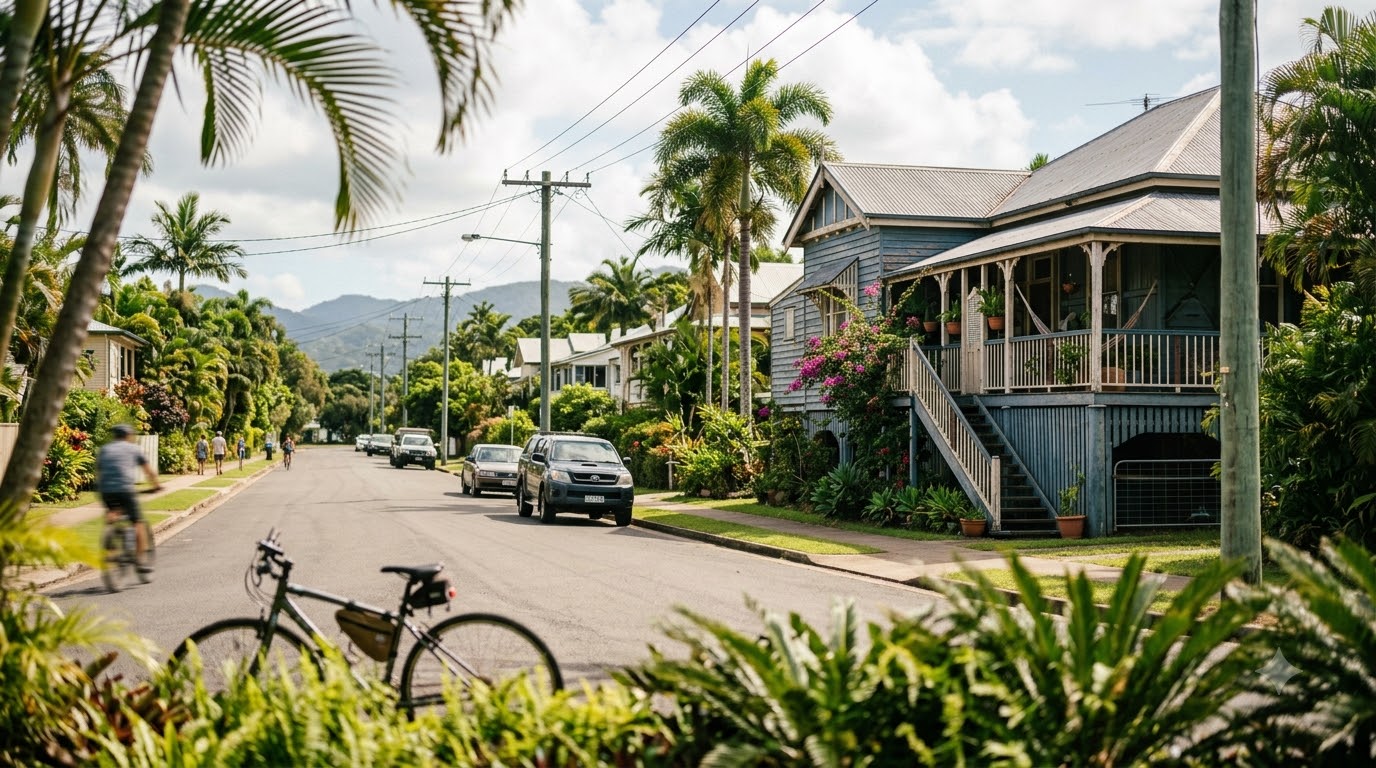
Cairns is really two choices stacked along one coast road. There is the city itself, a compact grid on the water where the reef boats leave from the marina and everything is walkable.
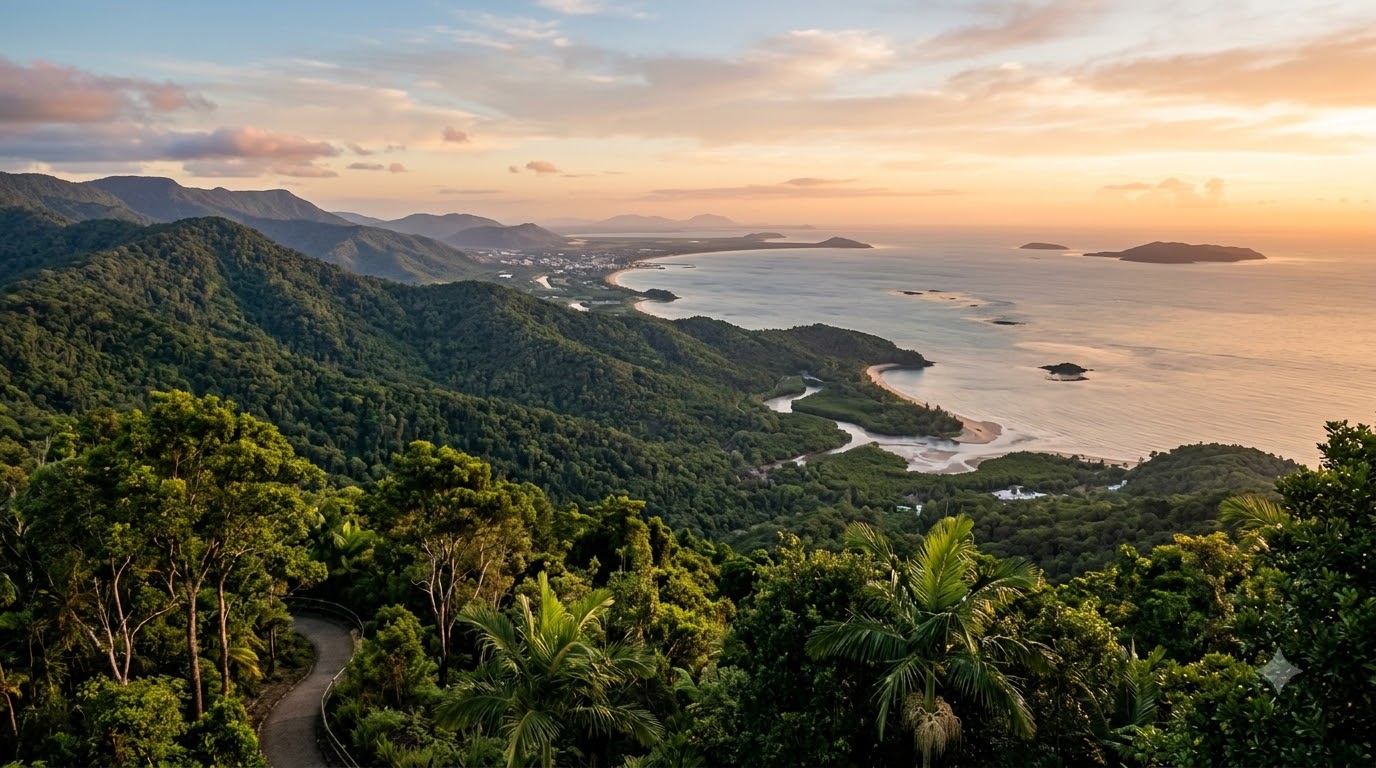
Then there is a string of separate beach suburbs to the north, Palm Cove, Trinity Beach, Yorkeys Knob, Clifton Beach and a few more, each with real sand and its own small village. Further up again sits Port Douglas, an hour north and worth a mention if the reef is your whole trip.
The rule of thumb is simple: the city is for convenience and tours, the beaches are for sand and quiet.
The Esplanade and the CBD
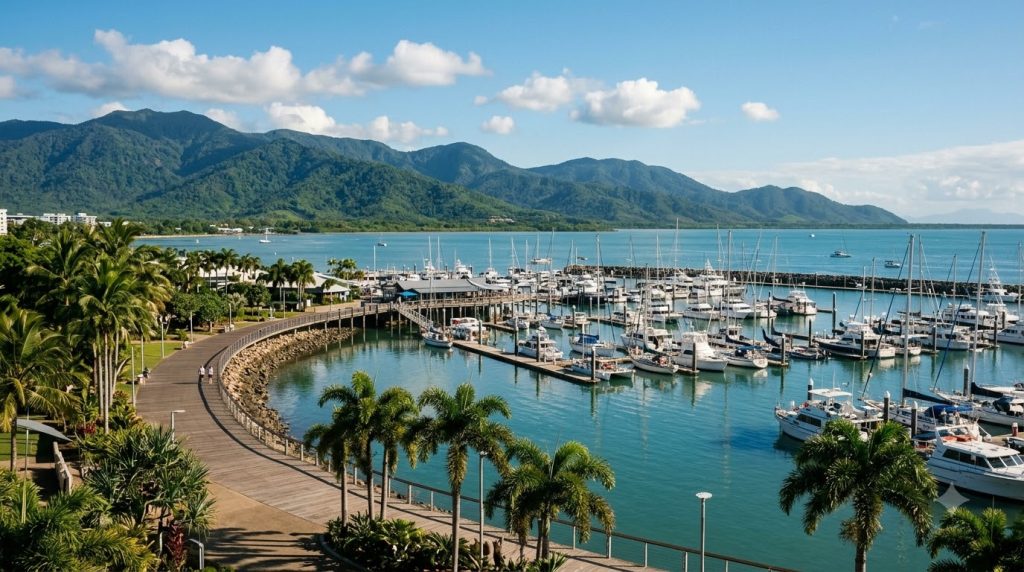
This is where most first-timers should stay, and where the no-beach surprise catches people out. The Esplanade runs along the waterfront, and instead of a beach it has a free public swimming lagoon, grass, barbecues and a boardwalk over the mudflats. It’s genuinely pleasant, and it solves the swimming problem in the middle of the city.
Nearly every reef trip leaves from the Marlin Marina a few minutes’ walk from here, and the tour desks, dive shops, restaurants and the night markets are all in the same walkable core.
The trade-off the photos hide is that “waterfront” here does not mean beachfront. You will not walk out of your hotel onto sand, and at low tide the flats are brown and smell of mud. That surprises people who booked expecting a beach.
What you get instead is the best base for doing the Great Barrier Reef without a car, plus the widest range of Cairns hotels, from backpacker dorms to high-end waterfront towers. If your trip is built around reef boats, day tours to the rainforest and eating out, base here.
Palm Cove
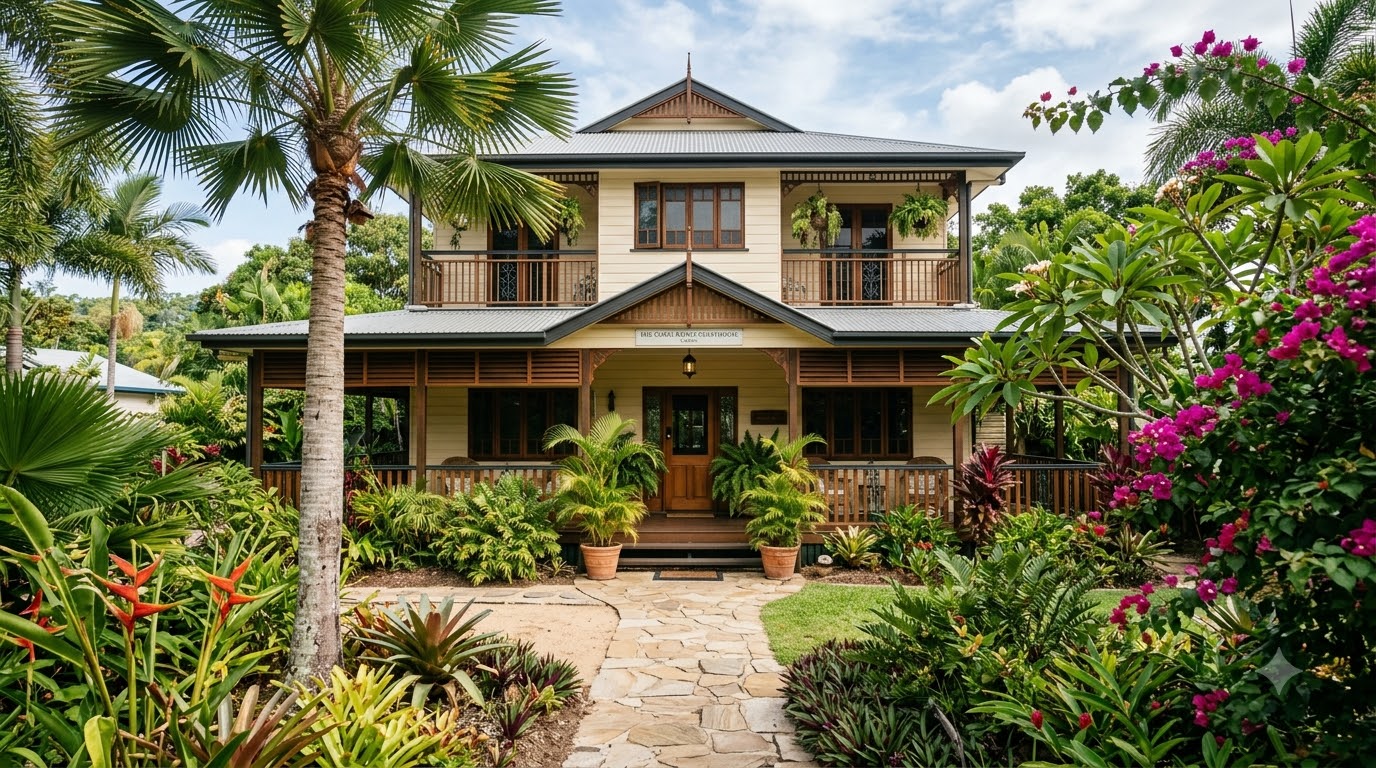
Palm Cove is the northern beach that most people picture when they imagine a tropical Queensland holiday, and it’s the calmest and most polished of them. A single esplanade of paperbark trees runs along the sand, lined with resorts, a few good restaurants and a jetty.
It’s quiet, it’s pretty, and it suits couples, honeymooners and anyone who wants to swap the city buzz for the sound of the sea. You can walk the length of it in a few minutes and never need the car until it’s tour day.
The catch is that Palm Cove is a fair way from the city and the marina, so every reef trip and most day tours mean either a hotel pickup with an early start or a drive in. It’s also the priciest patch of sand up here, and the village is small, so choice for dinner is limited compared with town.
One more thing that does not show in listing photos: like all the beaches here, the water has marine stingers in the warmer months, which is why you’ll see netted swimming enclosures. This is a place to slow down, not a place to base a busy tour schedule.
Trinity Beach
Trinity Beach is the middle ground a lot of returning visitors settle on, and for good reason. It has a proper curve of sand, a small strip of relaxed cafes and restaurants right behind it, and prices that sit below Palm Cove. It feels like a real neighbourhood rather than a resort strip, which families and longer-stay travellers tend to prefer.
You get the beach and the village feel without paying the top-tier rate, and you’re a little closer to the city than Palm Cove.
The honest trade-off is that Trinity Beach is still a driving base. There’s enough here for dinner and a swim, but the reef boats, the big supermarkets and the airport are all a drive away, and public transport up the coast is slow and infrequent. It suits families, couples and anyone who wants sand and a kitchen without resort prices.
If you want a beach suburb that locals actually live in and you have a car, this is the sensible pick when working out where to stay in Cairns.
The other northern beaches
Between Trinity Beach and Palm Cove sit several more suburbs, Yorkeys Knob, Kewarra Beach, Clifton Beach and Trinity Park among them, and they follow the same pattern with less polish and lower prices. These are quiet, residential, spread-out places where you’ll find holiday houses, low-rise apartments and a marina at Yorkeys Knob.
They’re the value end of the beaches, good for families who want space and self-catering, and for anyone happy to trade nightlife and walkability for a cheaper, calmer base near the sand.
The trade-off is real isolation without a car. There is very little within walking distance in most of these suburbs, sometimes a single cafe or a corner shop, so you drive for everything, including dinner. Bus services exist but they are slow and stop early.
Pick one of these only if you have a rental and you value space and price over being able to walk anywhere. For planning what’s around each one, the regional tourism site Tropical North Queensland is a useful starting point.
Accommodation on the islands near Cairns
If reef access matters more than a mainland base, two resort islands sit about 45 minutes from Cairns by boat, and staying overnight is a genuinely different experience from a day trip.
Fitzroy Island Resort is reached via the air-conditioned Fitzroy Flyer and offers Island Suites and Welcome Bay Suites (both around 71 square metres with a queen bed and sofa bed), a smaller Studio room, and Beach Front Cabins. The resort has a pool with a swim-up bar, the Zephyr restaurant and Foxy’s Bar, and a turtle rehabilitation centre worth a look even if you’re not staying the night.
Green Island Resort is a 45-minute fast catamaran ride from Cairns and runs as a guest-only property once day-trip crowds leave in the afternoon. Rooms range from an Island Suite King aimed at couples to an Island Suite Twin for families or friends travelling together, up to a private Reef Suite pitched at honeymooners. Dining leans on local produce and a cocktail list, and the resort includes a set of complimentary activities for guests.
Both islands fall inside the Great Barrier Reef Marine Park, so expect a small environmental management charge folded into the resort or tour pricing on top of the room rate itself, the same levy that applies to day-trip reef tours out of Cairns.
Both islands work best as a one- or two-night add-on either before or after your mainland stay, rather than a full substitute for a Cairns-area base, since onward tours and the airport are easier to reach from the city or the northern beaches.
Pack light for an island night, since both resorts are reached by boat rather than car, and leave any bulky luggage you don’t need at your mainland hotel or in storage if your itinerary has you returning to the same base afterward, since storage space in the resort rooms themselves is limited.
Book the island stay well ahead of a trip built around school holidays or long weekends, since both properties run smaller room counts than a typical Cairns city hotel and sell out faster at the top end, especially over the Christmas and Easter school holidays.
Port Douglas (worth the mention)
Port Douglas is an hour north of Cairns and technically a separate town, but it comes up in every where-to-stay conversation because it’s the other main reef and rainforest base.
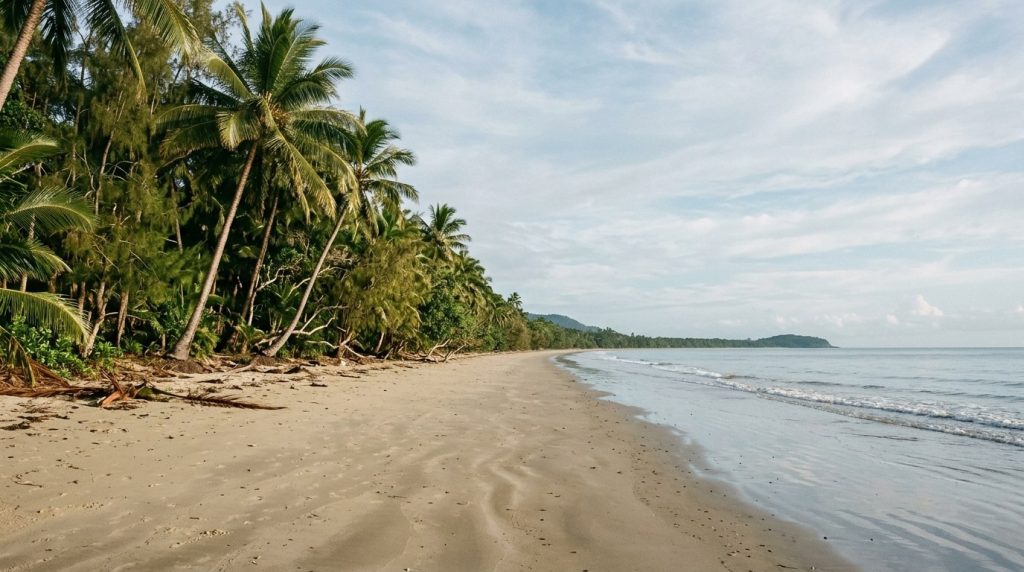
It has one lovely long beach, Four Mile, a walkable village of good restaurants and boutiques, and its own reef boats that reach parts of the outer reef more quickly than some Cairns departures. It’s more upmarket and more compact than the Cairns beach suburbs, and it’s the natural jumping-off point for the Daintree and Cape Tribulation.
The trade-off is distance and access. You fly into Cairns regardless, so Port Douglas adds a long transfer at each end, and once you’re up there the city’s cheaper eats and bigger tour range are an hour away. It suits couples and anyone whose whole trip is reef and rainforest rather than city convenience.
If you’re only picking one base and you want a beach town with reef access, it’s a genuine alternative to staying in Cairns itself.
How much does a Cairns stay cost
Camping and caravan parks sit at the bottom of the range, with powered sites and basic cabins from around AUD 33–60 · USD 24–43 a night at parks on the city fringe. These suit self-contained travellers and families happy to self-cater rather than stay central.
Backpacker hostels in the CBD sit in a similar bracket to the caravan parks on price, and they’re the one option here that keeps you walking distance from the marina and the Esplanade lagoon without paying hotel rates.
Mid-range hotels and apartments in and around the CBD typically run AUD 100–200 · USD 72–144 a night, covering everything from a simple hotel room to a one-bedroom apartment with a kitchen, which matters if you’re staying four or five nights and want to cook breakfast.
Luxury marina-front hotels and serviced apartments push past AUD 200 and into the AUD 200–350 · USD 144–252 band, and this is also roughly where Palm Cove’s top resorts sit, given it’s the priciest patch of sand covered earlier.
As with everywhere on this coast, rates move with the season: December to March peak pushes every tier up, while the wetter months from January onward can bring softer rates if you don’t mind the humidity.
Palm Cove and Port Douglas both sit above the CBD on price for a comparable room, reflecting the premium on actual beach frontage rather than city convenience, while Trinity Beach and the other northern suburbs generally undercut the CBD once you look at apartment-style stays with a kitchen.
Camping aside, a kitchen is the single biggest lever on your daily spend in Cairns, since eating out for every meal across a four or five night stay adds up quickly on top of the room rate itself.
Which area is right for you
| Traveller type | Best area | Why |
|---|---|---|
| First-timer, no car | The Esplanade / CBD | Reef boats, tours and dinner all on foot |
| Couples | Palm Cove or Port Douglas | Sand, quiet and good restaurants |
| Families | Trinity Beach or northern beaches | Real beach, space and self-catering value |
| Budget / backpacker | The CBD | Cheapest beds, lagoon to swim, walk everywhere |
| Beach over everything | Palm Cove or Port Douglas | Best sand and the most relaxed pace |
| Car-free travellers | The Esplanade / CBD | The only base that works without driving |
What to book first
Book the room first, and let your answer to one question pick the area: do you want to walk to reef boats, or wake up on sand? If it’s boats and no car, book the Esplanade or CBD; if it’s sand, book a northern beach and plan to drive.
Sort transport second, because a car is close to essential for the beaches and close to useless in the city core. Then book your reef day and any rainforest tours once your dates are locked, and check whether pickup is from your hotel or the marina.
The live map below shows real current prices across every area so you can compare on your dates.
Live nightly prices from Booking, Airbnb, Hotels.com and more across every Cairns area — move the map or change your dates to compare.
Related where-to-stay guides
- Where to Stay in Byron Bay
- Where to Stay in Gold Coast
- Where to Stay in Adelaide
- Where to Stay in Hobart
- Where to Stay in Uluru
Frequently asked questions
Is Cairns expensive?
Cairns is mid-range for Australia, cheaper than Sydney but not a bargain, and reef tours are the big cost rather than the room. City hotels run the full range from backpacker dorms to high-end, while the beach suburbs and Palm Cove sit higher. The live map shows real current prices across each area so you can compare on your dates.
Do you need a car in Cairns?
Not if you stay in the city. Reef boats, day tours and restaurants are all walkable from the Esplanade, and most tours pick you up. A car only becomes useful, and close to essential, if you base at one of the northern beaches, where public transport is slow and there’s little within walking distance.
Does Cairns have a beach?
Not a swimming beach in the city itself. The waterfront is mangrove mudflat, so the council built a free saltwater lagoon on the Esplanade instead. The real sandy beaches, Palm Cove, Trinity Beach and the others, are a drive north of town. This surprises a lot of first-time visitors.
How many days should you spend in Cairns?
Four to five nights is the sweet spot. That gives you a full day on the reef, a day in the Daintree or Kuranda rainforest, a beach day up north, and time to spare without rushing. Add a night or two if you want both an inner-reef and an outer-reef trip.
What is the best area for first-time visitors?
The Esplanade or CBD. It puts the reef boats, tour desks and restaurants within walking distance, gives you the lagoon to swim in, and means you never need a car. Base here, take day trips out to the beaches and the rainforest, and come back to the same room.