Disclosure: Some links in this guide are affiliate links. If you book or buy through them, we may earn a small commission at no extra cost to you — it helps keep our guides free.
Quick answer: Stay near the waterfront at Sullivans Cove if it is your first time, because you can walk to the docks, the restaurants and Saturday’s Salamanca market. Couples and quieter travellers should look one street up the hill in Battery Point.
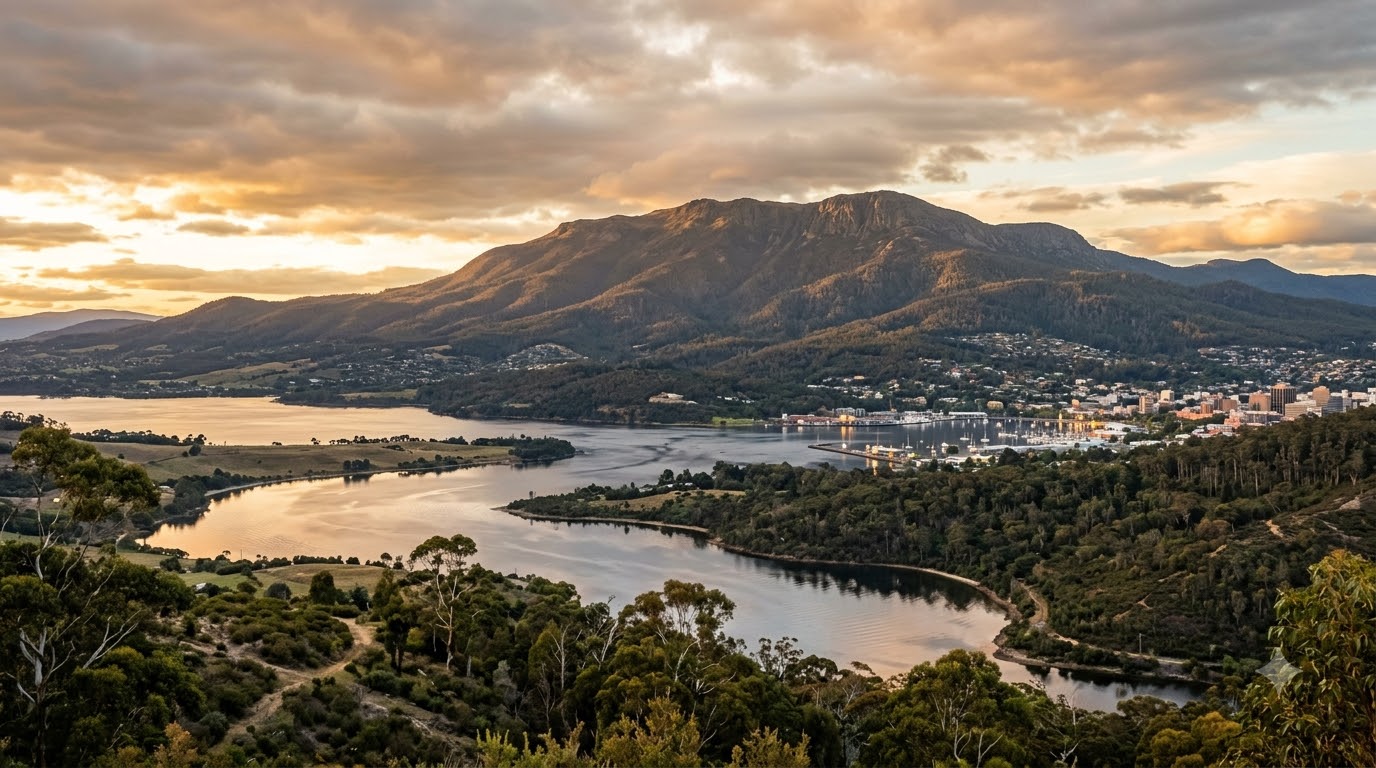
Figuring out where to stay in Hobart is easier than it looks, because the city is small and sits under a mountain with the harbour at its feet. Most of what people come for is clustered around one cove. The main thing first-timers get wrong is timing: the Saturday Salamanca market runs once a week, and it is worth building the whole trip around it.
Affiliate Disclosure: This post contains affiliate links. We earn a small commission if you book through our links, at no extra cost to you.
The areas at a glance
Hobart is a harbour city, and almost everything visitors want sits within a fifteen-minute walk of Sullivans Cove. The waterfront and the historic Salamanca strip are the centre of gravity. Battery Point rises on the hill just behind them, Sandy Bay stretches south along the water toward the university, and North Hobart sits inland on the far side of the city grid. The one big draw that is not walkable is MONA, which is out to the north and reached by ferry or car.
The waterfront and Sullivans Cove
This is the obvious base, and for most people it is the right one. You are on the docks, a few minutes from the sandstone warehouses of Salamanca Place and the ferry pier for MONA. On Saturdays the market takes over the whole strip, and being able to walk out your door into it, rather than driving in and hunting for parking, is the single best reason to book here.
The trade-off is noise and price. The waterfront and Salamanca carry the highest Hobart hotels rates in the city, and the pubs and restaurants along the cove stay lively into the evening, especially on market weekends. Light sleepers should ask for a room away from the street. You will not need a car for anything central, which matters, because parking down here is tight and metered.
Battery Point
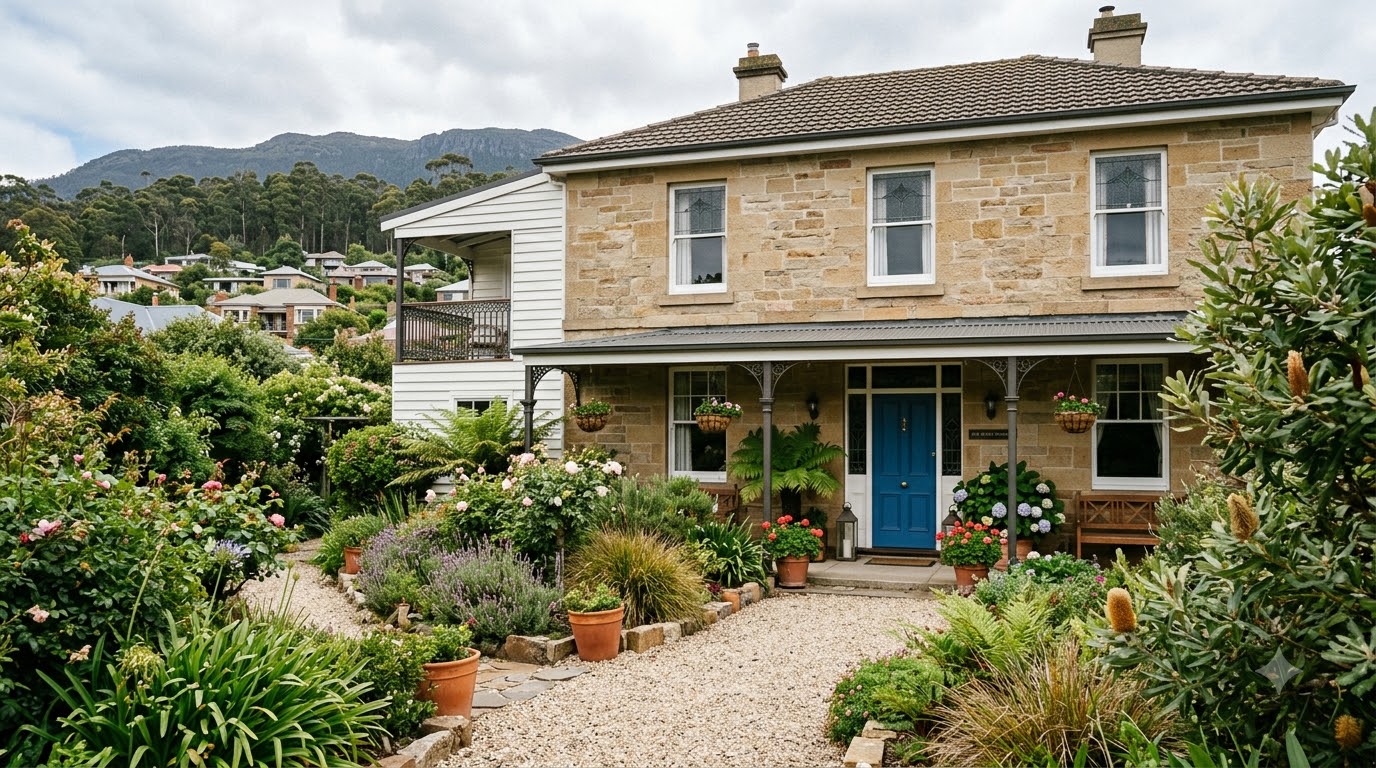
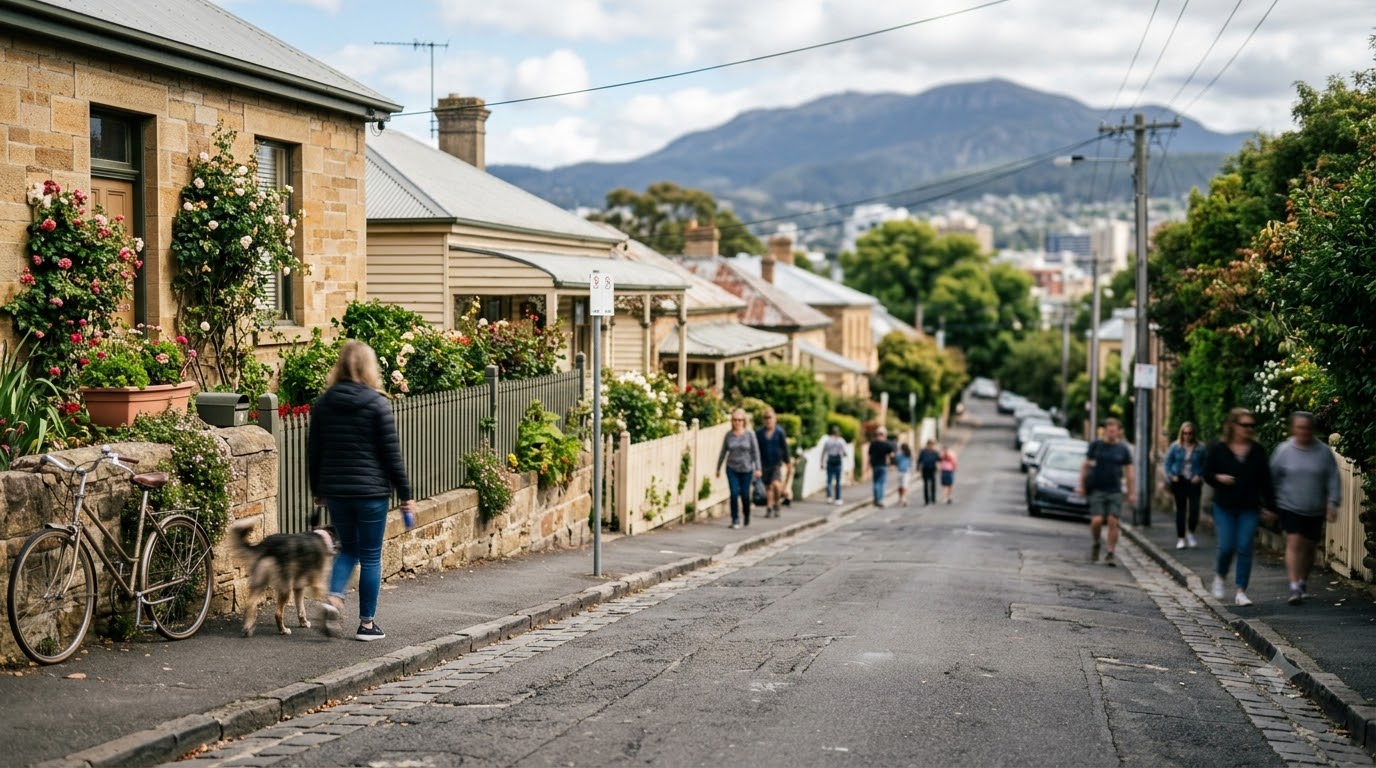
One street up the hill from Salamanca, Battery Point is the old maritime village, all narrow lanes, cottages and a small green square called Arthur Circus. It suits couples and anyone who wants quiet without giving up the location. You are a five-minute walk down to the market and the water, but the streets themselves are residential and calm at night.
What the listing photos do not show is the hill. Battery Point genuinely climbs, and hauling luggage or walking back up after dinner is real work if you are not used to slopes. Accommodation here leans toward guesthouses, B&Bs and apartments rather than big hotels, so it books out fast in summer and around festival dates. This is a book-early area.
Sandy Bay
South of Battery Point, Sandy Bay follows the water toward the University of Tasmania and the casino. It is more suburban and generally better value than the waterfront, with a mix of motels, apartments and the odd larger hotel. Families and travellers who want a bit more space for the money tend to end up here, and it stays quiet in the evenings.
The catch is that Sandy Bay spreads out. Some of it is a pleasant stroll into town along the foreshore, but plenty of it is far enough that you will want the car you probably rented for day trips anyway, or you will lean on the local buses. It is a good pick if your plan involves driving out to Bruny Island, the Huon Valley or Mount Wellington, and you do not mind not being in the thick of things.
North Hobart
North Hobart is where locals go to eat. Its main strip along Elizabeth Street is a run of small restaurants, wine bars, an old independent cinema and cafes, and it has a more neighbourhood, less touristy feel than Salamanca. If food is high on your list, this is a strong and often overlooked place to stay.
The honest downside is that you are not on the water and not in the historic core. It is a flat, walkable fifteen minutes or so into the city centre, or a short bus or rideshare hop, but you will make that trip most days. Accommodation is thinner here, mostly boutique stays, apartments and a few smaller hotels, so options are limited compared to the waterfront. Come for the dinners, accept the small commute.
Out toward MONA
MONA, the Museum of Old and New Art, sits north of the city at Berriedale, and it is the reason a lot of people visit Hobart at all. You can sleep out this way, near Glenorchy or on the museum grounds themselves, which puts you close to the art and away from the tourist waterfront. It is quieter, and it can be cheaper than the cove.
But you trade the city for it. Out here you are committed to the ferry or a drive for everything central, including the Saturday market, and there is far less within walking distance in the evenings. The museum runs its own ferry down to the waterfront, which is the pleasant way in, and you can plan your visit and check the ferry through the official MONA site. Most first-timers are better basing in town and treating MONA as a day out, not a home base.
Which area is right for you
| Traveller type | Best area | Why |
|---|---|---|
| First-timer | Waterfront / Sullivans Cove | Walk to the docks, Salamanca and the Saturday market |
| Couples | Battery Point | Quiet old streets, still minutes from the water |
| Families | Sandy Bay | More space, better value, easy car access for day trips |
| Food-focused | North Hobart | The best local restaurant strip in the city |
| Budget / car-based | Out toward MONA / Glenorchy | Cheaper rooms, close to the museum, you have the car anyway |
| Car-free | Waterfront / Sullivans Cove | Everything central is on foot from here |
What to book first
Book the room first, and book it around the Saturday you want at Salamanca, because market weekends are the busiest and the central places go early. Decide next whether you are renting a car: if your trip is mostly the city and MONA, you can skip it and walk or use the ferry, but anything toward Bruny Island, the Huon or the mountain needs wheels. Lock in big-ticket tours and any MONA tickets after that, since those set the shape of your days. Compare real nightly rates by area before you commit, the live map below shows current prices across Hobart so you can see the waterfront premium against Sandy Bay or North Hobart at a glance.
Live nightly prices from Booking, Airbnb, Hotels.com and more across every Hobart area — move the map or change your dates to compare.
Related where-to-stay guides
- Where to Stay in Uluru
- Where to Stay in Whitsundays
- Where to Stay in Broome
- Where to Stay in Port Douglas
- Where to Stay in Kangaroo Island
Frequently asked questions
Is Hobart expensive?
Hobart is mid-range for an Australian city, cheaper than Sydney but not a bargain, and prices spike in summer and around festivals. The waterfront and Salamanca carry the highest room rates; Sandy Bay, North Hobart and the areas out toward MONA are noticeably better value. The live map is the fastest way to compare current rates by area.
Do you need a car in Hobart?
Not for the city itself. The waterfront, Salamanca, Battery Point and North Hobart are all walkable, and MONA has its own ferry from the docks. You will want a car for day trips: Mount Wellington, Bruny Island, the Huon Valley and Port Arthur all sit outside easy reach of the local buses run by Metro Tasmania.
How many days do you need in Hobart?
Three to four days suits most people. That covers the waterfront, Salamanca on a Saturday, a day at MONA and a drive up Mount Wellington, with time for one bigger day trip. Add more days if you want Bruny Island, Port Arthur or the Huon Valley, since each is a full day out from the city.
What is the best area for a first-time visitor?
The waterfront around Sullivans Cove. You can walk to the docks, the restaurants and, crucially, straight into the Saturday Salamanca market without dealing with parking. It is the liveliest and priciest area, so if you want quiet, book one street up the hill in Battery Point instead.
When is the Salamanca market on?
The Salamanca market runs every Saturday, and it is the event many people time their Hobart trip around. Because it only happens once a week, plan to be in the city on a Saturday, and check the current hours through Discover Tasmania before you lock in your dates.