Disclosure: Some links in this guide are affiliate links. If you book or buy through them, we may earn a small commission at no extra cost to you — it helps keep our guides free.
25 Best Things To Do in Ho Chi Minh City 2026
Quick answer: The top things to do in Ho Chi Minh City are touring the Cu Chi Tunnels, tracing Vietnam War history at the War Remnants Museum and Reunification Palace, eating your way through a District 1 street food or Vespa tour, and taking a Mekong Delta day trip. Base yourself in walkable District 1 and balance the heavy-history sights with rooftop bars, markets, a water puppet show, and a hands-on cooking class.
Ho Chi Minh City packs more energy per square kilometer than almost anywhere else in Southeast Asia — a 9-million-person metropolis where French colonial architecture stands beside glittering skyscrapers and street vendors ladle pho at 6 a.m. This guide covers the 25 best things to do in Ho Chi Minh City in 2026, with exact prices, honest travel tips, and affiliate links we personally use.
Key Takeaways
- Ho Chi Minh City welcomed over 5 million international visitors in 2024, making it Vietnam’s top tourist destination (Vietnam National Administration of Tourism, 2024).
- The Cu Chi Tunnels attract roughly 1.5 million visitors per year; guided half-day tours cost $20-$30 USD via Klook (Klook, 2025).
- A 3-day e-SIM with 3 GB data costs as little as $4.50 USD with Airalo, keeping you connected from touchdown (Airalo, 2025).
- Budget travelers can sleep comfortably for $15-$30 USD per night in District 1 with dozens of well-rated options on Agoda (Agoda, 2025).
- Street food meals average $1.50-$3.00 USD; a sit-down meal at a mid-range local restaurant rarely exceeds $10 USD per person (Numbeo, 2025).
1. Explore the Cu Chi Tunnels
Related: Ho Chi Minh City packing list.
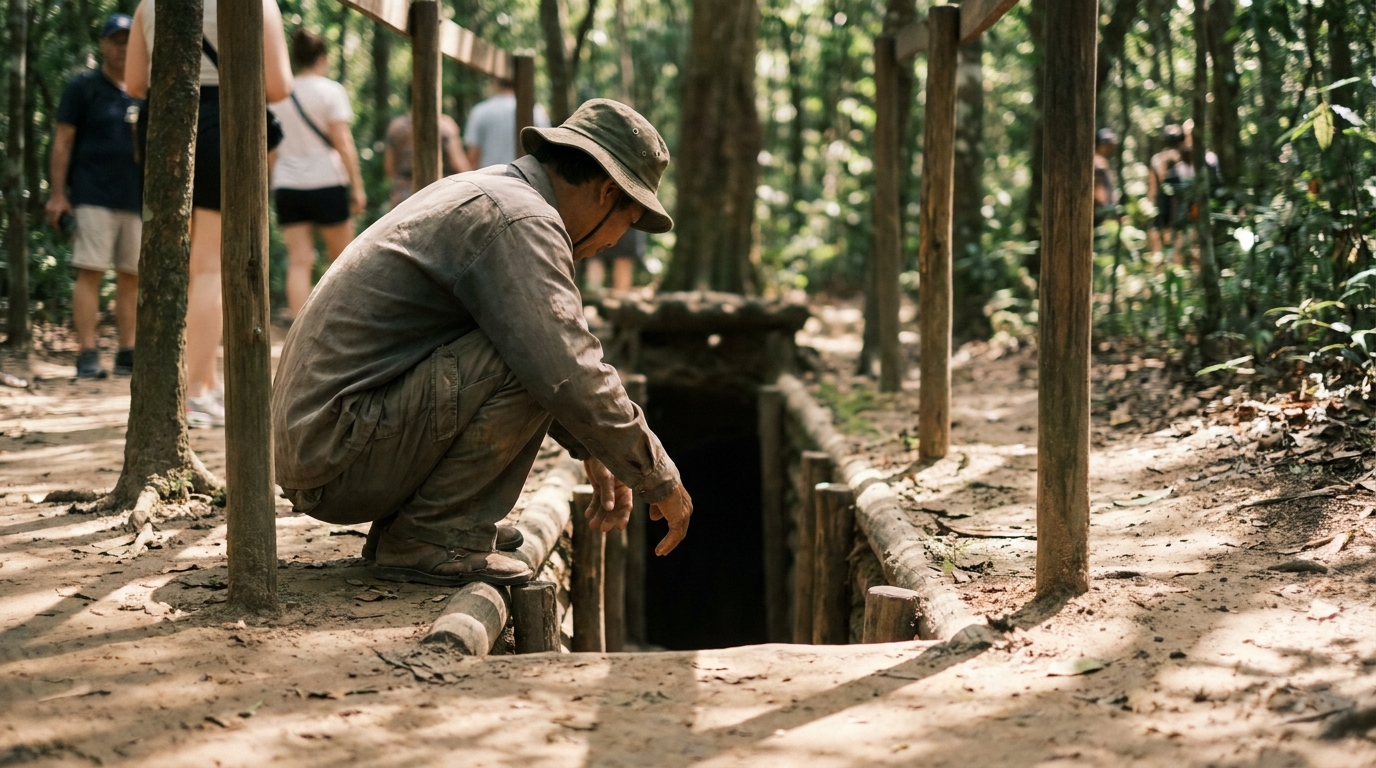
The Cu Chi Tunnels are the single most historically significant day trip from Ho Chi Minh City, drawing visitors into a 250-kilometer underground network used during the Vietnam War. We recommend booking a half-day guided tour on Klook ($22-$28 USD including transport) rather than arranging your own taxi, since knowledgeable guides provide context that transforms the experience from a walk-through to a genuine history lesson.
The tunnels run about 70 km northwest of the city center near Ben Duoc and Ben Dinh. Ben Dinh is more tourist-friendly with enlarged passages; Ben Duoc is larger and less crowded. Entry alone costs 110,000 VND (~$4.40 USD), but transport adds significantly. On-site demonstrations include trap mechanisms and a firing range ($1.50 per bullet for select weapons).
(Cu Chi Tunnels Management Board, 2025)
2. Visit the War Remnants Museum
Related: Bali travel guide.
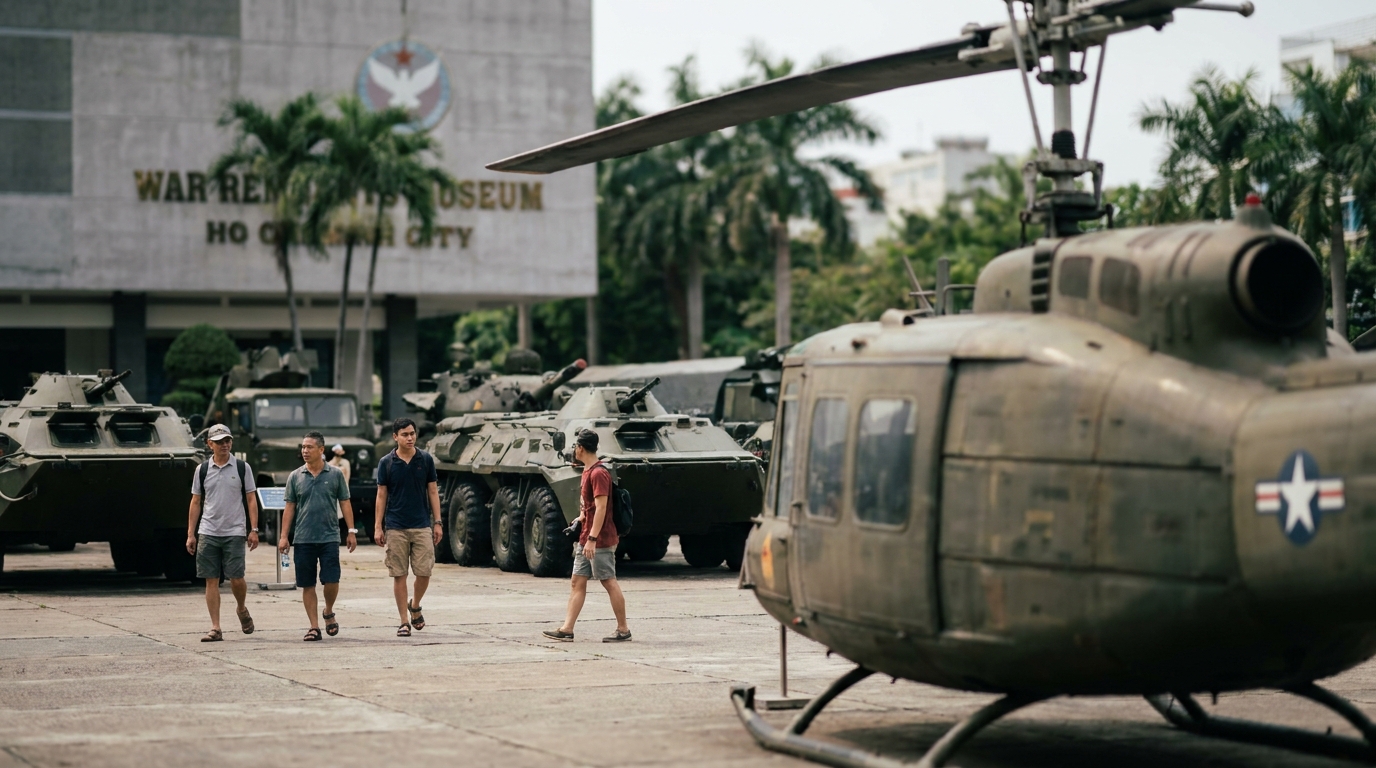
The War Remnants Museum in District 3 is one of the most visited museums in Southeast Asia, receiving over 500,000 visitors annually, and it presents Vietnam War history from the Vietnamese perspective with raw, unflinching photography and artifacts. Admission is 40,000 VND (~$1.60 USD) — one of the best-value cultural experiences in the city.
Plan 2-3 hours minimum. The third floor’s “Historical Truths” exhibition covers media coverage of the war, while the ground-floor courtyard displays captured U.S. military hardware including helicopters, tanks, and a Cessna O-1 reconnaissance aircraft. The museum is open daily 7:30 a.m.–6:00 p.m. Combine this visit with the nearby Reunification Palace for a full half-day of history. See our full vietnam war history travel guide for deeper context.
(War Remnants Museum, 2025)
3. Tour the Reunification Palace
Related: Da Nang travel guide.
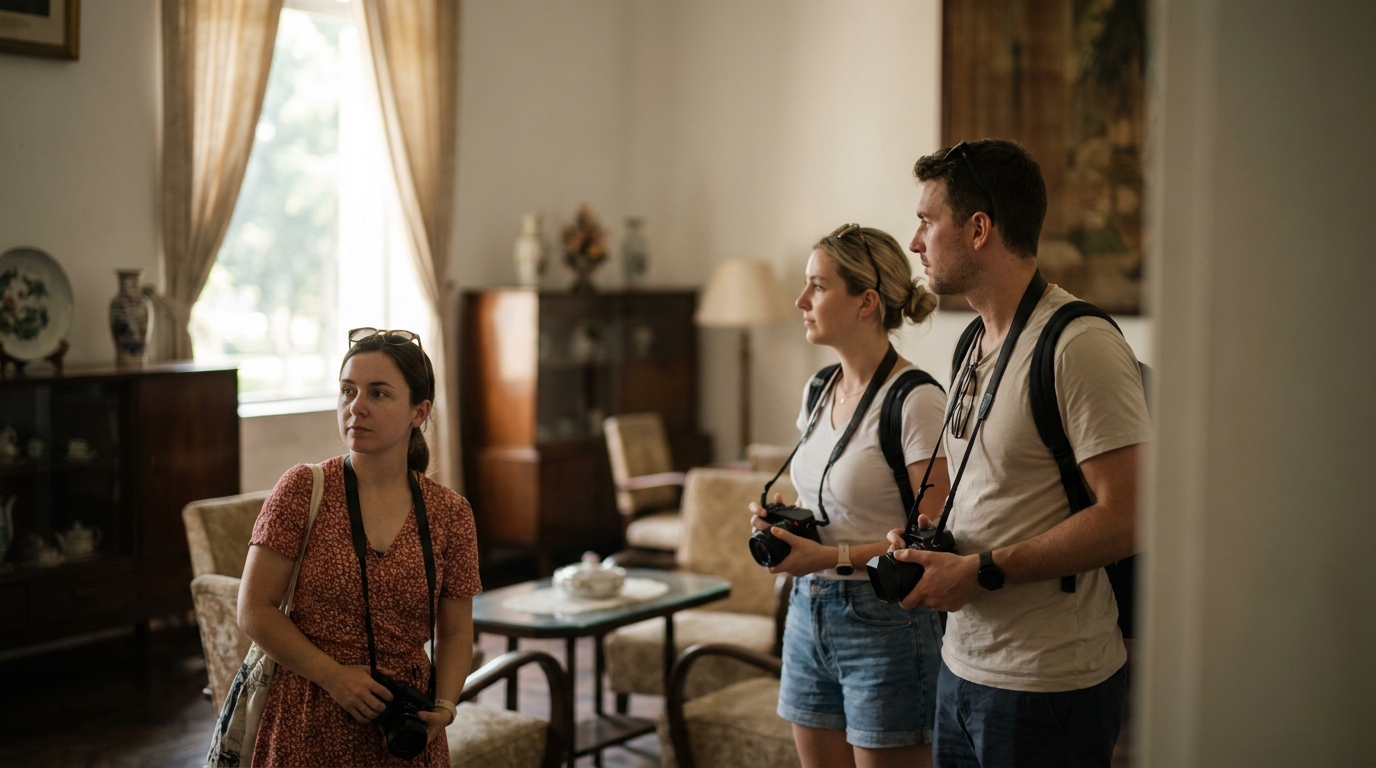
The Reunification Palace — also called Independence Palace — is where the Vietnam War officially ended on April 30, 1975, when North Vietnamese tanks crashed through its gates. The building has been preserved exactly as it stood that day, making it a remarkable time-capsule tour that costs only 40,000 VND (~$1.60 USD) for foreigners.
Self-guided audio tours are available for an additional 30,000 VND (~$1.20 USD). Highlights include the rooftop helipad, the subterranean command bunker with original radio equipment, the president’s formal receiving rooms, and the cinema room. The palace is open daily 8:00 a.m.–5:00 p.m. with a lunch break from 11:30 a.m.–1:00 p.m. Expect 60-90 minutes for a thorough visit.
(Reunification Palace Management Board, 2025)
Find your Ho Chi Minh City hotel on the map
Live prices from Booking & Airbnb — tap a pin to compare stays around District 1 and beyond.
4. Walk Through the Ben Thanh Market Area
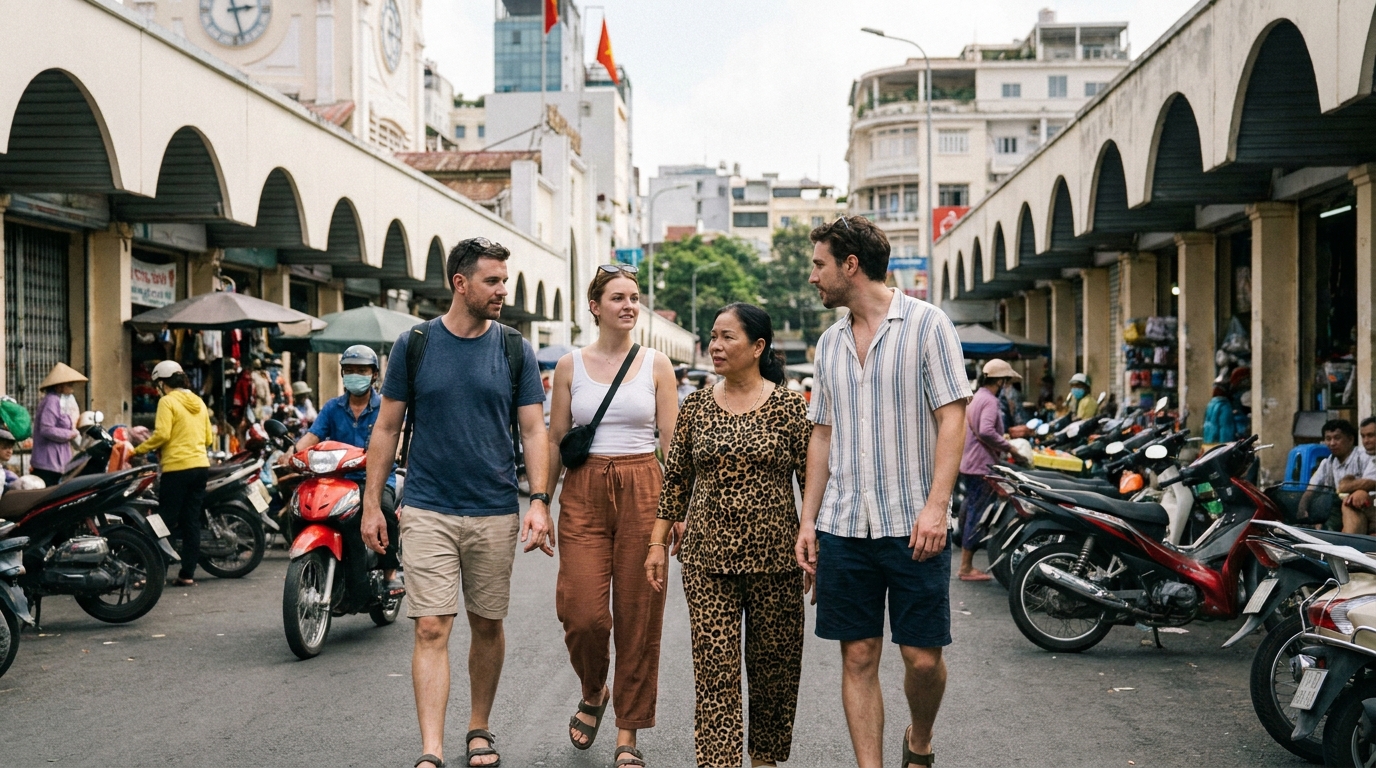
Ben Thanh Market is Ho Chi Minh City’s most iconic marketplace — a French-colonial covered market built in 1914 that now offers everything from dried seafood to counterfeit goods to genuinely good street food. The surrounding streets, particularly Pham Ngu Lao and the night market that opens after 6 p.m. on the eastern side, are where we spend most of our time.
Inside the market, expect aggressive vendor pitching and inflated opening prices — budget travelers should counter-offer at 40-50% of the asking price for clothing and souvenirs. Food stalls inside serve banh mi ($0.80-$1.20 USD), fresh fruit, and com tam (broken rice) at fair prices. The night market outside runs nightly and sells streetwear, accessories, and local snacks.
This is also the starting point for most ho chi minh city street food guide tours.
(Ben Thanh Market Administration, 2025)
5. Eat Your Way Through a Street Food Tour
Ho Chi Minh City’s street food scene is one of the most diverse in Asia, spanning 700+ street-side stalls in District 1 alone, with specialties ranging from banh xeo (sizzling crepes, ~$2 USD) to hu tieu (southern noodle soup, ~$1.50 USD). Booking a dedicated street food tour on Klook ($25-$45 USD for 3-4 hours) gives you access to neighborhoods most solo travelers never find.
Must-eat items: banh mi from Huynh Hoa on Le Thi Rieng Street (consistently ranked top 3 in the city, ~$2.50 USD), bun bo Hue from any cart near Tan Dinh Market (~$1.80 USD), and che (sweet dessert soups) from the alley vendors off Nguyen Thi Minh Khai. Go hungry, wear comfortable shoes, and plan to eat 6-8 small dishes across the evening.
(Numbeo, 2025; Vietnam Culinary Institute, 2024)
6. Take a Mekong Delta Day Trip
A Mekong Delta day trip from Ho Chi Minh City is one of Vietnam’s most iconic rural experiences, putting you on narrow wooden boats through a labyrinth of waterways in a region that produces nearly 50% of Vietnam’s rice and 60% of its fish (World Bank, 2023). My Tho and Ben Tre are the most common departure points, roughly 70-90 km southwest of the city.
We recommend booking through Klook ($25-$45 USD including air-conditioned transport, boat transfers, and lunch) to avoid the logistical headache of arranging your own ride and boat. Full-day tours include a floating market visit at Cai Be or Cai Rang, a coconut candy factory stop, and a home-cooked lunch. Depart early — 6:30-7:00 a.m. — to beat traffic out of the city.
Check our mekong delta day trip from ho chi minh city for a full breakdown.
(Klook, 2025)
7. Climb Bitexco Financial Tower’s Saigon Skydeck
The Saigon Skydeck on the 49th floor of Bitexco Financial Tower offers the best unobstructed 360-degree view of Ho Chi Minh City’s skyline, with floor-to-ceiling windows at 178 meters above street level. Admission is 250,000 VND (~$10 USD) for adults.
The tower is open daily 9:30 a.m.–9:30 p.m. We suggest arriving 30-45 minutes before sunset (typically 6:00-6:30 p.m. year-round) to watch the city transition from golden hour to full neon blaze. The adjoining helipads — designed by Carlos Zapata — are uniquely visible from inside and make for excellent photos. Skip the in-tower restaurants and eat street food on nearby Ngo Duc Ke Street before or after.
(Bitexco Financial Tower, 2025)
8. Spend a Morning at the Notre-Dame Cathedral and Central Post Office
Related: hidden gems in Ho Chi Minh City.
District 1’s French Quarter contains two colonial-era landmarks within 200 meters of each other that most visitors rush past without stopping. Notre-Dame Cathedral Basilica of Saigon, built between 1863 and 1880 from materials shipped entirely from France, is currently undergoing restoration but the exterior remains fully accessible and free. The stained-glass windows visible through the entrance are original Chartres glasswork.
Next door, Saigon Central Post Office (designed by Gustave Eiffel’s firm in 1891) is still a working post office and is free to enter. The barrel-vaulted hall, vintage maps of telegraph lines painted directly on the walls, and the portrait of Ho Chi Minh above the main counter are genuinely worth the ten-minute stop.
It opens at 7:00 a.m. and closes at 7:00 p.m. Post a physical postcard home — stamps cost about 15,000 VND (~$0.60 USD).
(Ho Chi Minh City Department of Tourism, 2025)
9. Drink at a Rooftop Bar in District 1
The rooftop bar scene in Ho Chi Minh City is among the best in Southeast Asia, with a dozen serious venues concentrated in District 1 between Dong Khoi Street and the Saigon River. Chill Skybar (AB Tower, Floor 26) charges no entry fee and serves cocktails from 200,000-280,000 VND (~$8-$11 USD). EON Helixbar (Bitexco, Floor 52) has a cover charge of 100,000 VND (~$4 USD) redeemable against drinks.
For value, Social Club Rooftop at Hotel des Arts (Floor 23, Nguyen Thi Minh Khai) offers happy-hour cocktails at 149,000 VND (~$6 USD) from 5:00-8:00 p.m. The views here directly face the reunification-era architecture of District 3, which most travelers never see from above. Dress code is smart-casual at the higher-end venues; shorts are fine at Chill Skybar.
(Timeout Ho Chi Minh City, 2025)
10. Stay in a Well-Located District 1 Hotel
District 1 keeps you within walking distance of Reunification Palace, Ben Thanh Market, and the French Quarter, cutting down on taxi and ride-share costs significantly. A clean, well-rated 3-star hotel in District 1 costs $25-$55 USD per night on Booking.com or Agoda; a quality 4-star property runs $60-$100 USD.
| Hotel Tier | Avg Nightly Rate (USD) | Recommended Platform |
|---|---|---|
| Budget (hostel/guesthouse) | $12 – $25 | Agoda |
| Mid-range (3-star) | $28 – $55 | Booking.com |
| Comfort (4-star) | $60 – $110 | Booking.com |
| Luxury (5-star) | $130 – $300+ | Booking.com |
Search Agoda for last-minute flash deals that regularly drop mid-range rooms to $22-$30 USD. Read our best hotels in ho chi minh city district 1 for curated picks.
(Agoda, 2025; Booking.com, 2025)
11. Ride a Motorbike Through the City
Related: getting to Ho Chi Minh City.
Saigon’s traffic is legendary — and riding through it on a semi-automatic motorbike is one of the most exhilarating urban experiences in Asia. Rentals at reputable shops on Pham Ngu Lao run $6-$10 USD per day for a Honda Wave or similar semi-auto; a full-auto scooter (Honda Air Blade) costs $8-$14 USD. You must have a valid international driver’s license category A.
Alternatively, book a “Saigon by Night Motorbike Tour” on Klook ($18-$28 USD) where a local driver takes you pillion through the backstreets, night markets, and food stops — zero stress, 100% the experience. This is the format we recommend for first-timers. The tour typically covers Cholon, District 4’s seafood alleys, and the illuminated Notre-Dame Cathedral.
(Klook, 2025)
12. Visit the Jade Emperor Pagoda
The Jade Emperor Pagoda (Phuoc Hai Tu) in District 3 is one of the most atmospheric and genuinely active religious sites in the city — a Taoist-Buddhist temple dating to 1909 that is continuously used for worship, not just tourism. Entry is free; a small donation box sits near the altar.
The interior chambers are dense with carved wooden deities, incense smoke, and genuine worshippers offering prayers. The courtyard turtle pond — a Vietnamese symbol of longevity — is usually packed with tortoises. Avoid visiting on the 1st and 15th of the lunar month when crowds surge. Open 7:00 a.m.–6:00 p.m. daily. Dress modestly (covered knees and shoulders) and speak quietly inside.
(Ho Chi Minh City Cultural Heritage Department, 2025)
13. Day Trip to Can Gio Mangrove Forest
Can Gio is a UNESCO Biosphere Reserve 60 km south of the city center — a 75,000-hectare mangrove ecosystem accessible by a 90-minute bus-and-ferry combination or a 2-hour private car. A Klook-organized day tour costs $35-$50 USD including transport, boat ride, and lunch, and typically includes a visit to the Monkey Island wildlife sanctuary where macaques roam freely.
The forest produces a significant share of the oxygen for Ho Chi Minh City and is home to salt-water crocodiles, estuarine wildlife, and bat colonies. This is a physically relaxing trip — mostly boat travel and short boardwalk walks — making it a good choice after a few intense city days. Book through can gio day trip from ho chi minh city for our detailed guide.
(UNESCO, 2023; Klook, 2025)
14. Shop in Cholon — Saigon’s Chinatown
Cholon (District 5) is the largest Chinatown in Southeast Asia, a commercial district of narrow streets, wholesale markets, and Chinese temples that predates the French colonial period. Most visitors come for the markets: Binh Tay Market is the wholesale distribution center for everything from toys to spices; Thien Hau Pagoda (free entry) is a 19th-century Cantonese community temple with outstanding ceramic roof sculptures.
For shopping, the streets around Chau Van Liem and Nguyen Trai offer wholesale fabric, medicinal herbs, dried seafood, and hardware at prices 30-40% lower than District 1. Take a Grab (ride-share app) directly — the 4-5 km journey from Ben Thanh costs $1.50-$2.00 USD. A full morning here pairs well with a lunch of dim sum at one of the ground-floor tea houses.
(Ho Chi Minh City People’s Committee, 2025)
15. Get Connected with an Airalo eSIM
Having data from the moment you land eliminates the airport SIM queue and saves money compared to hotel Wi-Fi dependency or carrier roaming charges. We use Airalo to pre-install a Vietnam eSIM before departure — a 7-day/3 GB plan costs $4.50 USD and activates instantly on landing.
Vietnam’s 4G coverage across District 1, 2, 3, and major tourist corridors is excellent (Opensignal, 2025). Pair your eSIM with Grab (ride-share), Google Maps, and the Vietnam e-Visa portal (if you haven’t already applied online at $25 USD for 90-day single entry). Physical SIM cards at Tan Son Nhat Airport cost $3-$7 USD from Viettel or Vinaphone kiosks for comparison.
(Airalo, 2025; Opensignal, 2025)
16. Visit the Fine Arts Museum
The Ho Chi Minh City Museum of Fine Arts (97A Pho Duc Chinh, District 1) occupies a restored 1929 Chinese-French villa and holds the country’s largest collection of Vietnamese art — from Cham sculpture fragments to Propaganda-era lacquer paintings to contemporary installation work. Admission is 30,000 VND (~$1.20 USD); the building alone is worth the price.
Three floors house over 21,000 works. Highlights include the ground-floor Nguyen Dynasty ceramics, the third-floor folk art section, and the rotating contemporary gallery. The museum closes on Mondays; all other days open 9:00 a.m.–5:00 p.m. The courtyard cafe sells decent Vietnamese coffee for 25,000 VND (~$1 USD) — a good spot to decompress after a morning of museums.
(Ho Chi Minh City Museum of Fine Arts, 2025)
17. Take a Vespa Food Tour at Night
The Vespa food tour format — riding pillion on vintage Italian scooters driven by local guides — has become one of the defining Ho Chi Minh City experiences since Vespa Adventures launched it in 2013. Tours run $50-$75 USD per person through GetYourGuide or Klook and cover 10-12 food stops across 3-4 hours through Districts 1, 3, and 4.
You’ll eat items unavailable in tourist restaurants: fresh coconut jelly from a street cart, deep-fried spring rolls at a 50-year-old family stall, banh trang nuong (Vietnamese pizza) assembled at a sidewalk grill. The scooter format lets guides cut through alleys impassable by car. Maximum group size is typically 8 guests. Book 3-5 days in advance during peak season (December-January, June-August).
(GetYourGuide, 2025)
18. Explore the History Museum
The Ho Chi Minh City Museum of History (2 Nguyen Binh Khiem, District 1) traces 12,000 years of Vietnamese civilization — from Dong Son bronze drums to Cham Hindu sculptures to imperial Vietnamese court artifacts. Admission is 30,000 VND (~$1.20 USD). The museum sits inside the Saigon Zoo botanical garden complex, which charges a separate 50,000 VND (~$2 USD) entry.
The Cham Gallery on the first floor is exceptional by any regional standard, with stone sculptures from 7th-15th century Champa kingdoms rarely seen outside Danang’s Cham Museum. Open Tuesday-Sunday 8:00 a.m.–5:00 p.m. Combine with a 30-minute walk through the adjacent botanical garden, one of the oldest in Asia (established 1864), to complete the morning.
(Ho Chi Minh City Museum of History, 2025)
19. Cross into District 2 for Thao Dien
District 2 (now part of Thu Duc City administratively, but still called D2 by everyone) is the expat and digital-nomad neighborhood across the Saigon River, reachable by $2 Grab ride or a 20-minute taxi. Thao Dien’s An Phu market street and Thao Dien Street host specialty coffee shops (from $2.50 USD), international restaurants, and a noticeably slower pace than District 1.
Highlights: The Factory Contemporary Arts Centre hosts rotating exhibitions from Vietnamese and regional artists (entry free to 50,000 VND depending on show). The Saigon River waterfront along Nguyen Van Huong Drive is good for a slow riverside dinner. International supermarkets (Annam Gourmet, Saigon Centre) stock items unavailable in local markets. This neighborhood works well as a half-day combination with a sunset riverside drink.
(Timeout Ho Chi Minh City, 2025)
20. Watch a Water Puppet Show
Water puppetry (mua roi nuoc) is a 10th-century Vietnamese art form performed on waist-deep water stages, with lacquered wooden puppets depicting folk tales, dragon dances, and rice-farming scenes. The Golden Dragon Water Puppet Theatre on 55B Nguyen Thi Minh Khai runs nightly performances at 5:00, 6:30, and 7:45 p.m.; tickets cost 150,000-200,000 VND (~$6-$8 USD) and can be booked through Klook at a slight discount.
Shows run 60-75 minutes with a live traditional orchestra performing alongside the puppeteers. Front-row seats risk minor splashing — a feature, not a flaw. Book 1-2 days ahead in peak season. This is a genuinely good option for travelers who want to see traditional performance art rather than another food tour.
(Golden Dragon Water Puppet Theatre, 2025)
21. Visit Tan Dinh Market and the Pink Church
Tan Dinh Church (at the corner of Hai Ba Trung and Nguyen Huu Cau, District 3) is a shocking coral-pink French Gothic structure built in 1876 that has become one of the most photographed facades in the city — the exterior is free to photograph from the street and the interior is accessible during services (free).
Adjacent Tan Dinh Market is far less touristy than Ben Thanh and has better prices on produce, street food, and fabric.
The banh mi stall at the northwestern corner of Tan Dinh Market (no name, just a cart) serves what several local food writers rank as the best banh mi in District 3 at $0.80 USD. The neighborhood surrounding the market on Nguyen Huu Cau and Vinh Khanh streets becomes a seafood alley at night with grilled scallops, oysters, and snails sold at $3-$8 USD per dish.
(Ho Chi Minh City Department of Tourism, 2025)
22. Take a Half-Day Cooking Class
A Vietnamese cooking class in Ho Chi Minh City covers the foundational southern dishes — goi cuon (fresh spring rolls), pho bo (beef noodle soup), and banh xeo (sizzling crepes) — while teaching technique transferable to a home kitchen. Klook-listed half-day classes run $28-$45 USD including market tour, all ingredients, and a sit-down meal of what you cook.
The best-value classes depart from the Ben Thanh Market area, where the market walk is included in the session. Class sizes max at 8-12 students. Cooking class operators typically accommodate dietary restrictions (vegetarian, gluten-free) with 48 hours’ notice. For serious food travelers, a full-day class at $55-$70 USD adds banh mi bread-making and a more extensive recipe set. See vietnamese cooking class ho chi minh city for our detailed comparison.
(Klook, 2025)
23. Walk Along Nguyen Hue Pedestrian Street
Nguyen Hue Walking Street is a 700-meter pedestrianized boulevard running north from the Saigon River to the People’s Committee Building — a French colonial-era city hall whose orange-and-white facade appears on most Ho Chi Minh City travel photography. The street hosts public events, temporary installations, and a permanent LED light corridor that activates at dusk.
The ground-floor retail and cafe strip along Nguyen Hue includes Highlands Coffee (Vietnamese chain, ca phe trung/egg coffee $2.20 USD), Tous les Jours (Korean-French bakery), and international fast food for anyone with children in tow. Best visited at 6:00-7:00 a.m. for the Sunday morning exercise culture or at 8:00-10:00 p.m. for the evening crowd and street performers.
(Ho Chi Minh City Urban Development Management Authority, 2025)
24. Day Trip to Vung Tau Beach
Vung Tau is Ho Chi Minh City’s nearest beach town — a 90-minute drive or 75-minute high-speed ferry ride (300,000 VND / ~$12 USD one-way on Greenlines DP) from Bach Dang Wharf on the Saigon River. Front Beach (Bai Truoc) and Back Beach (Bai Sau) are the two main stretches; Back Beach is longer at 8 km and has more beach clubs and food vendors.
This is primarily a Vietnamese domestic tourism destination, which means restaurants are excellent value (full grilled seafood spread for two people: $15-$25 USD) but English is less widely spoken. The Giant Jesus statue (taller than Rio’s Christ the Redeemer at 32 meters, erected 1974) on Nho Mountain is a free and easy 30-minute climb with panoramic coastal views.
Check our vung tau day trip from ho chi minh city for ferry schedules and hotel picks.
(Greenlines DP Ferry, 2025; Vietnam Tourism Board, 2024)
25. Explore the City on a Cyclo or Walking Tour
A cyclo (three-wheeled pedicab) tour of the French Quarter covers roughly 2 km at walking pace, giving you time to photograph colonial architecture from a seated vantage point without dodging motorbikes. Negotiate directly with cyclo drivers near Ben Thanh Market — expect to pay 150,000-200,000 VND (~$6-$8 USD) for a 45-minute loop. Agree on the price and route before you sit down.
For a self-guided walking alternative, the free Saigon Walking app (iOS/Android) maps a 4 km architectural heritage loop through Districts 1 and 3 with audio commentary at each stop. The route passes the Opera House (1898), the Continental Hotel (1880, Graham Greene’s former residence), and the Rex Hotel rooftop — iconic Cold War-era briefing site. Allow 2.5-3 hours at a comfortable pace.
(Saigon Walking App, 2025; Ho Chi Minh City Heritage Walking Project, 2024)
Frequently Asked Questions
How many days do you need in Ho Chi Minh City?
Three to four full days is enough to cover the core attractions — Cu Chi Tunnels, War Remnants Museum, Reunification Palace, Cholon, a Mekong Delta day trip, and evening food and bar time in District 1. Five to six days allows a beach day trip to Vung Tau and a slower pace overall.
What is the best time to visit Ho Chi Minh City?
December through April is the dry season and the most comfortable time to visit, with temperatures averaging 28-33 degrees Celsius and low humidity. The wet season (May-November) brings afternoon downpours lasting 1-2 hours but rarely disrupts a full day of plans. Peak tourist season is December-January and July-August.
Is Ho Chi Minh City safe for solo travelers?
Ho Chi Minh City is broadly safe for solo travelers, including solo women. Petty theft — particularly bag-snatching from moving motorbikes — is the primary risk in District 1. Keep bags zipped and worn across the chest, not dangling from one shoulder. Scams targeting tourists are common near Ben Thanh Market; always agree on taxi prices before entering unlicensed vehicles.
How do you get around Ho Chi Minh City?
Grab (the regional ride-share app) is the most reliable and affordable option for most trips — fares from District 1 to District 3 average $1.50-$2.50 USD. City buses cover major routes at 6,000-7,000 VND (~$0.25-$0.28 USD) per trip. Metered taxis from Vinasun or Mai Linh are trustworthy; avoid unmarked taxis.
The new Metro Line 1 (Ben Thanh to Suoi Tien) opened in late 2024 and now connects the city center to District 9.
(Grab Vietnam, 2025; Ho Chi Minh City Metro, 2024)
How much does a trip to Ho Chi Minh City cost per day?
A budget traveler spending $40-$60 USD per day can cover accommodation, three meals, local transport, and one paid attraction. A mid-range traveler spending $80-$130 USD per day adds 4-star accommodation, guided tours, and nicer restaurants. Luxury travelers with $200+ USD per day can stay in 5-star hotels, take private day trips, and eat at Michelin-listed venues.
(Numbeo, 2025)
Do you need a visa to visit Vietnam?
Most Western passport holders (US, UK, EU, Australia, Canada) qualify for Vietnam’s e-Visa at $25 USD for 90-day single-entry, applied online via the official Vietnam Immigration portal. Citizens of roughly 55 countries (including UK, Germany, France, Italy, Spain) are visa-exempt for up to 45 days. Always verify current requirements at least 30 days before travel.
(Vietnam Immigration Department, 2025)
What currency is used in Ho Chi Minh City?
The Vietnamese Dong (VND) is the official currency. As of June 2026, the exchange rate is approximately 25,000-25,500 VND per USD. ATMs are widely available throughout District 1 and charge fees of 30,000-85,000 VND per withdrawal depending on bank. Agribank and BIDV ATMs typically offer better rates and lower fees for foreign cards than private banking ATMs.
(XE Currency, 2026)
Conclusion
Ho Chi Minh City rewards travelers who go beyond the obvious itinerary — a city where a $1.60 museum ticket delivers genuinely world-class history and a $4.50 eSIM removes every logistical friction from your first hour on the ground.
Whether you spend three days on a tight budget or a week with guided day trips filling every morning, the 25 things to do in Ho Chi Minh City above represent the most time-efficient and honest use of your visit.
For more Vietnam travel planning, read our vietnam travel guide for first time visitors and ho chi minh city itinerary 3 days.