25 Best Things To Do in Chiang Mai 2026: Complete Activity Guide
By TravelguidestipUpdated 17 min readHow we earn
Hotel buttons open Stay22 (Booking.com, Agoda and others) and tour buttons open GetYourGuide. We may earn a commission at no extra cost to you.
In short
- Chiang Mai received over 9.8 million tourists in 2024, making it Thailand’s second-most-visited destination (TAT, 2025)
- Ethical elephant sanctuaries like Elephant Nature Park care for 80+ rescued elephants and charge $80-$120 USD per day visit (ENP, 2025)
- A Thai cooking class at a top school costs $30-$55 USD and typically covers 5-7 dishes in half a day (Chiang Mai Cookery School, 2025)
- The Sunday Walking Street (Wualai Road) draws up to 10,000 visitors per night and stretches nearly 1 km (Chiang Mai Municipality, 2024)
- Budget travelers can cover most temple visits for under $5 USD per day — entrance fees range from free to 50 THB ($1.40 USD)
Quick answer: The top things to do in Chiang Mai are climbing to the mountaintop Doi Suthep temple, spending a day at an ethical (no-riding) elephant sanctuary, and taking a hands-on Thai cooking class. Round out the trip by temple-hopping the Old City on foot and browsing the Sunday Walking Street night market. Most temples cost under $5, while sanctuaries and cooking classes run roughly $30 to $120.
Chiang Mai packs more variety per square kilometer than almost any other city in Southeast Asia — ancient Lanna temples, ethical elephant sanctuaries, night markets, Thai cooking classes, and mountain treks all within easy reach.
This guide covers the 25 best things to do in Chiang Mai for 2026, with current prices, insider tips, and booking advice drawn from hands-on visits and verified sources. First-timers weighing the risks can start with is Chiang Mai safe.
1. Visit Doi Suthep Temple
Related: Bali travel guide.
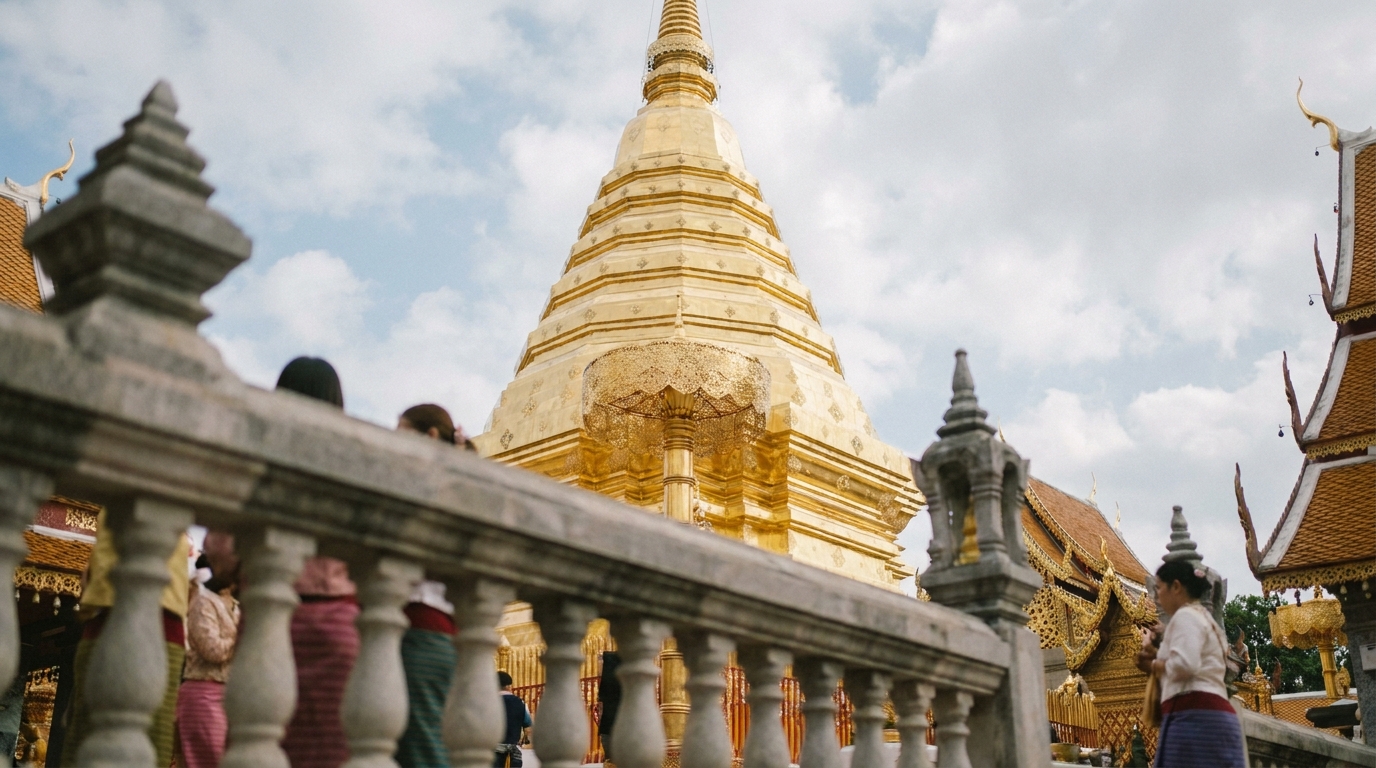
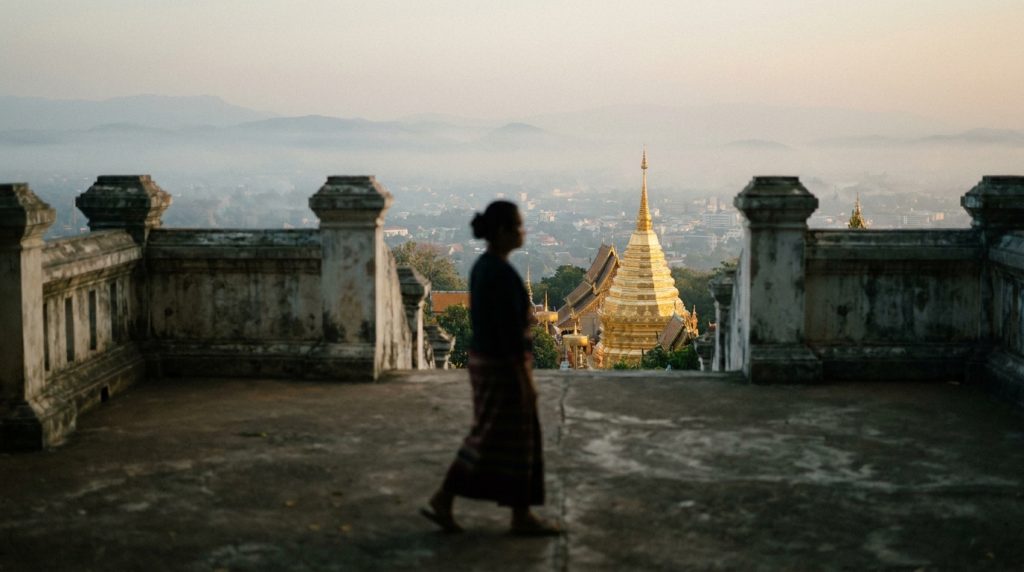
Wat Phra That Doi Suthep is the defining landmark of Chiang Mai — a 14th-century hilltop temple that sits 1,073 meters above sea level with a golden chedi visible from the city below. Entry costs 50 THB ($1.40 USD), and the songthaew shared taxi from Huay Kaew Road runs about 60 THB ($1.70 USD) each way.
Plan 1.5-2 hours and arrive before 9 AM to beat tour groups (Tourism Authority of Thailand, 2025).
The 309-step Naga staircase leads up to a terrace with panoramic city views. Dress modestly — shoulders and knees covered — and remove shoes before entering the main shrine. A free tram is available for visitors who need it. We recommend booking a guided tour through GetYourGuide for context on the temple’s Lanna Buddhist history.
2. Spend a Day at an Ethical Elephant Sanctuary
Related: Da Nang travel guide.
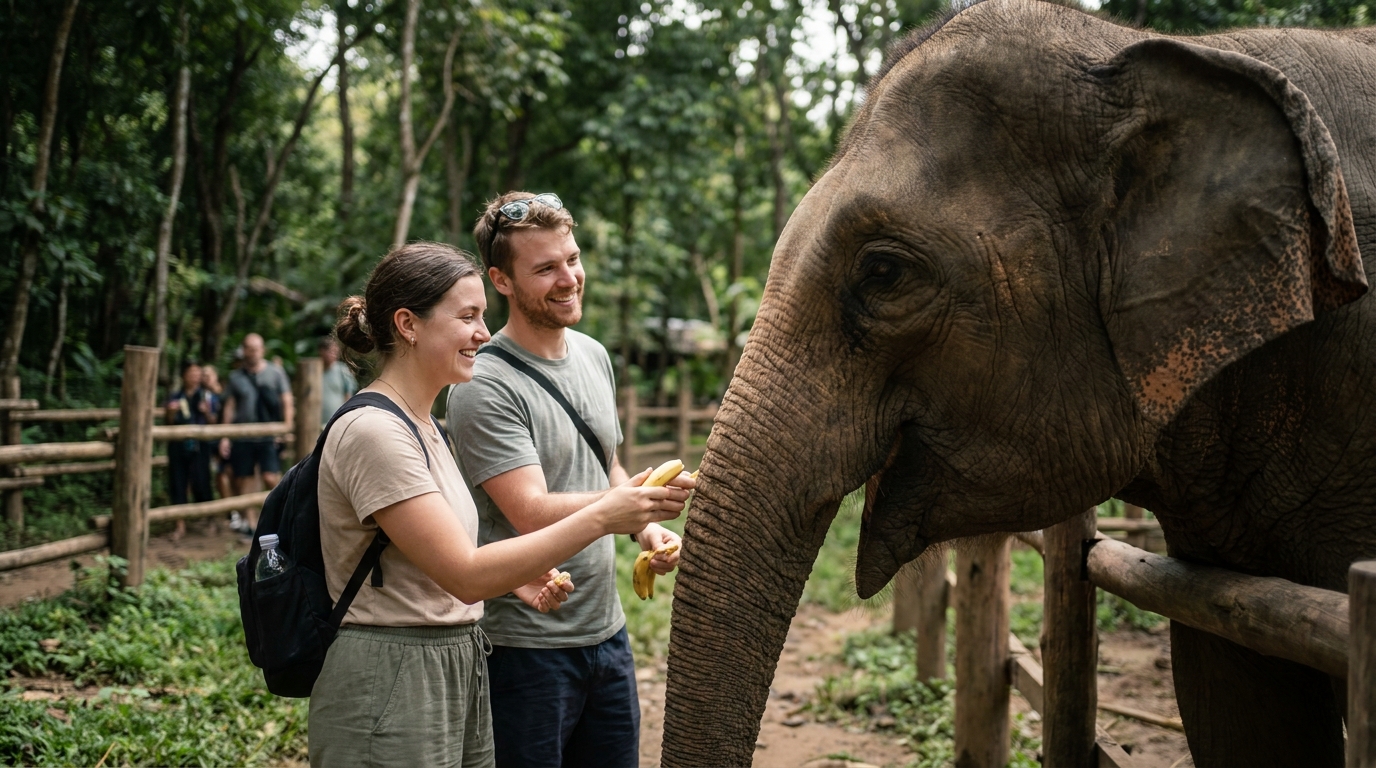
Chiang Mai is the closest major city to Thailand’s elephant country, and ethical sanctuaries allow close interaction without riding or performance shows. Elephant Nature Park (ENP) charges $80-$120 USD for a full-day program that includes feeding, bathing, and guided walks with rescued elephants. ENP cares for over 85 elephants on a 250-acre reserve in Mae Taeng Valley, 60 km from Chiang Mai (ENP, 2025).
Other reputable sanctuaries include Elephant Jungle Sanctuary ($75 USD) and MandaLao ($85 USD). Avoid any venue offering elephant rides, tricks, or painting performances.
3. Take a Thai Cooking Class
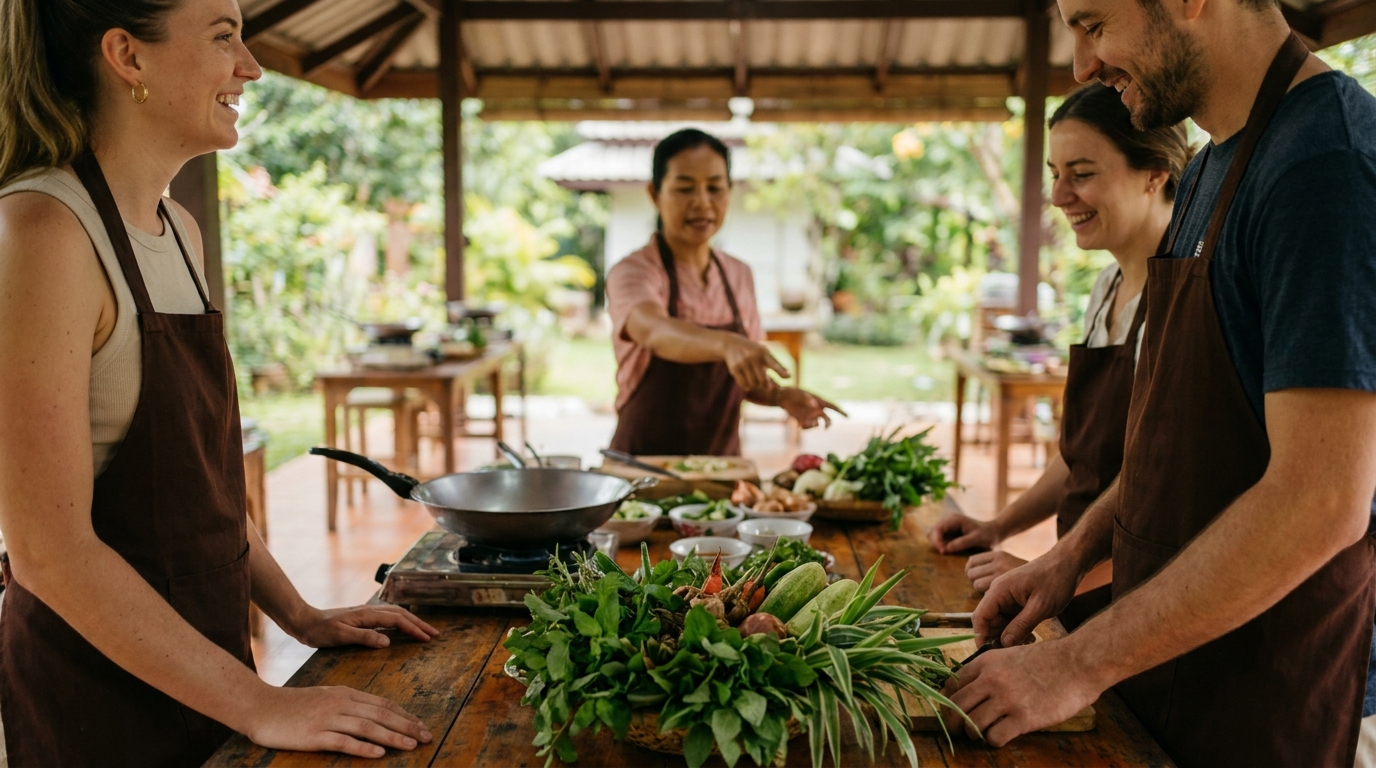
Learning to cook pad thai, green curry, and mango sticky rice is one of the most practical and enjoyable activities in Chiang Mai. Half-day classes run $30-$45 USD and full-day programs cost $50-$65 USD at top schools. Chiang Mai Thai Cookery School, established in 1993, is the oldest in the city and teaches 5-7 dishes per session including a market visit (CMTCS, 2025).
Other well-regarded options include Asia Scenic Thai Cooking School ($35-$40 USD) and Thai Farm Cooking School ($45 USD, held in a working organic garden 12 km from the city).
4. Explore the Old City Temples
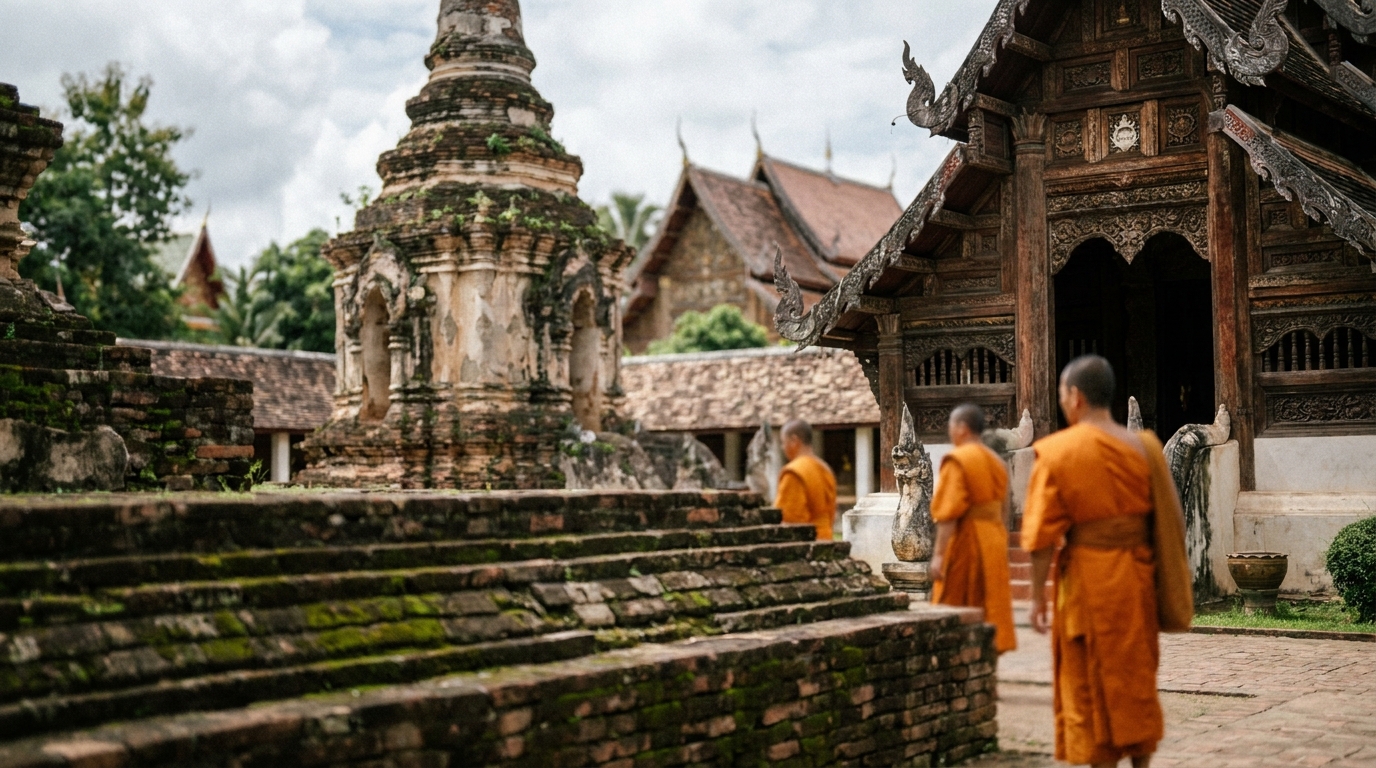
Chiang Mai’s Old City (Mueang Kao) contains over 30 temples within a 1.5 km square moat.
Wat Chedi Luang, built in 1391, houses a revered jade Buddha replica and charges no entrance fee; Wat Phra Singh (free entry, 20 THB donation suggested) holds the most sacred Buddha image in northern Thailand; Wat Chiang Man, the city’s oldest temple (1296 CE), is free to enter. A 3-hour self-guided walk hits all three comfortably.
Early morning (6-8 AM) is ideal for seeing monks collect alms along Ratchadamnoen Road — stay respectful and don’t interrupt the procession. Renting a bicycle from Spice Roads ($7/day) or using a songthaew ($1-$2 per trip) makes temple-hopping efficient.
5. Browse Chiang Mai’s Night Markets
Related: hidden gems in Chiang Mai.
Night markets are the social heartbeat of Chiang Mai evenings. The Sunday Walking Street on Wualai Road (6 PM-midnight) stretches 900 meters and draws 8,000-10,000 visitors with handicrafts, silverwork, and street food. The Saturday Night Bazaar on Wualai is smaller but less touristy. The Chiang Mai Night Bazaar (nightly, Changklan Road) caters more to shoppers seeking branded goods and souvenirs.
Nimman Night Market near Nimmanhaemin Road suits younger travelers and has better food-court options at 40-80 THB ($1.10-$2.25 USD) per dish. Budget 200-400 THB ($5.60-$11.20 USD) for a full street food dinner with drinks. Bargaining is normal but keep it good-humored — opening offer at 60-70% of asking price is standard.
6. Trek in Doi Inthanon National Park
Doi Inthanon, Thailand’s highest peak at 2,565 meters, lies 90 km southwest of Chiang Mai and offers one of the best single-day nature experiences in the country. The park entry fee is 300 THB ($8.40 USD) for foreigners; guided day tours from the city are available on GetYourGuide and typically include the twin chedis (Naphamethanidon and Naphaphonphumisiri), Wachirathan Waterfall, and the summit.
Temperature at the summit averages 15-18 C year-round, so pack a light layer. The best waterfall flow is October-December. Birdwatchers count this among Asia’s top sites — over 380 bird species have been recorded (DNWP, 2024). The park is about a 1.5-hour drive from Chiang Mai, making it a viable self-drive day trip with a rented scooter ($8-$12/day).
7. Attend a Muay Thai Match or Class
Chiang Mai has a thriving Muay Thai scene ranging from stadium fights to beginner training camps. Kalare Night Bazaar and Thaphae Boxing Stadium host matches 2-3 nights per week, with tickets at 400-600 THB ($11-$17 USD) for ringside. Fights run about 2 hours and include 4-6 bouts. The atmosphere is genuine — these are not staged tourist shows but sanctioned bouts (WBC Muay Thai Thailand, 2024).
For training, camps like Lanna Muay Thai and Santai Muay Thai offer drop-in sessions from $15 USD per 2-hour class or week-long packages from $180 USD including training twice daily. A beginner session teaches stance, basic kicks, and padwork — no experience needed.
8. Rent a Scooter and Ride the Mae Hong Son Loop
The Mae Hong Son Loop is a 600 km mountain circuit starting and ending in Chiang Mai, passing through Pai, Mae Hong Son, and Mae Sariang. Serious riders complete it in 3-5 days; a truncated version to Pai and back (180 km each way) takes 2 days. Scooter rental in Chiang Mai runs $8-$15 USD/day from shops on Moon Muang Road.
An international driving permit is technically required, and Route 1095 to Pai has 762 curves — it is genuinely challenging. Stick to daylight hours and fill up at every petrol station as gaps between stations exceed 50 km in places. Travel insurance that covers motorbike riding is essential.
9. Shop and Eat at Warorot Market (Kad Luang)
Warorot Market (locally called Kad Luang) is Chiang Mai’s oldest and largest public market, operating since 1910. The four-story building plus adjacent lanes sell everything from northern Thai sausages (sai ua, 60-80 THB per pack) to silk fabric, dried longan, and raw herbs. Ground floor vendors open from 4 AM; peak activity runs 7 AM-noon.
We recommend arriving hungry — khao soi (northern Thai coconut curry noodle soup) costs 60-70 THB ($1.70-$2 USD) from stalls near the building’s north entrance, and no bowl in the city comes cheaper or more authentic. The adjacent Ton Lam Yai flower market stays open 24 hours with wholesale-quality blooms at retail prices.
10. Visit the Chiang Mai Night Safari
Related: getting to Chiang Mai.
The Night Safari is a 142-hectare wildlife park 12 km south of the city and one of Thailand’s most-visited after-dark attractions with 1.8 million annual visitors (DNP, 2024). Three zones — Predator Zone, Savanna Safari, and Jaguar Trail — are accessed on foot or tram. Entry is 800-1,000 THB ($22-$28 USD) for adults; trams run every 20 minutes after 7 PM.
The park houses 120 species including white tigers, giraffes, and tapirs. An animal show runs three times nightly (free with entry). Book tickets in advance online to skip queues on weekends when the park draws 3,000+ visitors. Families with children rate this among the top Chiang Mai activities according to TripAdvisor’s 2025 Travelers’ Choice data.
11. Take a Bamboo Rafting and Jungle Trek
Half-day and full-day bamboo rafting trips down the Mae Tang or Mae Wang rivers combine gentle whitewater with village visits and elephant encounters. Mae Tang River tours cost $25-$40 USD and run from October through May when water levels are safe. Most operators include lunch, transport from Chiang Mai, and a short jungle walk (Chiang Mai Adventure, 2025).
This activity suits most fitness levels — the rafting itself is low-grade, and jungle walks are 1-2 km on gentle terrain. Wear shoes you don’t mind getting wet. Combined elephant-sanctuary-plus-rafting day tours can be booked through GetYourGuide.
12. Explore Nimmanhaemin Road (Nimman)
Nimmanhaemin Road is Chiang Mai’s creative district — a walkable strip of independent coffee shops, galleries, concept stores, and restaurants that grew up around Chiang Mai University. The best blocks run from Soi 1 to Soi 17 and reward a leisurely 2-3 hour afternoon stroll. Average coffee at a specialty cafe costs 80-120 THB ($2.20-$3.40 USD), competitive with Bangkok’s specialty scene.
Maya Mall at the north end of Nimman anchors the district with a cinema, food court (40-80 THB per dish), and an H&M. One Nimman plaza at the south end hosts weekend pop-up markets. Evening is the best time to visit — terrace restaurants like Locus and Ristr8to fill up by 7 PM. Accommodation in the Nimman area averages $45-$80/night on Agoda for mid-range options.
13. Do a White Water Rafting Day Trip
The Mae Taeng River offers Class III-IV rapids suitable for adventure travelers from November through May, with peak flow in November-December. Full-day tours cost $35-$50 USD and include transport from Chiang Mai, equipment, lunch, and 10-13 km of rafting with 7-8 distinct rapids. Operators are required to hold ATPCO safety certification (TAT Northern Office, 2025).
Minimum age is typically 10 years; strong swimmers preferred but life jackets and helmets are provided. Combined white-water-rafting-and-elephant-sanctuary day tours run $75-$95 USD and are bookable through GetYourGuide. The drive to the put-in point takes about 1 hour from the Old City.
14. Attend a Traditional Lanna Khantoke Dinner
A khantoke dinner is a northern Thai tradition where diners sit on low cushions around a carved teak table (the khantoke) and share an array of local dishes including nam prik ong (pork chili dip), kaeng hang le (Burmese-style pork curry), and sticky rice. The Old Chiang Mai Cultural Center hosts nightly khantoke dinners at 580 THB ($16.20 USD) including traditional dance performances (OCCC, 2025).
Performance runs 7-10 PM and showcases northern Thai, Lanna, and hill tribe dances. The dinner is tourist-oriented but the food quality is genuine and portions generous. Dress code is relaxed. Book 24 hours ahead via the venue’s website or through hotel concierge — capacity is 500 and it fills most evenings in high season.
Find your Chiang Mai hotel on the map
Live prices from Booking & Airbnb — tap a pin to compare stays around the Old City and Nimman and beyond.
15. Stay in a Boutique Hotel in the Old City
Related: best hotels in Chiang Mai.
Staying inside or immediately adjacent to the Old City moat puts you within walking distance of temples, markets, and restaurants. Boutique guesthouses on Ratchadamnoen Road and Phra Pokklao Road cost $35-$70 USD/night on Booking.com for well-reviewed options with heritage architecture and private bathrooms. Popular picks include Tamarind Village ($120-$160/night) and Rachamankha Hotel ($180-$230/night) for upscale travelers.
Budget travelers will find clean guesthouses at $15-$25 USD/night around Moonmuang Road. We recommend using Agoda for comparison — they often have better rates on Thai properties than international platforms, especially for last-minute bookings.
16. Get a Traditional Thai Massage
Thai massage in Chiang Mai costs a fraction of prices elsewhere: 1-hour traditional massage runs 200-300 THB ($5.60-$8.40 USD) at reputable parlors, versus $40-$80 USD in Bangkok hotels. Chiang Mai has hundreds of licensed massage shops — look for outlets affiliated with the Chiang Mai Vocational School or those displaying a formal license from the Ministry of Public Health.
The Old City is saturated with options on every block. We rate Let’s Relax (150-250 THB for foot massage) and Fah Lanna Spa ($25-$40 USD for full Thai massage packages) as reliable mid-range choices. Avoid street-front spots with aggressive touts. A 2-hour combination massage (Thai massage + herbal compress) at mid-range venues runs 500-700 THB ($14-$20 USD).
17. Visit Baan Tawai Handicraft Village
Baan Tawai, 15 km south of Chiang Mai, is Thailand’s largest handicraft manufacturing village with over 200 workshops and retail outlets. Items range from teak furniture ($50-$500+ USD) to hand-carved wooden elephants ($5-$30 USD), lacquerware, and cotton textiles. Factories welcome visitors — watch artisans carve, paint, and assemble pieces in real time at no charge.
Budget 2-3 hours for a thorough visit and bring baht cash (ATMs on site). International shipping is available through most larger shops with costs starting around $80 USD for a medium box to the US or Europe. A songthaew from the Old City costs 100-150 THB ($2.80-$4.20 USD) one-way, or rent a scooter to explore at your own pace.
18. Connect with Hill Tribe Culture
Several hill tribe villages within 60-100 km of Chiang Mai welcome visitors — the Hmong markets at Doi Pui (near Doi Suthep), Karen villages in Mae Wang district, and Akha settlements in Chiang Dao area are the most accessible. Responsible operators include Mirror Foundation and Chiang Mai Trekking which operate community-tourism programs where 70-80% of fees go to the villages (Mirror Foundation, 2025).
Full-day hill tribe treks with homestay options cost $45-$80 USD. Avoid tours that treat villages as photo opportunities without cultural consent. The Mirror Foundation runs a 2-day cultural immersion program for $65 USD including accommodation in a village guesthouse.
19. Take a Day Trip to Chiang Rai
Related: best day trips from Chiang Mai.
Chiang Rai, 3 hours north of Chiang Mai by bus (130-150 THB/$3.65-$4.20 USD), is home to the White Temple (Wat Rong Khun), Blue Temple (Wat Rong Suea Ten), and Black House (Baan Dam). Entry to the White Temple is 100 THB ($2.80 USD); Blue Temple and Black House are free.
A round-trip bus from Arcade Bus Terminal costs 260-300 THB ($7.30-$8.40 USD) and buses run hourly 6 AM-5 PM (Arcade Bus Terminal schedule, 2025).
Joining an organized day tour from Chiang Mai that includes all three sites plus a stop at Doi Tung Royal Villa saves planning time; compare options on GetYourGuide. Private minivan tours cost $80-$120 USD for groups up to six people and allow more flexibility with timing.
20. Learn Meditation at a Temple
Several temples in Chiang Mai offer free or donation-based meditation retreats for foreigners. Wat Suan Dok’s Monk Chat program runs Monday, Wednesday, and Friday evenings (5-7 PM) and pairs visitors with English-speaking monks for informal discussion and seated meditation — free of charge (Wat Suan Dok, 2025).
Wat Umong, set in a forest compound 2 km west of the Old City, offers weekend meditation retreats from 200 THB ($5.60 USD) per session.
Bring modest clothing (long pants, covered shoulders), a small donation of 50-100 THB, and an open mind. The Northern Insight Meditation Center runs structured 3-day courses for $60 USD including accommodation in simple kuti (monk cells). Pre-registration required; minimum 10 days advance booking recommended for longer programs.
21. Try Local Food Beyond Pad Thai
Related: best food in Chiang Mai.
Chiang Mai’s northern Thai cuisine is distinct from central Thai food and worth exploring intentionally. Key dishes include khao soi ($1.70-$2.50 USD), sai ua northern sausage ($1-$1.50 USD for 2-3 links), larb moo (minced pork salad, $2-$3 USD), and khao niao mamuang (mango sticky rice, $1.50-$2 USD).
Hele restaurant on Nimman Soi 7 and Huan Phen near the Old City’s west gate are widely cited as the best value northern Thai restaurants (Michelin Guide Bangkok + Phuket + Chiang Mai 2025).
For street food density, the area behind Warorot Market (Ton Payom Market, open 6 AM-noon) offers the lowest prices and most authentic setting. A complete breakfast here costs 50-80 THB ($1.40-$2.25 USD) for rice soup, sai ua, and coffee. We recommend pairing a street food walk with a cooking class for full culinary context.
22. Go Rock Climbing at Crazy Horse Buttress
Crazy Horse Buttress, 35 km east of Chiang Mai near Mae On, is northern Thailand’s best sport climbing area with 100+ bolted routes ranging from 5.7 to 5.13c. Half-day guided intro sessions cost $35-$50 USD including gear; experienced climbers can hire a local guide for $25 USD and rent equipment separately.
The crag is accessible by scooter or songthaew (80-100 THB one way) and is open year-round with the best conditions November-April (Chiang Mai Rock Climbing Adventures, 2025).
Beginners will find 15-20 routes suitable for their level in the 5.7-5.10a range on quality limestone. The area has basic facilities including a small cafe and toilets. Sunrise wall routes catch morning light perfectly — arrive by 7:30 AM for the best experience. Full-day tours including transport and 2 climbers from $90 USD via GetYourGuide.
23. Buy a Local SIM or eSIM
Staying connected in Thailand is cheap and easy. An Airalo Thailand eSIM costs $5-$12 USD for 1-7 days with 1-5 GB data — usable immediately after airport arrival. Local DTAC and AIS SIM cards at Chiang Mai Airport cost 299-399 THB ($8.40-$11.20 USD) for 30 days unlimited calls and 15-30 GB data (AIS, 2025).
eSIMs are ideal if your phone supports dual SIM, since you keep your home number active. Airalo works with all major Thai carriers and activates in minutes via their app — no physical SIM swap needed. This is especially useful if you are transiting between multiple countries in Southeast Asia, as Airalo offers regional ASEAN eSIM packages from $15 USD for 10 days across 10 countries.
24. Visit Mae Sa Valley for Waterfalls and Gardens
Mae Sa Valley, 20 km north of Chiang Mai on Route 1096, offers a concentrated day-trip destination with 10-tier Mae Sa Waterfall (entry 100 THB/$2.80 USD), the Royal Project Queen Sirikit Botanic Garden ($8.40 USD entry), and several orchid farms ($2-$4 USD entry). The 60 km Queen Sirikit Botanic Garden covers 6,500 acres of tropical and temperate greenhouse exhibits and is open 8:30 AM-5 PM daily (RSQBG, 2025).
Weekdays are significantly less crowded than weekends. Rent a scooter from Chiang Mai and ride the valley in half a day, or join a combination tour on GetYourGuide that includes the garden, waterfall, and a butterfly farm. The valley is at 700-1,000 m elevation and 3-5 C cooler than the city — a welcome break June-October.
25. Catch the Yi Peng Lantern Festival
Yi Peng (also written Yee Peng) is held on the full moon of the second lunar month, falling in November, and is the most photographed event in all of Southeast Asia. Thousands of paper lanterns (khom loi) are released simultaneously into the night sky over the Old City and Ping River.
The main public ceremony at Taphae Gate is free; the Dhutanka Yi Peng ceremony organized by the CAD organization is ticketed at $35-$50 USD and offers more structured lantern releases (CAD Yi Peng Foundation, 2025).
Exact dates shift annually: 2026 falls on November 11. Book accommodation 3-4 months ahead as every property in Chiang Mai fills at inflated rates during this week. Hotels on the Ping River waterfront charge 2-3x normal rates — use Booking.com price alerts to book as early as August. This is genuinely the single most magical event we have witnessed in a decade of Southeast Asia travel.
| Activity | Cost (USD) | Best Time | Book Via |
|---|---|---|---|
| Doi Suthep Temple | $1.40 entry + $1.70 songthaew | Year-round (before 9 AM) | Walk-in / GetYourGuide tour |
| Elephant Nature Park | $80-$120 | Nov-Feb (peak), year-round | GetYourGuide / ENP direct |
| Thai Cooking Class | $30-$55 | Year-round | GetYourGuide / school direct |
| Doi Inthanon Day Trip | $35-$55 (tour) | Oct-Feb (waterfalls) | Online |
| Muay Thai Match | $11-$17 | Year-round (2-3x/week) | Walk-in / online |
| Mae Sa Valley Trip | $35-$50 (tour) | Year-round (weekdays) | Online |
| Yi Peng Festival | Free-$50 | November (full moon) | CAD / Booking.com hotel |
Frequently Asked Questions
How many days do you need in Chiang Mai?
Most travelers find 4-6 days enough to cover the highlights comfortably — temples, one day trip (Doi Suthep or Doi Inthanon), an elephant sanctuary, and evening markets. Budget an extra day if you plan to add white water rafting, a cooking class, or a Chiang Rai day trip. Week-long visits suit those combining trekking with slower cultural exploration.
What is the best time of year to visit Chiang Mai?
November through February is peak season with cool, dry weather and average highs of 28-32 C. March through May is hot and smoky (agricultural burning season) with air quality indices frequently above 150 AQI in March-April. June through October brings rain and lush greenery with lower accommodation prices — a valid tradeoff if you are flexible on weather.
Is Chiang Mai safe for solo travelers?
Chiang Mai is consistently ranked among Asia’s safest cities for solo travel. The Old City tourist zone has high foot traffic and good street lighting. Standard precautions apply: watch drinks in bars, use metered taxis or Grab app over tuk-tuks for fixed pricing, and secure valuables in accommodation safes. The US State Department rates Thailand at Level 1 (Exercise Normal Precautions) as of 2025.
How do I get from Chiang Mai Airport to the Old City?
Metered taxi from Chiang Mai International Airport (CNX) to the Old City costs 130-160 THB ($3.65-$4.50 USD) plus a 50 THB airport surcharge. The trip takes 15-25 minutes depending on traffic. Grab rides run 120-150 THB ($3.40-$4.20 USD) and can be booked from within the arrival hall. Red songthaew shared taxis charge 50-80 THB per person but require negotiation.
What is the local currency and can I use cards?
Thailand uses the Thai Baht (THB). The exchange rate in mid-2026 runs approximately 35-36 THB per 1 USD. Most hotels, malls, and larger restaurants accept Visa and Mastercard; street markets and small restaurants are cash-only. ATMs charge 220-250 THB ($6.20-$7 USD) per foreign transaction — withdraw larger amounts less frequently. Wise or Revolut debit cards avoid foreign ATM fees entirely.
Is it worth hiring a guide in Chiang Mai?
A local guide adds significant value for temple visits (context on Lanna Buddhism), cooking classes (ingredient sourcing), and hill tribe treks (cultural sensitivity). For self-guided temple-hopping in the Old City or night market browsing, guides are unnecessary. Private guided day tours cost $40-$80 USD through GetYourGuide. Group tours are cheaper at $20-$40 USD but move at a fixed pace.
Can I rent a motorbike without an international license?
Technically, an international driving permit (IDP) endorsed for motorcycles is required. In practice, rental shops rarely verify this. However, Thai police set up checkpoints specifically targeting foreign riders, and fines run 500-1,000 THB ($14-$28 USD). More critically, most travel insurance policies void motorbike coverage without a valid IDP. Obtain one before travel — it costs $20 USD from AAA in the US and takes 1-2 business days.
Plan Your Chiang Mai Trip
Related: Chiang Mai packing list.
Chiang Mai in 2026 remains one of Southeast Asia’s best-value, highest-variety destinations. Whether you stay three days or three weeks, the combination of Lanna temple culture, natural landscapes, authentic food, and adventure activities is hard to match anywhere in the region.
Start by locking in your accommodation early if traveling November-February or during Yi Peng — use Booking.com for the Old City area or Agoda for Nimman district hotels. Book your elephant sanctuary slot at least two weeks out, grab an Airalo eSIM before you land, and leave room in your schedule for spontaneous temple walks and street food discoveries. Chiang Mai rewards the traveler who slows down.