Koh Tao Diving Tours and Courses: 7 Ways to Dive the Island
By TravelguidestipUpdated 6 min readHow we earn
Hotel buttons open Stay22 (Booking.com, Agoda and others) and tour buttons open GetYourGuide. We may earn a commission at no extra cost to you.
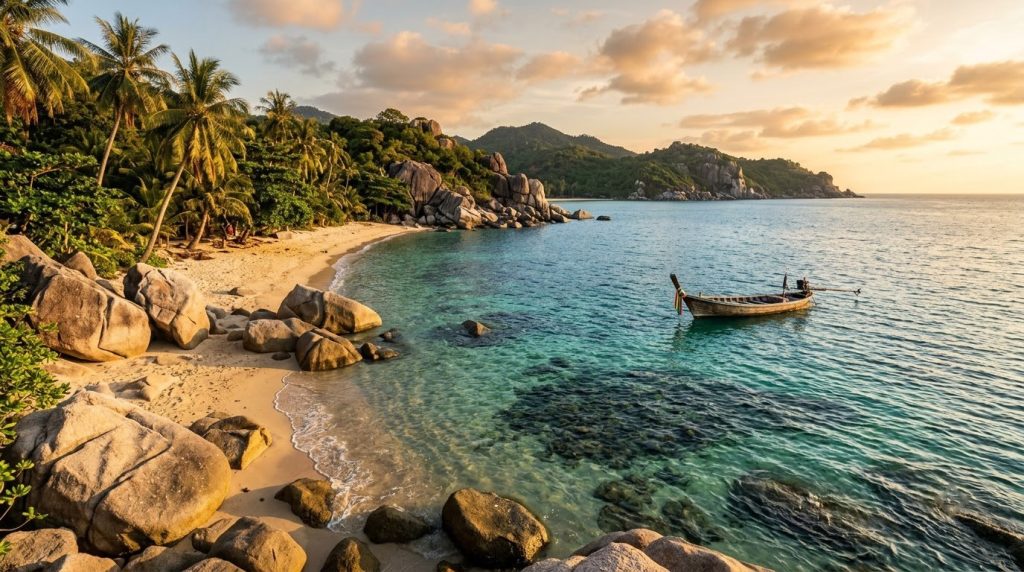
Koh Tao diving starts with a 2-4 day Open Water course, or a first-time try dive priced from about THB 2,500 on 2026 school guides. Certified divers can join fun dives from around THB 800 per dive, and Sail Rock and Chumphon Pinnacle cost more. Below are 7 options, who each suits, and who should skip diving here.
| Tour | Duration | From (as listed) | Best for |
|---|---|---|---|
| Discover Scuba Diving (try dive) | THB 2,500 | First-timers, no commitment | |
| PADI or SSI Open Water course | 2-4 days | THB 11,000 | Learning to dive properly |
| Advanced Open Water course | THB 11,000 | Newly certified divers | |
| Fun dives for certified divers | Per dive trip | THB 800 | Qualified divers, flexible plans |
| Sail Rock dive trip | – | Experienced divers, big fish | |
| Chumphon Pinnacle and whale shark trip | – | Advanced divers | |
| Snorkel trip | – | Non-divers, families |
Prices above are the low end of THB ranges quoted in a 2026 Koh Tao dive-school budget guide. They are not converted to USD, and schools set their own rates.
Planning Koh Tao diving from Samui
Many Australians reach Koh Tao as a side trip from the Gulf islands. If you are still choosing a base, our Koh Samui vs Koh Tao comparison covers the trade-offs for divers and non-divers.
The Koh Samui travel guide covers the wider Gulf of Thailand, and best day trips from Koh Samui lists dry alternatives for family members who would rather stay out of the water.
The 7 options
1. Discover Scuba Diving, the try dive
Discover Scuba Diving is the no-certification entry point. PADI describes it as a way to try scuba for the first time in a pool or calm water environment, with a PADI Professional providing gear and explaining basic skills.
It suits anyone nervous about committing to a full course.
The downside is that it does not certify you. You cannot dive independently afterwards, and you stay with the instructor. A 2026 budget guide lists try dives at THB 2,500-3,500; confirm inclusions with the school.
Check availability on GetYourGuide →
2. Open Water Diver course (PADI or SSI)
This is the course most visitors come for. PADI says you can learn to dive in as little as 2-4 days, and a 2026 Koh Tao budget guide lists schools at THB 11,000-12,500, including certification and full gear.
Individual schools price differently, so ask exactly what is included.
PADI’s course page lists the minimum age as 10, with 10-14 year olds earning a Junior certification. It also requires being able to swim, which the instructor tests with a 200 metre swim without aids (or 300 metres with mask, fins and snorkel) and a 10 minute float or tread. You must also be medically fit to dive.
The honest downside is time. Four days of study and water sessions eat into a short trip, so book the course for the start of your stay.
Check availability on GetYourGuide →
3. Advanced Open Water course
This continuation course suits divers who already hold an entry-level certification. The budget guide lists it at THB 11,000-12,000 for 5 dives.
It suits divers who want to reach deeper sites such as Chumphon Pinnacle, which dive guides call an advanced site. Check the school’s own page for prerequisites.
The downside is that it is another multi-day commitment. If you only want deeper dives on one visit, ask whether an advanced-level guided trip is cheaper.
Check availability on GetYourGuide →
4. Fun dives for certified divers
Fun dives are guided boat dives for people who already hold a certification. A 2026 guide lists single dives at THB 800-1,200 including gear, tank and guide, and packages of 6 to 20 dives at THB 3,500-15,000.
Packages lower the price per dive.
The downsides are crowding and cost swings: the same guide notes that February to April, the high season, means more divers and higher prices. Bring proof of certification and check when you last dived, since many schools ask for a refresher after a long gap.
Check availability on GetYourGuide →
5. Sail Rock dive trip
Sail Rock sits between Koh Tao and Koh Phangan. SSI describes it as suitable for all levels, with depths from 5-40 metres and a chimney swim-through running from 5 to 18 metres. Fish schools and moray eels are common, and whale sharks appear on what SSI calls lucky days.
It suits divers with some experience who want a standout site. Trips cost more than inshore fun dives, though the budget guide gives no figure.
The downside is that it is a longer boat ride to an exposed open-water rock. Sea conditions can change plans, so keep a spare day.
Check availability on GetYourGuide →
6. Chumphon Pinnacle and whale shark trips
Chumphon Pinnacle is a deep, advanced site with granite pinnacles at 18-30 metres, according to SSI, and currents can be strong. Barracuda and trevally are seen here, and sometimes whale sharks.
Do not book it purely for whale sharks. A local school says there is no specific whale shark season because they are wild animals, and no guarantees apply. It reports sightings as more common from February to around May, and other operators give slightly different windows.
It suits advanced divers who accept that a sighting is a bonus.
Check availability on GetYourGuide →
7. Snorkel trip
Not everyone in a group wants tanks. Snorkel trips are the practical choice for non-divers, young children and anyone who is not medically cleared to dive. Compare current operator listings for price.
The downside is limited depth and variety. You see reef fish, not the pinnacles and deeper sites that divers visit.
Who should skip diving on Koh Tao
Medical fitness comes first. PADI lists being medically fit as a requirement, and schools ask you to complete a medical questionnaire. Conditions such as asthma, heart problems or ear and sinus problems can mean seeing a doctor before you dive.
Think carefully about flights. DAN’s guidelines suggest a minimum 12 hour surface interval before flying after a single no-decompression dive, and at least 18 hours after multi-day repetitive diving. For compulsory-decompression dives it says substantially longer. DAN notes its trials used resting volunteers in a chamber, so longer waits may be wise. Plan your last dive well before any flight home.
Season and visibility matter too. SSI says conditions are typically best from March to September, with visibility often over 20 metres. The October to December monsoon can bring rain and rough seas, although diving is still possible on the leeward side. Operators quote differing visibility figures by month, so ask your school for current conditions.
If you cannot spare 2-4 days or dislike the water, try a try dive or snorkel trip instead.
Where to stay
Koh Tao is compact, so choose by your dive school and beach. Stays near your school suit people on courses, and quieter bays suit couples. If you are basing yourself on Samui, read where to stay in Koh Samui first.
Related guides: private pool villas in Koh Samui.
Find your Koh Tao, Thailand hotel on the map
Live prices from Booking, Airbnb and more — move the map or change dates to compare stays across Koh Tao, Thailand.
Frequently Asked Questions
How long does the Koh Tao Open Water course take?
PADI says you can learn to dive in as little as 2-4 days. A 2026 Koh Tao budget guide gives 2-4 days in its table, though its FAQ says 3-4. Ask the school for its exact schedule before you book.
How much does Koh Tao diving cost?
A 2026 school budget guide lists try dives at THB 2,500-3,500, Open Water courses at THB 11,000-12,500 and fun dives at THB 800-1,200. Some schools publish lower course prices, so compare inclusions such as gear and certification fees.
Can I fly home after diving?
DAN suggests at least 12 hours after a single no-decompression dive and 18 hours after repeated diving over several days. Longer is safer. Check the guidance with your school and your dive insurer.
When is the best time to dive Koh Tao?
SSI says March to September typically brings warm water and the best visibility. The October to December monsoon can mean rain and rough seas, though leeward diving continues.