How Many Days in Siem Reap Do You Really Need? (2026)
By TravelguidestipUpdated 8 min readHow we earn
Hotel buttons open Stay22 (Booking.com, Agoda and others) and tour buttons open GetYourGuide. We may earn a commission at no extra cost to you.
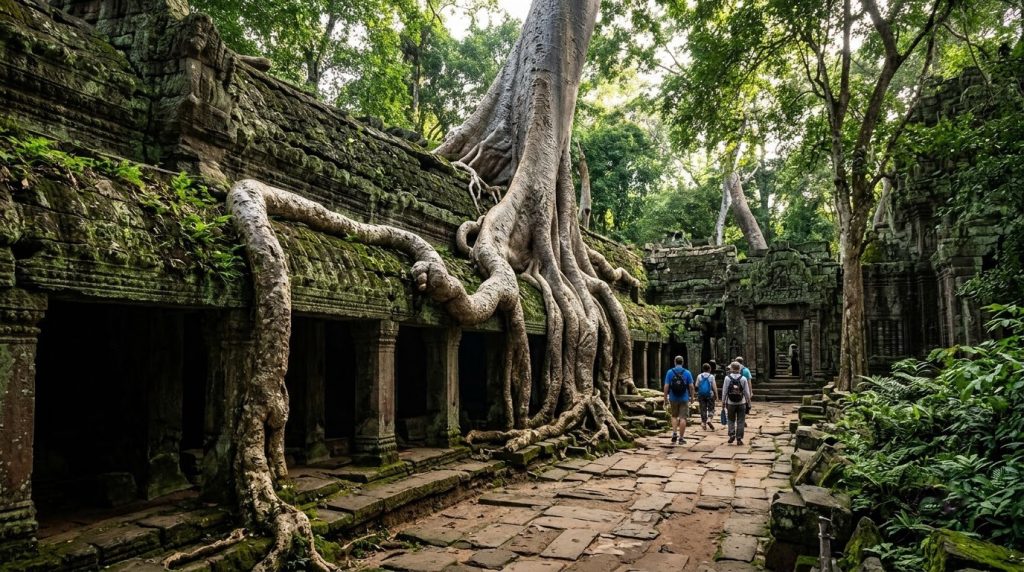
Three days in Siem Reap is the right answer for most travellers, because the 3-day Angkor pass (AUD 86 · USD 62) lets you spread the Small Circuit, the Grand Circuit and Banteay Srei across any 3 days within a week. Two days works if you only want the big three temples.
Add a fourth day for Phnom Kulen or the Tonle Sap floating villages, and a fifth if you are travelling in the April heat or the September downpours and need slower mornings.
| Trip length | Angkor pass to buy | What it realistically covers | Verdict |
|---|---|---|---|
| 1 day | 1-day, AUD 51 · USD 37 | Angkor Wat, Bayon, Ta Prohm at a sprint | Only if you are passing through |
| 2 days | 3-day, AUD 86 · USD 62 | Small Circuit plus Banteay Srei or Grand Circuit | Tight but workable |
| 3 days | 3-day, AUD 86 · USD 62 | Small Circuit, Grand Circuit, Banteay Srei | Best value for most |
| 4–5 days | 3-day or 7-day, AUD 100 · USD 72 | All of the above plus Kulen, Tonle Sap, rest time | Ideal for families and photographers |
| 6+ days | 7-day, AUD 100 · USD 72 | Beng Mealea, Koh Ker, a temple-free day or two | Temple enthusiasts only |
Why 3 days is the sweet spot
The answer comes down to how the official passes work. Angkor Enterprise, the only official seller, prices the 1-day pass at USD 37, the 3-day at USD 62 and the 7-day at USD 72. The 3-day pass is valid for any 3 days within 7, and the 7-day pass for any 7 days within 30. Temples open from 5am to 6:30pm.
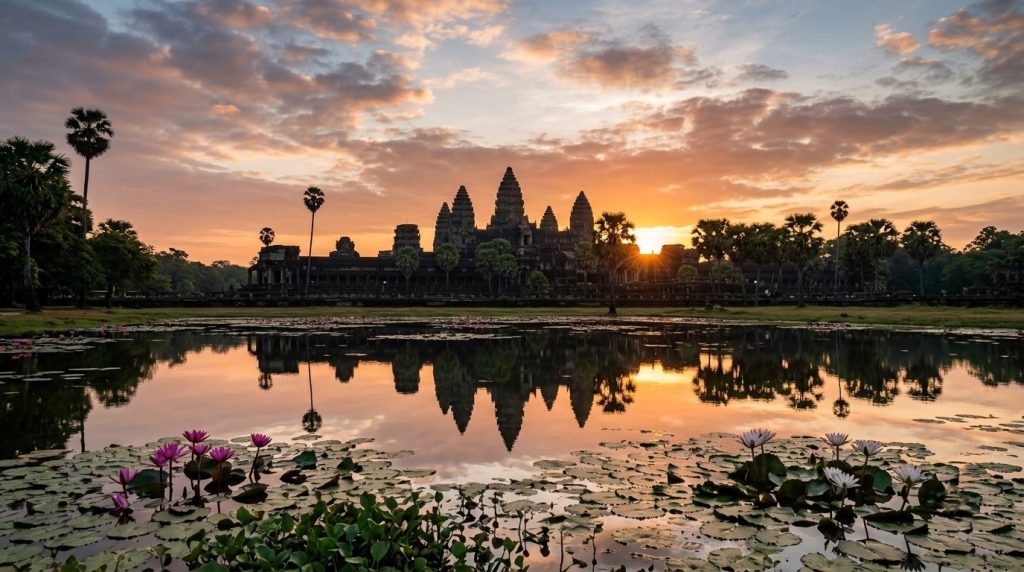
The moment you want a second temple day, the 3-day pass is cheaper than two singles. And because those days need not be consecutive, you can slot a pool day or a Kulen trip in the middle.
Three temple days also match the geography. The Small Circuit is roughly 17km and holds Angkor Wat, Angkor Thom (Bayon, Baphuon, the Terrace of the Elephants) and Ta Prohm. The Grand Circuit is roughly 26km and loops through Preah Khan, Neak Pean, Ta Som, East Mebon and Pre Rup.
Banteay Srei sits just over 30km from town and is covered by the Angkor pass. That is one clean day each. If you want those days mapped hour by hour, our 3-day Siem Reap itinerary with sunrise timings lays them out.
What each extra day actually buys you
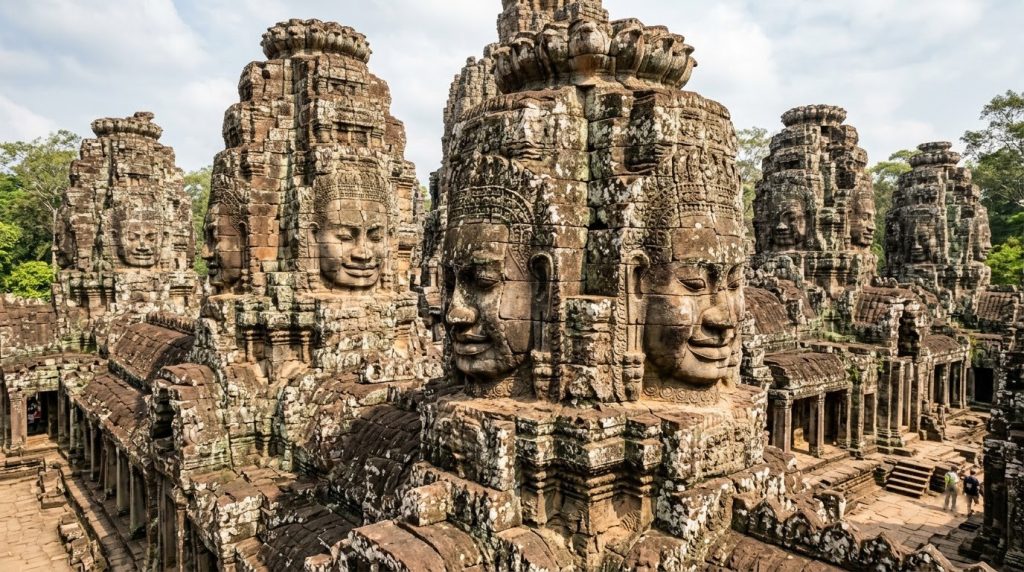
Day 1, the Small Circuit. Sunrise at Angkor Wat, Bayon’s stone faces before the tour buses, Ta Prohm’s strangler figs after lunch. It fills a full day on its own.
Day 2, the Grand Circuit. Quieter. Preah Khan is a maze of corridors you can almost have to yourself early, and Pre Rup is a sunset alternative to crowded Phnom Bakheng.
Day 3, Banteay Srei. The pink sandstone carvings are the finest in the park. Add Banteay Samre on the way back.
Day 4, Phnom Kulen or Tonle Sap. Kulen is about 48km out (roughly an hour’s drive or more) and needs its own ticket, AUD 28 · USD 20, which is not part of the Angkor pass. The floating village of Kampong Phluk, just over 30km away, is a half-day, with a boat ticket around AUD 28 · USD 20 plus a small community fee.
Day 5 and beyond. Beng Mealea (AUD 14 · USD 10 standalone) and Koh Ker (AUD 21 · USD 15) are long road trips into jungle ruins. Worth it for temple lovers, overkill for most.
Our guide to getting around Siem Reap by tuk-tuk, Grab and bicycle covers daily driver rates.
Heat and wet season change the maths
Siem Reap is hot all year, with average temperatures between 25°C and 31°C. April is the hottest month, averaging highs of 35°C, and by 11am in March to May the temples become an endurance test. The wet season runs from May to the end of October, and September and October are the wettest months.
In practice, the climate shortens your useful hours: the hot season pushes you into early mornings and late afternoons, and the wet season costs you afternoons to storms. Plan fewer temples per day and add one buffer day. With 7 days to use a 3-day pass, a washed-out afternoon costs you nothing.
The wet season has an upside. From roughly August to November the Tonle Sap lake is high, and Kampong Phluk’s flooded forest is at its best from August to early December. In March to May the water drops and the boat channels narrow. If the floating villages matter to you, a late-wet-season trip is the time to give them a day.
Who should not do Siem Reap in 1 day
A single day suits people on a quick overland hop from Bangkok and few others. You will spend it in the busiest temples at the busiest hours.
Think twice about a 1-day visit if:
– You are flying in from Australia. Expect to connect through a regional hub such as Bangkok, Singapore or Kuala Lumpur. Siem Reap Angkor International Airport is about 40–50km from town, a 45–50 minute drive, and the official shuttle costs AUD 11 · USD 8.
That transfer time alone eats half a day at each end. – You are travelling with kids. Children under 12 enter free with a passport, but small legs give out after two temples in the heat. – You want photos without crowds. Golden-hour light only happens twice a day.
Equally, a week of temples is too long for most first-timers. Use spare days for Kulen or the lake instead.
If you are watching costs, our Siem Reap travel budget breakdown shows what 3 versus 5 days costs in total once you add hotels, drivers and food.
Phnom Kulen: what the one-way climb actually involves
Getting up Phnom Kulen takes more planning than most of the other day-trip options in this guide.
The road climbing the mountain is steep enough that tuk-tuks cannot make the trip at all, so you need a car, a private driver or a tour van rather than the usual Siem Reap tuk-tuk; most operators quote the drive itself at around 1 to 1.5 hours each way from the centre of town, on top of time at the site.
Hikers who want to walk rather than drive can arrange a guided trek with a car dropping you partway, but check with a licensed operator before planning to hike the whole mountain independently, since trail conditions and park rules change.
Once at the top, the standard route runs past the 1,000 Lingas riverbed carvings, the reclining Buddha carved into a sandstone outcrop, and the waterfall, in roughly that order, with most day visits allowing an hour or so at each stop before the drive back.
Midday heat on the mountain is intense, so plan to be moving between stops in the morning and treat any time at the waterfall as a genuine swim break rather than a quick photo stop. Because the return drive eats a meaningful chunk of the day either way, Kulen pairs awkwardly with anything else scheduled for the same day.
If you are adding it to a 4- or 5-day Siem Reap trip, give it its own day rather than trying to combine it with a temple circuit or the floating villages.
Day trips further afield: Battambang and Sambor Prei Kuk
With six or more days in Siem Reap, two destinations outside the usual temple circuit are worth the longer drive.
Battambang, Cambodia’s second-largest city, sits about 162 km away, roughly a 3-hour bus ride with tickets around AUD 14 · USD 10 one way, making it a long but doable day trip or, better, an overnight stop if you want to see its French-colonial shophouses and the bamboo train without rushing back for a Siem Reap sunset.
Sambor Prei Kuk, a pre-Angkorian temple complex older than Angkor itself, sits near Kampong Thom town on the road toward Phnom Penh, a drive that tour operators generally price at about 3 hours each way.
The brick towers here predate the better-known sandstone temples around Angkor, and the site draws a fraction of the visitors, so you can expect to walk among the ruins largely alone even in high season.
Most day tours leave Siem Reap around 8am, stop in Kampong Thom on the way, and return by early evening, which makes it a full but manageable single day rather than an overnight trip.
Both destinations ask a lot of a short Siem Reap stay: budget a full day for either one, and treat them as a reason to extend a 5-day trip to 6 or 7 rather than something to squeeze into an already packed 3-day temple schedule.
Where to stay in Siem Reap
Siem Reap is compact, but these three areas suit different trips:
– Old Market and Pub Street. Walk to restaurants and the night market, with tuk-tuks waiting on every corner. Best for first-timers and short stays. Light sleepers should pick a street one or two blocks back. – Wat Bo and the riverside. East of the river, quieter, with boutique pool villas and good cafés, still walking distance to the Old Market.
Best for couples and 4+ day stays. – Charles de Gaulle Avenue (the road to the temples). Larger resorts and the shortest run to the Angkor ticket office and Angkor Wat sunrise. Best for families and early starters.
For a fuller breakdown of each neighbourhood, see our guide to where to stay in Siem Reap by area.
Find your Siem Reap hotel on the map
Live prices from Booking, Airbnb and more — move the map or change dates to compare stays across Siem Reap.
Frequently Asked Questions
Is 2 days enough for Siem Reap?
Two days is enough for the essentials if you are organised. Do the Small Circuit (Angkor Wat, Bayon, Ta Prohm) on day one, then either the Grand Circuit or Banteay Srei on day two. Buy the 3-day pass, not two 1-day passes, since it is cheaper and gives you a spare day within a week.
Is the 7-day Angkor pass worth it?
Only if you will visit temples on four or more days. It costs AUD 100 · USD 72 against AUD 86 · USD 62 for the 3-day pass, and stays valid for 30 days. It suits slow travellers, photographers and people returning to Siem Reap after a side trip.
Is Phnom Kulen included in the Angkor pass?
No. Phnom Kulen National Park charges foreigners a separate AUD 28 · USD 20 entry fee, with no child discount. It is about 48km from town, so it needs most of a day once you add the waterfall, the reclining Buddha and the riverbed carvings.
What is the best month to visit Siem Reap?
November to February is the most comfortable, after the rains and before the heat. April is the hottest month, with average highs of 35°C. September and October are the wettest. Late wet season is still worthwhile because the Tonle Sap floating villages are at their best when the lake is high.
Can I see Angkor Wat in half a day?
You can see Angkor Wat itself in a morning, but that leaves Bayon and Ta Prohm for the afternoon heat. Start at the 5am opening for sunrise, move straight to Bayon and Ta Prohm while it is still cool, and you can finish the Small Circuit before the worst of the midday sun.