Disclosure: Some links in this guide are affiliate links. If you book or buy through them, we may earn a small commission at no extra cost to you — it helps keep our guides free.
Best Time to Visit Penang 2026: Month-by-Month Weather Guide
Key Takeaways: The best time to visit Penang is November to April — the dry northeast monsoon season when rainfall is lowest and temperatures are most comfortable. December to February is the peak period with best weather but higher prices and Chinese New Year crowds (Jan/Feb). March to April offers dry weather with fewer tourists and lower prices.
October is the wettest month — avoid it if you can. Penang is visitable year-round; even the wetter months rarely have all-day rain.
Penang’s average annual rainfall is 2,630mm — distributed very unevenly across the year. The northwest coast (Batu Ferringhi, Teluk Bahang) receives more rainfall than George Town on the east coast due to orographic effects. October is the wettest month at an average 330mm; February is the driest at around 110mm. Average daily temperatures stay within a narrow band year-round: 24°C (low) to 33°C (high).
Penang sits on the Strait of Malacca side of the Malay Peninsula, which gives it a different monsoon pattern than Thailand’s Andaman Coast or Malaysia’s East Coast. This means the island rarely gets prolonged monsoon shutdowns — even the rainy season typically brings afternoon showers rather than all-day downpours. For the full trip context, see our Penang Travel Guide and 4-Day Penang Itinerary.
Penang Weather Overview by Season
| Period | Weather | Crowds | Prices | Verdict |
|---|---|---|---|---|
| Nov-Feb | Dry, coolest | Peak (CNY: very high) | Highest | Best overall |
| Mar-Apr | Dry, warm | Medium | Medium | Best value dry season |
| May-Jun | Warm, some rain | Low-medium | Low | Good budget option |
| Jul-Sep | Warm, humid | Medium | Low | Manageable |
| Oct | Wettest | Low | Lowest | Avoid if possible |
Find your Penang hotel on the map
Live prices from Booking & Airbnb — tap a pin to compare stays around George Town and beyond.
Best Time to Visit Penang: Month by Month
November — Excellent
Avg high: 31°C | Rainfall: ~165mm | Crowds: Building
November marks the start of the dry season. Rain tapers off significantly from October’s peak. Comfortable temperatures, manageable crowds before the December holidays, and reasonable prices. A strong contender for the overall best month if you want dry weather without peak pricing.
Good for: Heritage walks, food tours, Penang Hill — all outdoor activities at their best.
December — Peak Season Begins
Avg high: 31°C | Rainfall: ~145mm | Crowds: High
One of the best weather months in Penang. Christmas and New Year’s bring increased tourist traffic — George Town’s heritage area, Gurney Drive, and beach hotels fill up noticeably. Prices for boutique guesthouses in the heritage zone rise 20-40% compared to low season.
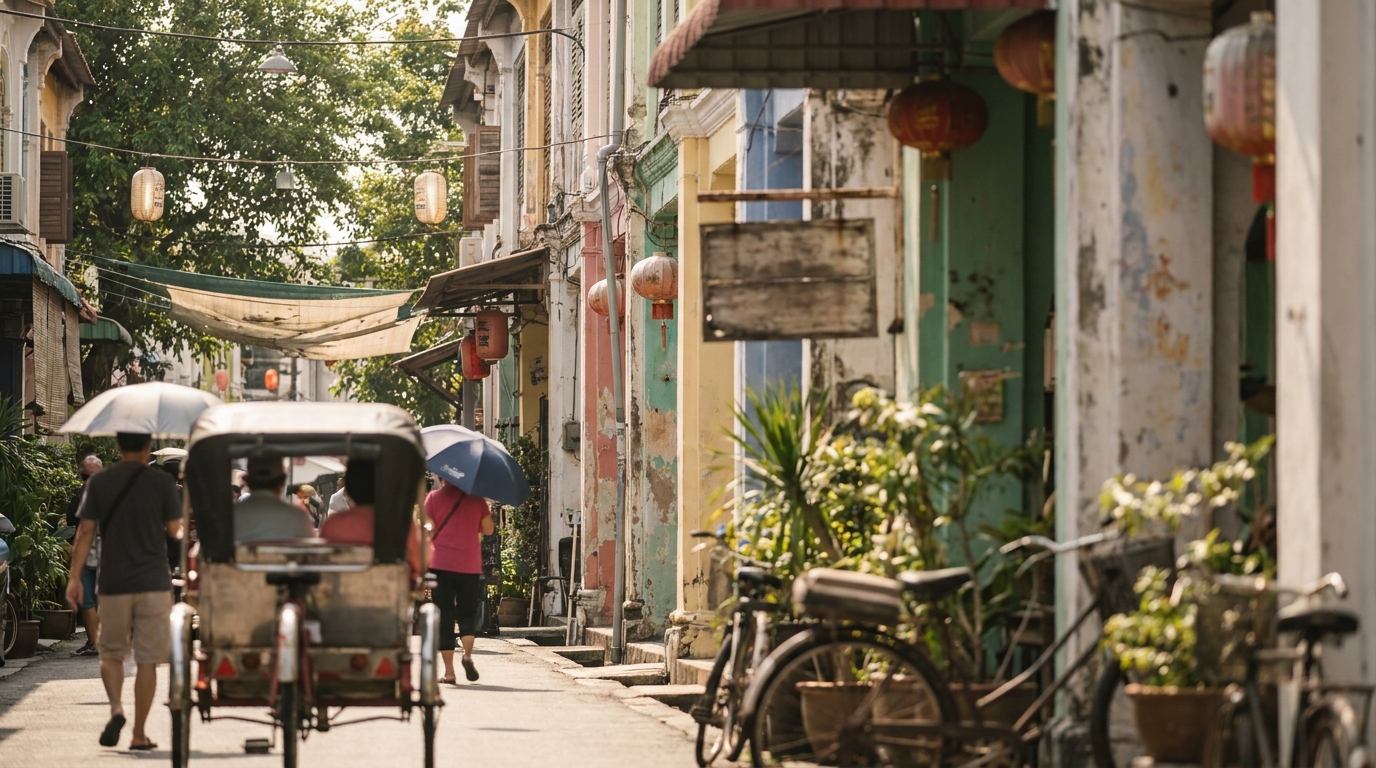
December evenings in George Town are particularly atmospheric — the heritage lanes are lit with lanterns, boutique cafés run seasonal events, and the colonial architecture is at its most photogenic in the cooler, drier air. This is when the Blue Mansion’s courtyard tours draw the largest turnout.
Book ahead: Cheong Fatt Tze (Blue Mansion) and Eastern & Oriental Hotel fill up in December. Reserve 4-6 weeks ahead.
January — Best Weather, High Crowds
Avg high: 31°C | Rainfall: ~130mm | Crowds: High-Very High (CNY)
January is consistently the driest month in Penang, with low rainfall and the most reliable sunshine. It’s also when Chinese New Year falls (late January or early February depending on the lunar calendar), bringing the biggest festival period of the year.
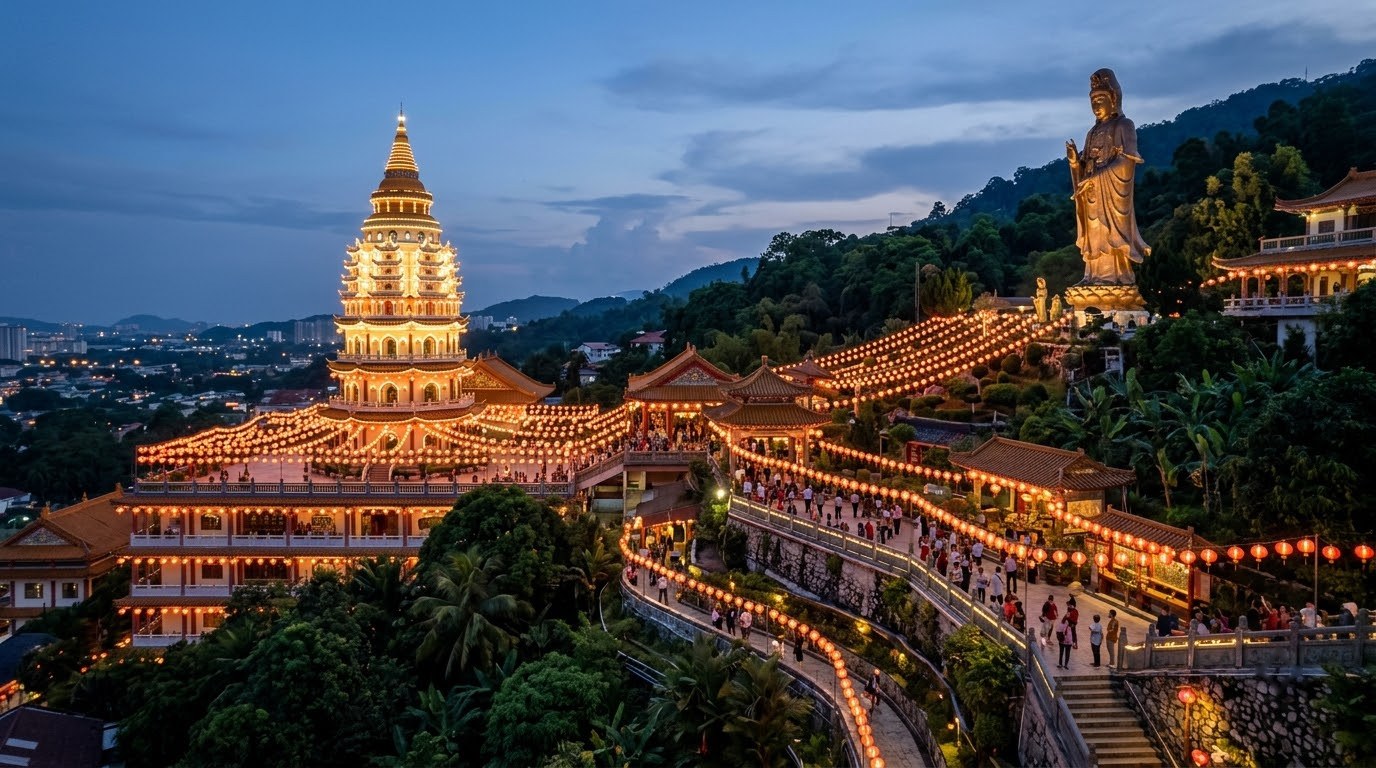
Chinese New Year in Penang: Kek Lok Si Temple lights up with 10,000 lanterns. George Town’s clan temples host ceremonies, dragon dances, and street processions. The atmosphere is spectacular — but hotel prices double, accommodation sells out weeks ahead, and the island’s population swells with domestic visitors.
February — Festival Season
Avg high: 31°C | Rainfall: ~110mm | Crowds: Very High (if CNY falls here)
February is the driest month statistically. If Chinese New Year falls in February, expect peak crowds and prices. Book 2-3 months ahead. If CNY is in January, February becomes excellent value: dry weather, lower prices, fewer visitors.
March — Best Value Dry Month
Avg high: 32°C | Rainfall: ~150mm | Crowds: Medium
March is the hidden sweet spot for Penang visits: dry weather continues, Chinese New Year crowds have gone, and prices return to normal. Temperatures tick up slightly but remain manageable. The best budget window to experience Penang at its best without competition for hostel beds or hawker stall seats.
Good for: Budget travelers, repeat visitors, anyone who visited during CNY and wants a quieter experience.
April — Last of the Dry Season
Avg high: 33°C | Rainfall: ~190mm | Crowds: Low-Medium
April sees rainfall beginning to increase. The first half of April is generally still pleasant; by late April, afternoon showers become more common. Still a good month overall — prices remain reasonable and crowds are low.
May to June — Shoulder Season
Avg high: 33°C | Rainfall: ~220-210mm | Crowds: Medium
The inter-monsoon period. Rain frequency increases but rarely all-day. School holidays in May-June bring Malaysian domestic visitors. Batu Ferringhi beach hotels see a bump in occupancy as Malaysian families take holidays. Outdoor activities like Penang Hill and the national park are still accessible; just carry a light rain jacket.
July to September — Low Season
Avg high: 32-33°C | Rainfall: ~190-220mm | Crowds: Low-Medium
The southwest monsoon affects Malaysia’s west coast less severely than the Andaman Coast. Penang gets rain but not monsoon shutdowns. Fewer international tourists, more Malaysian domestic visitors. Good prices on accommodation. Beach at Batu Ferringhi is swimmable; the occasional afternoon downpour passes within an hour.
October — Avoid if Possible
Avg high: 32°C | Rainfall: ~330mm | Crowds: Low
October is Penang’s wettest month, with rainfall roughly double most other months. Heavy afternoon storms are common, sometimes persisting into evenings. Outdoor sights (Penang Hill, clan jetties, street art walks) can be uncomfortable. If you must visit in October, plan indoor activities for afternoons: Peranakan Mansion, Blue Mansion tours, kopitiam food crawls.
Silver lining: Lowest prices of the year. Budget guesthouses may drop to 40-60 MYR/night; beach resorts run deep discounts.
Best Time for Specific Activities
| Activity | Best Months | Avoid |
|---|---|---|
| George Town heritage walk | Nov-Apr (cooler mornings) | Oct (heavy rain) |
| Batu Ferringhi beach | Dec-Apr (calmest water) | Oct-Nov (choppy) |
| Penang Hill funicular | Any month (indoor option) | Peak CNY (queues) |
| Chinese New Year festivals | Late Jan / Feb | — (this IS the event) |
| Kek Lok Si lantern display | Jan-Feb (CNY) | Rest of year (no lanterns) |
| Food hawker tours | Year-round | None — rain doesn’t stop hawkers |
| Penang National Park hiking | Dec-Apr (dry trails) | Oct (trail flooding) |
Penang Festivals and Events Calendar
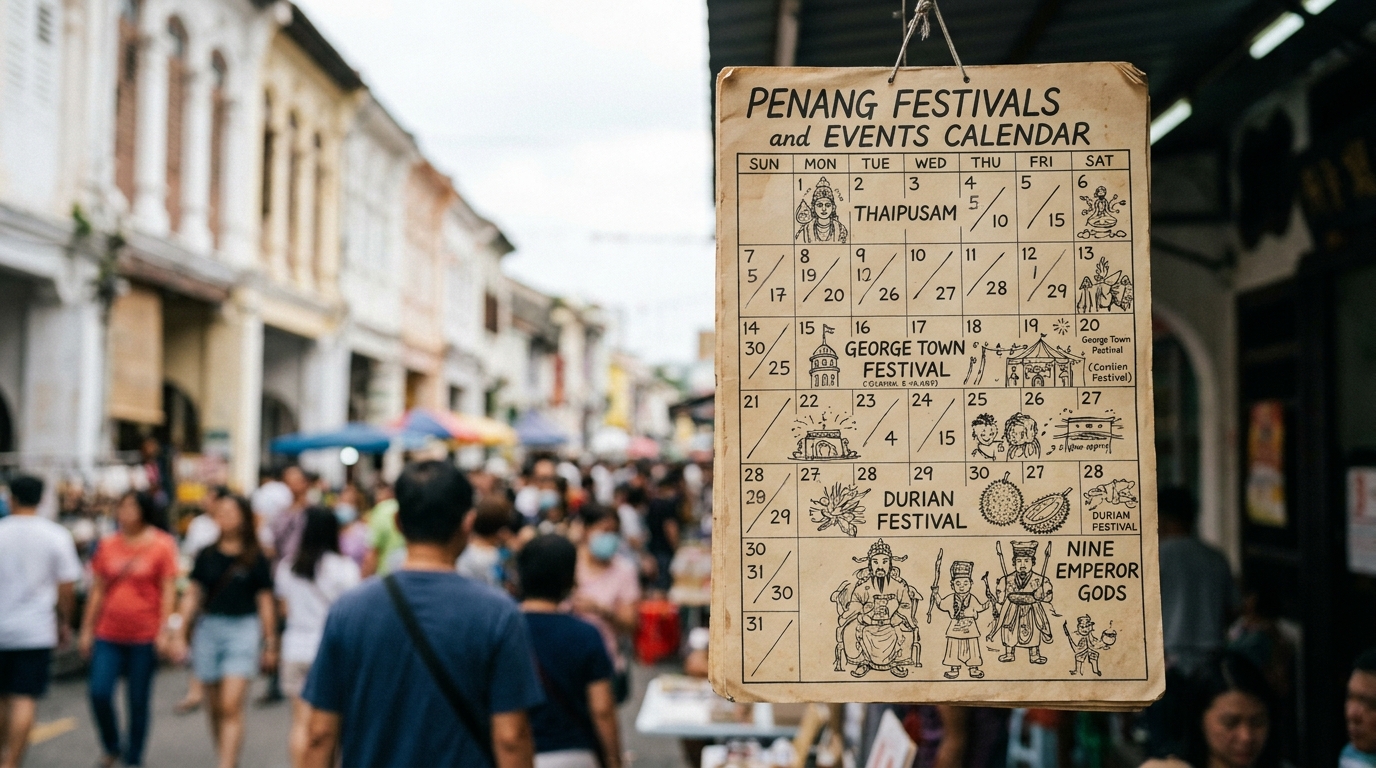
- Chinese New Year (Jan/Feb): Kek Lok Si lanterns, George Town clan temple ceremonies, 10 days of celebrations. Biggest event on the island.
- Thaipusam (Jan/Feb): Hindu festival with kavadi processions from Sri Mahamariamman Temple. Spectacular but very crowded.
- Penang World Music Festival (usually Oct): Annual outdoor music event at Fort Cornwallis — good reason to visit despite the rain.
- George Town Festival (July): Annual arts and culture festival across heritage venues in George Town.
- Wesak Day (May): Buddhist celebrations at Kek Lok Si; evening lantern processions.
Tips for Any Season
- Heat management: Penang is hot year-round. Plan outdoor walks for before 10am or after 4pm. Afternoons work best for indoor attractions (museums, mansions, kopitiams).
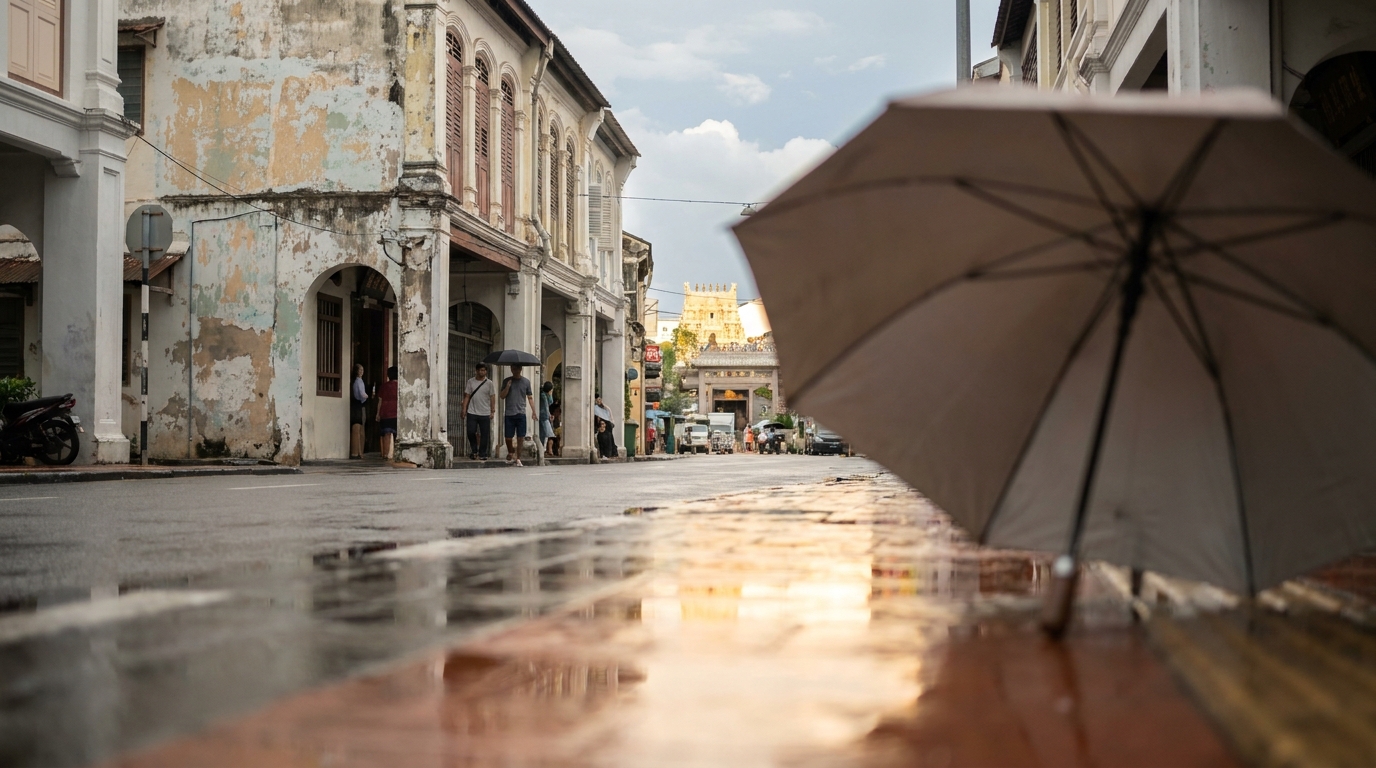
- Rain gear: A compact umbrella takes up minimal bag space and protects against both sun and sudden showers — useful every month.
- CNY timing: If your dates overlap with Chinese New Year, book accommodation 6-8 weeks ahead. For the clan temple ceremonies and Kek Lok Si lanterns, it’s worth the premium.
For accommodation near George Town, see Where to Stay in Penang. For what to do during your visit, see Best Things to Do in Penang.
Frequently Asked Questions
What is the best month to visit Penang?
November to April for the most reliable dry weather. January and February have the best weather but coincide with Chinese New Year — spectacular for culture, busy for logistics. March is the best balance of dry weather, low crowds, and reasonable prices.
Is Penang good to visit in July?
Yes — July is manageable. Rain falls mostly in the afternoon, mornings are clear, and prices are at their lowest. Fewer tourists than the dry season peak, which makes hawker queues shorter and accommodation easier to book.
How hot is Penang in December?
Temperatures average 24-31°C in December — slightly cooler than the rest of the year. It’s the most comfortable time to walk George Town’s heritage streets without the midday heat being oppressive.
Does it rain a lot in Penang?
Penang receives about 2,630mm of rain annually, but most falls in concentrated afternoon showers rather than all-day rain. Even the wettest months (September-October) allow for productive morning sightseeing. The driest months (January-March) average only 1-4 rainy days per month.
Sources:
1. Malaysian Meteorological Department — Penang monthly rainfall and temperature data, 2025
2. Penang Global Tourism — seasonal visitor statistics and event calendar, 2025
3. George Town World Heritage Inc. — Chinese New Year festival guide and heritage event calendar, 2025