15 Best Bali Photo Spots: Where to Get the Shot (2026)
 Lempuyang Temple’s Gates of Heaven — Bali’s most iconic bali photo spot
There’s a reason #bali has over 90 million posts on Instagram. These bali photo spots deliver the kind of images that make your friends ask “wait, where is that?” — and I’ve stood in every single queue to find out exactly when to arrive, what to pay, and how to avoid the crowds that ruin everything.
This isn’t a list of beautiful-sounding places copied from a travel brochure. It’s 15 bali photo spots I’ve personally visited, with exact arrival times, current entrance fees in IDR, and the honest truth about how crowded each one gets.
Key Takeaways
- Arrive early or go home: 70% of these spots require arriving before 8am to avoid crowds
- Cheapest shots: Campuhan Ridge Walk (FREE), Kelingking Beach (10K IDR), Tukad Cepung (15-20K IDR)
- Most expensive: Bali Swings (150-500K IDR depending on operator)
- Golden hour: Sunrise 6:00-6:30am, sunset 5:45-6:15pm year-round
- Sarong rule: You’ll need one at every temple — many spots rent them at the entrance
- Best for non-photographers: Tegallalang, Tanah Lot, Uluwatu — all worth seeing regardless of camera gear
- Drone warning: Banned at temples and within 5km of airports — check rules before you fly
Before you start planning, bookmark the Ultimate Bali Travel Guide for logistics, and check 5 Days in Bali Itinerary or 7 Days in Bali Itinerary to map these photo spots into a real trip.
Iconic Bali Photo Spots: Gates, Temples and Landmarks
1. Lempuyang Temple — Gates of Heaven (Karangasem)
You’ve seen this shot. The two stone gates frame Mount Agung perfectly, and there’s a mirror-still pool below that reflects the whole scene. It’s real — but getting it requires strategy.
What you’ll pay: 100,000-150,000 IDR per person When to arrive: 5:30am, no later Queue time: 1-2 hours during peak season (June-August, weekends) Sarong: Mandatory — rental included in the fee
The mirror reflection shot is created with a phone held just above a small pool of water. Temple staff help you position your phone. You don’t need your own mirror — just patience.
There are actually seven temples at Lempuyang, with a steep 1,700-step climb to the summit. Most visitors only go to the first gate for the photo. If you’re willing to do the full hike (2-3 hours round trip), you’ll have the upper shrines almost entirely to yourself.
Don’t arrive after 9am on weekends. The queue can stretch to 3 hours, and the mountain disappears behind clouds by mid-morning.
Book a guided tour from Ubud on Klook — it’s cheaper than hiring a private driver and they’ll get you there at the right time.
2. Handara Gate (Bedugul)
The twin split gate at Handara Golf Resort looks like a portal to another world, especially when morning mist rolls through the mountains behind it. It’s one of the most replicated bali photo spots on social media — but it’s far smaller in person than photos suggest.
What you’ll pay: 50,000-75,000 IDR When to arrive: 6-8am before fog lifts Queue time: 30-60 minutes on weekdays, double that on weekends
The gate sits at roughly 1,200m elevation, so it’s genuinely cool in the morning. Bring a light jacket. The mist that makes the shot typically burns off by 9am, and by 10am it looks completely ordinary.
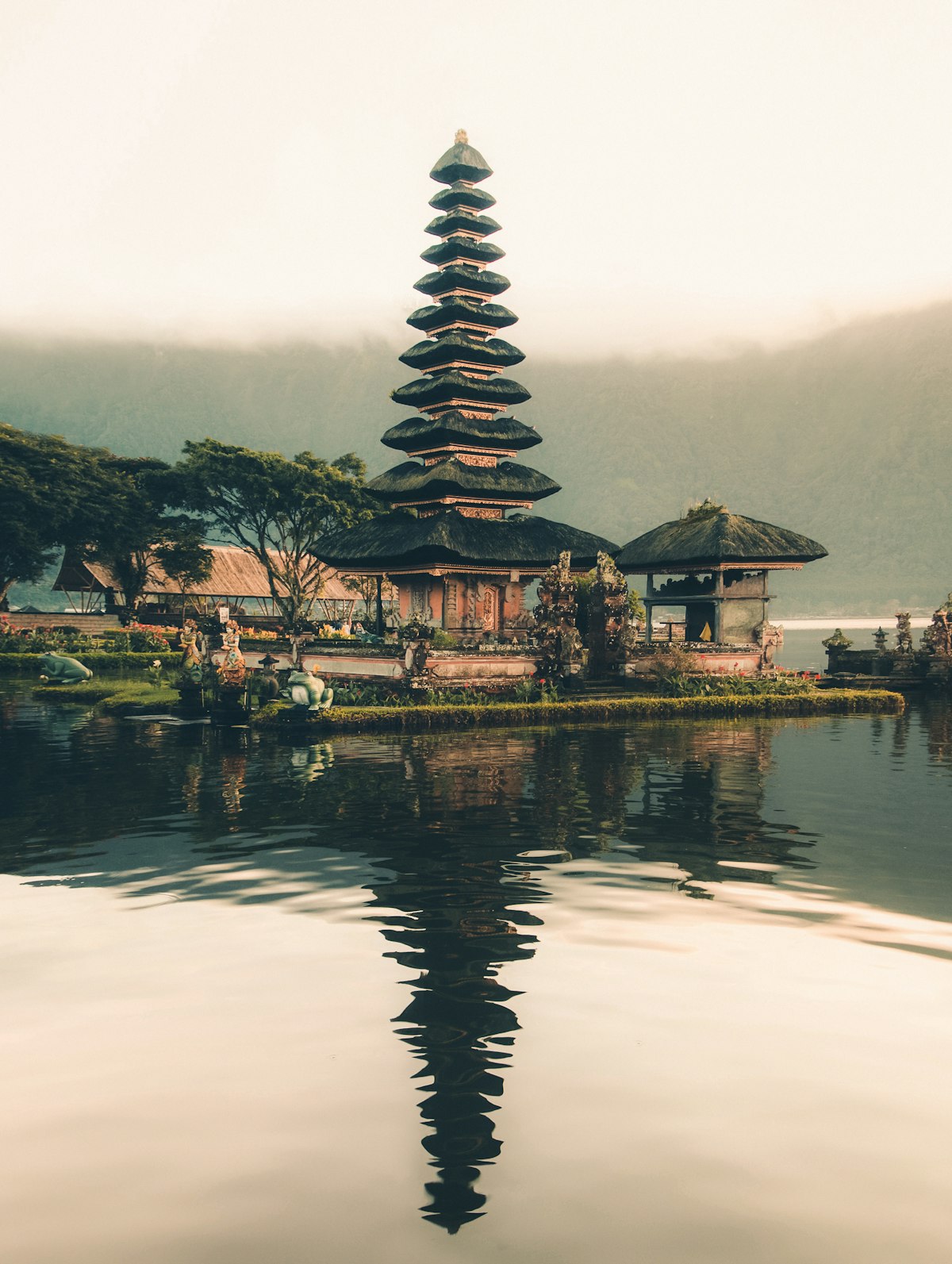
3. Pura Ulun Danu Beratan (Bedugul)
The floating temple on Lake Bratan is one of Bali’s most recognized landmarks, and it genuinely earns its reputation. On a calm morning, the pagoda towers reflect perfectly on the lake surface.
What you’ll pay: 50,000-75,000 IDR When to arrive: Sunrise, 6-7am Best shot: From the main lawn, slightly to the left of center, at water level
Don’t miss the lotus pond at the northern end of the complex — it’s less photographed and often empty of tourists.
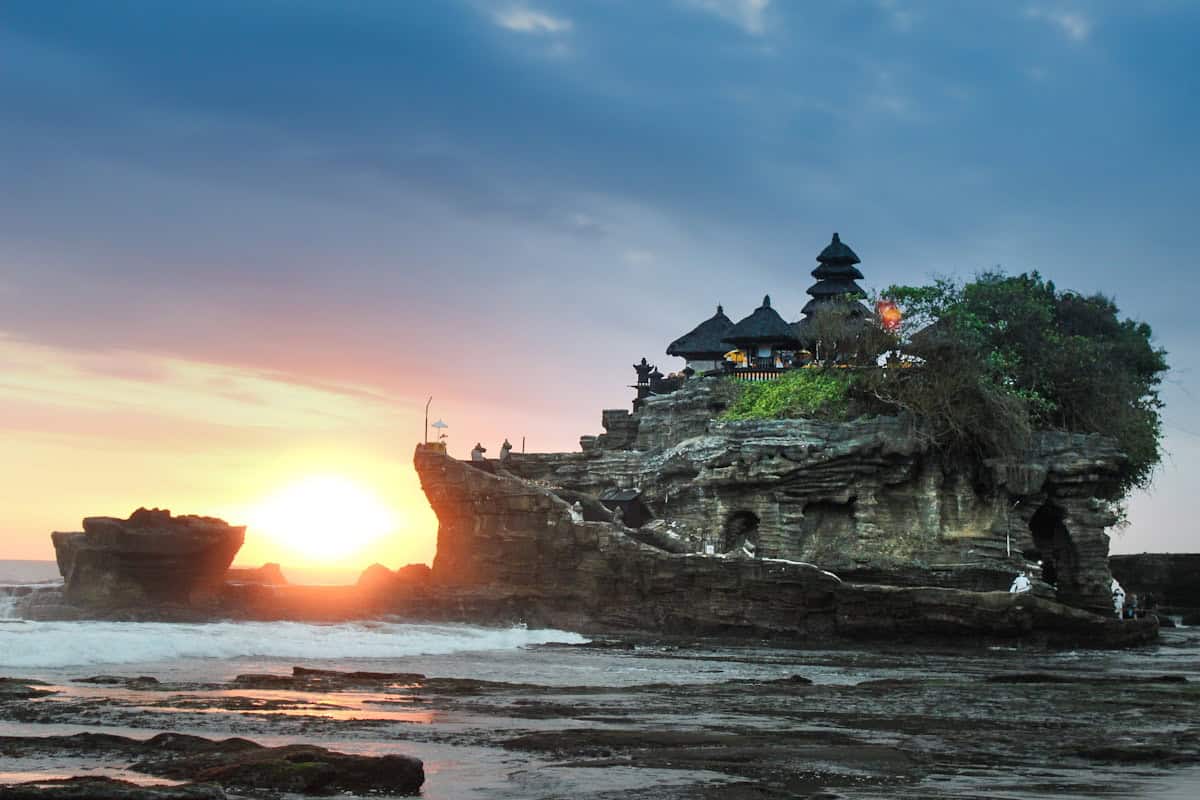
4. Tanah Lot (Tabanan)
Tanah Lot is built on a rocky outcrop in the sea, and at sunset it’s genuinely dramatic. You can’t enter the main temple (it’s accessible only to worshippers), but you don’t need to — the exterior at golden hour is the shot.
What you’ll pay: 60,000-75,000 IDR When to arrive: 4:30pm for position, stay through sunset (5:45-6:15pm) Crowd level: Very high — it’s one of Bali’s most visited sites
Get there early and secure a spot on the rocks to the southwest. Arrive at 4:30pm and you’ll have an hour to find your angle before the crowds peak.
5. Uluwatu Temple (Bukit Peninsula)
Perched 70 meters above the Indian Ocean on a sheer cliff, Uluwatu delivers one of Bali’s most dramatic sunset settings. The stone temple silhouetted against an orange sky is an image you won’t manufacture anywhere else.
What you’ll pay: 50,000 IDR When to arrive: 5pm for sunset, stay for the Kecak fire dance at 6pm (separate ticket ~100K IDR) Warning: Monkeys will grab sunglasses, phones, hats — keep everything in a bag
Don’t wear sandals with straps that are easy to grab. The monkeys at Uluwatu are strategic and fast.
Nature and Landscape Bali Photo Spots
6. Tegallalang Rice Terraces (Ubud)
Tegallalang’s cascading rice paddies are probably the most photographed natural landscape in Bali. The traditional subak irrigation system creates the layered effect you’ve seen everywhere — and it’s genuinely beautiful, even with the crowds.
What you’ll pay: 10,000-15,000 IDR for terrace access; 100,000-150,000 IDR for swings When to arrive: 7-9am Avoid: 10am-3pm — tour buses fill the area completely
The best angle is from the cafe viewpoints on the road above the valley. Most of them let you shoot from their terrace for free if you buy a drink.
You’ll find lots more to explore around Ubud in the Bali Bucket List — it’s worth pairing Tegallalang with a few other stops on the same day.
7. Jatiluwih Rice Terraces (UNESCO World Heritage)
If Tegallalang is the Instagram version of rice terraces, Jatiluwih is the real thing. Six hundred hectares of rolling paddies spread across the slopes of Mount Batukaru, with far fewer people and a much more open, pastoral feel.
What you’ll pay: 20,000-30,000 IDR When to arrive: Morning or late afternoon for golden light Crowd level: Significantly less than Tegallalang — you might have whole sections to yourself
The terraces at Jatiluwih have been farmed continuously for over 1,000 years. The subak system here was part of what earned Bali’s cultural landscape its UNESCO designation in 2012. That’s worth mentioning if you’re posting context with your photos.
8. Tukad Cepung Waterfall
This is a non-negotiable stop if you’re serious about Bali photography. The waterfall itself drops into a narrow canyon, and between 9-11am, sunbeams cut through a gap in the rocks above and illuminate the mist in rays of light. Outside that 2-hour window, it’s just a dark cave.
What you’ll pay: 15,000-20,000 IDR Timing: 9-11am ONLY — the light alignment doesn’t happen before or after Access: 20-minute walk from the parking area, involves wading through ankle-deep water
Wear shoes you don’t mind getting wet. The canyon path requires stepping through a shallow stream for about 100 meters.
Check the Best Waterfalls in Bali guide for more waterfall locations across the island — Tukad Cepung pairs well with Kanto Lampo on the same day.
9. Kanto Lampo Waterfall
Kanto Lampo doesn’t have the cathedral-light drama of Tukad Cepung, but it’s got something different: water cascading across a series of layered basalt rocks like a natural curtain. The stepped structure makes it incredibly photogenic at any angle.
What you’ll pay: 20,000 IDR When to arrive: Morning for softer light Camera settings: f/16, 1-2 second shutter speed with an ND filter for silky water effect
10. Campuhan Ridge Walk (Ubud)
One of Bali’s only free photo spots — and one of the best. The ridge walk winds through jungle-covered hills above Ubud, with rolling grass on both sides and an almost total absence of traffic noise.
What you’ll pay: FREE When to arrive: 5:30-7am for an empty trail and morning light Length: About 2km one way, mostly flat
After 8am, the path fills with guided tour groups. By 9am it’s busy. If you’re staying in Ubud, walk directly from your accommodation — no transport needed.
Nusa Penida Photo Spots: Cliffs That Break the Internet
Nusa Penida is a 45-minute fast boat from Sanur or Padangbai. The island has some of Bali’s most dramatic scenery, and it’s worth at least a full day. Book your Nusa Penida boat and tour package on Klook in advance — boats sell out on peak season mornings.
11. Kelingking Beach (Nusa Penida)
The T-Rex cliff formation at Kelingking is probably the most shared Bali photo on the internet. The jagged rock dinosaur shape above a turquoise bay is completely real and completely astonishing.
What you’ll pay: 10,000 IDR When to arrive: 8-10am (before haze builds) Warning: The hike down to the beach is extremely steep — many people just shoot from the viewpoint above
The viewpoint is at the top of the cliff. To actually reach the beach below requires about 45 minutes of near-vertical scrambling each way. It’s doable but bring water and don’t wear flip-flops.
12. Broken Beach (Nusa Penida)
A natural rock arch frames a circular lagoon filled with brilliant blue water. It’s right next to Angel’s Billabong, so you can hit both in under an hour.
What you’ll pay: 10,000 IDR When to arrive: Morning for the best light direction Note: Swimming inside the lagoon is dangerous — strong currents
Cultural and Hidden Bali Photo Spots
13. Tirta Gangga Water Palace (Karangasem)
The royal water palace at Tirta Gangga has a series of stepping stones across ornate fish pools, with carved statues and tiered fountains. It’s significantly less crowded than the more famous temple spots, and the east Bali setting is stunning.
What you’ll pay: 50,000 IDR When to arrive: 7-9am Best shot: The stepping stone path with Mount Agung visible in the background on clear mornings
Pair it with Lempuyang on the same day — they’re about 40 minutes apart by road, making east Bali’s best combo itinerary.
14. Penglipuran Village (Bangli)
Penglipuran is a traditional Balinese village where the main street hasn’t changed in centuries. Perfectly symmetrical bamboo gates line both sides of a stone path, flanked by identical compound walls. It looks like someone designed it for photography — they didn’t, it’s just how this village has always been.
What you’ll pay: 30,000-50,000 IDR When to arrive: 7-9am before tour groups arrive Tip: Walk to the bamboo forest at the north end of the village — almost nobody goes there
15. Bali Swings (Ubud Area)
The famous “swing over jungle” shot has been done a million times, but it’s still genuinely fun and visually impressive. Swings are typically positioned over rice terraces or jungle valleys, and on a clear day the backdrop is remarkable.
What you’ll pay: 150,000-500,000 IDR depending on operator When to arrive: 8-10am for best light Book ahead: Peak season operators run out of time slots — pre-book on Klook
The price variation is significant. Budget operators charge 150K; premium ones with better equipment, cleaner platforms, and better backdrops charge 400-500K. The difference in the final photo is usually worth it.
See Instagrammable Places in Bali for even more selfie-ready locations beyond swings.
Entrance Fees and Quick Reference Table
| Spot | Location | Fee (IDR) | Best Time | Crowd Level |
|---|---|---|---|---|
| Lempuyang Temple | Karangasem | 100,000-150,000 | 5:30am | Very High |
| Handara Gate | Bedugul | 50,000-75,000 | 6-8am | High |
| Ulun Danu Beratan | Bedugul | 50,000-75,000 | 6-7am | Medium |
| Tanah Lot | Tabanan | 60,000-75,000 | 4:30-6pm | Very High |
| Uluwatu Temple | Bukit Peninsula | 50,000 | 5-6:30pm | High |
| Tegallalang | Ubud | 10,000-15,000 | 7-9am | Very High |
| Jatiluwih | Tabanan | 20,000-30,000 | Morning/Afternoon | Low |
| Tukad Cepung | Bangli | 15,000-20,000 | 9-11am ONLY | Medium |
| Kanto Lampo | Gianyar | 20,000 | Morning | Low-Medium |
| Campuhan Ridge Walk | Ubud | FREE | 5:30-7am | Low (early) |
| Kelingking Beach | Nusa Penida | 10,000 | 8-10am | High |
| Broken Beach | Nusa Penida | 10,000 | Morning | Medium |
| Tirta Gangga | Karangasem | 50,000 | 7-9am | Low |
| Penglipuran Village | Bangli | 30,000-50,000 | 7-9am | Medium |
| Bali Swings | Ubud Area | 150,000-500,000 | 8-10am | High (book ahead) |
Entrance fees are approximate for 2026 and subject to change. Source: Bali Tourism Board
How to Plan Your Bali Photo Day: 3 Combo Itineraries
These bali photo spots cluster naturally into day routes. Here’s how I’d organize them if I had to choose:
East Bali Day (Gates + Water Palace + Cave Waterfall)
- 5:30am: Lempuyang Temple (2-hour queue, Gates of Heaven shot by 8am)
- 9am: Tirta Gangga Water Palace (30-45 minutes, much less crowded than expected)
- 11am: Tukad Cepung Waterfall (timing is perfect — sunbeams hit 9-11am, you’ll catch the tail end)
This is genuinely the best single day of photography I’ve had in Bali. Lempuyang’s mystical morning atmosphere, Tirta Gangga’s calm ornamental pools, and Tukad Cepung’s cathedral-light canyon — three completely different moods in one day.
North Bali Day (Misty Gates + Floating Temple + UNESCO Terraces + Sunset)
- 8am: Handara Gate (mist is still present, queue manageable on weekdays)
- 10am: Ulun Danu Beratan (floating temple, lake reflections)
- 1pm: Jatiluwih Rice Terraces (UNESCO site, golden afternoon light)
- Sunset: Drive south to Tanah Lot (4:30pm arrival for position)
This route covers a lot of ground but it’s all connected on the same north-south highway. Hire a driver for the day — it’s worth it.
Ubud Day (Ridge + Terraces + Swing + Waterfall)
- 5:30am: Campuhan Ridge Walk (sunrise light, empty trail)
- 8am: Tegallalang Rice Terraces (before tour buses)
- 10am: Bali Swing (book ahead, morning light is best)
- 1pm: Kanto Lampo Waterfall (afternoon works fine here)
Nusa Penida Day (Full Island Circuit)
Kelingking Beach → Broken Beach → Angel’s Billabong → Crystal Bay
Take the first boat from Sanur (7:30-8am) and you’ll have the cliffs mostly to yourself before the day-tripper crowds arrive around 10am. Book the whole package on Klook — it includes transport between sites.
Photography Tips for Bali
Camera Settings for Key Shot Types
Waterfalls (silky water effect):
- Aperture: f/11-f/16
- Shutter speed: 1-2 seconds
- ISO: 100
- Essential gear: ND filter (6-stop or 10-stop), tripod
Landscapes and rice terraces:
- Aperture: f/8-f/11
- ISO: 100
- Tripod: mandatory for golden hour (low light = blurry handheld shots)
- Time your shot at the exact moment of golden light — it moves fast
Temples and people:
- Shoot wide at f/5.6-f/8 for depth
- Use a longer lens (85-135mm) to compress backgrounds at Lempuyang
- Ask permission before photographing worshippers during ceremonies
Golden Hour in Bali
Bali sits just 8 degrees south of the equator, so golden hour is brief and consistent year-round:
- Sunrise: 6:00-6:30am
- Sunset: 5:45-6:15pm
Don’t be late. The light shifts from golden to harsh in about 15 minutes, and from golden to flat in 20. Set an alarm.
Drone Photography Rules
You can fly a drone in Bali, but you need to know the restrictions:
- Registration required for drones over 250g
- Banned zones: All temples, within 5km of Ngurah Rai Airport, national parks without a permit
- Maximum altitude: 120 meters
- Penalties for violations are enforced — don’t assume nobody’s watching at temple sites
Check current regulations on the Bali Tourism Board website before your trip.
Temple Etiquette (Non-Negotiable)
Every temple on this list requires a sarong and sash. You’ll need to cover your shoulders and knees. At most spots, you can rent a sarong at the entrance for a small fee — but it’s faster to bring your own.
Don’t step on offerings placed on the ground. Don’t point your feet toward shrines. Don’t climb on temple structures for a better angle — it’s disrespectful and increasingly results in bans.
Hiring a Photographer in Bali
If you want photos of yourself rather than landscapes, hiring a local photographer is genuinely affordable and the results are usually excellent.
Rates: $50-150 USD for a 1-2 hour session Book via: Flytographer (vetted professionals), or search Instagram for Bali-based photographers
Most photographers know exactly which bali photo spots work at which time of day, and they’ll handle queue management and positioning.
Staying Connected for Navigation and Bookings
You’ll need mobile data to get around between these bali photo spots — Google Maps works well in Bali but requires a signal. Get an Airalo eSIM before you arrive — it’s cheaper than airport SIM cards and you can activate it the moment you land without hunting for a phone shop.
Hidden Bali Photo Spots Worth the Detour
If you’ve done the main circuit and want something less visited, these three spots deserve a place on your radar.
Sidemen Valley: A quiet farming valley east of Ubud with rice fields, a rushing river, and Mount Agung as a backdrop. It’s on the way to Lempuyang and you’ll have it almost entirely to yourself before 9am.
Taman Ujung Water Palace: Often called the “neglected cousin” of Tirta Gangga, Taman Ujung has a similar ornamental pool and stepping stone setup but sees a fraction of the visitors. It’s 20 minutes from Tirta Gangga.
Pura Kehen Temple (Bangli): A stepped temple carved into a hillside, with enormous banyan trees and detailed stone carvings. Almost no tourists. Best photographed in the hour after sunrise.
Check the Hidden Gems in Bali guide for more off-the-beaten-path locations like these.
 Tegallalang Rice Terraces — arrive by 7:30am before tour buses fill the viewpoints
Frequently Asked Questions About Bali Photo Spots
What are the best bali photo spots for sunrise?
Lempuyang Temple and Campuhan Ridge Walk are the top sunrise picks. Lempuyang gets you the Gates of Heaven with Mount Agung reflecting in still water, but you need to arrive by 5:30am. Campuhan Ridge is free and gives you golden light over rolling jungle — no queue required.
How much does it cost to visit the best photo spots in Bali?
Budget around 600,000-800,000 IDR (~$37-50 USD) for a day covering 4-5 spots including entrance fees. Add 100,000-500,000 IDR if you want Bali swing photos. Campuhan Ridge Walk is free. Nusa Penida adds fast boat costs (~150,000-200,000 IDR each way) on top of entrance fees.
Is Lempuyang worth it with the long queue?
Yes, if you arrive at 5:30am and accept a 60-90 minute wait. The Gates of Heaven shot is genuinely unique and the mountain backdrop on a clear morning is extraordinary. It’s worth one early morning — but don’t attempt it on a Sunday or holiday weekend when queues stretch to 3 hours.
Can I fly a drone at Bali’s photo spots?
Drones are banned at all temple sites and within 5km of Ngurah Rai Airport. You can fly at Jatiluwih and Sidemen Valley with the right registration (required for drones over 250g). Maximum legal altitude is 120 meters. Check current rules before you pack your drone.
What’s the least crowded famous bali photo spot?
Jatiluwih Rice Terraces and Tirta Gangga Water Palace are consistently the least crowded among the major bali photo spots. Jatiluwih has 600 hectares of UNESCO terraces and you can walk for 20 minutes without seeing another tourist. Tirta Gangga gets busy after 10am but it’s peaceful early morning.
Final Thoughts
The best bali photo spots aren’t secrets anymore — but the difference between a postcard shot and a crowded-parking-lot snapshot is almost entirely about timing. Arrive early, stay flexible with weather, and don’t skip the less famous spots like Tirta Gangga and Jatiluwih just because they have fewer Instagram tags.
If you’re planning a longer stay, the 7 Days in Bali Itinerary maps out how to fit all four day routes above into a single trip without backtracking. And if you want to pair photography with beach time, Best Beaches in Bali and Best Hotels in Bali will help you choose a base that puts you close to multiple bali photo spots.
Got questions about any of these spots? The Bali Travel Guide covers logistics — transport, money, visas, and seasonal conditions — so you can focus on the photography once you arrive.