Disclosure: Some links in this guide are affiliate links. If you book or buy through them, we may earn a small commission at no extra cost to you — it helps keep our guides free.
Off-the-Beaten-Path Hanoi: Overlooked Spots Worth Visiting in 2026
Our guide to hidden gems hanoi highlights the spots and details most visitors miss in 2026.
Most travelers spend their entire Hanoi trip within a half-kilometer of Hoan Kiem Lake — missing the neighborhoods, markets, and street scenes that make this city worth a return visit. We put together this guide to Hanoi’s overlooked spots so you can move past the surface and actually experience the city the way residents do.
Key Takeaways
- Over 8 million people live in Hanoi, yet fewer than 12% of tourist activity takes place outside the Old Quarter (Vietnam National Tourism Administration, 2024)
- Tay Ho District (West Lake) hosts 70% of Hanoi’s expat population and has a street food scene largely unknown to short-stay visitors (Hanoi Department of Tourism, 2023)
- Average guesthouse prices in Ba Dinh District run 30-40% lower than equivalent Old Quarter options at around $18-$25/night (Agoda, 2025)
- Dong Xuan Market’s wholesale floors are visited by fewer than 5% of foreign tourists despite being the city’s largest covered market (General Statistics Office Vietnam, 2024)
- Hanoi’s ceramic village of Bat Trang, 13 km from downtown, sees roughly 200 international visitors per day versus 20,000+ daily visitors to Hoan Kiem (local district data, 2024)
Find your Hanoi hotel on the map
Live prices from Booking & Airbnb — tap a pin to compare stays across the Old Quarter and beyond.
Hidden Gems Hanoi: Tay Ho (West Lake District): Hanoi’s Underrated Expat Belt
Related: Hanoi packing list.
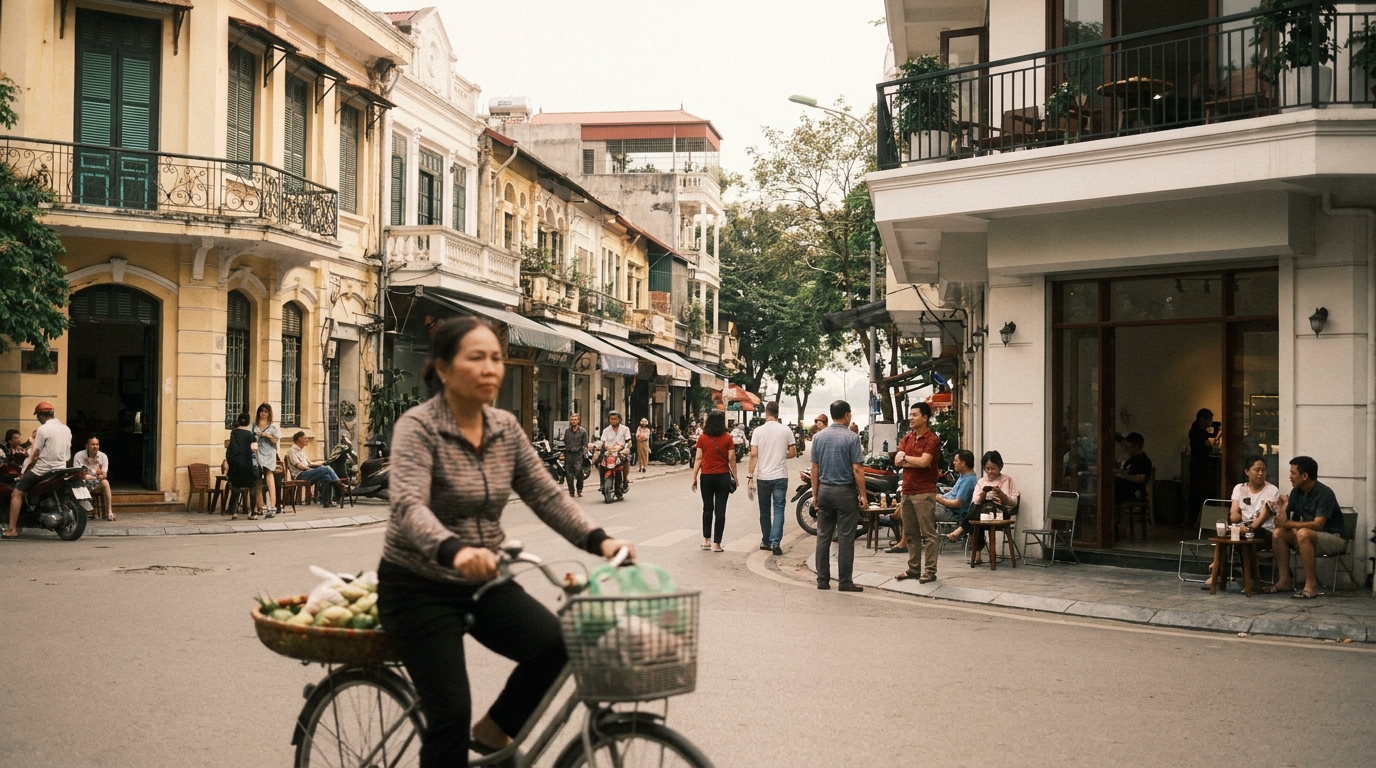
Tay Ho gives you Hanoi at a slower pace, with lakeside cafes, independent restaurants, and almost zero souvenir shops. Circumnavigate the 17 km lake by rented bicycle ($2-$3/day at local shops on Xuan Dieu Street) and you’ll pass lotus farms, pagodas, and street vendors selling che (sweet dessert soups) for 15,000-20,000 VND ($0.60-$0.80).
The Phu Tay Ho Pagoda on a small peninsula in the lake draws local devotees, not tour buses. Most coffee shops around Au Co Street are independently owned and serve ca phe trung (egg coffee) for 35,000-50,000 VND.
Consider staying here rather than the Old Quarter — Agoda lists solid guesthouses on Dang Thai Mai Street from $22/night, and you can reach the center by taxi in under 20 minutes for roughly $3-$4. Explore Tay Ho stays on Agoda.
Bat Trang Ceramic Village: A Working Craft Community 13 km Out
Related: getting to Hanoi.
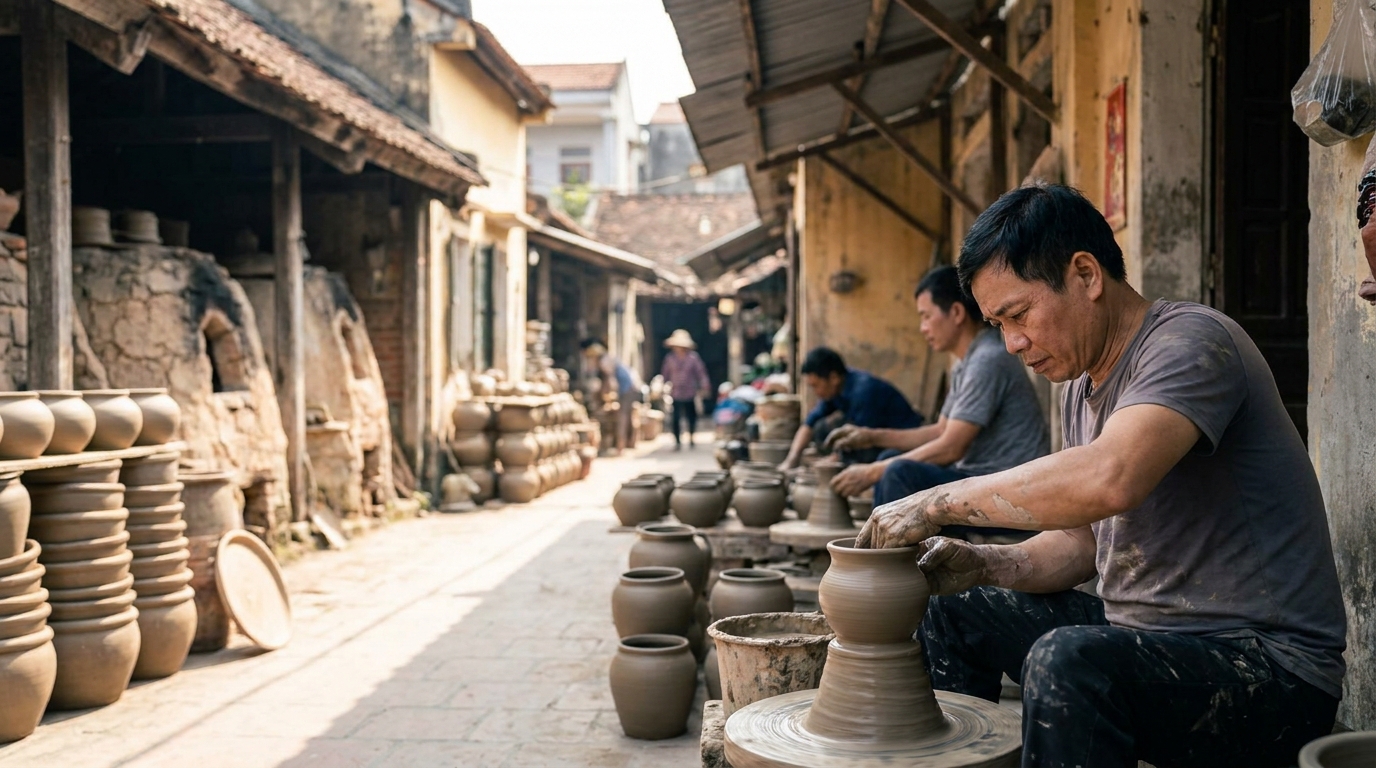
Bat Trang is a 600-year-old village where most families still operate kilns producing ceramics sold across Vietnam and exported to Japan and South Korea.
Unlike staged cultural shows, this is a working production village — you can walk freely through the alleys between workshops, watch potters throw pieces on hand-operated wheels, and buy direct from producers at roughly 30-50% below Old Quarter boutique prices.
A standard hand-painted bowl costs 60,000-120,000 VND ($2.40-$4.80); custom-order pieces run 250,000-500,000 VND with 1-2 day turnaround if you’re staying a few nights.
Getting there: Bus 47 from Long Bien Bus Station costs 7,000 VND and takes about 45 minutes. Grab motorcycle taxi runs $4-$5 each way. Book a Bat Trang pottery workshop via Klook if you want a structured guided session that includes a hands-on throwing class and firing demo — these run about $18-$22 per person.
Long Bien Bridge and the Riverside Neighborhoods Below
Related: best beaches in Hanoi.
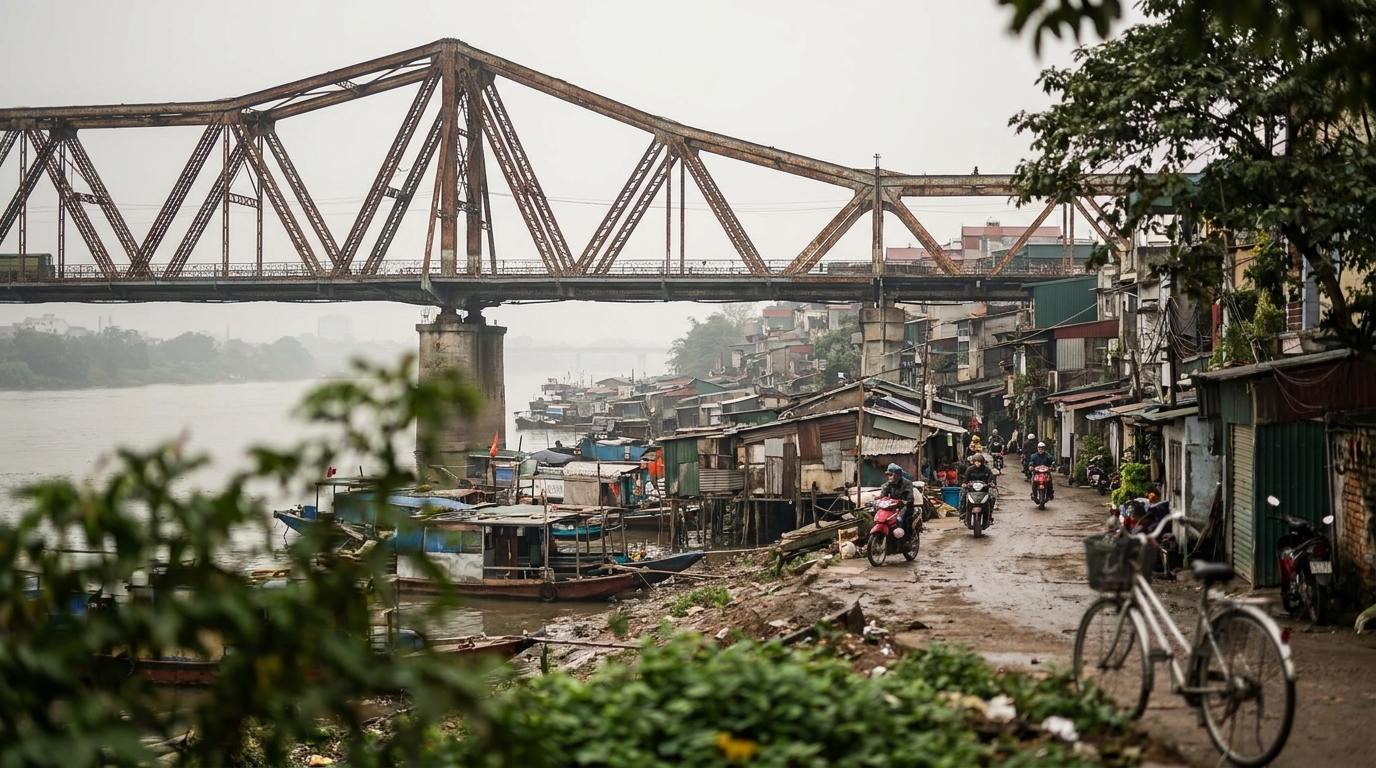
Long Bien Bridge, built between 1899 and 1902 by the same engineering firm behind the Eiffel Tower, carries motorbike and foot traffic daily and is one of Hanoi’s most photographed structures. What most visitors miss is the community living on the Red River floodplain beneath it.
Several hundred families farm vegetables here using seasonal sand flats — in dry season (November-April), this area fills with bok choy, morning glory, and herb plots that supply Old Quarter restaurants.
Walking down to the riverbank from the Phuc Xa access road takes about 10 minutes and costs nothing. Early mornings (5:30-7:30 AM) are best for light and activity. Pair this with breakfast at one of the bun rieu (crab noodle soup) stalls on Hang Muoi Street for 40,000-50,000 VND.
Dong Xuan Market: Beyond the Ground Floor
Related: best food in Hanoi.
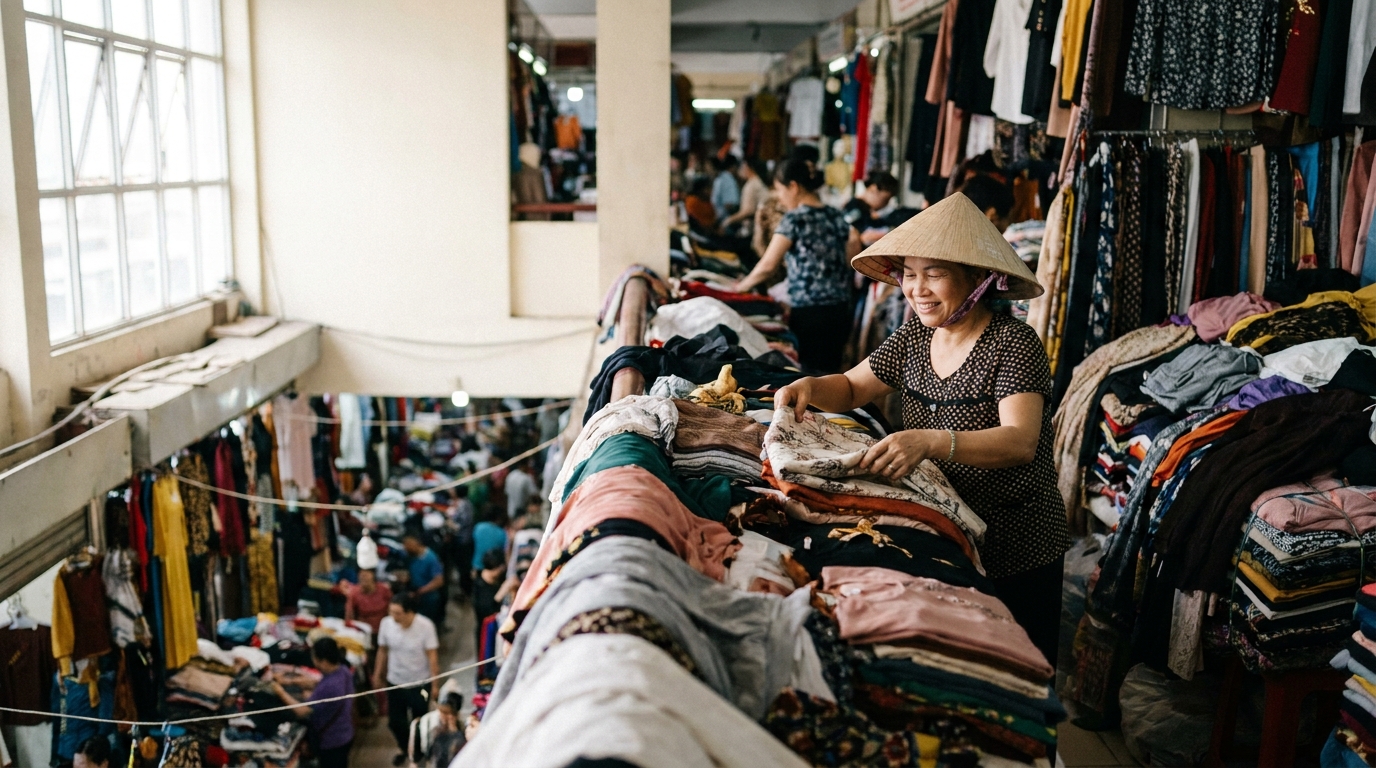
Dong Xuan is the Old Quarter’s largest covered market and a well-known tourist stop — but almost every visitor stays on the ground floor, which sells fabrics and tourist goods.
The upper floors are entirely wholesale and serve the city’s small traders: floors two and three carry plasticware, cleaning supplies, bulk textiles, and hardware at prices that make it clear you’ve crossed into the non-tourist economy. Browsing costs nothing and gives you a better read on how the city actually functions.
Early morning (5-7 AM) is when the wholesale action peaks. The wet market attached to the northern side of the building operates from 4 AM and sells live seafood, pork, and vegetables. The surrounding lanes — especially Hang Khoai and Nguyen Thien Thuat — have noodle shops open from 5 AM where a bowl of pho bo (beef noodle soup) runs 45,000-60,000 VND ($1.80-$2.40).
Ba Dinh District: French Quarter Architecture Without the Crowds
Related: best day trips from Hanoi.
Ba Dinh holds Hanoi’s government buildings, Ho Chi Minh Mausoleum, and a grid of French colonial streets that see a fraction of the foot traffic of the Old Quarter. Streets like Hoang Dieu, Chu Van An, and Nguyen Tri Phuong are lined with late 19th and early 20th century villas, many still occupied by government ministries or embassies.
The architecture — pale yellow facades, shuttered windows, tree-shaded sidewalks — is intact in a way that central Hanoi no longer is.
Street food here skews toward Hanoi locals: the banh mi stalls around Kim Ma Street are less performative and run 25,000-35,000 VND versus 50,000+ VND in tourist zones. The Temple of Literature is in this district and does draw visitors, but weekday mornings before 9 AM are quiet enough to move through at your own pace.
Budget accommodation around Giang Vo runs $18-$25/night — search Booking.com for Ba Dinh hotels to compare options with free cancellation.
Quan Thanh and the Northern Lake Circuit
Related: Hanoi itinerary.
Quan Thanh Temple sits on the northern bank of Truc Bach Lake, a smaller lake immediately west of West Lake that most itineraries skip entirely. The temple dates to the 11th century Ly Dynasty and charges 10,000 VND ($0.40) admission.
The surrounding streets — Quan Thanh, Thanh Nien, and Pho Duc Chinh — run between the two lakes and have a village-within-a-city feel with low-rise shophouses and local cafes. Truc Bach Lake has a small lakeside promenade where residents exercise in the evenings and vendors sell bap xao (stir-fried corn) and grilled squid for 20,000-30,000 VND.
One block east on Dang Dung Street you’ll find a cluster of banh cuon (steamed rice roll) shops that have been operating for decades — a full plate with cha lua (pork sausage) runs 40,000-50,000 VND. This area connects easily to the Ho Chi Minh Museum and the nearby Botanical Garden, making it a walkable half-day that stays almost entirely off the standard tourist map.
Kim Lien and Phuong Lien: South Hanoi’s Soviet-Era Housing Blocks
Related: Bali travel guide.
Kim Lien and Phuong Lien are Soviet-era collective housing estates built in the 1960s-70s that have evolved into dense, self-sufficient neighborhoods with their own wet markets, repair shops, and food lanes. For anyone interested in 20th century Vietnamese urban history, these blocks are more revealing than any museum.
The ground floors of many buildings have been converted into informal shops and kitchens — you’ll find ca phe den (black drip coffee) served in small plastic cups for 10,000-15,000 VND and bun cha (grilled pork with noodles) for 35,000-45,000 VND.
The Kim Lien wet market operates daily from 5 AM-11 AM and has a produce section that supplies restaurants across the south of the city. Getting here from Hoan Kiem takes about 20 minutes by Grab motorbike ($1.50-$2) or 30 minutes by city bus. This is not a polished experience — it’s just Hanoi as it is for most residents.
Frequently Asked Questions
Related: Da Nang travel guide.
How far is Bat Trang from central Hanoi?
Bat Trang ceramic village is approximately 13 km southeast of the Old Quarter. By Grab car the trip takes 25-35 minutes and costs $5-$7 depending on traffic. Bus 47 from Long Bien is the cheapest option at 7,000 VND but takes 40-50 minutes. Most visitors spend 2-3 hours here before returning to the city.
Is West Lake (Tay Ho) worth staying in instead of the Old Quarter?
For travelers who want a quieter base with easy cafe-working conditions and less tourist density, Tay Ho is a better choice. It’s 15-20 minutes by taxi from the Old Quarter ($3-$4), accommodation runs $18-$35/night for solid guesthouses, and the lake circuit offers good morning and evening walks. It suits travelers staying 4+ nights more than those on a 2-night pass-through.
What is the best time to visit Hanoi’s outdoor local spots?
Early mornings between 5:30 AM and 8 AM capture the most activity in markets, riverbank farms, and street food lanes. November through March offers the most comfortable temperatures for walking (18-24C), though some cafes and outdoor spots are quieter in January-February around Tet. April and May see rising humidity but fewer crowds than the July-August peak.
Do I need a data SIM to navigate these neighborhoods?
We strongly recommend picking up an Airalo Vietnam eSIM before arriving — a 5 GB plan costs around $9 and activates before you land, so Google Maps works from the moment you clear customs. Navigating between districts like Ba Dinh, Tay Ho, and Kim Lien is straightforward with maps, but without data you’ll lose time.
Are these neighborhoods safe for solo travelers?
Hanoi’s outlying neighborhoods are generally safe for solo travelers, including women traveling alone. Street theft (bag-snatching from motorbikes) is the main risk, more common in busy Old Quarter lanes than in residential districts. In places like Ba Dinh, Tay Ho, and Kim Lien the foot traffic is local and the risk profile is low.
Keep bags zipped and worn in front on busy streets; use Grab rather than hailing random motorbike taxis.
What tours cover Hanoi’s local neighborhoods rather than the main sights?
Several operators run half-day cyclo and walking tours focused on everyday Hanoi rather than the standard highlights circuit. Klook’s Hanoi local street food tour covers Ba Dinh markets and Old Quarter back lanes with a local guide for around $25-$35 per person. These tours typically run 3-4 hours and include 4-6 food stops.
How many days do you need to cover these spots alongside the main sights?
Five days gives you enough time to cover both the standard Hanoi circuit and several of the neighborhoods listed here without rushing. A practical split: days 1-2 for Old Quarter and Hoan Kiem area, day 3 for Bat Trang and Long Bien, day 4 for Tay Ho and Quan Thanh, day 5 for Ba Dinh and southern Hanoi.
If you only have 3 days, prioritize Tay Ho for accommodation and fold Bat Trang into a half-day.
The Case for Slowing Down in Hanoi
Related: things to do in Hanoi.
Hanoi rewards time investment in a way that few Southeast Asian capitals do. The further you move from Hoan Kiem Lake, the more the city reveals itself as a genuinely layered place — Soviet housing blocks next to Ly Dynasty temples, ceramic workshops exporting to Tokyo, riverbank vegetable farms feeding restaurant kitchens a kilometer away.
None of these places require a guide or a tour group. Most require only a Grab fare under $5 and the willingness to walk without a fixed agenda.
If you’re planning your first trip to Hanoi, start with our hanoi travel guide for logistics and orientation before using this article to build out your itinerary. For accommodation across all budgets, compare options on Agoda filtering by Ba Dinh or Tay Ho to get away from the Old Quarter premium.
And if you want a structured introduction to the food scene before going independent, Klook’s local food tours are a practical first day investment.
The city is bigger and stranger than most visitors realize. Give yourself the days to find that out.