Disclosure: Some links in this guide are affiliate links. If you book or buy through them, we may earn a small commission at no extra cost to you — it helps keep our guides free.
Best Food in Yogyakarta 2026: 12 Must-Try Dishes & Where to Eat
Quick answer: Yogyakarta food is Javanese and noticeably sweet. The signature dish is gudeg, young jackfruit slow-braised in coconut milk and palm sugar, served with rice, chicken, egg, and spicy krecek. Round it out with bakpia (sweet bean-filled pastry souvenir), nasi kucing at evening angkringan carts, and smoky sate klathak goat satay.
Key Takeaways: Yogyakarta’s cuisine is Javanese — distinctly sweeter than most Indonesian regional food, using coconut milk and palm sugar extensively. Gudeg (young jackfruit braised in coconut milk) is the city’s signature dish and should be eaten at least once. Street food and warungs serve filling meals for 8,000-25,000 IDR. Malioboro and the Wijilan food street (south of the Kraton) are the best eating zones. Angkringan street stalls — open from 6pm to midnight along major streets — are the authentic Yogyakarta eating experience.
Yogyakarta’s gudeg tradition dates to the 16th-century Mataram Kingdom when jackfruit was abundant in the royal gardens and palace staff developed slow-cooked preparations using coconut milk and palm sugar. Bakpia Pathuk, one of Yogyakarta’s most famous food exports (bean-filled sweet pastry), originated from Chinese settlers in the Pathuk area during the colonial period. The city’s angkringan culture — push-cart food stalls serving small portions of rice and grilled skewers — is documented as far back as the 1930s and remains the cheapest form of food in Yogyakarta today.
For the full trip picture, see the Yogyakarta Travel Guide. For restaurants by area, see Where to Stay in Yogyakarta.
12 Must-Try Foods in Yogyakarta — Best Food In Yogyakarta
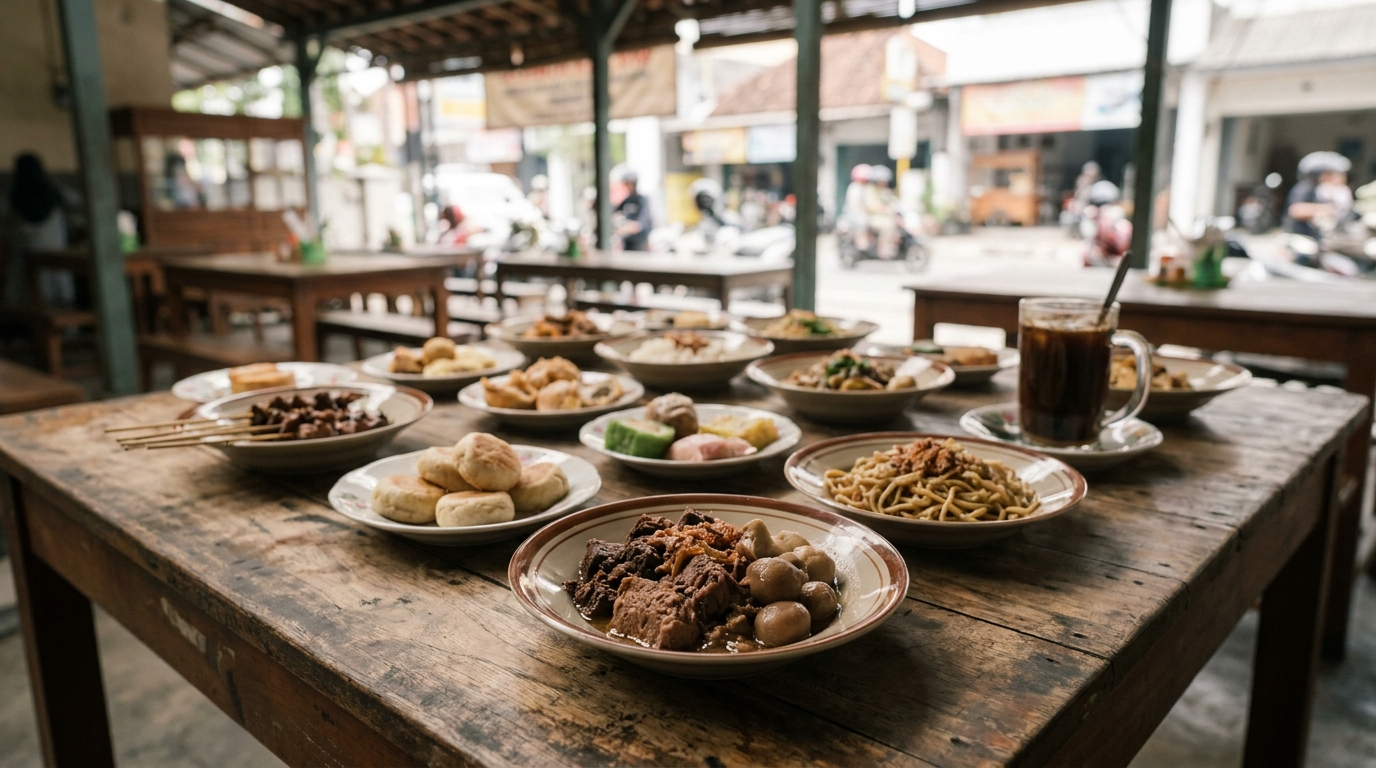
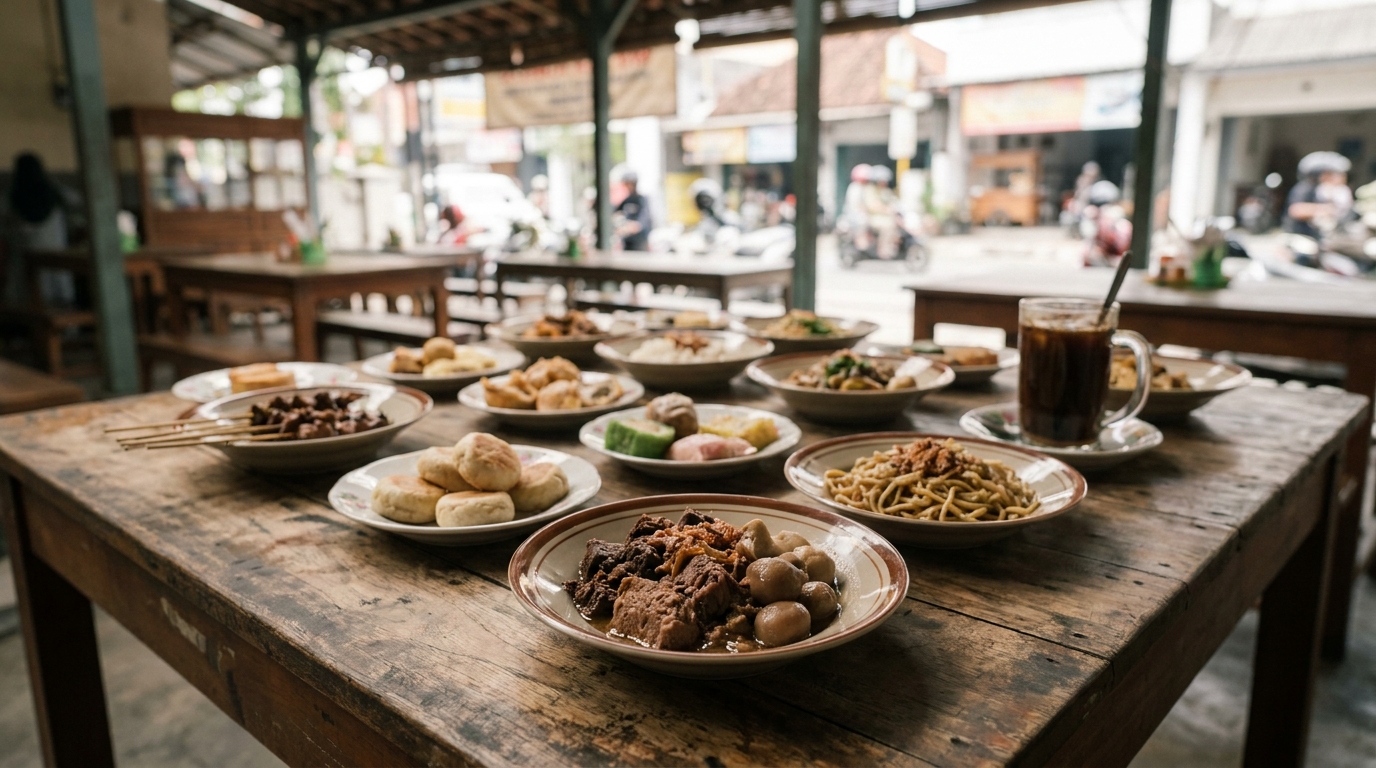
1. Gudeg — Yogyakarta’s Signature Dish
Young jackfruit (nangka muda) braised for hours in coconut milk, palm sugar, and spices until soft and golden-brown. Served as a set meal with steamed rice, opor ayam (chicken in coconut sauce), krecek (spiced crispy cow skin), boiled egg, and sambal. Has a distinctive sweet-savory flavor unlike any other Indonesian dish.
Price: 20,000-45,000 IDR for a full set meal
Best places:
– Warung Gudeg Bu Tjitro (Jl. Adisucipto) — considered by locals as Yogyakarta’s definitive gudeg, open since 1925
– Gudeg Wijilan food street (south of the Kraton, Jl. Wijilan) — 10+ gudeg restaurants in one alley, open from 6am
– Gudeg Bu Harjo (Malioboro area) — affordable, popular with locals
Gudeg types:
– Gudeg basah (wet): Fresh, softer texture, coconut sauce still liquid. Better on the day it’s made.
– Gudeg kering (dry): Drier, darker, more concentrated flavor. Traditionally made for longer preservation — sold in sealed clay pots as a Yogyakarta souvenir.
2. Bakpia — Yogyakarta’s Famous Pastry
Small round pastry with sweet fillings — originally mung bean paste (kacang hijau), now available in dozens of variations: sweet potato, durian, green tea, cheese, chocolate. Thin, slightly flaky shell with dense sweet filling.
Price: 35,000-80,000 IDR per box (25-30 pieces)
Best places:
– Bakpia Pathuk 75 (Jl. KS Tubun, Pathuk area) — the most cited original source
– Bakpia 145 — consistently high quality, popular with local buyers
– Malioboro shops — dozens of bakpia shops, prices slightly higher than Pathuk area
Bakpia quality varies significantly. Freshly made bakpia (look for shops with visible baking activity, warm trays) is dramatically better than boxed bakpia from souvenir stalls that may be days old. Ask: “yang baru ya?” (fresh ones please?) when buying.
3. Soto Ayam Yogyakarta
Yogyakarta’s version of the national chicken soup — clear golden turmeric broth with shredded chicken, glass noodles (vermicelli), hard-boiled egg, rice cakes (lontong), crispy shallots, and fresh tomato. Lighter than other regional soto variations.
Price: 12,000-25,000 IDR
Best places:
– Soto Kadipiro (Jl. Wates) — institution since 1921, lunch queues common
– Warung-warung around Beringharjo market — local-focused, very affordable
– Any standard warung serving full Indonesian menu
4. Nasi Kucing (Angkringan Style)
“Cat rice” — the signature offering of Yogyakarta’s angkringan carts. Small banana-leaf wrapped portions of rice with toppings (teri kacang/anchovy peanuts, sambal, tempe). Designed to be ordered several packets at a time, paired with satay (10,000-15,000 IDR for 5 sticks), boiled eggs, and hot drinks.
Price: 2,000-3,000 IDR per rice packet; 15,000-30,000 IDR for a satisfying angkringan meal
Where: Angkringan stalls set up from 6pm along Malioboro, Jl. Sosrowijayan, and throughout the city. Most recognizable by the cart with lamp, owner seated inside selling from small plastic containers.
5. Wedang Ronde
Hot ginger-infused syrup with glutinous rice balls (ronde) filled with crushed peanuts and palm sugar, often served with pineapple cubes and kolang-kaling (palm fruit). A Yogyakarta cold-evening staple, especially September-November.
Price: 8,000-15,000 IDR
Where: Angkringan carts, traditional beverage stalls on Malioboro, markets
6. Kipo
Very small, palm-sized green rice cakes made from glutinous rice flour mixed with pandan leaf juice, filled with shredded coconut and palm sugar, grilled on banana leaf. A Yogyakarta speciality that rarely appears outside the city.
Price: 5,000-8,000 IDR for 5 pieces
Where: Kotagede area (traditional production area), occasional Malioboro market vendors
7. Oseng-oseng Mercon
“Fireworks stir-fry” — a Yogyakarta specialty of spicy stir-fried beef (including tendon and cartilage) cooked with chili, bay leaves, and coconut water. The name comes from the explosive heat level. Not for those who can’t handle strong spice.
Price: 25,000-45,000 IDR
Best places:
– Oseng-oseng Mercon Bu Nanik (Jl. KH Ahmad Dahlan) — the most famous, queues on weekends
– Javanese restaurants in Prawirotaman area
8. Pecel
A Javanese take on the Indonesian peanut sauce dish — assorted steamed vegetables (kangkung, bean sprouts, long beans, spinach) smothered in a sweet-spicy peanut sauce, served with rice crackers and rice or lontong (compressed rice).
Price: 10,000-20,000 IDR
Where: Traditional warungs throughout the city, Beringharjo market area, morning food stalls
9. Tahu Gejrot
Fried tofu pieces in a thin, tangy sauce of palm sugar, tamarind, chili, and shallots. Served cold in a small clay bowl. Refreshing, inexpensive street snack.
Price: 5,000-10,000 IDR
Where: Beringharjo market, Malioboro street vendors
10. Nasi Liwet Yogyakarta
Rice cooked in coconut milk with pandan leaves, served with shredded chicken, egg, tofu, and labu siam (chayote). Similar to its Solo counterpart but with Yogyakarta spicing differences.
Price: 20,000-35,000 IDR
Where: Traditional Javanese warungs, morning markets
11. Sate Klathak
A Bantul (near Yogyakarta) specialty — goat meat satay skewered on bicycle spokes rather than bamboo, grilled over coconut shell charcoal. The metal skewers conduct heat to cook the meat from inside. Distinctly smoky, slightly gamey, unmissable.
Price: 30,000-50,000 IDR for a portion
Best place: Sate Klathak Pak Pong (Jl. Imogiri, ~15km south) — originator, worth the trip
12. Ronde Jahe (Ginger Tea with Rice Balls)
Hot ginger tea with glutinous rice balls, peanuts, and sliced jackfruit — a warming drink-dessert hybrid. Found at traditional drink stalls and night markets throughout the city.
Price: 8,000-12,000 IDR
Where: Angkringan carts, traditional beverage stalls near Malioboro
The 3-Day Yogyakarta Itinerary
The plan we use ourselves — sent straight to your inbox.
- Day-by-day route
- Where to stay
- Real 2026 costs
Free · No spam · Unsubscribe anytime
Find your Yogyakarta hotel on the map
Live prices from Booking & Airbnb — tap a pin to compare stays around Malioboro and beyond.
Best Eating Areas in Yogyakarta
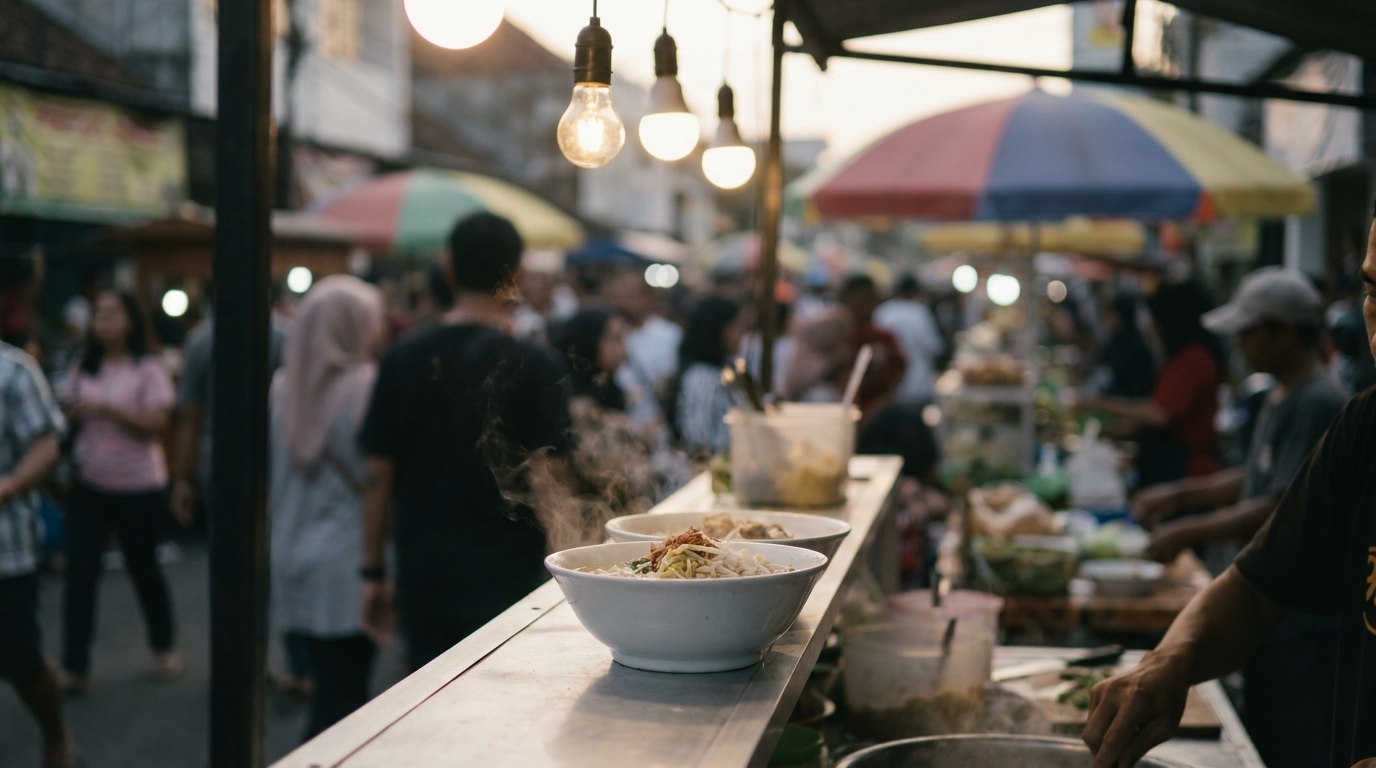
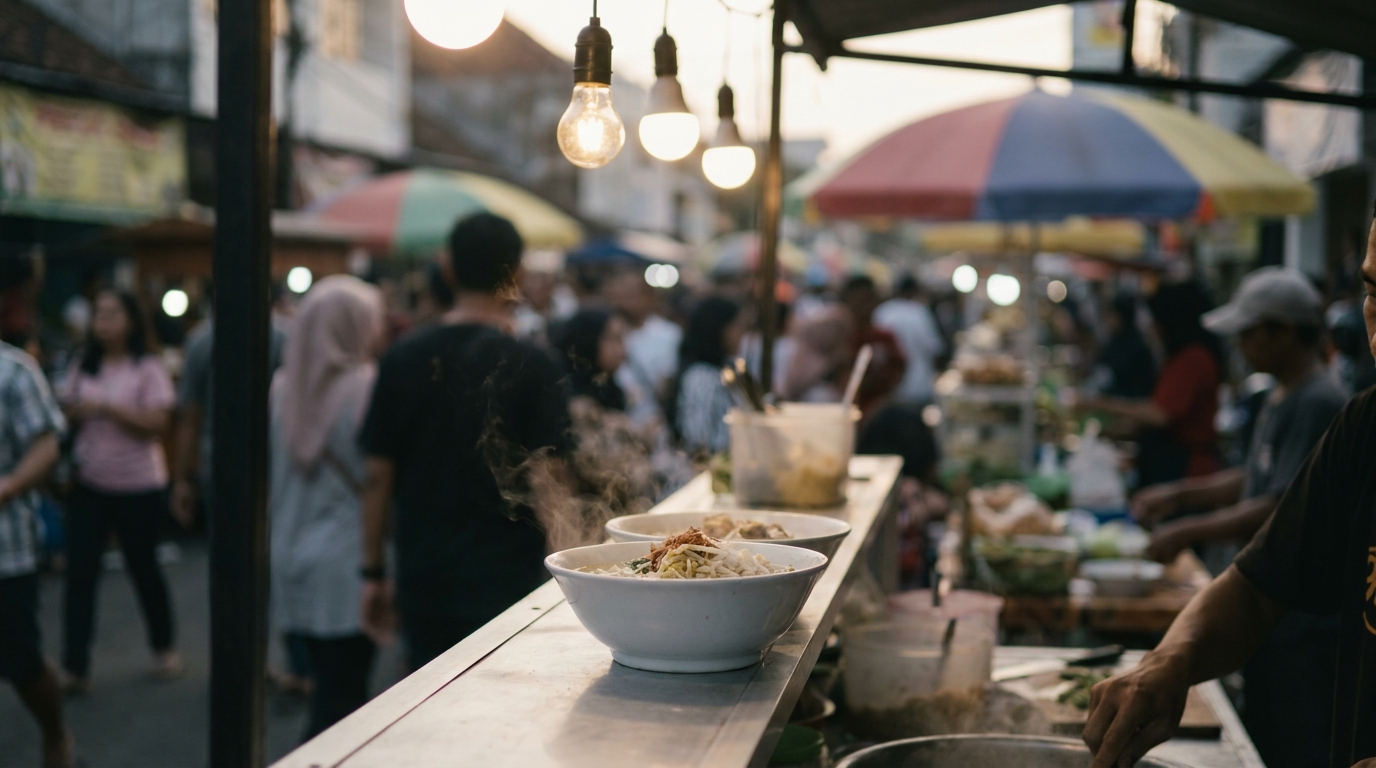
Wijilan Food Street (South of the Kraton)
The dedicated gudeg strip — 10+ restaurants in one alley south of the Kraton’s south square (alun-alun selatan). Opens from 6am. Best gudeg quality in the city. Combine with a morning Kraton visit.
Malioboro Street (Evening, 5pm+)
Street food vendors set up from late afternoon. Angkringan stalls appear from 6pm. Wide variety from satay to bakpia to grilled corn. Tourist-focused pricing but convenient.
Prawirotaman Arts District (Cafes and Restaurants)
Higher quality sit-down dining options for mid-range travelers. Mix of traditional Javanese food, Western options, and fusion. Cafe Batik (courtyard setting) and Via Via Yogyakarta (international menu) are reliable choices.
Beringharjo Market (Morning)
Yogyakarta’s main traditional market, east of Malioboro. Street food level around the market entrance — fresh market snacks (jaje pasar), soto, and traditional Javanese sweets. Morning hours (7-11am).
Budget Eating in Yogyakarta
| Option | Price Range | Notes |
|---|---|---|
| Angkringan meal (nasi kucing + satay) | 15,000-25,000 IDR | Best value in the city |
| Warung lunch (nasi campur) | 15,000-30,000 IDR | Local staple |
| Gudeg set meal | 20,000-45,000 IDR | Full meal, very filling |
| Soto ayam | 12,000-25,000 IDR | Breakfast or lunch |
| Bakpia box (souvenir) | 35,000-80,000 IDR | Per box |
| Sit-down restaurant | 50,000-150,000 IDR per person | Prawirotaman area |
Full budget breakdown: Yogyakarta on a Budget.
See also: Yogyakarta itinerary | best things to do in Yogyakarta
Frequently Asked Questions
What is Yogyakarta’s most famous food?
Gudeg — young jackfruit braised in coconut milk and palm sugar. It’s Yogyakarta’s city dish and has been associated with the royal court cuisine for centuries. Bakpia pastry is the most famous souvenir food.
Is Yogyakarta food spicy?
Less spicy than Padang or Manado food. Javanese cuisine from Yogyakarta tends toward sweet-savory with moderate heat. Oseng-oseng mercon is the main exception (very spicy). Sambals are served on the side — you control the heat level.
What is angkringan?
A Yogyakarta street food tradition — push-cart stalls (angkringan) selling small portions of rice (nasi kucing), satay, fried snacks, and hot drinks from around 6pm to midnight. The cheapest and most authentic way to eat in Yogyakarta. A full angkringan meal costs 15,000-25,000 IDR.
Where to eat gudeg in Yogyakarta?
The Wijilan food street (south of the Kraton) is the classic choice — 10+ traditional gudeg restaurants in one alley. Warung Gudeg Bu Tjitro (since 1925) is the most celebrated single restaurant. Most restaurants open from 6am (gudeg is traditionally a morning dish).
Affiliate Disclosure: This post may contain affiliate links. We earn a small commission at no extra cost to you if you book through these links.
Sources:
1. Tourism Indonesia — Yogyakarta cuisine and food culture, 2025
2. Yogyakarta Special Region Government — traditional culinary heritage, 2025
3. Indonesian Ministry of Tourism — culinary destination guide, Yogyakarta, 2025