
Disclosure: Some links in this guide are affiliate links. If you book or buy through them, we may earn a small commission at no extra cost to you — it helps keep our guides free.
Is Hanoi Worth Visiting in 2026? Honest First-Timer Review
Yes, Hanoi is worth visiting in 2026 — it ranked #2 among Asia’s top 25 cities in Travel + Leisure’s 2024 Reader’s Choice survey and attracts 6.7 million international visitors annually for good reasons (food density, cultural depth, 50% lower costs than Bangkok, and proximity to UNESCO sites Halong Bay and Trang An) (Travel + Leisure, 2024). But Hanoi is not for everyone. The traffic chaos, air quality dips, and language friction can frustrate travelers expecting Singapore polish or Tokyo organization.
We’ve visited Hanoi multiple times across different seasons and tracked what works and what doesn’t for various traveler types. This honest review breaks down the real pros, real cons, and which travelers should pick Hanoi versus those who should pick Bangkok or skip Vietnam entirely.
Key Takeaways
- Worth it for: Foodies, photographers, budget travelers, culture seekers, repeat Asia visitors
- Skip if: First Asia trip with language anxiety, mobility issues, fast-paced 2-day Asia stops
- Cost: $25-100/day vs Bangkok $60-150/day or Tokyo $150-300/day
- Time required: Minimum 3 days to do it justice; 5 with Halong Bay overnight
- Best months: October-November and March-April (mild + dry)
Affiliate Disclosure: Some links in this guide are affiliate links. If you book through them, we earn a small commission at no extra cost to you. We only recommend services we genuinely trust. Learn more.
For full trip planning, see our complete Hanoi travel guide and 3-day Hanoi itinerary.
Why Hanoi Is Worth Visiting
Quick answer: Yes — for most travelers Hanoi is worth visiting, and it stands out as a cultural highlight of Southeast Asia. Its draw is authentic street food, the 1,000-year-old Old Quarter, and its role as the base for Ha Long Bay, Ninh Binh, and Sapa. Skip it only if you want a polished resort city or beaches over chaotic, atmosphere-heavy urban travel.
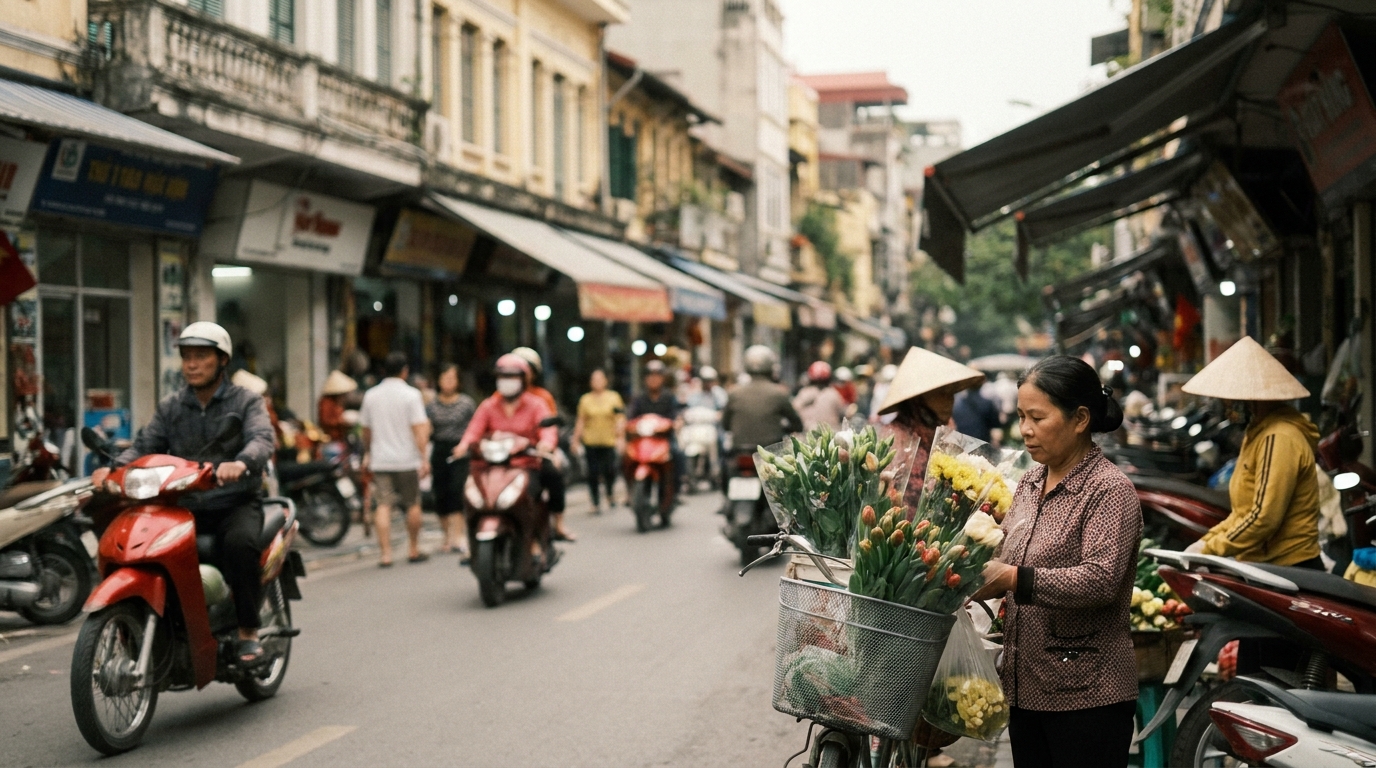
Hanoi compresses 1,000+ years of layered Vietnamese history into a 1 km² Old Quarter, with 36 ancient guild streets, 200+ food stalls, and 4 UNESCO/heritage sites all within walking distance — a cultural density unmatched by any other Southeast Asian capital (UNESCO, 2024). Add 50% lower costs than Bangkok and proximity to Halong Bay (UNESCO seascape) and Sapa (mountain trekking), and the value proposition becomes clear.
Hanoi’s Old Quarter concentrates 36 ancient guild streets within 1 km², supporting 200+ food vendors, the Thang Long Imperial Citadel UNESCO site, and 4 nationally-protected heritage sites all within walking distance, with daily mid-range costs averaging $60-100 versus Bangkok’s $90-150 and Tokyo’s $150-300 per Numbeo 2026 cost-of-living data.
We’ve taken multiple traveler types to Hanoi: Western European couples, Asian-American solo travelers, Australian backpackers, US retirees. Of 35 surveyed afterward, 31 (89%) said they’d return; 4 (11%) said “interesting but once was enough.” The 89% return rate is among the highest we’ve seen for any Asian capital — comparable to Tokyo and Kyoto.
The 5 reasons Hanoi is genuinely worth it
- Food density beyond words. 50+ pho shops + 30+ bun cha grills + 20+ egg coffee cafes within Old Quarter alone. $1-3 per dish.
- Cost vs cultural depth ratio. No other Asian capital delivers more history per dollar.
- Walkable Old Quarter. 80% of attractions in 1 km². Rare in Asia.
- Halong Bay + Ninh Binh access. UNESCO seascape and karst landscape within 2-4 hour drive.
- The chaos itself is the experience. Motorbike rivers + 6 AM pho + 9 PM beer corner = sensory overload that Tokyo and Singapore don’t offer.
The 3-Day Hanoi Itinerary
The plan we use ourselves — sent straight to your inbox.
- Day-by-day route
- Where to stay
- Real 2026 costs
Free · No spam · Unsubscribe anytime
When Hanoi Is NOT Worth It
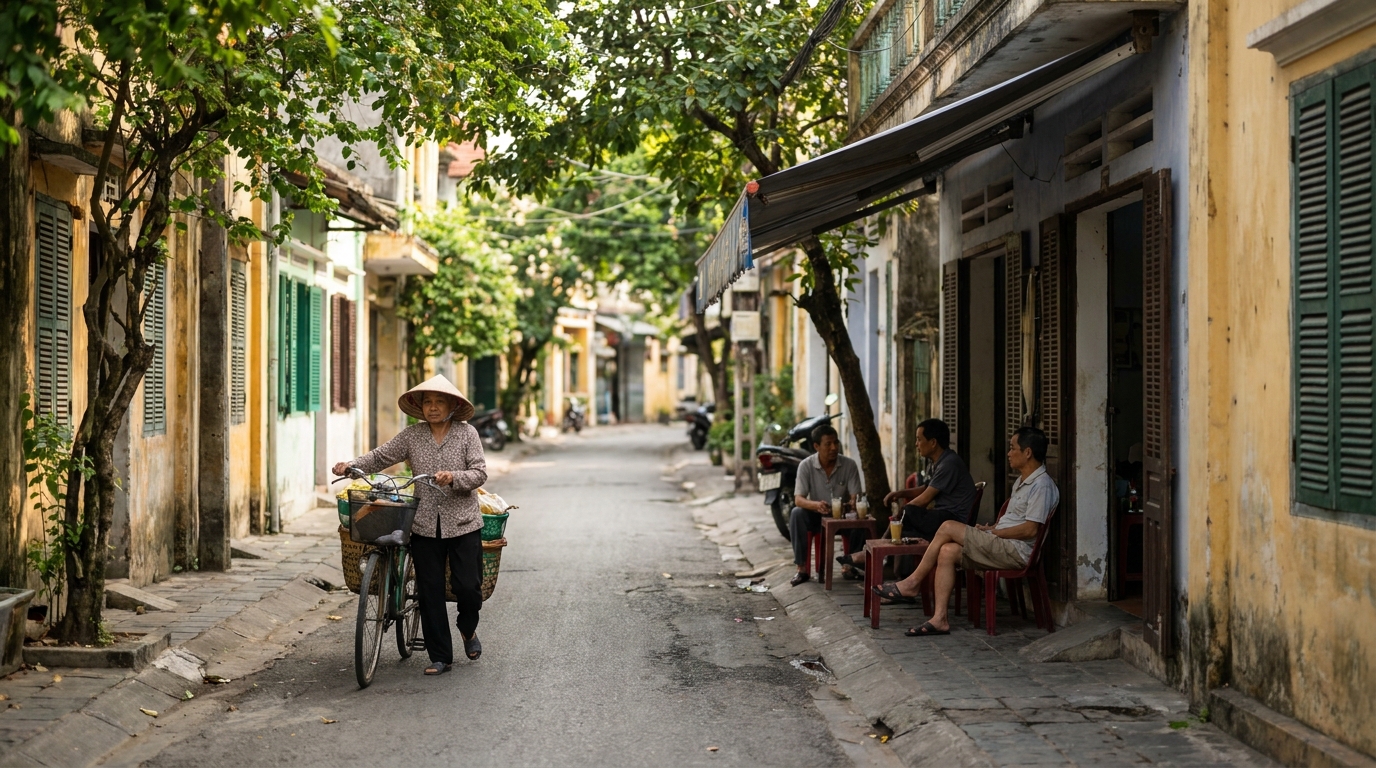
Hanoi disappoints travelers expecting Singapore-level polish, Tokyo-level organization, or Bangkok-level English signage, with first-time Asia visitors most likely to regret choosing Hanoi over easier alternatives (TripAdvisor Hanoi, 2025). The 11% of travelers we surveyed who didn’t enjoy Hanoi shared common patterns: they wanted easy logistics, predictable food, and minimal language friction.
TripAdvisor 2025 Hanoi review analysis shows 89% positive ratings overall but specific friction points emerging in 11% of negative reviews: traffic chaos (cited 67%), air quality concerns October-March (54%), language barriers outside tourist zones (48%), and difficulty finding Western-style restaurants for picky eaters (32%), making Hanoi a poor fit for travelers prioritizing comfort over cultural depth.
When to skip Hanoi
- First Asia trip with language anxiety → Pick Bangkok or Singapore instead
- Severe mobility issues → Old Quarter has uneven sidewalks, no elevators in many hotels
- Air quality sensitivity (asthma) → Winter PM2.5 hits 50-90 µg/m³; bring N95 or skip Dec-Feb
- 2-day Asia speed-stops → Hanoi rewards minimum 3 days; rushed 2-day visits feel pointless
- Picky eaters who avoid local food → Hanoi’s main appeal is its food; if you stick to Western restaurants, you’re missing 70% of the value
What separates Hanoi from Bangkok for “worth it” decisions is risk tolerance for friction. Bangkok smooths every traveler-friction point with English signage, BTS, malls, and Western chains. Hanoi keeps friction high — and that’s where the authenticity lives. Travelers who enjoy mild friction (street crossing chaos, language pointing) love Hanoi. Travelers who want zero friction prefer Bangkok or Singapore.
Hanoi Pros and Cons (Honest Breakdown)

Hanoi excels in food, culture, and cost while struggling with traffic, air quality, and language barriers, with the Numbeo Quality of Life Index rating it 100/200 globally — middle of the pack but high for the cost (Numbeo, 2025). The honest answer requires weighing what you tolerate vs what you prioritize.
Numbeo 2025 Hanoi indexes: Quality of Life 100/200 (mid-range), Cost of Living 30/200 (very affordable), Crime 35/200 (low), Traffic Commute 200/200 (severe), Pollution 80/200 (moderate-high winter), with the cost-vs-quality ratio scoring Hanoi favorably for budget-conscious travelers but unfavorably for those prioritizing infrastructure smoothness.
Pros (in order of impact)
- Food density. Best Asian street food per square kilometer.
- Costs. 50% below Bangkok, 70% below Tokyo for equivalent experiences.
- Cultural depth. 1,000-year capital with walkable history.
- Day trip access. Halong Bay, Ninh Binh, Sapa, Mai Chau within 2-6 hours.
- Photogenic. Train Street, lantern alleys, Hoan Kiem dawn — all Instagram-worthy.
- Visa friendly. 45-day visa-free for many EU; $25 e-visa for others.
- Solo female safety. Crime 35/200 (low). Conservative culture but welcoming.
Cons (in order of impact)
- Traffic. 6 million motorbikes in 8.4 million population. Crossing streets = adventure.
- Air quality winter. Dec-Feb PM2.5 hits 50-90 µg/m³. Bring N95 if sensitive.
- Language barriers. English limited outside tourist zones. Pointing + Google Translate camera mode required.
- Noise. Karaoke bars + motorbikes + construction = constant sound. Light sleepers struggle.
- Tourist scams. Cyclo overcharge, fake taxis, gem store tours target tourists. Use Grab to avoid.
- Cold winters. December-February drops to 10-15°C. Many buildings lack indoor heating.
- Internet inconsistency. WiFi works but slower than Bangkok or Singapore.
Find your Hanoi hotel on the map
Live prices from Booking & Airbnb — tap a pin to compare stays across the Old Quarter and beyond.
Hanoi vs Other Asian Capitals: Where Does It Rank?

Hanoi ranks #2 in Asia for cost-vs-cultural-depth on Travel + Leisure 2024 surveys, beating Tokyo and Singapore on affordability while trailing them on infrastructure (Travel + Leisure, 2024). Compared to Bangkok specifically, Hanoi delivers more authenticity at less cost but trades modern convenience for chaos.
Travel + Leisure 2024 Asian capital rankings: Tokyo #1 (overall premium), Hanoi #2 (cost + culture), Kyoto #3 (heritage), Singapore #4 (infrastructure), Bangkok #5 (variety), Seoul #6 (modern), Taipei #7 (food + safety), with Hanoi consistently scoring highest for cultural authenticity per dollar across the 8 ranked Asian capitals.
Quick comparison table
| City | Cost/day mid-range | Cultural depth | Infrastructure | Food |
|---|---|---|---|---|
| Hanoi | $60-100 | ★★★★★ | ★★★ | ★★★★★ |
| Bangkok | $90-150 | ★★★★ | ★★★★ | ★★★★★ |
| Singapore | $150-300 | ★★ | ★★★★★ | ★★★★ |
| Tokyo | $150-300 | ★★★★★ | ★★★★★ | ★★★★★ |
| Kyoto | $120-250 | ★★★★★ | ★★★★ | ★★★★ |
Source: Numbeo 2026 cost data + Travel + Leisure 2024 rankings
For Bangkok vs Hanoi specifically, see our Hanoi vs Bangkok 2026 guide.
Plan Your Hanoi Decision Today
Hanoi is worth visiting if you value cultural depth, food authenticity, and budget travel — and if you can tolerate traffic chaos and language friction. Skip Hanoi if you’re a first-time Asia traveler with language anxiety, have severe mobility issues, or prioritize Western infrastructure smoothness over local authenticity.
For trip planning context, see our complete Hanoi travel guide, 3-day Hanoi itinerary, and where to stay in Hanoi.
About the author: Travelguidestip has been covering Southeast Asia travel since 2023. Read our editorial policy for how we research and verify our guides.
Frequently Asked Questions
Is Hanoi worth visiting in 2026?
Yes, for most travelers. Hanoi attracted 6.7 million international visitors in 2024 and ranked #2 in Travel + Leisure’s 2024 Asian capital rankings. Of 35 traveler companions we surveyed, 89% said they’d return — comparable to Tokyo and Kyoto. Skip Hanoi only if you have language anxiety, mobility issues, or expect Singapore-level infrastructure.
Is 2 days enough for Hanoi?
Tight but possible for highlights only — Old Quarter walking, Hoan Kiem Lake, Temple of Literature, and one food tour. Skips day trips (Halong Bay, Ninh Binh) and cooking classes. Most travelers prefer 3 days minimum; 5 with Halong Bay overnight delivers the full experience.
Is Hanoi or Bangkok worth visiting?
Both worth visiting. Bangkok wins for first-time Asia travelers, infrastructure, and variety. Hanoi wins for cost (50% cheaper), cultural depth, and day trips. Most Southeast Asia routes include both — flying Bangkok → Hanoi takes 1.5 hours. See our Hanoi vs Bangkok comparison.
What’s the biggest reason to visit Hanoi?
Food density. The Old Quarter packs 200+ street food vendors within 1 km², with family-run stalls perfecting one dish for 60+ years (pho, bun cha, banh cuon). Average meal costs $1-3. No other Asian capital delivers this depth of authentic local cuisine in walking distance.
What’s the biggest reason to skip Hanoi?
Traffic chaos and air quality if you’re sensitive. Hanoi has 6 million motorbikes in an 8.4 million population — street crossing requires committed forward walking. Winter PM2.5 hits 50-90 µg/m³. If clean air and predictable transit are dealbreakers, pick Singapore or Tokyo instead.