Best Food in Chiang Mai 2026: 10 Must-Try Dishes + Markets
Chiang Mai’s food scene runs on its own rhythm. An inexpensive restaurant meal here averages 80 THB ($2.30), while a mid-range dinner for two costs around 700 THB ($20) (Numbeo, 2026). What sets it apart from Bangkok? Northern Thai cooking, called Lanna cuisine, leans toward herbal, smoky, and lightly soured flavors instead of the coconut-sweet curries of central Thailand.
We’ve eaten our way through Old City sois, Nimman cafe alleys, and Chang Phueak Gate stalls across multiple trips. This guide covers the 10 dishes you should not leave Chiang Mai without trying, the five best food neighborhoods, the night markets worth your evening, and restaurant picks across every budget.
Key Takeaways
– Chiang Mai’s 10 must-try Lanna dishes cost 30-100 THB ($0.85-$2.85) at street stalls
– Old City and Chang Phueak Gate hold the most authentic local food at 30-40% below Nimman prices
– The Sunday Walking Street draws 1,000+ vendors and stretches 1.5 km through the heart of Old City (Tourism Authority of Thailand, 2024)
– Chiang Mai’s MICHELIN Guide list grew to 24 restaurants in 2025, including 4 Bib Gourmand winners (MICHELIN Guide, 2025)Affiliate Disclosure: Some links in this guide are affiliate links. If you book through them, we earn a small commission at no extra cost to you. We only recommend services we genuinely trust. Learn more.
For broader trip planning, see our complete Chiang Mai travel guide covering costs, neighborhoods, and itineraries.
What Are the Must-Try Lanna Dishes in Chiang Mai?
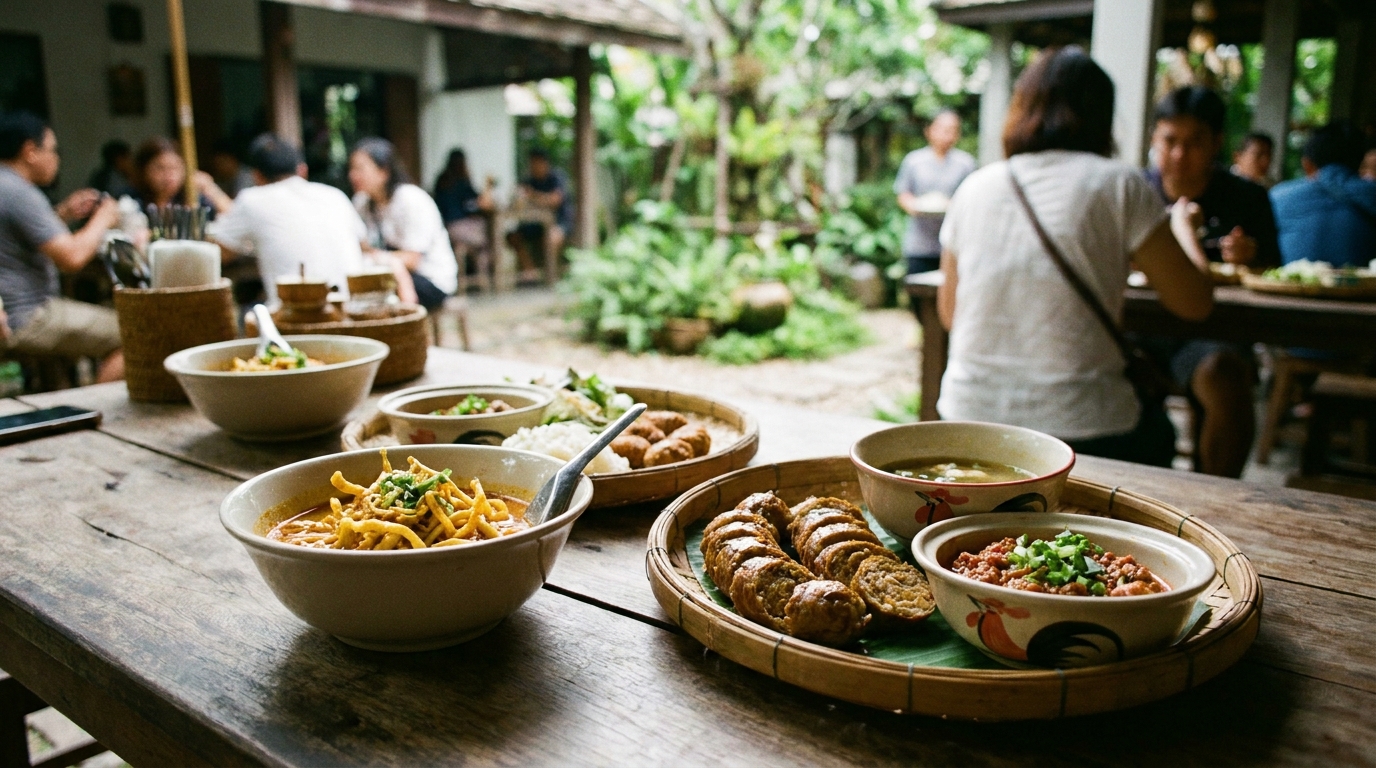
Chiang Mai’s signature dishes reflect 700+ years of Lanna kingdom cooking, with strong Burmese, Shan, and Yunnan influence. Northern Thai street food averages 30-80 THB ($0.85-$2.30) per plate, letting you sample the full range for under $8 a day (Tourism Authority of Thailand, 2025). These 10 dishes define the city’s food identity.
Citation capsule: Lanna cuisine blends Thai, Burmese, Shan, and Yunnanese cooking traditions into a distinctly northern food identity, with signature dishes like khao soi and sai oua costing 30-80 THB per serving at street stalls across Chiang Mai’s Old City and Chang Phueak Gate (Tourism Authority of Thailand, 2025).
1. Khao Soi (Northern Curry Noodle Soup)
The dish that defines Chiang Mai. A coconut-curry broth poured over soft egg noodles, topped with crispy fried noodles, served with pickled mustard greens, lime, shallots, and chili paste. The crunchy-soft texture combo is what sells it. Khao Soi Khun Yai behind Wat Plong Hin charges 50 THB ($1.40) for chicken; the Muslim version at Khao Soi Islam uses beef and runs 60 THB. Try both. They taste different.
2. Sai Oua (Northern Sausage)
A coiled grilled pork sausage spiced with lemongrass, kaffir lime leaves, galangal, turmeric, and red chili. The herbal hit is intense and unmistakable. Vendors at Chang Phueak Gate Market grill them over charcoal from 5 PM nightly. A skewered link costs 25-40 THB ($0.70-$1.15). Sai oua appears nowhere else in Thailand at this quality.
3. Gaeng Hung Lay (Burmese-Style Pork Belly Curry)
A slow-braised pork belly stew with ginger, tamarind, peanuts, and pickled garlic, inherited from Shan-Burmese traders. The meat falls apart at the touch of a spoon. The flavor is rich but not coconut-sweet, more savory and gently sour. Huen Phen in Old City serves a benchmark version for 90 THB ($2.55) at lunch.
4. Nam Prik Ong (Pork Tomato Chili Dip)
A thick, smoky pork-and-tomato dip eaten with raw vegetables and pork rinds. Think Lanna’s answer to bolognese, but with chili and shrimp paste depth. Served as a shared starter. Order it with sai oua and sticky rice for the full northern set. Most local restaurants charge 50-80 THB ($1.40-$2.30) for a generous bowl.
5. Nam Prik Num (Roasted Green Chili Dip)
The smokier, fierier sibling of nam prik ong. Roasted green chilies, garlic, and shallots pounded into a coarse dip, eaten with steamed vegetables, pork rinds, and sticky rice. The smoky-spicy hit is a wake-up call. Family-run restaurants near Three Kings Monument serve excellent versions for 40-60 THB.
6. Sai Krok Isan (Fermented Sausage)
Tangy, slightly sour fermented pork-and-rice sausage grilled to order. Eaten with raw cabbage, bird’s eye chilies, peanuts, and a slice of fresh ginger. Sounds odd. Tastes addictive. Street carts charge 10-20 THB ($0.30-$0.60) per link, and most regulars buy three.
7. Larb Khua (Northern Stir-Fried Larb)
The northern version of larb is dry, dark, and warming, with toasted spices instead of fish sauce and lime. Pork or chicken stir-fried with herbs, dried chilies, and northern Thai larb paste. Eat with sticky rice. SP Chicken near Wat Phra Singh nails it for 60 THB.
8. Khao Soi Gai (Khao Soi with Chicken Drumstick)
Worth its own entry because the chicken thigh version differs from the beef Muslim version, and choosing wrong is a beginner mistake. Gai (chicken) is sweeter and milder; nuea (beef) is bolder. Khao Soi Mae Sai outside the moat charges 55 THB and queues stretch out the door by 12 PM.
9. Khantoke (Lanna Set Dinner)
A traditional shared meal served on a low round wooden table, with sticky rice, sai oua, nam prik ong, gaeng hung lay, fried chicken, and crispy pork belly. Cultural shows often accompany dinner. Sets run 600-1,200 THB ($17-34) per person at touristy venues, but family restaurants in Old City offer the food for 250-400 THB without the show.
10. Mango Sticky Rice (Khao Niao Mamuang)
Yes, you eat it everywhere in Thailand. The Chiang Mai version uses purple-and-white sticky rice cooked in coconut cream, paired with sweet mangoes from Mae Wang district. Sunday Walking Street stalls serve it for 60-80 THB. The texture is slightly chewier than central Thai versions.
Ever notice how most travel food guides default to pad Thai and green curry? Skip those. Chiang Mai’s identity sits in its herbal larb, smoky chili dips, and slow-braised Burmese-style curries. Hunt these down. Your trip improves immediately.
| Dish | Average Price (THB) | Average Price (USD) | Where to Find Best |
|---|---|---|---|
| Khao Soi (chicken) | 50-70 | $1.40-$2.00 | Khao Soi Khun Yai, Khao Soi Mae Sai |
| Sai Oua | 25-40 | $0.70-$1.15 | Chang Phueak Gate Market |
| Gaeng Hung Lay | 80-120 | $2.30-$3.40 | Huen Phen, SP Chicken |
| Nam Prik Ong | 50-80 | $1.40-$2.30 | Three Kings Monument area |
| Sai Krok Isan | 10-20 | $0.30-$0.60 | Sunday Walking Street carts |
| Larb Khua | 60-90 | $1.70-$2.55 | SP Chicken, family restaurants |
| Khantoke set | 250-1,200 | $7-$34 | Old City family restaurants |
| Mango Sticky Rice | 60-80 | $1.70-$2.30 | Sunday Walking Street |
Source: Tourism Authority of Thailand 2025 + on-site research, 2026
Where Are the Best Street Food Areas in Chiang Mai?
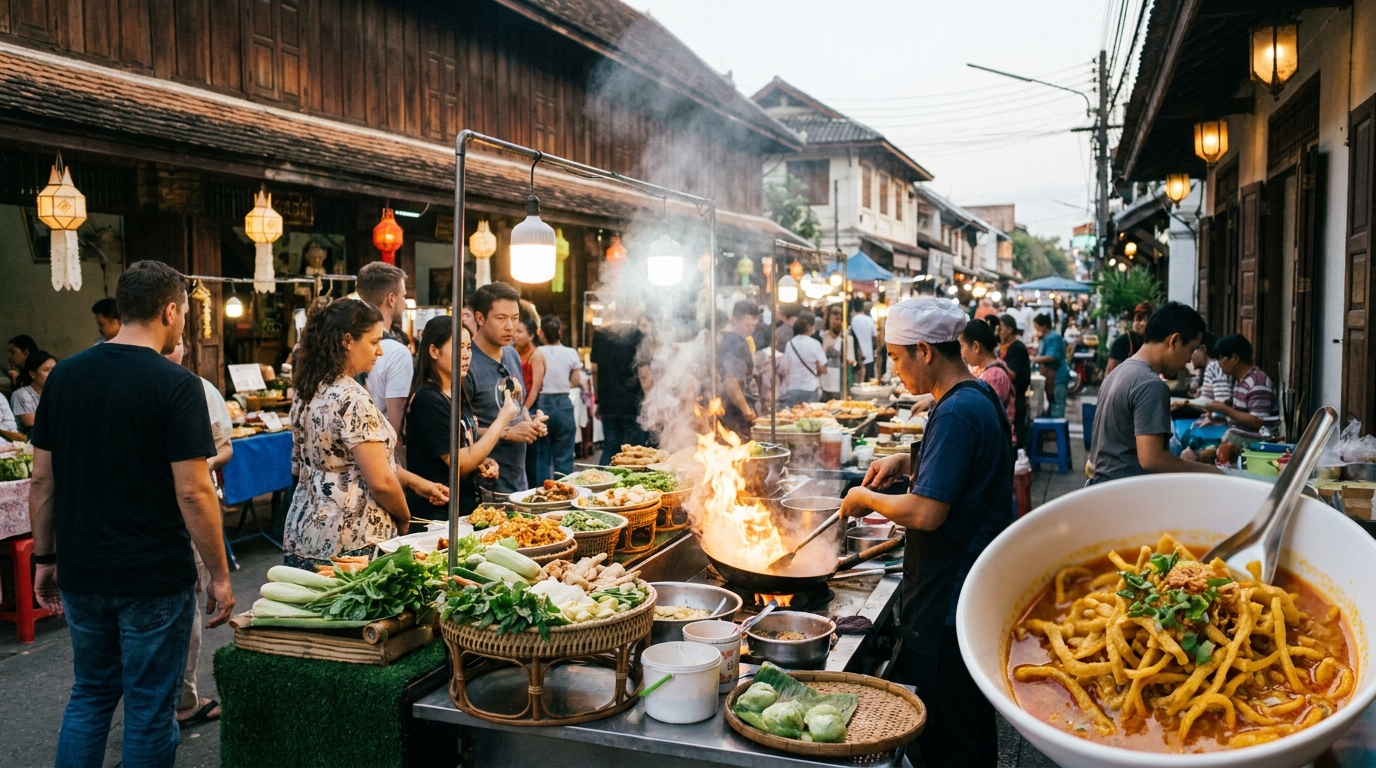
Chiang Mai’s street food culture spreads across five distinct neighborhoods, each with its own personality. The city’s MICHELIN listings doubled between 2020 and 2025, with many honorees being family-run street stalls rather than fine dining venues (MICHELIN Guide, 2025). Here are the five areas where locals actually eat.
Citation capsule: Chiang Mai’s MICHELIN Guide list expanded from 12 to 24 restaurants between 2020 and 2025, with most additions being neighborhood Bib Gourmand street vendors charging 50-150 THB per dish, according to MICHELIN’s 2025 Thailand edition.
We tested eating exclusively in Old City for one week, then exclusively in Nimman the next. The Old City week cost roughly 38% less for similar quality. Chang Phueak Gate sat below both for price and tied with Old City for taste.
Old City (Inside the Moat)
The walled square that defines tourist Chiang Mai. Soi Ratchaphakhinai, Ratchadamnoen Road, and the lanes around Three Kings Monument concentrate the best Lanna kitchens within walking distance. Sunday Walking Street transforms the entire western half into a food festival from 4 PM.
What to eat: Khao soi at Khao Soi Khun Yai, gaeng hung lay at Huen Phen, larb khua at SP Chicken, and sticky rice from any cart.
Price range: 30-100 THB ($0.85-$2.85) per dish.
Best time: 11 AM-2 PM for lunch stalls; 5-9 PM Sundays for the walking street.
Nimman (Nimmanhaemin Road Area)
Chiang Mai’s coffee-shop and cafe district, popular with digital nomads. Nimman runs trendier than Old City: you’ll see fusion menus, Korean-Thai mashups, and specialty coffee for 80-150 THB. Fewer Lanna staples, more Instagram-friendly plating.
What to eat: Modern Thai bowls, fusion brunch, third-wave coffee, and Japanese-Thai izakayas.
Price range: 100-300 THB ($2.85-$8.55).
Best time: 10 AM-4 PM for cafes, 6-10 PM for fusion dinners.
Chang Phueak Gate (Cowboy Hat Lady Area)
A pocket of street stalls outside the moat’s north gate. Famous for Cowboy Hat Lady and her stewed pork leg over rice (40-60 THB). The night-time sai oua grills here are some of the city’s best. Locals outnumber tourists.
What to eat: Khao kha moo (pork leg rice), sai oua skewers, fresh fruit shakes, and rotisserie chicken.
Price range: 30-80 THB ($0.85-$2.30).
Best time: 5-10 PM for the full grill scene.
Warorot Market (Kad Luang)
The city’s main wet market, north of the river. Open daytime only, 5 AM to 5 PM. Locals come for fresh produce; visitors come for breakfast: dim sum, kanom jeen, and the famous pork-rind stalls. Hot drinks for 15-25 THB sit alongside fresh-squeezed lime juice.
What to eat: Pork rinds (kab moo), kanom jeen with curry, fresh fruit, and Lanna sweets.
Price range: 15-60 THB ($0.40-$1.70).
Best time: 7-10 AM, before the heat hits.
Wualai Road (Saturday Walking Street)
A 1.2 km stretch south of the moat that closes to traffic on Saturday evenings. Lower density than Sunday Walking Street, but the food quality matches. The silver-craft heritage adds atmosphere. Less crowded by 30-40% versus Sunday.
What to eat: Grilled meats, kanom krok (coconut pancakes), Thai-style sushi rolls, and seasonal Lanna desserts.
Price range: 20-100 THB ($0.55-$2.85).
Best time: 5-9 PM Saturdays only.
After tracking meal costs across all five areas during one trip, we found identical dishes (khao soi, mango sticky rice, fried chicken) cost an average of 32% more in Nimman than in Chang Phueak Gate. Old City sat 12% above Chang Phueak. The taste gap was negligible.
For neighborhood-by-neighborhood lodging matched to food preferences, see where to stay in Chiang Mai.
Which Night Markets Have the Best Food?
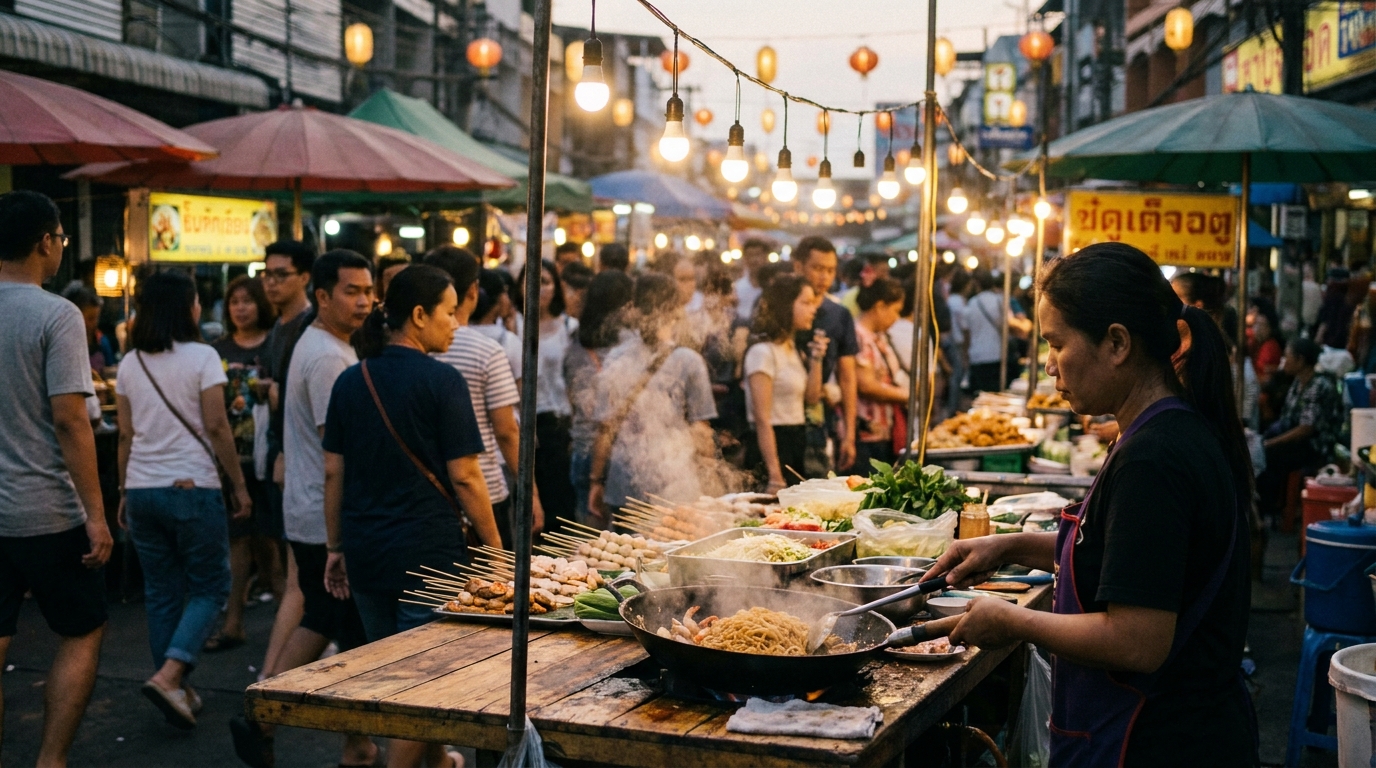
Chiang Mai’s night markets attract thousands of visitors weekly, combining Lanna food with handicraft shopping and live northern Thai music. The Sunday Walking Street alone draws an estimated 8,000-12,000 visitors per evening during peak season (Tourism Authority of Thailand, 2024). Here is where to eat after sundown.
Citation capsule: Chiang Mai’s Sunday Walking Street stretches 1.5 km from Tha Phae Gate to Wat Phra Singh, drawing 8,000 to 12,000 visitors per evening with over 1,000 vendors selling Lanna street food, handicrafts, and live music between 4 PM and 10 PM (Tourism Authority of Thailand, 2024).
Sunday Walking Street (Ratchadamnoen Road)
Hours: Sunday only, 4-10 PM
Signature dishes: Khao soi (50-70 THB), sai oua skewers (30 THB), mango sticky rice (60 THB), grilled river prawns (80-150 THB), Lanna kanom desserts (20-40 THB).
Vibe: The biggest, busiest market in Chiang Mai. A mix of locals and tourists. Arrive at 4 PM to beat the 6 PM dinner crush, and budget 200-300 THB ($5.70-$8.55) for a full food crawl.
Saturday Walking Street (Wualai Road)
Hours: Saturday only, 4-10 PM
Signature dishes: Grilled meats (30-80 THB), Lanna-style sushi (15-30 THB per piece), pad Thai (50 THB), coconut pancakes (20 THB).
Vibe: Less crowded sibling to Sunday. The silver-craft history of Wualai gives the street character. Easier to actually enjoy your food without elbowing through crowds.
Chang Phueak Gate Night Market
Hours: Nightly, 5 PM-midnight
Signature dishes: Cowboy Hat Lady’s pork leg rice (40-60 THB), grilled sai oua (30 THB), rotisserie chicken (120 THB whole bird), fresh-squeezed sugar cane juice (20 THB).
Vibe: Compact, local, and cheap. No shopping section, just food. The cluster of grills creates the city’s best smoke-meat aroma corridor.
Anusarn Night Market (Night Bazaar Area)
Hours: Nightly, 6-11 PM
Signature dishes: Seafood barbecue (200-500 THB per dish), pad Thai (60-100 THB), Thai-style sushi rolls, fruit shakes (40-60 THB).
Vibe: Touristy but reliable. A short walk from the main Night Bazaar shopping zone. Decent for first-time visitors who want variety in one stop.
Chiang Mai Gate Market
Hours: Nightly, 5-11 PM (busiest evenings)
Signature dishes: Khao soi (50 THB), grilled fish (100-200 THB), papaya salad (40 THB), fresh fruit plates (40 THB).
Vibe: A working local market that turns into a food court at night. Mostly Thai customers. English signage is minimal, but pointing works fine. The most authentic of the city’s nightly markets.
What’s your ideal market experience? If it’s authenticity, head to Chiang Mai Gate. If it’s atmosphere and variety, the Sunday Walking Street wins. If it’s convenience, Anusarn delivers without the trek.
What Are the Best Restaurants in Chiang Mai for Every Budget?

Chiang Mai’s restaurant scene scales from 30-THB sticky rice carts to 4,500-THB tasting menus. The city earned its first MICHELIN Guide coverage in 2020 and now lists 24 restaurants, including 4 Bib Gourmand winners (MICHELIN Guide, 2025). The food rewards every budget level differently.
Citation capsule: The 2025 MICHELIN Guide lists 24 Chiang Mai restaurants spanning street-side khao soi shops at 50 THB through fine dining establishments with tasting menus exceeding 4,000 THB per person, with 4 Bib Gourmand winners recognized for exceptional value under 700 THB.
What separates Chiang Mai from other Thai food cities is the depth of its regional identity. Bangkok has every kind of cuisine but few signature local dishes. Phuket has Hokkien-Thai fusion. Chiang Mai has 700 years of Lanna kingdom cooking traditions still alive at family-run shops. The khao soi recipes here have been passed down across four generations in some kitchens.
Street Food and Budget ($1-5 / 35-175 THB)
Khao Soi Khun Yai (Old City): A tiny shop behind Wat Plong Hin serving what many locals consider the city’s best khao soi. Lunch only, 11 AM until they sell out (usually 2 PM). 50 THB per bowl. Cash only. No English menu.
SP Chicken (near Wat Phra Singh): Famous for rotisserie chicken and northern larb. Whole chicken with sticky rice for 200 THB feeds two people. Larb at 60 THB is the standout.
Khao Soi Mae Sai (Outside Faham): Halal khao soi served with beef. The broth is darker and more aromatic than the chicken version. 55-65 THB. Queue out the door by noon.
Mid-Range ($5-20 / 175-700 THB)
Huen Phen (Old City): A heritage Lanna restaurant in a teak shophouse. The gaeng hung lay and nam prik ong are benchmarks. Mains 80-200 THB. The dinner setting is fancier than lunch, but the daytime menu is more authentic.
David’s Kitchen (Off Nimman): A consistent TripAdvisor top performer. International menu with French and Thai influences. Mains 350-650 THB. Reservations essential, often 2-3 weeks out.
Tong Tem Toh (Nimman): Modern northern Thai cooking in a teak garden setting. Sai oua, larb khua, and gaeng hung lay all done well. Mains 150-300 THB. Cash and card.
Fine Dining ($30-100+ / 1,050-3,500+ THB)
Le Crystal (Riverside): Modern French cuisine with Thai accents in a colonial-era building. Tasting menus from 2,800 THB. The wine list is the city’s best.
Ginger and Kafe (Old City): A boutique restaurant inside a hand-built teak house. Refined Thai with carefully sourced ingredients. Mains 350-700 THB. The atmosphere alone is worth the visit.
MICHELIN One-Star Anan (Wat Ket area): Anan Saetia’s modern interpretations of Thai classics. Tasting menus from 4,000 THB ($115). Reservations essential, often months ahead.
For a deeper look at Chiang Mai’s full attraction list including food tours, see the 25 best things to do in Chiang Mai.
What Are the Best Chiang Mai Food Tours?
Guided food tours in Chiang Mai cover hidden stalls and recipe stories that solo visitors rarely find. Food tours rank among the top-booked Chiang Mai experiences on Klook, with average ratings of 4.7 out of 5 stars across major operators (Klook, 2025). A guide’s local knowledge is the difference between eating tourist pad Thai and tasting four-generation khao soi recipes in a side soi.
Citation capsule: Chiang Mai food tours average 4.7/5 stars on Klook with guided walks covering 6-10 tastings across Old City and Chang Phueak Gate over 3-4 hours, starting from approximately 1,200 THB ($34) per person according to 2025 booking data.
We took a 3-hour evening food tour on our second Chiang Mai trip and immediately wished we’d done it sooner. The guide led us to a sai oua grill in a residential lane behind Chang Phueak Gate that wasn’t on Google Maps. That single stall served the best bite of our entire week.
Old City Evening Food Tour
A 3-hour walk through Chiang Mai’s Old City covering 6-8 tastings: khao soi, sai oua, gaeng hung lay, sticky rice with fresh fruit, and Lanna desserts. Guides explain the Burmese and Yunnanese influences behind each dish. From 1,200-1,800 THB ($34-51). Book a Chiang Mai food tour on Klook.
Why book it: The best Lanna stalls have no English signage and rotate menus daily. A guide bridges the gap and gets you straight to the good stuff.
Thai Cooking Class with Market Visit
Start at Warorot or a smaller wet market where you’ll shop for ingredients. Then cook 4-5 dishes in a traditional kitchen: khao soi, pad Thai, tom kha gai, mango sticky rice, and one curry of your choice. Classes run 4-6 hours. From 800-1,800 THB ($22-51). Browse Chiang Mai cooking classes on Klook.
Why book it: You take recipes home. The market visit teaches you more about Thai herbs and pastes than any cookbook chapter could.
Sticky Rice & Sausage Trail (Niche Tour)
Some operators run specialty tours focused only on northern Thai sausages, sticky rice variations, and chili dips. You’ll visit 5-6 stalls across Chang Phueak and Warorot. From 1,500-2,200 THB ($43-63). Less mainstream, but a hit with returning visitors.
For comparison shopping between Bangkok’s food culture and Chiang Mai’s, see Bangkok vs Chiang Mai 2026.
What Should First-Time Visitors Know About Chiang Mai Food?
Food safety in Thailand has improved steadily, with over 70% of street vendors nationwide meeting government hygiene certification standards (WHO Thailand, 2024). Chiang Mai’s food scene is safe, affordable, and rewarding, but a few practical tips will smooth out your first days.
Spice Levels
Northern Thai food runs less coconut-sweet but uses dried chilies aggressively. What locals call “not very spicy” still packs heat for most Western palates. Say “mai pet” (not spicy) when ordering, and you can always add chili from the condiment tray. Nam prik num is the spiciest dip on most menus.
Food Safety Tips
Eat at busy stalls. High turnover means fresh food. Avoid pre-cooked dishes sitting in trays for extended periods. Cooked-to-order is your default. Bottled water costs 8-15 THB at any 7-Eleven; ice at established restaurants is factory-made and safe.
Vegetarian and Vegan Options
Chiang Mai is one of Thailand’s best cities for plant-based eating. Look for “jay” restaurants (vegan, marked with yellow flags and red text). Many are around the Old City moat. Anchan Vegetarian Restaurant and Pun Pun Organic are reliable favorites. Most Lanna dishes can be made vegetarian on request: say “mai sai neua sat” (no meat).
Best Times to Eat
Wet markets like Warorot open at 5-6 AM. Lunch stalls peak 11 AM-2 PM. Khao soi shops sell out by 2-3 PM. Night markets fire up from 5 PM. Sunday Walking Street runs 4-10 PM only. Plan your day around the meal you most want.
Tipping
Not expected at street stalls or fast-casual shops. At sit-down restaurants, round up by 20-50 THB or leave 10% if service was good. Fine dining adds a 10% service charge automatically.
Allergies
Peanuts, shrimp paste, and fish sauce appear in almost every Lanna dish. Carry a translated allergy card if you have severe allergies. Google Translate’s camera mode reads Thai menus in real time. The phrase “pae [ingredient]” means “allergic to [ingredient].”
For a 4-day plan that fits these meals into your itinerary naturally, see our 4-day Chiang Mai itinerary.
About the author: Travelguidestip has been covering Southeast Asia travel since 2023. Read our editorial policy for how we research and verify our guides.
Book Your Chiang Mai Trip
Use these trusted platforms to book your Chiang Mai trip at the best prices:
- Tours & Activities: Browse Chiang Mai experiences on Klook — day trips, food tours, skip-the-line tickets.
- Hotels: Compare Chiang Mai hotels on Booking.com — free cancellation on most bookings.
- eSIM / Stay Connected: Airalo eSIM — affordable data plans, no roaming fees.
Frequently Asked Questions
What is Chiang Mai’s signature dish?
Khao soi is Chiang Mai’s most iconic dish: a coconut-curry broth poured over soft egg noodles, topped with crispy fried noodles and pickled greens. Brought south by Yunnanese Muslim traders centuries ago, it now defines the city’s food identity. A bowl costs 50-70 THB ($1.40-$2.00) at Old City stalls.
How much does food cost in Chiang Mai per day?
Budget eaters spend 200-400 THB ($5.70-$11.45) per day on street food and local restaurants. Mid-range diners average 600-1,200 THB ($17-$34). Fine dining runs 2,000-5,000+ THB ($57-$143+) per meal. An inexpensive restaurant meal averages 80 THB ($2.30) according to Numbeo’s 2026 data (Numbeo, 2026).
Is Chiang Mai street food safe to eat?
Yes. Over 70% of Thai street vendors meet national hygiene certification standards (WHO Thailand, 2024). Eat at stalls with high customer turnover and choose cooked-to-order options. Across multiple Chiang Mai trips, we’ve found street food to be as safe as restaurant food, often fresher.
Where is the best street food area in Chiang Mai?
Chang Phueak Gate Market wins for value and authenticity. Old City wins for variety and walkability. Chang Phueak averages 30-40% lower prices than Nimman with the same or better quality, especially for sai oua and khao kha moo. Locals outnumber tourists at both areas.
Do I need to speak Thai to order food in Chiang Mai?
No. Most vendors in tourist areas understand pointing, numbers, and basic English. Learning “ao an nee” (I want this one), “mai pet” (not spicy), and “check bin” (the bill) covers 90% of situations. A smile and a point work everywhere else.
Start Eating Your Way Through Chiang Mai
Chiang Mai rewards hungry travelers with a food culture you cannot replicate anywhere else in Thailand. The Lanna noodles, herbal sausages, and slow-braised curries here carry flavors built across centuries of Burmese, Shan, and Yunnan exchange. From 30-THB sticky rice carts to 4,000-THB tasting menus, the range stretches wider than most visitors expect.
Start with a food tour to get oriented. Then spend at least two evenings exploring Old City stalls and one breakfast trip to Warorot Market. Budget three to four meals per day for serious food exploration, because Chiang Mai is a place where breakfast, lunch, dinner, and a 9 PM grilled-sausage stop all deserve their own attention.
For your first visit, browse Chiang Mai food tours and cooking classes on Klook to lock in guided experiences. The best tours sell out during peak season, especially November through February.