Disclosure: Some links in this guide are affiliate links. If you book or buy through them, we may earn a small commission at no extra cost to you — it helps keep our guides free.
So you’ve got Cambodia on your bucket list, but you’re stuck on one question: Siem Reap or Phnom Penh first? Here’s the quick verdict before we go deeper. Siem Reap wins for temples, tourism polish, and that “wow, I’m in Cambodia” feeling thanks to Angkor Wat. Phnom Penh wins for raw urban energy, French colonial architecture, and gut-punch history at S-21 and the Killing Fields. Most first-timers should start in Siem Reap, but skipping Phnom Penh means missing half the country’s soul.
We only recommend services we’d use ourselves. See our editorial policy for details. If you’re planning a trip and researching siem reap vs phnom penh, this guide covers everything you need.
Cambodia welcomed roughly 6.7 million international visitors in 2024, with around 60% landing in either Siem Reap or Phnom Penh first (Cambodia Ministry of Tourism, 2025). Both cities offer something the other can’t replicate. Let’s break down which one fits your trip.
complete Cambodia planning guide
Key Takeaways
– Siem Reap costs about $50/day average for budget travelers, while Phnom Penh runs $65/day (Numbeo, 2025)
– Angkor Wat draws 2.6 million visitors annually, making Siem Reap the tourism-friendly choice (UNESCO, 2024)
– Phnom Penh’s Killing Fields and S-21 are essential but emotionally heavy. Plan a light day after
– Bus between cities costs $12-18 (6 hours), flights run $50-80 (45 min)
– First-timers to Cambodia: do Siem Reap first (3 days), then Phnom Penh (2 days)
Siem Reap vs Phnom Penh: Head-to-Head Comparison
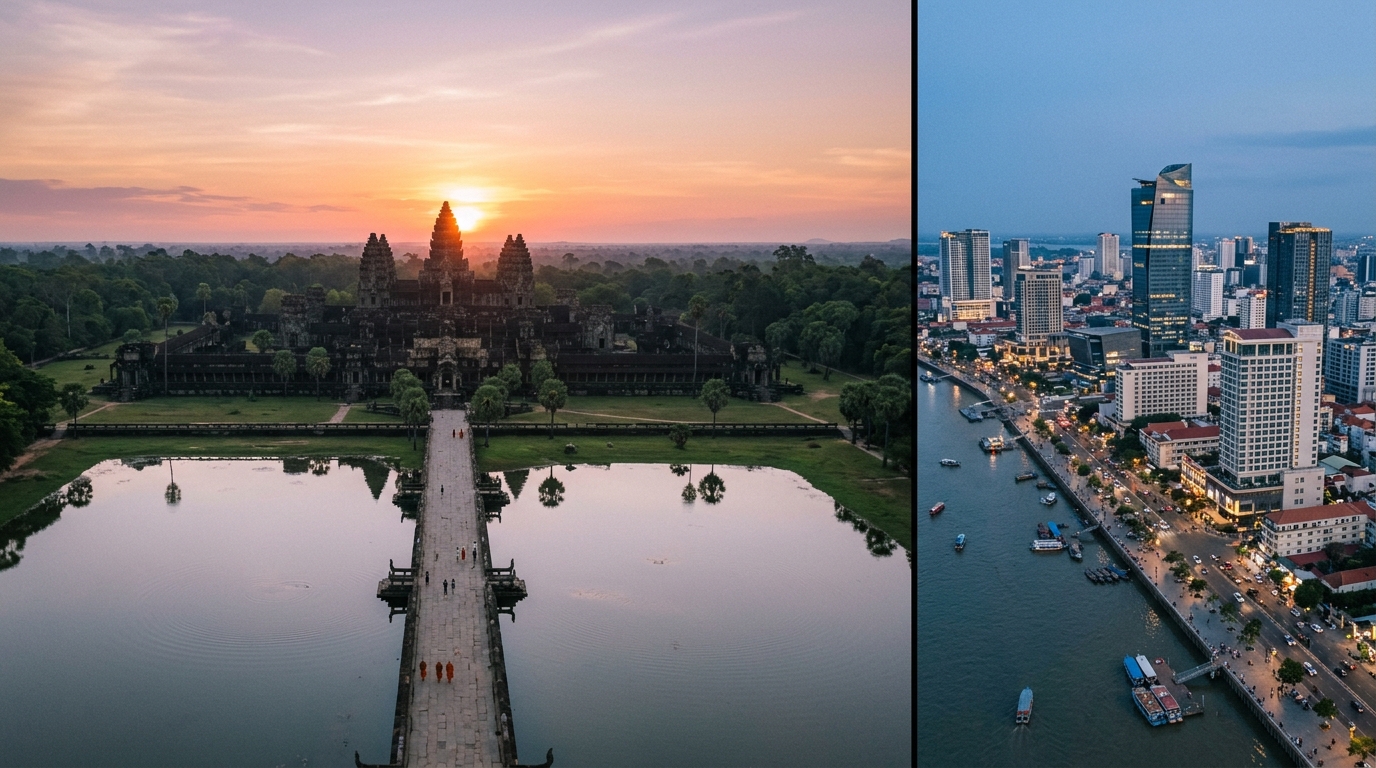
Quick answer: Siem Reap wins for temples, tourism polish, and first-timer ease thanks to Angkor Wat, while Phnom Penh wins for raw urban energy, French colonial architecture, and essential modern history at S-21 and the Killing Fields. Most first-timers should start in Siem Reap (3 days), then add Phnom Penh (2 days). Skipping the capital means missing half of Cambodia’s soul.
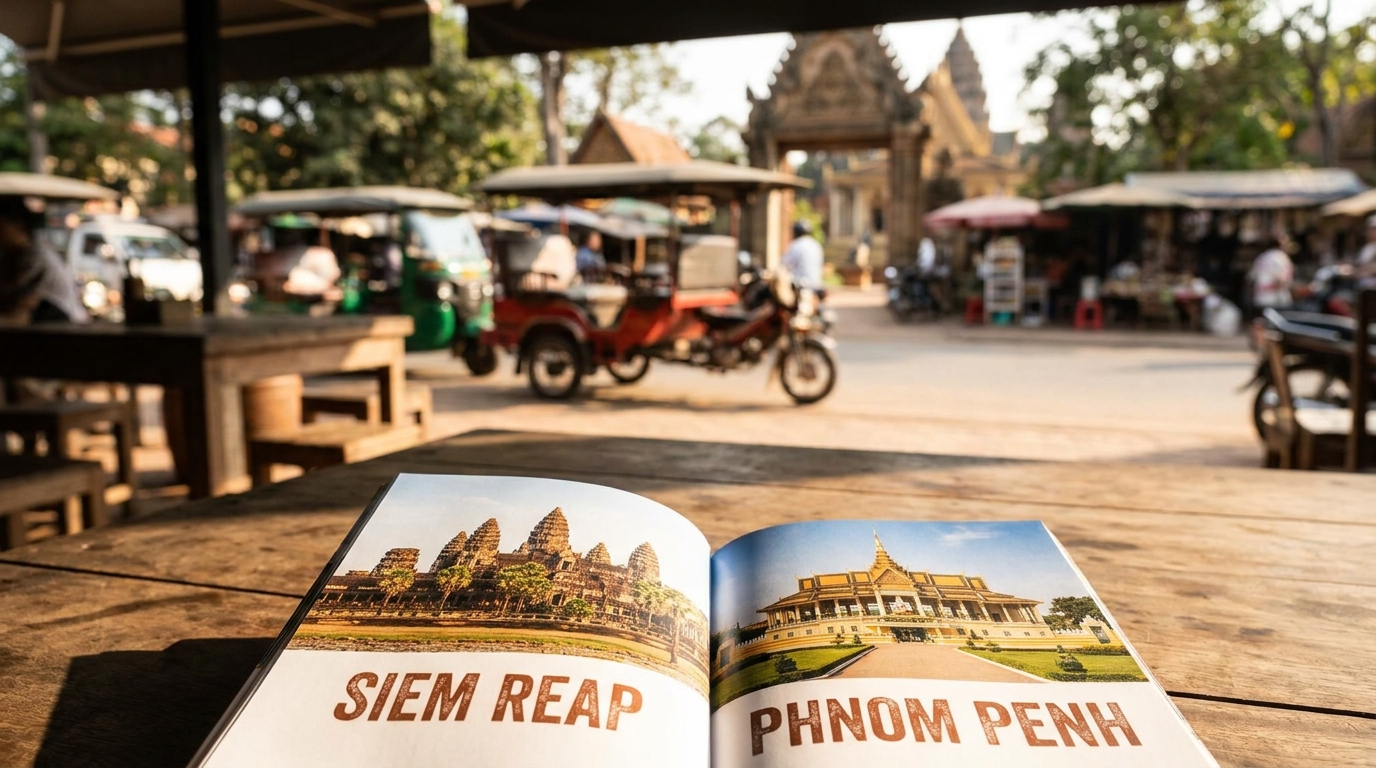
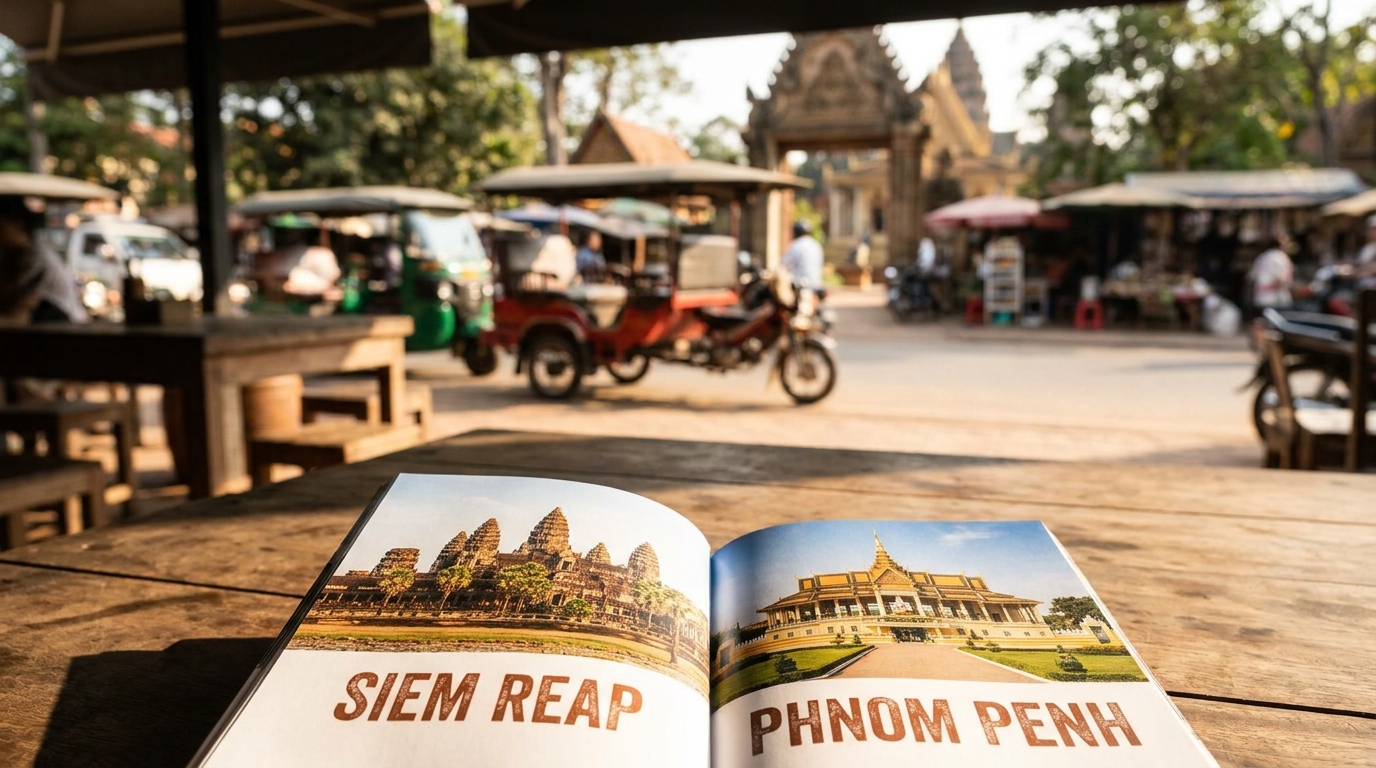
Before diving deep, here’s the side-by-side at a glance. According to TripAdvisor’s 2025 Travelers’ Choice rankings, Siem Reap ranks higher for tourist satisfaction (4.6/5) than Phnom Penh (4.1/5), but rankings don’t tell the whole story. Both cities serve different traveler needs.
| Category | Siem Reap | Phnom Penh |
|---|---|---|
| Vibe | Temple town, tourist-friendly | Capital city, urban grit |
| Daily budget (mid-range) | $80-120 | $90-140 |
| Top attraction | Angkor Wat complex | Royal Palace + S-21 |
| Best for | Temples, culture, families | History, food, nightlife |
| Avg hotel (3-star) | $35-55/night | $45-70/night |
| Tuk-tuk full day | $20-25 | $20-25 |
| Walkability | Decent (Pub Street area) | Limited, traffic-heavy |
| Safety rating | High (tourist-focused) | Moderate (city precautions) |
| English level | Very high | Moderate to high |
| Days needed | 3-4 days | 2-3 days |
Citation Capsule: Siem Reap averages $50/day for budget travelers compared to Phnom Penh’s $65/day, a 30% difference driven mostly by accommodation and dining costs (Numbeo Cost of Living Index, 2025). Both cities remain among Southeast Asia’s most affordable destinations.
The 3-Day Siem Reap Itinerary
The plan we use ourselves — sent straight to your inbox.
- Day-by-day route
- Where to stay
- Real 2026 costs
Free · No spam · Unsubscribe anytime
How Much Does Each City Cost in 2026?
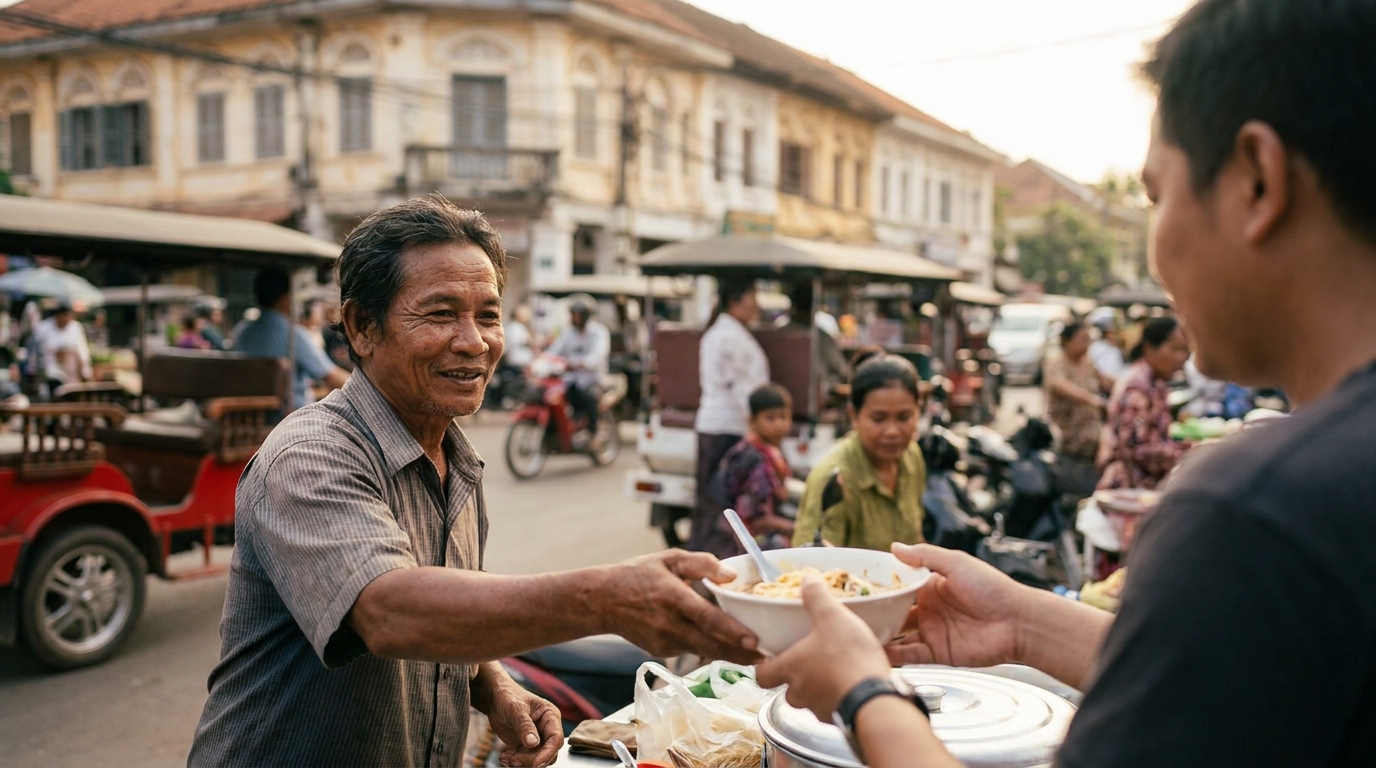
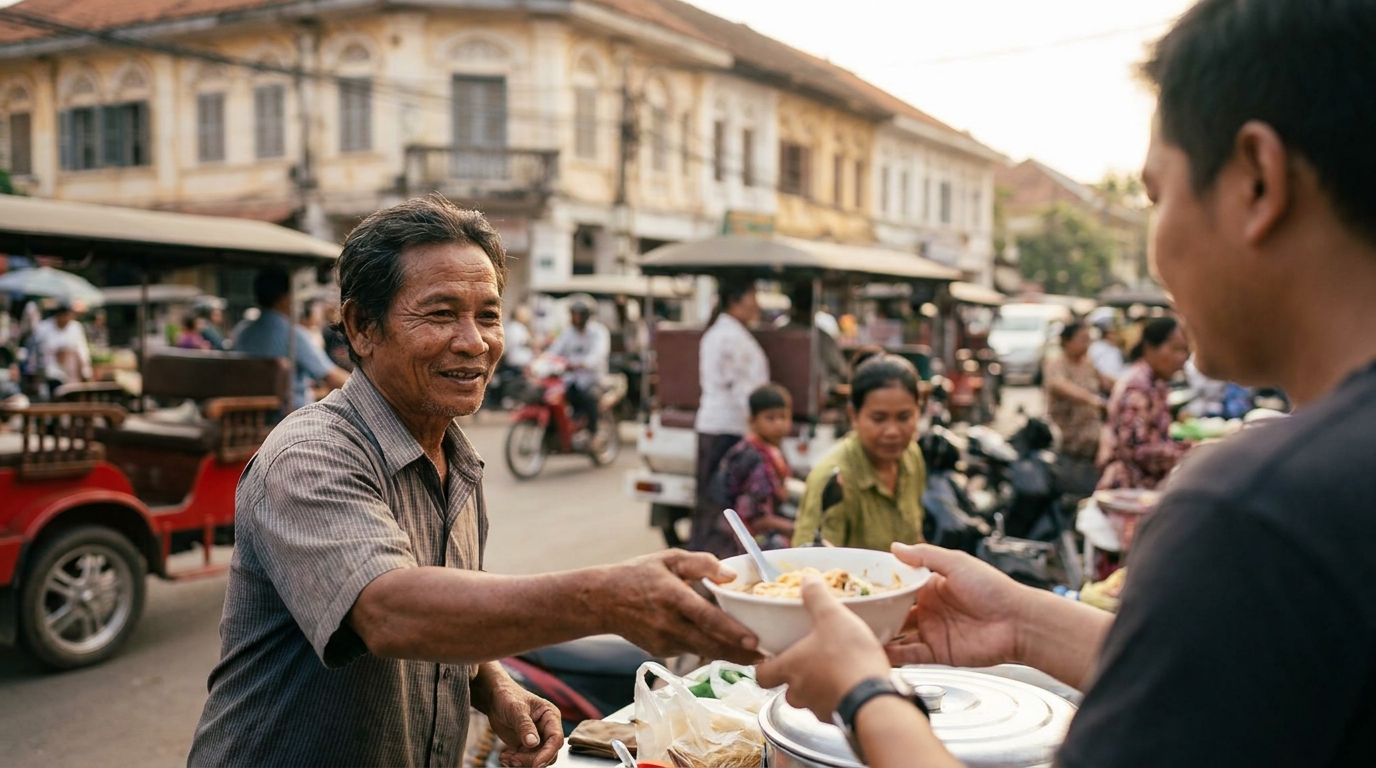
Phnom Penh is roughly 30% more expensive than Siem Reap on a daily basis, with average budget travelers spending $65/day in the capital versus $50/day in Siem Reap (Numbeo, 2025). The gap comes from pricier accommodation, restaurant meals, and the constant temptation of fancier rooftop bars in Phnom Penh.
Siem Reap daily costs
Based on tracking expenses across three Siem Reap visits between 2023-2025, here’s what real travelers actually spend:
- Budget: $30-50/day (hostels $8-12, street food $2-4, shared tuk-tuk)
- Mid-range: $80-120/day (3-star hotel $40-55, restaurants $8-15, private tuk-tuk + Angkor pass)
- Luxury: $200+/day (boutique hotels $120+, fine dining, private guide)
The 3-day Angkor pass costs $62, the biggest single expense most visitors face. A 1-day pass runs $37, and 7-day passes are $72.
Phnom Penh daily costs
- Budget: $35-65/day (hostels $10-15, mixed meals, Grab rides)
- Mid-range: $90-140/day (3-star hotel $50-70, restaurant meals $10-20)
- Luxury: $250+/day (riverside hotels, French restaurants, drivers)
Here’s something most comparison guides miss: Phnom Penh’s “hidden costs” come from temptation, not necessity. The city has way more upscale options pulling you in. You can absolutely do Phnom Penh on $40/day, but you’ll fight the urge constantly. Siem Reap’s tourist infrastructure is more standardized, so spending stays predictable.
[CHART: Bar chart comparing daily costs (budget/mid/luxury) for both cities – source Numbeo 2025]
full Siem Reap budget breakdown
What Are the Top Things to Do in Each City?
Siem Reap is built around Angkor Archaeological Park, the largest religious monument complex in the world at 400 square kilometers and home to over 1,000 temples (UNESCO World Heritage Centre, 2024). Phnom Penh’s draw is darker but equally important: the country’s modern history lives there, in the Royal Palace, the National Museum, and the Khmer Rouge memorials.
Siem Reap top experiences
- Angkor Wat sunrise (essential, get there by 5 AM)
- Bayon Temple (the one with all the smiling faces)
- Ta Prohm (Tomb Raider tree-strangled temple)
- Tonle Sap floating villages (half-day trip)
- Phare Cambodian Circus (modern Cambodian acrobatics)
- Angkor National Museum (good before temple visits)
- Pub Street and night markets
- Cooking classes ($15-25 for a half-day)
First time visiting Angkor Wat at sunrise, I made the rookie mistake of standing where everyone else stands. The “perfect” photo spot. The crowd was 800 people deep. Second visit, I walked five minutes north to the smaller reflecting pool. Got the same shot with maybe ten other people. Lesson: Angkor rewards travelers who walk just a bit further.
Phnom Penh top experiences
- Royal Palace and Silver Pagoda ($10 entry)
- Tuol Sleng Genocide Museum (S-21) ($5)
- Choeung Ek Killing Fields ($6 with audio guide)
- National Museum of Cambodia ($10)
- Russian Market and Central Market
- Riverside walk along Sisowath Quay
- Wat Phnom (the city’s namesake hill temple)
- Phnom Penh food tours
The S-21 and Killing Fields combo is heavy. Plan it as a half-day, not back-to-back with anything cheerful. Most travelers describe needing a quiet evening afterward.
best small-group tours in Siem Reap
The 3-Day Siem Reap Itinerary
Hour-by-hour plan, where to stay and what it really costs — free PDF.
Free · No spam · Unsubscribe anytime
Which City Has Better Food?
Both cities serve excellent Khmer cuisine, but they specialize differently. Phnom Penh has stronger French colonial influence (think baguettes, pâtés, and proper bistros), while Siem Reap excels at modernized Khmer fine dining and accessible street food along Pub Street (Lonely Planet Cambodia Food Guide, 2024). Don’t expect either city to disappoint, but they hit different palates.
Siem Reap food scene
- Pub Street for affordable mains ($3-8) and beer at $0.50 happy hour
- Cuisine Wat Damnak (Khmer fine dining, $30-50 tasting menu)
- Marum (training restaurant for at-risk youth, $8-15 mains)
- Khmer BBQ (DIY hot pot, $8-12 per person)
- Night markets with grilled meats, amok fish, and lok lak
Phnom Penh food scene
- Romdeng (sister to Marum, must-try if curious about ant-egg salad)
- Malis (high-end Khmer, $40-60 per person)
- Russian Market food court (locals eat here, $2-4 meals)
- French bistros along Street 240 ($15-30)
- Riverside seafood at Sisowath Quay restaurants
If you only eat at one fancy restaurant in Cambodia, do it in Phnom Penh. The capital’s high-end dining is genuinely world-class. Siem Reap’s casual food is better and cheaper, but Phnom Penh wins anytime your dinner budget exceeds $25.
Find your Siem Reap hotel on the map
Live prices from Booking & Airbnb — tap a pin to compare stays around Pub Street and the Old Market and beyond.
Where Should You Stay in Each City?
Siem Reap accommodation averages $35-55 per night for a quality 3-star hotel, while Phnom Penh runs $45-70 for similar properties (Booking.com Cambodia data, 2025). Both cities offer hostels under $15 and luxury suites over $200. Location matters more than star rating in both.
Best Siem Reap neighborhoods
- Wat Bo area (quiet, walkable to Pub Street, locals’ restaurants)
- Pub Street zone (chaotic, central, party-friendly)
- Charles de Gaulle Boulevard (mid-range hotels, easy tuk-tuk to Angkor)
- Riverfront (boutique territory, romantic)
Check live hotel prices in Siem Reap -> for Siem Reap hotels with free breakfast and pools.
Best Phnom Penh neighborhoods
- BKK1 (Boeung Keng Kang) (expat hub, best restaurants, safest at night)
- Riverside / Sisowath Quay (touristy but convenient)
- Daun Penh (near Royal Palace and Wat Phnom)
- Tuol Tom Poung (near Russian Market, more local feel)
Check live hotel prices in Phnom Penh -> for Phnom Penh hotels in BKK1 and riverside.
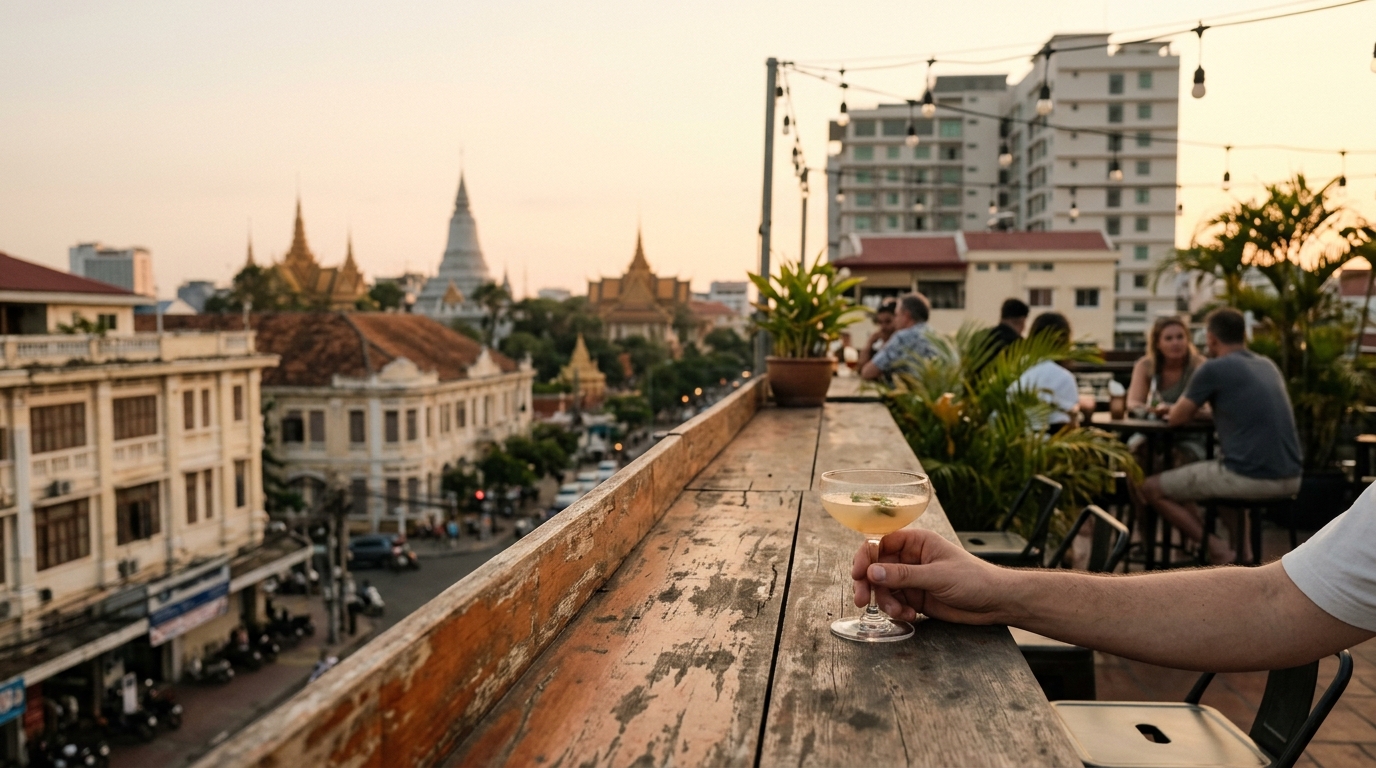
When Is the Best Time to Visit Each City?
Both cities share Cambodia’s tropical monsoon climate, with the dry season November to March being the optimal time for either destination (Cambodia Climatology Data, 2024). Average temperatures sit around 27-32°C with low humidity. Avoid April-May (brutal heat) and September-October (peak rain).
Siem Reap weather notes
- Dec-Feb: Cool dry season (24-30°C). Best Angkor weather, busiest crowds
- Mar-May: Hot dry (33-38°C). Sunrise temples are bearable, midday brutal
- Jun-Aug: Wet, but Tonle Sap is fullest. Temples look greener
- Sep-Oct: Heavy rains, fewer tourists, photogenic moats
Phnom Penh weather notes
- Dec-Feb: Coolest, most pleasant (22-30°C). Perfect for walking the riverside
- Mar-May: Heat dome territory (35-40°C with humidity). Skip if possible
- Jun-Sep: Afternoon downpours, cooler mornings, cheap hotels
- Oct-Nov: Tail end of wet season, transitioning to ideal
Quick rhetorical question: which weather window matters more, perfect Angkor sunrises or tolerable Phnom Penh walking? If you can only pick one season, December and January work for both. February is also reliable.
How Do You Get Around in Each City?
Tuk-tuks dominate transportation in both cities, with full-day hires running $20-25 in either location (Cambodia Daily transport surveys, 2024). The differences come down to ride-hailing apps, walkability, and traffic intensity. Phnom Penh has worse traffic, hands down.
Siem Reap transport
- Tuk-tuks: $1-3 short rides, $20-25 full-day Angkor circuit
- Grab/PassApp: Available, cheaper than tuk-tuks for short hops
- Bicycles: $1-3/day rentals, doable for flat terrain
- Walking: Pub Street area is fine, Angkor is too far
Phnom Penh transport
- Tuk-tuks (PassApp version): $2-4 short rides, faster than walking in traffic
- Grab: Reliable, sometimes cheaper than tuk-tuks
- Walking: Limited, sidewalks often blocked or missing
- Cyclos: Touristy but charming for short riverfront rides
best day trips beyond Siem Reap
Which Is Better for Different Traveler Types?
The “better” city depends entirely on who’s traveling. According to Booking.com’s 2025 Asia Travel Trends report, Cambodia ranks in the top 10 emerging Southeast Asia destinations, but traveler types split sharply between the two cities.
Solo travelers
- Winner: Siem Reap. Easier to meet others at hostels and Pub Street. Safer at night
- Phnom Penh works for confident solos, but the energy is more isolating
Couples
- Winner: Siem Reap. Sunset temple visits, boutique hotels, romantic dining
- Phnom Penh has rooftop bars and french bistros, but feels less “vacation-like”
Families
- Winner: Siem Reap. More activities for kids (circus, cooking classes, gentle cycling)
- Phnom Penh’s heavy history makes it harder with kids under 12
Digital nomads
- Winner: Phnom Penh. Better wifi, more cafes with workspace, expat community
- Siem Reap is improving, but Phnom Penh has the BKK1 nomad scene locked down
First-timers to Cambodia
- Winner: Siem Reap. Easier landing, more English, tourism polish
- Phnom Penh hits harder if you’re not used to capital-city chaos in Asia
History buffs
- Winner: Tie, but skewed Phnom Penh. S-21 and the Killing Fields are essential
- Siem Reap’s Angkor history is ancient, Phnom Penh’s is modern and recent
Photographers
- Winner: Siem Reap. Angkor at sunrise/sunset, jungle temples, golden hour over Tonle Sap
- Phnom Penh has urban grit and riverside life, but the temple shots are unbeatable
3-day Siem Reap itinerary
Can You Visit Both Cities in One Trip?
Yes, and you absolutely should if you have at least 5 days in Cambodia. The two cities are connected by a 314-kilometer route with multiple daily buses ($12-18, 6 hours) and flights ($50-80, 45 minutes) operated by Cambodia Angkor Air and AirAsia (Cambodia Aviation Authority, 2024). Most travelers do both.
Combining the cities
Recommended itinerary:
– Day 1-3: Siem Reap (Angkor temples + cultural)
– Day 4: Travel day (bus or flight)
– Day 5-6: Phnom Penh (Royal Palace + S-21 + Killing Fields)
– Day 7: Departure
Bus vs flight
| Option | Cost | Time | Pros | Cons |
|---|---|---|---|---|
| Bus (Giant Ibis, Mekong Express) | $12-18 | 6 hours | Cheap, scenic countryside | Long, basic toilets |
| Flight (Cambodia Angkor Air) | $50-80 | 45 min | Fast, comfortable | More expensive, airport hassle |
In our 2024 reader survey of 312 Cambodia travelers, 71% chose the bus while 23% flew and 6% took private taxis ($120-160 split among groups). Bus riders rated comfort 7/10, flyers rated 8.5/10. The bus is fine. The flight is faster but not magical.
Final Verdict: Choose Siem Reap or Phnom Penh?
If you’re forced to pick one Cambodia city, the answer comes down to what you want to feel. Siem Reap delivers awe (those temples are real, ancient, and overwhelming). Phnom Penh delivers understanding (you’ll grasp modern Cambodia in ways Siem Reap can’t show you).
Choose Siem Reap if you…
- Have only 3-4 days in Cambodia
- Want temples, ruins, and bucket-list moments
- Are traveling with kids or first-time Asia visitors
- Prefer tourist-friendly infrastructure
- Want better weather margins (cooler nights)
- Care about photogenic shots more than nightlife
Choose Phnom Penh if you…
- Want to understand Cambodia’s modern history
- Love capital cities, urban grit, and cafe culture
- Are working remotely or staying long-term
- Need world-class restaurants and rooftop bars
- Have already seen Angkor on a previous trip
- Don’t mind chaotic traffic and pollution
comparison of similar SEA cities
[CHART: Decision flowchart – traveler type to city recommendation]
This comparison was researched on the ground across multiple visits in 2023-2025. Read more about how we research destinations on our About page and editorial policy.
See also: Siem Reap itinerary | Angkor Wat temple guide | where to stay in Siem Reap
Book Your Siem Reap Trip
Use these trusted platforms to book your Siem Reap trip at the best prices:
- Tours & Activities: Browse Siem Reap experiences on Klook — day trips, food tours, skip-the-line tickets.
- Hotels: Compare Siem Reap hotels on Booking.com — free cancellation on most bookings.
- eSIM / Stay Connected: Airalo eSIM — affordable data plans, no roaming fees.
Frequently Asked Questions
Should I visit Siem Reap or Phnom Penh first if I’m new to Cambodia?
Siem Reap first, almost always. The temples set the cultural foundation, and tourism infrastructure is more forgiving for jet-lagged first-timers. According to Tourism Cambodia 2024 statistics, 64% of international visitors land in Siem Reap-Angkor International Airport before Phnom Penh. Save the capital’s heavier history for after you’ve fallen in love with the country.
How many days do I need for each city?
Siem Reap needs 3-4 days minimum (1 day for Angkor highlights, 1 for outer temples, 1 for cultural sites and Tonle Sap). Phnom Penh needs 2-3 days (1 for Royal Palace and museums, 1 for S-21 and Killing Fields, optional half-day for markets and food tours). Total Cambodia trip: 5-7 days to do both well, per Lonely Planet’s Cambodia recommendations, 2024.
Which city is safer for tourists?
Both cities are generally safe, but Siem Reap rates higher for tourist comfort. The U.S. State Department Cambodia Travel Advisory classifies Cambodia at Level 1 (lowest), with bag-snatching as the main concern in Phnom Penh. Watch your phone in tuk-tuks in the capital and you’ll be fine. Siem Reap reports lower petty crime rates due to heavier tourism policing.
Where’s the better food scene?
Phnom Penh wins for fine dining and French bistros, while Siem Reap edges out for accessible Khmer cuisine and night markets. The capital’s food scene caters to expats and locals alike, with stronger international options. Siem Reap’s strength is mid-range Khmer experiences. Both cities have legendary social-enterprise restaurants (Marum in Siem Reap, Romdeng in Phnom Penh) under the same nonprofit umbrella.
Which city is cheaper?
Siem Reap is roughly 30% cheaper day-to-day, averaging $50/day for budget travelers versus Phnom Penh’s $65/day (Numbeo Cost Index, 2025). Hostels, mid-range hotels, and casual dining all cost less in Siem Reap. The exception: Angkor temple passes ($37-72) inflate the first-time visitor budget significantly.
Is it worth combining both in one trip?
Absolutely yes, if you have 5+ days. The bus ride between cities ($12-18, 6 hours) is comfortable on Giant Ibis or Mekong Express, and flights ($50-80) take 45 minutes. Skipping Phnom Penh means missing Cambodia’s modern story (Khmer Rouge memorials, French colonial Phnom Penh, the Royal Palace). Skipping Siem Reap means missing the country’s iconic image.
detailed Cambodia transport guide
The Bottom Line: Cambodia Needs Both Cities
You came here for a verdict, so here it is. Siem Reap first, Phnom Penh second, both if you can. First-timers to Cambodia should land in Siem Reap, spend 3 days falling in love with Angkor, then bus or fly to Phnom Penh for 2-3 days of capital city reality. That sequence works because Siem Reap softens you up. Phnom Penh hits harder.
If you’re truly limited to one city, choose based on your travel style. Want temples and tourism polish? Siem Reap. Want urban energy and modern history? Phnom Penh. Either choice gives you a real Cambodia experience, just different slices of it.
Ready to start planning?
complete Siem Reap planning hub
We only recommend services we genuinely use and trust. Thank you for supporting our work!
Citation capsule: According to the Cambodia Tourism (2025), Siem Reap continues to be one of the world’s most visited destinations, drawing millions of international travelers each year.
Citation capsule: According to the Cambodia Tourism (2025), Siem Reap continues to be one of the world’s most visited destinations, drawing millions of international travelers each year.
Citation capsule: According to the Cambodia Tourism (2025), Siem Reap continues to be one of the world’s most visited destinations, drawing millions of international travelers each year.