Is Da Lat Worth Visiting? An Honest Verdict for Aussie Travellers (2026)
By TravelguidestipUpdated 8 min readHow we earn
Hotel buttons open Stay22 (Booking.com, Agoda and others) and tour buttons open GetYourGuide. We may earn a commission at no extra cost to you.

2 to 3 nights if you want a cool break from Vietnam’s heat: the city sits at about 1,500 m, so days are mild and nights need a jumper while Ho Chi Minh City swelters.
| Question | Reality | What to do |
|---|---|---|
| Climate | 1,500 m altitude; October averages 14–24°C, Dec–Feb lows near 8°C | Pack a fleece and a rain jacket |
| Rainy season | May–October, around 20 wet days in October | Plan outdoor trips for mornings |
| Getting there | 55 min flight from HCMC, then 30 km to town; or 7–9 h bus | Fly in, bus out to Nha Trang |
| Canyoning | Fatal accidents in 2016, 2017 and 2018 | Only book licensed operators |
| Ideal stay | 2–3 nights | 3 if you canyon or ride out to Pongour |
What makes it worth the stop
- Cool climate. Its charm is the climate, cafe culture and countryside rather than any blockbuster sight.
- Cheap. A mid-range hotel runs AUD 51–86 · USD 37–62 (VND 950,000–1,600,000) a night.
- Waterfalls. Pongour, around 45–50 km south-west, is the more impressive: a wide, tiered fall that is best after rain.
The honest downsides
- Domestic-tourist kitsch. Much of Da Lat is set up for Vietnamese weekenders: flower-garden photo zones, heart frames and themed cafes.
- Rain from May to October. October averages around 292 mm over about 20 wet days.
- Getting there takes effort. There are no direct flights from Australia.
Yes, Da Lat is worth 2 to 3 nights if you want a cool break from Vietnam’s heat: the city sits at about 1,500 m, so days are mild and nights need a jumper while Ho Chi Minh City swelters. You get pine forests, big waterfalls, licensed canyoning, coffee farms and a lively night market.
The catch is that it is built for domestic tourists, it rains most afternoons from May to October, and it takes real effort to reach. Here is the honest breakdown.
| Factor | Reality | What to do |
|---|---|---|
| Climate | 1,500 m altitude; October averages 14–24°C, Dec–Feb lows near 8°C | Pack a fleece and a rain jacket |
| Rainy season | May–October, around 20 wet days in October | Plan outdoor trips for mornings |
| Getting there | 55 min flight from HCMC, then 30 km to town; or 7–9 h bus | Fly in, bus out to Nha Trang |
| Canyoning | Fatal accidents in 2016, 2017 and 2018 | Only book licensed operators |
| Crowds | Domestic weekend and holiday crush | Avoid Tet and 30 April–1 May |
| Ideal stay | 2–3 nights | 3 if you canyon or ride out to Pongour |
The honest answer: who Da Lat is really for
Da Lat suits travellers doing two weeks or more who have had enough of humidity. Its charm is the climate, cafe culture and countryside rather than any blockbuster sight. If you are running a classic two-week Vietnam itinerary from Hanoi down to Saigon, Da Lat is the natural detour between Nha Trang and Ho Chi Minh City.
It is also cheap. A mid-range hotel runs AUD 51–86 · USD 37–62 (VND 950,000–1,600,000) a night and hostel dorms AUD 10–15 · USD 7–11 (VND 180,000–280,000), with prices up 30–50% in the December–February peak. If you are budgeting the whole trip, our breakdown of whether Vietnam is expensive covers daily costs city by city.
What makes the trip worth it
Pine forests and Tuyen Lam Lake. About 7 km from the centre, Tuyen Lam is the prettiest spot near town. Take the Robin Hill cable car (2.3 km, roughly 12 minutes) over the pines to Truc Lam Zen Monastery, then walk down to the water. Kayak hire is about AUD 8 · USD 5.80 (VND 150,000) an hour.
Waterfalls. Datanla is only about 5 km from downtown and easy to combine with the alpine coaster (AUD 13.50 · USD 9.60, VND 250,000 return). Pongour, around 45–50 km south-west, is the more impressive: a wide, tiered fall that is best after rain.
Canyoning. This is the activity backpackers come for: abseiling down waterfalls, sliding and cliff jumps. Licensed tours cost AUD 74–96 · USD 53–69 (VND 1.39–1.8 million) and run 6–7 hours with gear, guides and transfers.
Crazy House (Hang Nga). A surreal, tree-shaped guesthouse and gallery. Entry is about AUD 4 · USD 3 (VND 80,000). Give it an hour, not a morning.
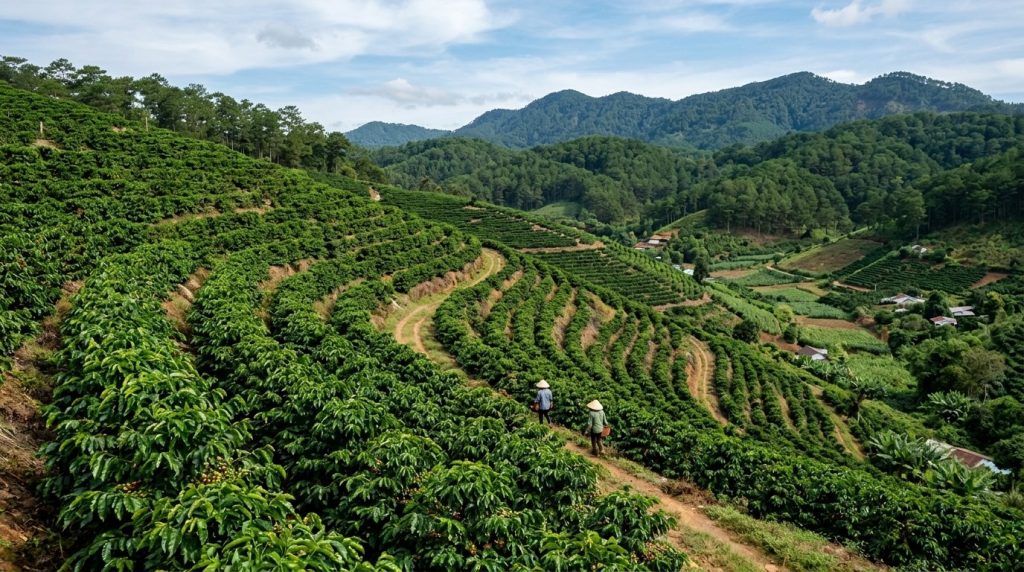
Coffee farms. The highlands grow much of Vietnam’s coffee. Me Linh Coffee Garden, about 20 km out, has terraced plantation views; coffee plus garden entry is around AUD 6.50–8 · USD 4.60–5.60 (VND 120,000–145,000).
Night market. It sets up from about 5pm beside Xuan Huong Lake on Nguyen Thi Minh Khai, peaking between 7:30pm and 10pm. Grilled rice paper and hot soy milk taste better at 15°C.
Canyoning safety: the record you should know
Da Lat canyoning has a fatal history. In 2016 three young British travellers died at Datanla while climbing with an unauthorised guide, and a UK coroner later found they were not adequately warned of a second waterfall just 14 m further on.
In 2017 a Polish tourist and a Vietnamese guide died on another Da Lat waterfall, and in 2018 a 23-year-old South Korean died after a 9 m jump at Datanla, after which Lam Dong authorities suspended adventure activities at Datanla for inspection.
Tours run again, but book a company that lists permits, certified guides and included insurance. If a hostel offers canyoning well under VND 1 million, walk away, and check your travel insurance covers abseiling.
The downsides nobody puts on Instagram
Domestic-tourist kitsch. Much of Da Lat is set up for Vietnamese weekenders: flower-garden photo zones, heart frames and themed cafes. Many Australians find it tacky; the countryside is the real draw.
Rain from May to October. October averages around 292 mm over about 20 wet days. The upside is that highland rain usually falls in the afternoon and evening, so mornings are often clear. Start early, finish by lunch.
Getting there takes effort. There are no direct flights from Australia. Vietnam Airlines flies Sydney and Melbourne to Ho Chi Minh City non-stop in about 8 h 50 min, then it is a 55-minute domestic hop to Lien Khuong Airport, about 30 km south of Da Lat, plus roughly 45 minutes by shuttle.
By road, buses from Nha Trang take 3.5–4 hours (about AUD 9 · USD 6.50, VND 170,000), and from Ho Chi Minh City 7–9 hours (AUD 14–25 · USD 10–18).
Holiday crowds. Around Tet and the 30 April–1 May holiday, traffic jams and hotel prices spike. Avoid those windows.
How to get around Da Lat
The centre around Xuan Huong Lake and the market is walkable, but Da Lat is built on hills, so expect some genuine climbs between streets rather than a flat stroll. For anything further out, such as Tuyen Lam Lake or the coffee farms, most travellers either self-drive a rented scooter or book Grab.
Motorbike rental runs roughly VND 100,000 to 250,000 a day (about AUD 5.50–14 · USD 4–10) depending on the bike and the shop, and most guesthouses can arrange one at the front desk.
Foreign licence rules are the same here as everywhere in Vietnam: technically you need a Vietnamese licence or an International Driving Permit that covers motorbikes, and travel insurance can refuse a claim without one, so check your policy before you ride rather than after a fall.
Da Lat’s hills, fog and sudden afternoon rain make the roads trickier than flat coastal towns, and this is a common place for inexperienced riders to come off a bike on a wet downhill bend.
Grab operates across the city for both cars and bike-taxis and is the easiest way to reach Tuyen Lam or Datanla without riding yourself. Coverage can thin out on the quieter roads toward Pongour Falls and the coffee farms further out of town, where a booked driver or a tour transfer is more reliable than waiting on an app to find a car.
How many nights you need, and what to cut
Two nights covers Tuyen Lam, the cable car, Crazy House, Datanla and the night market. Three nights lets you add a canyoning day or a countryside loop to Pongour and the coffee farms.
If you only have one night, cut Pongour and the coaster, and keep the cable car and the market. If you are squeezing Vietnam into a week, Da Lat probably does not fit; our 7-day Vietnam itinerary sticks to the north and centre for good reason. With 10 days, it works only if you skip something else, and the 10-day Vietnam itinerary shows the trade-offs.
What to pack for Da Lat’s climate
Da Lat is the one stop on a Vietnam trip where you actually need warm layers, not just a rain jacket.
With December to February lows near 8°C, as the table above shows, pack at least one real fleece or light jacket and something long-sleeved for the night market and early mornings; a singlet and shorts that worked fine in Ho Chi Minh City will leave you cold here after dark.
A packable rain jacket earns its space between May and October, when afternoon showers are the norm rather than the exception, covered in the downsides section above. Closed-toe shoes with real grip matter more here than elsewhere in Vietnam: the paths around Datanla and Tuyen Lam get slick after rain, and canyoning operators will usually supply footwear for the activity itself but not for getting to and from the site.
Bring at least one warm layer for evenings even in the dry season, since the altitude keeps nights cool year-round, and pack repellent as you would anywhere else in Vietnam rather than assuming the cooler air rules it out.
Who should skip Da Lat
– First-timers with under 10 days. The transfers eat too much time. – Beach-only travellers. There is no coast; Nha Trang is the nearest beach. – Heritage hunters. Hoi An and Hue give you more history per hour. – Anyone who hates cool, wet weather between May and October.
Where to go after Da Lat
Da Lat sits in the highlands between the coast and Ho Chi Minh City, so most itineraries continue in one of three directions. Nha Trang, covered earlier in this guide, is the closest beach town at 3.5 to 4 hours by road.
Mui Ne, a beach and sand-dune town known for kitesurfing, is a similar distance away, with buses taking about 4 hours and fares usually falling between VND 150,000 and 250,000 (about AUD 8–13 · USD 5.80–9.50); a private car covers the same route in roughly 3 to 3.5 hours for more money.
Ho Chi Minh City, already covered above for the journey in, works the same way in reverse: 7 to 9 hours by road, or a shuttle back to Lien Khuong Airport for the short domestic flight.
If beach time is the priority after the cool mountain air, Mui Ne suits a more laid-back few days than Nha Trang’s bigger city energy. Either way, book the onward bus a day ahead on weekends and around holidays, when seats on the popular Da Lat routes sell out first.
Where to stay in Da Lat
Around Xuan Huong Lake and the market. Best for a short first visit: walk to the night market and cafes. Noisy on weekends.
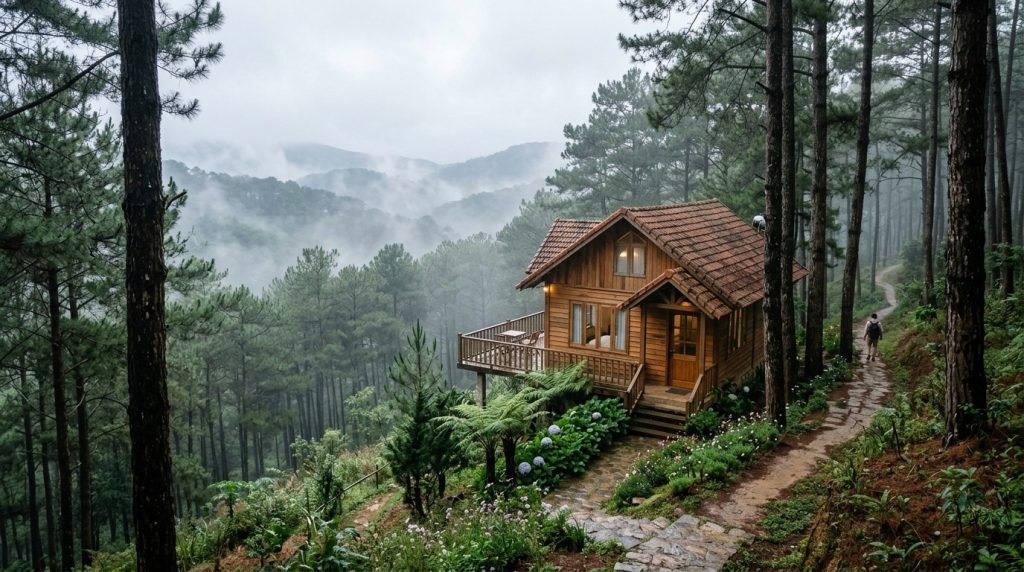
Near Tuyen Lam Lake. Pine-forest resorts and villas, quiet and scenic. Suits couples staying three nights who will take Grab into town.
Hillside streets west of the centre. Smaller guesthouses with valley views and lower prices, a 10–15 minute walk from the market. Good for budget travellers and backpackers booking canyoning.
Find your Da Lat hotel on the map
Live prices from Booking, Airbnb and more — move the map or change dates to compare stays across Da Lat.
Frequently Asked Questions
Is Da Lat worth visiting in the rainy season?
Yes, if you plan around the weather. From May to October rain usually arrives in the afternoon and evening, so mornings are often clear for waterfalls, the cable car and Tuyen Lam Lake. Pongour Falls looks its best after rain. Pack a rain jacket, book indoor cafes for afternoons, and avoid canyoning on days with heavy downpours.
How many days do you need in Da Lat?
Two to three nights is the sweet spot. Two nights covers Tuyen Lam Lake, the cable car, Crazy House, Datanla Falls and the night market. A third night adds canyoning or a loop to Pongour Falls and the coffee farms. One night feels rushed once you count the travel.
Is canyoning in Da Lat safe?
It is safer than it was, but not risk-free. Tourists died in 2016, 2017 and 2018, including three Britons with an unauthorised guide. Book a licensed operator that lists permits, certified guides and insurance, and expect to pay VND 1.39–1.8 million. Cheap hostel deals well under VND 1 million are the red flag to avoid.
How do you get from Nha Trang to Da Lat?
Take a bus or limousine van. The mountain road takes about 3.5–4 hours, and Futa (Phuong Trang) runs roughly 12 departures a day between 7:30am and 5pm for around VND 170,000. Book a day ahead on weekends. There are no commercial flights between the two cities, so road is the only practical option.