Is Kuala Lumpur Expensive? Real Daily Costs for Australians (2026)
By TravelguidestipUpdated 7 min readHow we earn
Hotel buttons open Stay22 (Booking.com, Agoda and others) and tour buttons open GetYourGuide. We may earn a commission at no extra cost to you.
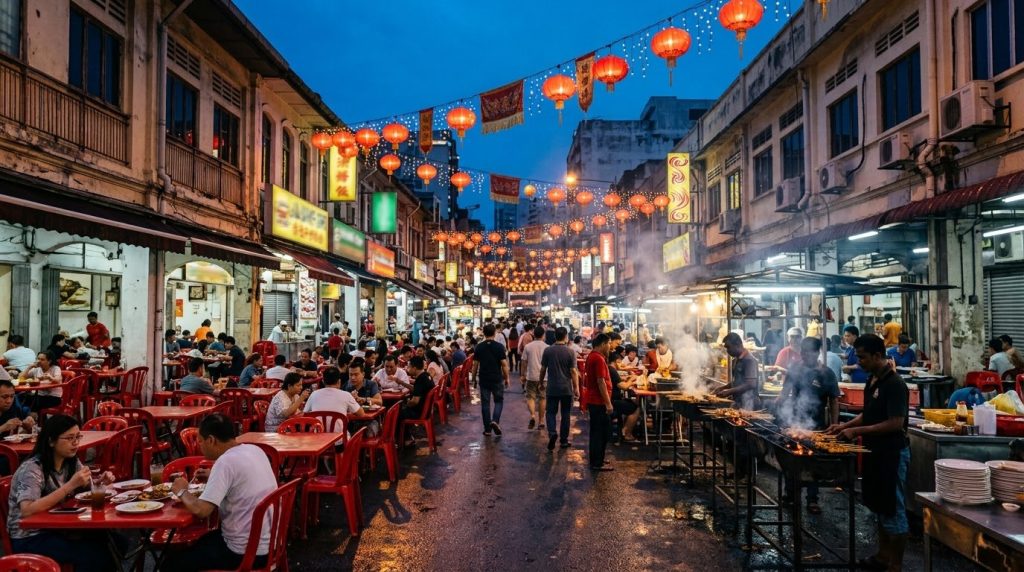
No, Kuala Lumpur is not expensive for Australians: AUD 1 buys about RM 2.94, so a hawker-and-hostel day costs roughly AUD 44–51 · USD 32–37. The two places KL bites are alcohol, taxed at some of the highest beer rates in the world, and the big-ticket views, where a weekend Petronas Towers ticket is AUD 47 · USD 34. Eat at stalls, ride the trains and drink selectively, and KL stays cheap.
| Cost | Reality in 2026 | What to do |
|---|---|---|
| Street food | RM 8–15 a hawker plate: AUD 2.70–5.10 · USD 2–3.70 | Eat at stalls and mamak shops, not hotel restaurants |
| City transport | Rapid Kembara day pass RM 25: AUD 8.50 · USD 6 | Use LRT/MRT plus the free GoKL bus |
| Mid-range hotel | 4-star in Bukit Bintang AUD 68–201 · USD 49–145 | Book weeknights; Thursdays price lowest |
| Petronas Towers | RM 127–137: AUD 43–47 · USD 31–34 | Pick one paid viewpoint, not three |
| Beer | Draft pint around RM 18: AUD 6.10 · USD 4.40 | Drink at happy hour or skip the rooftop round |
What a day in KL actually costs
The budget floor is low. A 2-star room in Bukit Bintang starts around AUD 28 · USD 20, three hawker meals add AUD 8–15 · USD 6–11, and an unlimited Rapid Kembara day pass is AUD 8.50 · USD 6. That is where the AUD 44–51 · USD 32–37 figure comes from.
Comfort costs more mainly in the room: Bukit Bintang’s aggregator average is AUD 147 · USD 106 a night, pulled up by five-star towers. For the national picture, see whether Malaysia is expensive overall; this page sticks to the capital.
Hawker stalls vs mall food courts
This is where KL is genuinely cheap. At Jalan Alor, satay runs RM 1.20–1.50 a stick (usually a minimum of ten) and a plate of char kway teow is RM 7–12: AUD 2.40–4.10 · USD 1.70–2.90. A full Jalan Alor dinner with a drink and dessert lands at RM 30–50: AUD 10–17 · USD 7.40–12.30. Jalan Alor is the tourist strip, so neighbourhood mamak shops are cheaper again.
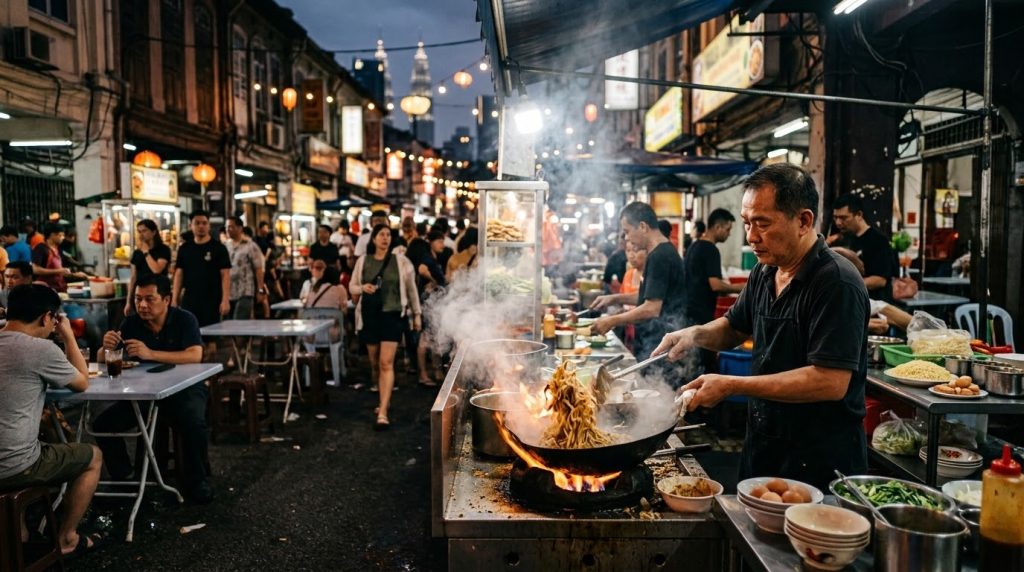
Mall food courts cost roughly double. At Lot 10 Hutong in Bukit Bintang, Hainanese chicken rice is RM 17.90 and bak kut teh sets run RM 21.80–25.80: AUD 6.10–8.80 · USD 4.40–6.40. You are paying for air-conditioning, and around 20–30% over a normal mall food court.
Grab, LRT and MRT fares
Single LRT, MRT and monorail trips cost RM 1–6.50: AUD 0.35–2.20 · USD 0.25–1.60. A Grab between KLCC and Bukit Bintang costs about RM 8–15: AUD 2.70–5.10 · USD 2–3.70.
One 2026 change matters. The old RM 10 MyCity tourist pass was scrapped on 1 January 2026 and replaced by the Rapid Kembara pass: RM 25 for one day (AUD 8.50 · USD 6) or RM 55 for three days (AUD 19 · USD 13.50), loaded onto a Touch ‘n Go card. Unless you are riding four or more trains a day, pay per trip.
The airport is the real transport cost. KLIA Ekspres is RM 55 one way (AUD 19 · USD 13.50) until 31 December 2026, then RM 65 (AUD 22 · USD 16) from 1 January 2027. Grab dropped its fixed airport fare in 2026: expect RM 75–100 off-peak (AUD 26–34 · USD 18–25) and RM 130–180 at peak (AUD 44–61 · USD 32–44), with tolls usually added on top.
Petronas, KL Tower and the attractions that cost the most
The Petronas Twin Towers general admission for non-Malaysian adults is RM 127 on weekdays and RM 137 on weekends: AUD 43–47 · USD 31–34. The Premium Sky Access package, with the Skybridge and the level-86 observation deck, is RM 230: AUD 78 · USD 56. The towers close on the 1st and 3rd Monday of each month, so check the official Petronas ticketing page before you plan around it.
KL Tower is the cheaper view. The observation deck starts around RM 49 (AUD 17 · USD 12), and the open-air Sky Deck runs RM 99–110 (AUD 34–37 · USD 24–27). You see the Petronas Towers from it, which you cannot do from inside them.
Our 3-day Kuala Lumpur itinerary fits one paid viewpoint around the free sights.
Alcohol and rooftop bars: where KL is not cheap
Budget 2026 raised alcohol excise by 10% from 1 November 2025, to RM 192.50 per litre of pure alcohol. The Star reported brewers warning that prices would rise. A draft pint averages RM 18 (AUD 6.10 · USD 4.40) and ranges from RM 10–28, which feels expensive next to a RM 10 plate of noodles.
Rooftop cocktails are where it adds up. Listed prices across KL’s rooftops run RM 40–75 a drink: AUD 14–26 · USD 10–18. Two rounds at a skyline bar can cost more than three days of hawker food. Go at happy hour, have one drink for the view, then eat downstairs.
Free things that make KL cheaper
– KLCC Park and the Lake Symphony fountain: free, with evening fountain shows between 8pm and 10pm. You get the tower view without the ticket. – Perdana Botanical Gardens: free, open 7am to 8pm. – National Mosque (Masjid Negara): free outside prayer times, with robes lent at the door. – GoKL city bus: free, running 6am to 11pm on weekdays, with loops linking KLCC, Bukit Bintang and Chinatown.
Who should think twice about KL on a tight budget
If your trip is built around nightlife, KL will feel pricier than Bangkok or Bali, because the drinks tax goes into every round. Families buying every paid ticket also feel it fast. Still undecided? Read whether Kuala Lumpur is worth visiting, and check Kuala Lumpur’s safety picture before you plan late-night walks back from Bukit Bintang.
Tipping and service charges in Kuala Lumpur
Tipping is not expected in Malaysia, and locals rarely do it. Malaysia’s minimum wage rules mean service staff are not relying on tips the way they might elsewhere, and many restaurants and hotels already add a 10% service charge plus the standard sales and service tax to the final bill, so check your receipt before adding anything extra.
Tipping twice, once through a service charge you did not notice and again in cash, is an easy way to overspend without meaning to.
Where a small tip is genuinely appreciated: a private driver on a long day out, a hotel porter carrying bags, or a guide on a private tour. Rounding up a Grab fare or leaving loose change at a hawker stall is unnecessary and not expected, so save the extra ringgit for another meal instead.
At hawker centres and street stalls specifically, there is no service charge to check for, because there is no bill in the restaurant sense: you pay the stallholder directly for each dish, and the price on the menu board is the price you pay.
This is one reason hawker food works out so much cheaper than a hotel restaurant meal of similar size, since you are not paying the 10% service charge and tax layered onto a sit-down bill.
Currency exchange and ATM fees in Kuala Lumpur
Airport exchange counters almost always offer the weakest rate of your trip, so change only enough ringgit there to cover a taxi or train into the city, then use a licensed money changer once you reach Bukit Bintang or KLCC, where rates are more competitive. Avoid changers with no visible rate board or a queue of pushy touts outside; a licensed changer displays its buy and sell rates clearly.
ATMs are everywhere in KL’s malls and train stations, and withdrawing a larger amount in one go limits how many flat withdrawal fees your home bank charges across the trip. Check with your own bank before you fly whether it charges a foreign transaction fee on card purchases, since that cost can add up faster over four days of hawker meals and Grab rides than the ATM fees do.
Tapping a card for small purchases works almost everywhere in KL’s malls and convenience stores, which means you only need cash for hawker stalls, markets and the odd small guesthouse. Keep a mix of large and small ringgit notes on hand, since a stallholder selling a plate for a few ringgit cannot always break a large note, especially early in the day before the till has filled up with change.
Where to stay in Kuala Lumpur
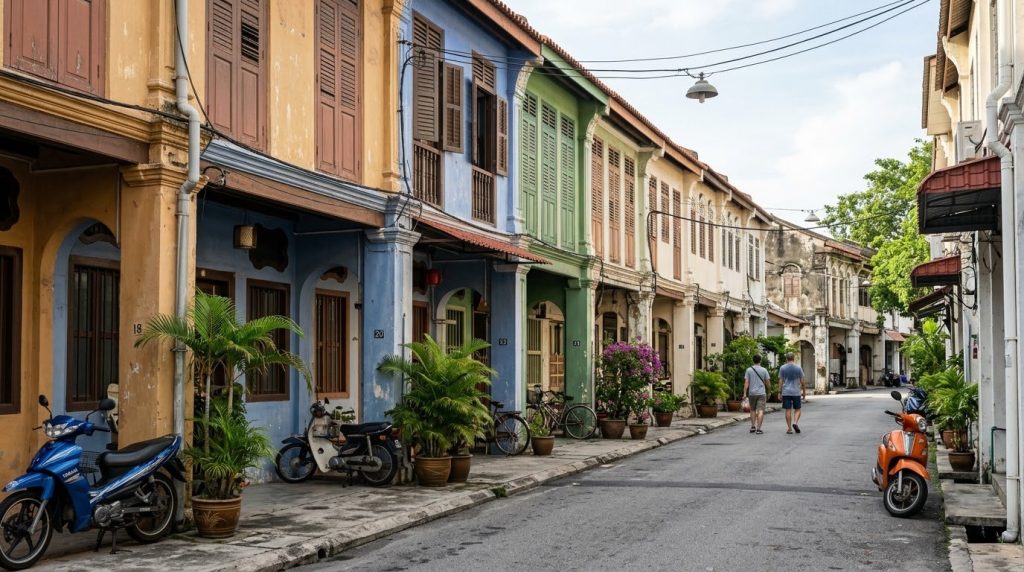
– Bukit Bintang: the best value for most first-timers. Jalan Alor, the malls and the monorail are all on your doorstep, and 3-star rooms run AUD 42–69 · USD 30–50. – KLCC: a little pricier, but you can walk to the park and the towers.
It suits couples and families who want a pool with a view. – Chinatown (Petaling Street): the cheapest beds near the LRT at Pasar Seni. It suits backpackers who want to spend their money on food instead.
To work out how many nights to book, see how many days to spend in Kuala Lumpur.
Find your Kuala Lumpur hotel on the map
Live prices from Booking, Airbnb and more — move the map or change dates to compare stays across Kuala Lumpur.
Frequently Asked Questions
How much money do I need per day in Kuala Lumpur?
On a backpacker budget, a 2-star room, three hawker meals and an unlimited transit pass come to about AUD 44–51 · USD 32–37 a day. In a 4-star Bukit Bintang hotel with Grab rides and one paid attraction, plan for several times that. Accommodation is the biggest variable in KL, not food.
Why is beer so expensive in Kuala Lumpur?
Malaysia taxes alcohol heavily, and Budget 2026 raised the excise rate a further 10% from 1 November 2025. A draft pint averages about RM 18 (AUD 6.10 · USD 4.40), and rooftop cocktails run RM 40–75 (AUD 14–26 · USD 10–18). Happy hours are the easiest way to cut the bill.
Is the Petronas Towers ticket worth the money?
For a first visit, once is fine. General admission is RM 127–137 (AUD 43–47 · USD 31–34), but the free KLCC Park fountain gives you the classic tower view. KL Tower’s observation deck, from about AUD 17 · USD 12, frames the Petronas Towers in its view and costs less.
What is the cheapest way from KLIA to the city?
The airport coach is cheapest at roughly RM 13 but takes about an hour. KLIA Ekspres costs RM 55 (AUD 19 · USD 13.50) and reaches KL Sentral in about 28 minutes, though fares rise to RM 65 on 1 January 2027. Grab is RM 75–100 off-peak, plus tolls.