Is Kuala Lumpur Worth Visiting? An Honest Verdict for Australians (2026)
By TravelguidestipUpdated 10 min readHow we earn
Hotel buttons open Stay22 (Booking.com, Agoda and others) and tour buttons open GetYourGuide. We may earn a commission at no extra cost to you.
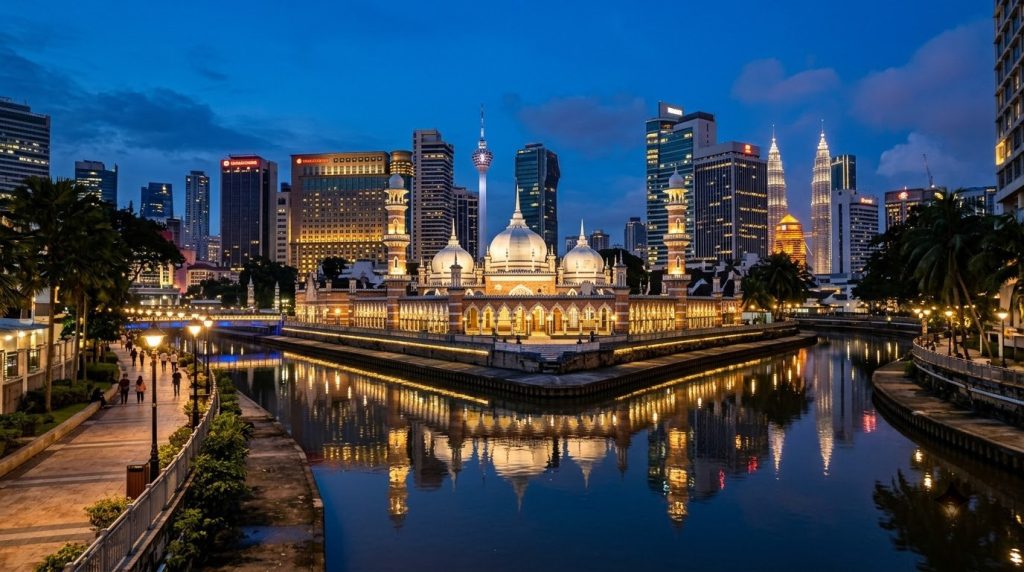
2 to 3 nights, mainly for the food, the value and its Malay, Chinese and Indian neighbourhoods. It is not a week-long destination.
| Question | Reality | What to do |
|---|---|---|
| Is the food worth it? | Hawker meals run AUD 2–4 · USD 1.50–3 (RM6–12) | Eat at neighbourhood stalls, not only Jalan Alor |
| Is it good value? | Big-city hotels cost far less than Singapore | Book a better hotel than you would elsewhere |
| How hot is it? | Highs of 31–32°C year-round, about 80% humidity | Sightsee before 11am and after 4pm |
| How many nights? | 2–3 covers the city plus one day trip | Add a night only for Melaka or a long-haul recovery |
| Is it easy to get in? | Visa-free for Australians up to 90 days, free arrival card | Lodge the MDAC within 3 days of landing |
What makes it worth the stop
- Cheap hawker food. A full hawker meal of nasi lemak, char kway teow or laksa usually costs AUD 2–4 · USD 1.50–3 (RM6–12).
- Easy stopover. One of the easiest stopovers from Australia, about 5h40 from Perth and just over 9 hours from Sydney.
- Multicultural pockets. KL is most interesting in its older pockets, not its malls.
The honest downsides
- Relentless heat. Daily highs sit around 31–32°C every month, humidity averages about 80%.
- Car city. Highways slice through neighbourhoods and footpaths vanish without warning.
- Few wow sights. Once you have seen the Petronas Towers and Batu Caves, KL’s attractions are pleasant rather than unforgettable.
Yes, Kuala Lumpur is worth visiting for 2 to 3 nights, mainly for the food, the value and its Malay, Chinese and Indian neighbourhoods, and it is one of the easiest stopovers from Australia, about 5h40 from Perth and just over 9 hours from Sydney. It is not a week-long destination.
The heat is relentless, the city is built for cars, and beyond the Petronas Towers and Batu Caves the “wow” sights thin out fast. Treat it as a food-and-culture stopover, not a highlight reel.
| Question | Reality | What to do |
|---|---|---|
| Is the food worth it? | Hawker meals run AUD 2–4 · USD 1.50–3 (RM6–12) | Eat at neighbourhood stalls, not only Jalan Alor |
| Is it good value? | Big-city hotels cost far less than Singapore | Book a better hotel than you would elsewhere |
| How hot is it? | Highs of 31–32°C year-round, about 80% humidity | Sightsee before 11am and after 4pm |
| How many nights? | 2–3 covers the city plus one day trip | Add a night only for Melaka or a long-haul recovery |
| Is it easy to get in? | Visa-free for Australians up to 90 days, free arrival card | Lodge the MDAC within 3 days of landing |
Why KL works as a stopover from Australia
Malaysia Airlines, AirAsia X and Batik Air fly non-stop from Sydney in about 9h10, and Perth has around six direct flights a day at roughly 5h40. If you are heading to Europe, the Middle East or elsewhere in Asia, a KL break turns one brutal journey into two manageable ones. Our guide to how many days to spend in KL shows that even a 1-day stopover fits the towers, Chinatown and a night on the food streets.
Getting in is painless. Australians enter visa-free for up to 90 days, but you must lodge the free Malaysia Digital Arrival Card (MDAC) online in the 3 days before you land. From KLIA, the KLIA Ekspres reaches KL Sentral in about 30 minutes for AUD 19 · USD 14 (RM55).
That fare rises to AUD 22 · USD 16 (RM65) from 1 January 2027, so budget for it on early-2027 trips.
Smartraveller rates Malaysia overall at “exercise normal safety precautions”, with a higher level only for the eastern Sabah coast, nowhere near KL. Bag snatching and scams are the realistic risks; our guide on whether Kuala Lumpur is safe for tourists covers them in detail.
The food is the real reason to go
If you only remember one thing about KL, it will be what you ate. Three cuisines sit side by side, and the cheap stuff is often the best. A full hawker meal of nasi lemak, char kway teow or laksa usually costs AUD 2–4 · USD 1.50–3 (RM6–12). The bigger budget traps are beer and paid viewpoints, which our Kuala Lumpur daily cost breakdown covers alongside hawker, hotel and train prices.
Jalan Alor in Bukit Bintang is the famous food street, but it is a tourist strip: dishes there run AUD 3.40–6.80 · USD 2.45–4.90 (RM10–20), so it is fun for a night, not for every meal.
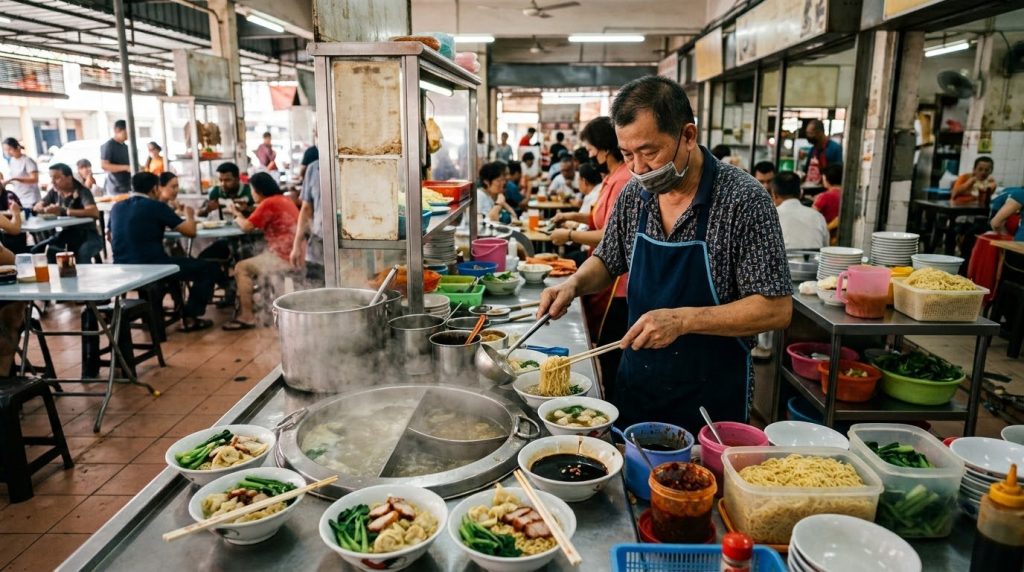
Our tip: eat where office workers eat. Banana-leaf rice in Brickfields, roti canai at a mamak stall and dim sum around Petaling Street beat any rooftop restaurant.
Multicultural neighbourhoods that reward slow walking
KL is most interesting in its older pockets, not its malls. Chinatown around Petaling Street mixes shophouses, temples and new cafes. Kampung Baru is a Malay village of wooden houses sitting under the Petronas skyline, and it is best at dinnertime. Brickfields, KL’s Little India, is loud, colourful and full of sweet shops and flower-garland sellers.
Give each one a few slow hours, ideally early or late in the day. If you want them sequenced into a sensible route, our 3-day Kuala Lumpur itinerary lays it out day by day.
Day trips that make a third night worthwhile
– Batu Caves: the KTM Komuter from KL Sentral takes about 30 minutes and costs AUD 0.75 · USD 0.55 (RM2.20). Temple Cave is free, but cover your shoulders and knees, and climb the 272 steps before 9am. – Melaka: buses from TBS terminal take about 2h15 and start around AUD 4 · USD 3 (RM12).
It is a UNESCO heritage town and the best single reason to stay a third night. Book weekend buses ahead. – Kuala Selangor fireflies: the Kampung Kuantan jetty is about 51km away, roughly 1 hour by road. Go on a guided evening tour, because there is no easy public transport back.
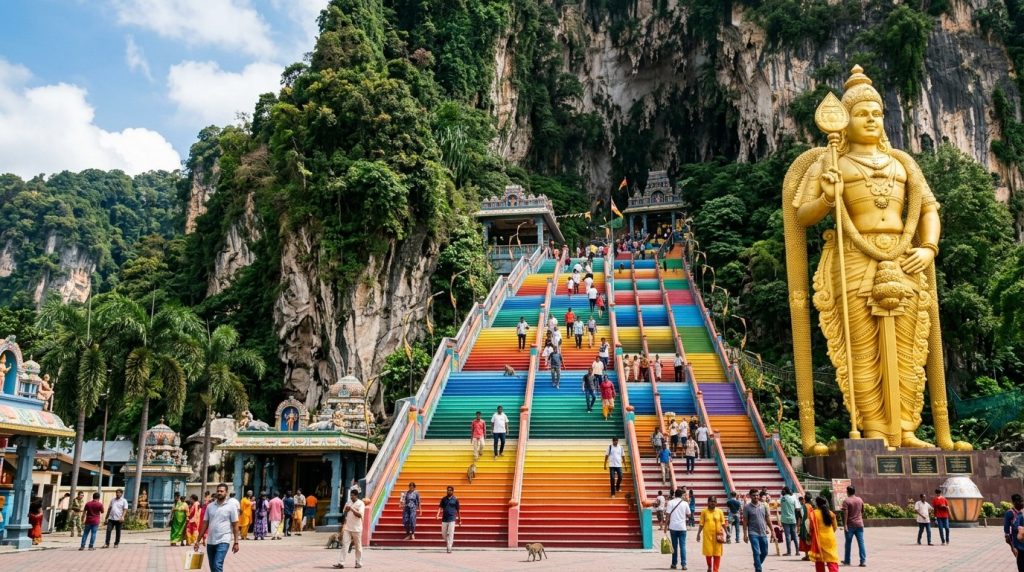
The Cameron Highlands are about 4 hours away by bus, so they are not a day trip. Do them as part of a longer route like our 7-day Malaysia itinerary.
The downsides nobody puts on Instagram
The heat. Daily highs sit around 31–32°C every month, humidity averages about 80%, and afternoon storms are common, especially in November and December. Walking between sights at 2pm is miserable. Plan to spend the middle of the day indoors.
It is a car city. Highways slice through neighbourhoods and footpaths vanish without warning. Most visitors end up using Grab plus the train lines rather than walking.
Few true “wow” sights. Once you have seen the Petronas Towers and Batu Caves, KL’s attractions are pleasant rather than unforgettable. The Petronas Skybridge costs AUD 33 · USD 24 (RM98) for non-Malaysian adults and is closed most Mondays. Many travellers think the free night view from KLCC Park is just as good.
Who should skip Kuala Lumpur (or cut it to one night)
– Beach-first travellers. KL has no beach. Head straight for Langkawi or Penang instead. – People who hate heat and humidity. If a Brisbane February flattens you, KL will too. – Sightseeing collectors. If you want a dense list of world-class monuments, Bangkok or Singapore deliver more per day. – Anyone with 7 days or less for all of Malaysia. Give KL one night and put the time into Penang or Melaka.
One night with a 5-hour layover is not enough to taste the city. Two nights is the minimum, and three is right if you add Melaka. For a longer trip that pairs KL with islands and highlands, see our 10-day Malaysia itinerary.
Getting around once you’re there
KL’s public transport covers the city better than its traffic reputation suggests. The LRT, MRT and monorail lines run on one network, and a single Touch ‘n Go card, the same one used on tolls and in convenience stores, taps in and out of all three for AUD 0.55 · USD 0.40 (RM1.50) to AUD 1.75 · USD 1.25 (RM5.00) per ride depending on distance.
Budget travellers who stick mostly to rail and the free GOKL city bus loop can cover a full day of sightseeing for around AUD 2.10–4.15 · USD 1.50–3 (RM6–12).
Grab, Malaysia’s ride-hailing app, fills the gaps the rail network does not reach, including Kampung Baru and most of Brickfields’ side streets. Short city rides typically cost AUD 2.10–4.15 · USD 1.50–3 (RM6–12), while the fixed trip between KLIA and the city centre runs AUD 22.55–26.05 · USD 16.25–18.75 (RM65–75), noticeably more than the KLIA Ekspres train but far simpler with luggage and for groups of three or more.
Walking works only in short stretches. Pavements disappear without warning outside the main tourist strips, crossings are infrequent, and the heat covered earlier in this guide makes any walk longer than 15 minutes in the middle of the day unpleasant.
Treat KL the way locals do: rail for the long legs between neighbourhoods, Grab for the last 10 minutes, and walking only inside a single area such as Chinatown or Bukit Bintang once you have arrived there.
Book your Grab as JustGrab rather than the premium tiers unless you specifically want a larger or newer car, since the standard option covers every trip described in this guide at the lower end of the price range above.
Avoid ordering one right as office towers empty out in the late afternoon, when surge pricing and traffic both spike at once; waiting 20 minutes or walking a block to a quieter pickup spot usually solves both problems.
Where to shop in Kuala Lumpur
Central Market, known locally as Pasar Seni, is the easiest first stop for souvenirs. Built in 1888 as a wet market and later converted into an air-conditioned crafts hub, it runs from 10am to 10pm and gathers batik, woodcraft, ceramics and local art under one roof, a useful alternative to haggling on the street if the heat and crowds feel like too much on a short visit.
Petaling Street itself, a short walk away in Chinatown, is the louder option: stalls selling clothing, watches, bags and souvenirs line a covered lane that gets busiest in the evening. Treat listed prices as a starting point rather than the final number, as is standard across Southeast Asian street markets, and keep both cash and a sense of humour handy.
For air-conditioned, fixed-price shopping, Suria KLCC sits at the base of the Petronas Towers and covers the full range from international fashion chains to a supermarket for self-caterers. Bukit Bintang’s Pavilion and the nearby malls cover similar ground closer to Jalan Alor, convenient if you are already staying in the area for the food street covered earlier in this guide.
None of KL’s malls feel essential the way Chinatown or Kampung Baru do, but they are a reliable fallback on afternoons when the heat makes the street markets unbearable.
Malaysia does not run a tourist VAT refund scheme the way Singapore or parts of Europe do, so factor the price you see into your budget rather than expecting any of it back at the airport.
Malls generally open around 10am and close by 10pm, broadly matching Central Market’s hours, while Petaling Street’s stalls stay open later into the evening once the day’s heat has passed and the dinner crowd arrives.
Health precautions: dengue and what to pack
Dengue is the health risk worth taking seriously in KL, more so than anything related to the city’s crime rate.
Smartraveller flags dengue fever as widespread across Malaysia, including in major cities, alongside a smaller Zika risk, and the World Health Organization’s Western Pacific dengue update recorded 1,116 new dengue cases across Malaysia in a single week in early March 2026.
The mosquitoes that carry it bite during the day, not just at dusk, which catches out visitors who only think about repellent in the evening.
Pack accordingly: a DEET or picaridin-based repellent, loose clothing that covers arms and legs for early-morning temple visits such as Batu Caves, and a willingness to reapply repellent after the kind of sweating that 80% humidity guarantees.
There is no vaccine routinely recommended for leisure travellers to Malaysia specifically for dengue, so prevention is the only real tool, along with seeing a doctor quickly if a fever develops within two weeks of returning home.
Water is a smaller decision than dengue but worth settling before you land. KL’s municipal supply is treated to national drinking-water standards and is technically safe at the point of treatment, but aging pipes in some older buildings can affect quality indoors, so most hotels provide bottled or filtered water and it is the simpler choice for a short visit rather than testing your luck straight from the tap.
Otherwise, pack light and breathable. Modest dress, covering shoulders and knees, is expected at Batu Caves’ Temple Cave, Thean Hou Temple and the National Mosque, and the free sarongs offered at some temple entrances are shared and not always freshly laundered, so carrying a light scarf of your own solves that problem without adding much to your luggage.
Where to stay in Kuala Lumpur
– Bukit Bintang: the best first-timer base, with monorail access, malls, Jalan Alor at your door and the widest range of hotels. It suits couples and short stopovers. – KLCC: the most polished area, close to the Petronas Towers and KLCC Park.
It suits families and travellers who want an easy, walkable bubble and a pool with a skyline view. – KL Sentral / Brickfields: the most practical area for transit, with direct KLIA Ekspres trains and the Komuter to Batu Caves. It suits one-night stopovers and early flights.
Budget an extra AUD 3.40 · USD 2.45 (RM10) per room per night for Malaysia’s tourism tax, which foreign guests pay at most hotels.
Find your Kuala Lumpur hotel on the map
Live prices from Booking, Airbnb and more — move the map or change dates to compare stays across Kuala Lumpur.
Frequently Asked Questions
Is Kuala Lumpur worth a stopover on the way to Europe?
Yes, if you can give it at least 2 nights. KLIA is a major hub for Malaysia Airlines and AirAsia X, the train into the city takes about 30 minutes, and hotels are good value. A single night mostly goes on transfers and sleep, so you will see little beyond your hotel and one meal.
How many days do you need in Kuala Lumpur?
Two to three days is right for most Australians. Two days covers the Petronas Towers, Batu Caves, Chinatown, Kampung Baru and a serious amount of hawker food. A third day lets you add a Melaka day trip or the Kuala Selangor fireflies without rushing.
Is Kuala Lumpur better than Singapore?
For value and food variety, KL usually wins: hotels and hawker meals cost noticeably less. Singapore is cleaner, more walkable and has more polished attractions. If you are on a budget or want a grittier, more local feel, choose KL. If you are travelling with young kids and want everything easy, Singapore is simpler.
What is the best time to visit Kuala Lumpur?
KL is hot all year, with highs around 31–32°C, so there is no cool season. November and December are the wettest months, with frequent afternoon downpours. Rain rarely lasts all day, though, and storms usually pass by evening, so any month works if you plan indoor time for the afternoons.
Do Australians need a visa for Malaysia?
No. Australians can stay up to 90 days visa-free as tourists. You must submit the free Malaysia Digital Arrival Card online within the 3 days before you arrive, and your passport should have at least 6 months’ validity to use the automated gates.