Is Da Nang Safe? An Honest Guide for Australian Travellers
By TravelguidestipUpdated 6 min readHow we earn
Hotel buttons open Stay22 (Booking.com, Agoda and others) and tour buttons open GetYourGuide. We may earn a commission at no extra cost to you.
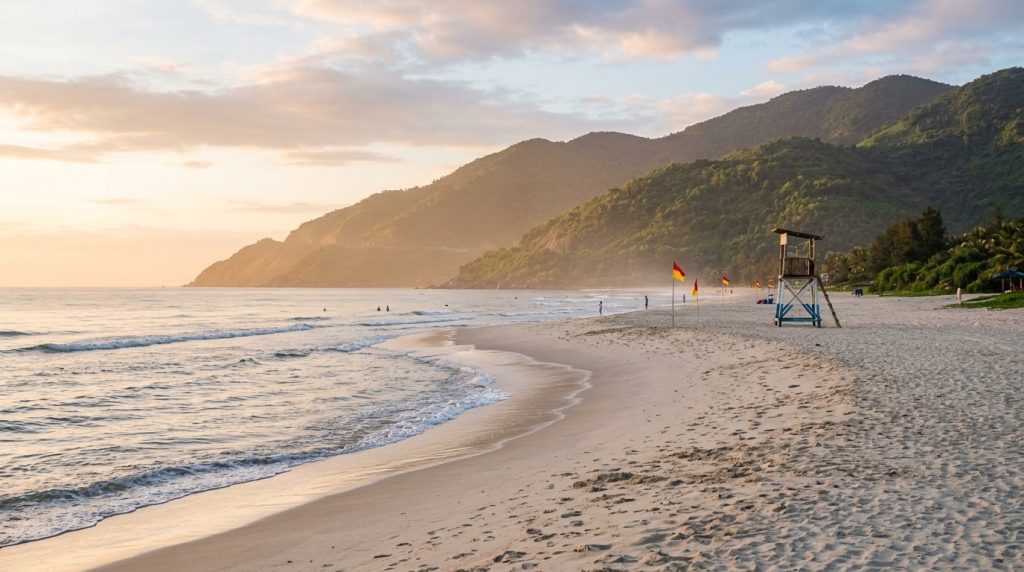
Yes, safe for most visitors. Smartraveller rates Vietnam at Level 1, “exercise normal safety precautions”. Violent crime against tourists is rare and the city is calmer than Hanoi or Ho Chi Minh City.
| Risk | Reality | What to do |
|---|---|---|
| Typhoons and floods | Wet season Sep–Dec, peaking Oct–Nov | Flexible bookings, weather-proof insurance |
| Rip currents at My Khe | Worst in rough months and outside flags | Swim between flags, 5am–8pm, never on red |
| Scooters and traffic | Rising serious tourist crashes | No riding without a Vietnamese licence |
| Petty theft | Snatch-and-grab from motorbikes | Carry bags away from the road |
| Taxi scams | Cash-fare and fake-cab tricks | Use Grab or the official airport rank |
What is low-risk
- Violent crime is rare. Violent crime against tourists is rare and the city is calmer than Hanoi or Ho Chi Minh City.
- Lowest advice level. The advice level for all of Vietnam is “Exercise normal safety precautions”, the lowest of four levels
- Comfortable for solo women. Women travelling alone generally report feeling comfortable, especially along the beachfront.
What to watch
- Storm season. The rainy season runs September to December and peaks in October and November, which is also when typhoons hit the central coast.
- Traffic and scooters. Traffic is the biggest physical risk in Da Nang.
- Rip currents. The habits that get visitors into trouble are night swims under the promenade lights (no lifeguards after 8pm)
- Bag snatching. Snatch-and-grab thefts from passing motorbikes happen across Vietnam, Da Nang included.
Yes, Da Nang is safe for most visitors: Smartraveller rates Vietnam at Level 1, “exercise normal safety precautions”, in advice updated 24 September 2026. Violent crime against tourists is rare and the city is calmer than Hanoi or Ho Chi Minh City.
The real risks are practical: scooter traffic, rip currents off My Khe, bag snatching, and storms and floods on the central coast from September to December. Plan around those four and Da Nang is one of the easiest cities in Southeast Asia.
| Risk | Reality | What to do |
|---|---|---|
| Typhoons and floods | Wet season Sep–Dec, peaking Oct–Nov | Flexible bookings, weather-proof insurance |
| Rip currents at My Khe | Worst in rough months and outside flags | Swim between flags, 5am–8pm, never on red |
| Scooters and traffic | Rising serious tourist crashes | No riding without a Vietnamese licence |
| Petty theft | Snatch-and-grab from motorbikes | Carry bags away from the road |
| Taxi scams | Cash-fare and fake-cab tricks | Use Grab or the official airport rank |
| Food and drink | Street food fine; tap water and ice less so | Bottled water, busy stalls, sealed drinks |
What Smartraveller says about Vietnam right now
The advice level for all of Vietnam is “Exercise normal safety precautions”, the lowest of four levels, last updated 24 September 2026. That update focuses on storm season, warning of “heavy rain, floods, landslides and typhoons” that can disrupt flights, roads and services, and telling travellers to check their insurance covers bad weather.
Two other points matter in Da Nang. Australian licences are not accepted, so you need a Vietnamese licence to ride any motorbike of 50cc or more. And emergency numbers (113 police, 114 fire, 115 ambulance) operate in Vietnamese only and “may be unreliable”, so save your hotel’s front desk number and your insurer’s 24-hour line. Read the full Smartraveller Vietnam advice before you book.
Typhoon and flood season: think twice about October and November
This is the risk most “Da Nang is perfectly safe” articles skip. The rainy season runs September to December and peaks in October and November, which is also when typhoons hit the central coast.
In 2025, the central Vietnam floods ran from 16 October to 6 December, left at least 219 people dead or missing, and caused damage in Da Nang of about AUD 46 million · USD 33.2 million. Hoi An now sits inside Da Nang city after the July 2025 provincial merger, so local warnings cover the Old Town too.
For tourists, the usual impact is cancelled flights, closed roads to Hoi An and Ba Na Hills, and days stuck indoors rather than personal danger. If you can only travel in the Australian spring, book refundable rooms, avoid tight connections and keep a buffer day before flying home. Our guide to how many days in Da Nang shows which day trips to cut first when the weather turns.
My Khe Beach: rip currents and lifeguard zones
My Khe is a 10 km stretch of open beach with real surf. Swimming is permitted from 5am to 8pm, lifeguards cover the patrolled zones, and coloured flags mark where it is safe. Red means no swimming, and you will see it often in the rough months. The calmest water is generally April to September.
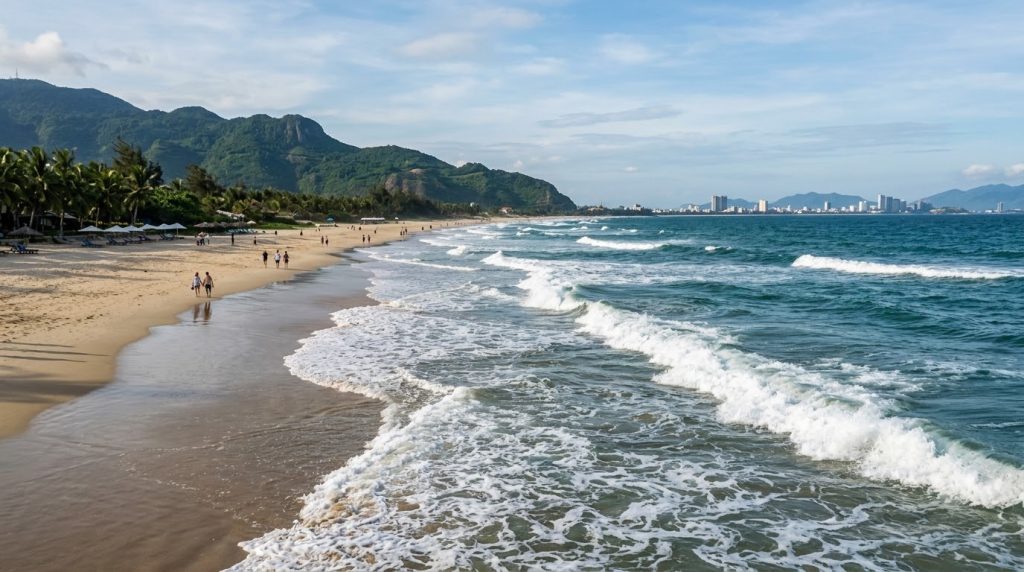
Rips form here like they do at Bondi: look for darker, flatter patches where waves are not breaking and foam drifting out. If caught, swim parallel to the shore, then come in. The habits that get visitors into trouble are night swims under the promenade lights (no lifeguards after 8pm) and wandering to quiet, unpatrolled stretches. Jellyfish also appear in summer.
Traffic, scooters and getting around
Traffic is the biggest physical risk in Da Nang. Smartraveller notes the number of travellers in serious motorcycle accidents is increasing. If you do not hold a Vietnamese licence, do not hire a scooter, however relaxed the beach road looks, and check what your insurer says about unlicensed riding.
Use Grab instead. The airport to the My Khe hotel strip is 5–7 km, usually 10–15 minutes, and costs about AUD 3.50–7 · USD 2.50–5 in the app. The official taxi rank posts fixed fares of AUD 5.50–7.60 · USD 4–5.50 (VND 100,000–130,000) to beach hotels.
Compare options in our Da Nang airport transfer guide. When crossing the road, walk at a slow, steady pace and let the bikes flow around you.
Petty theft, scams, food and drink
Snatch-and-grab thefts from passing motorbikes happen across Vietnam, Da Nang included. Keep your phone away from the kerb when checking maps, wear bags facing the footpath, and never leave belongings on the sand while you swim.
Most taxi scams start with paying cash: an unmetered cab, a “broken” meter, or a fare that multiplies at your hotel door. Grab fixes the price before you ride. Also watch for fake Facebook pages selling cheap Ba Na Hills and Hoi An tours. Smartraveller warns that methanol poisoning can kill with as little as one shot, so stick to branded, sealed drinks and skip bucket deals.
Street food is a highlight, and busy stalls cooking to order are the safest bet. Drink bottled or boiled water, and be careful with ice and raw salads. Outbreaks happen even at famous spots: in September 2023 a well-known Hoi An banh mi shop sickened 313 people, 103 of them foreigners, with Salmonella. For meal and transport budgets, see our Da Nang travel cost breakdown.
Da Nang with kids and for solo women
Families: Da Nang is one of Vietnam’s easiest cities with children, with wide beachfront footpaths, roomy Grab cars and plenty of hotels with pools. Keep kids inside the flagged zone and within arm’s reach, swim early or late to dodge the midday sun, and bring a carrier rather than a pram for side streets.
Solo women: Women travelling alone generally report feeling comfortable, especially along the beachfront. Use Grab at night rather than street motorbike taxis, share your trip from the app, watch your drink in bars, and choose a place with a 24-hour front desk.
Where to stay in Da Nang
– My Khe and An Thuong: the best all-round base for first-timers, families and solo travellers, with lifeguarded beach on your doorstep. – Han River (Hai Chau): better for a city break, food and nightlife, and a good fallback when the sea is rough. – Non Nuoc and the southern resort strip: quieter resorts suited to couples who want space over convenience.
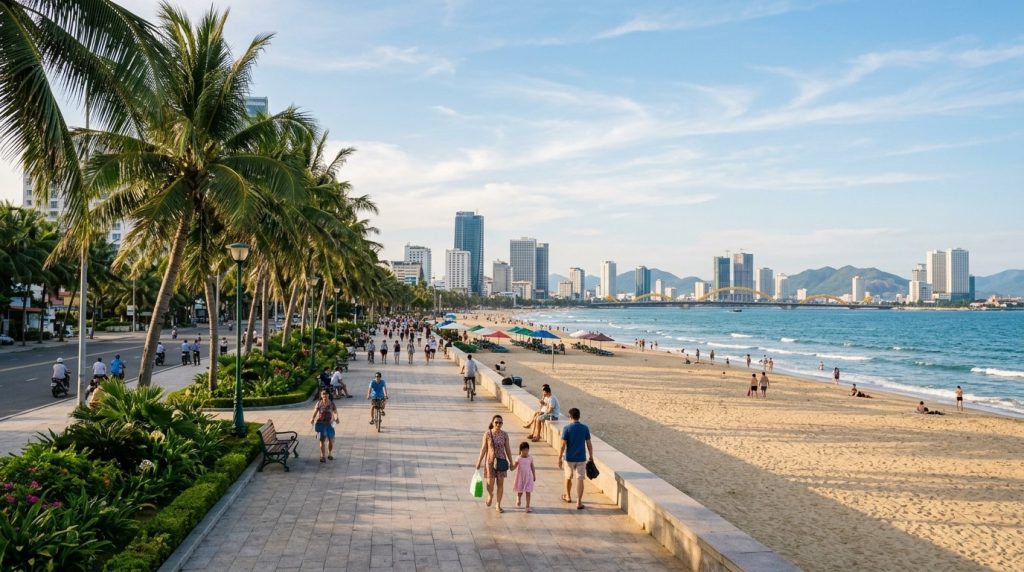
Browse vetted options in our list of the best Da Nang hotels.
Find your Da Nang hotel on the map
Live prices from Booking, Airbnb and more — move the map or change dates to compare stays across Da Nang.
Frequently Asked Questions
Is Da Nang safe for tourists in 2026?
Yes. Smartraveller rates Vietnam at its lowest level, “exercise normal safety precautions”, in advice updated 24 September 2026. Serious crime against tourists is uncommon in Da Nang. The main risks are road accidents, rip currents, bag snatching and storm disruption from September to December, all manageable with sensible planning and good insurance.
Is it safe to swim at My Khe Beach?
Yes, inside the flagged, lifeguarded zones between 5am and 8pm. Do not swim when red flags are up, at night, or on unpatrolled stretches. Rip currents are more common in the rainy months. If one catches you, swim parallel to the beach until you are out of the pull, then head back to shore.
Is it safe to visit Da Nang in October or November?
It is safe, but it is the riskiest time for travel disruption. October and November are peak months for heavy rain, floods and typhoons on the central coast, and 2025 brought deadly floods across the region. Choose refundable bookings, leave buffer days, and confirm your insurance covers weather cancellations.
Can I ride a scooter in Da Nang on my Australian licence?
No. Smartraveller says you need a valid Vietnamese licence to ride a motorbike of 50cc or more, and Australian licences are not accepted. Riding unlicensed is illegal and may leave you uninsured after a crash. Grab cars and Grab bikes are cheap, quick and a far safer way to get around the city.