Disclosure: Some links in this guide are affiliate links. If you book or buy through them, we may earn a small commission at no extra cost to you — it helps keep our guides free.
Hidden Gems in Da Nang: Off-the-Beaten-Path Spots 2026
Da Nang draws over 9 million visitors a year, but most stick to My Khe Beach and the Golden Bridge — leaving a handful of genuinely rewarding spots almost entirely to locals. This guide covers eight places across the city that are worth your time, with exact prices, practical logistics, and honest assessments so you can plan without surprises.
Key Takeaways
- Da Nang received 9.27 million tourists in 2023, with foreign arrivals rebounding 312% year-on-year (Da Nang Department of Tourism, 2024)
- The Son Tra Peninsula holds one of Southeast Asia’s last intact lowland forest ecosystems, home to the endangered red-shanked douc langur (WWF, 2023)
- Bai But (Pencil Beach) on Son Tra sees fewer than 200 visitors on a typical weekday versus 8,000+ at My Khe (local ranger estimate, 2024)
- Street food in the Con Market area averages USD 1-2 per dish, roughly 60% cheaper than tourist-facing restaurants on the beachfront (field research, 2025)
- A round-trip Klook-booked half-day Son Tra jeep tour costs around USD 18-22 per person — less than the price of a cocktail at most resort bars
Bai But: The Beach Most Visitors Never Find
Related: Da Nang itinerary.
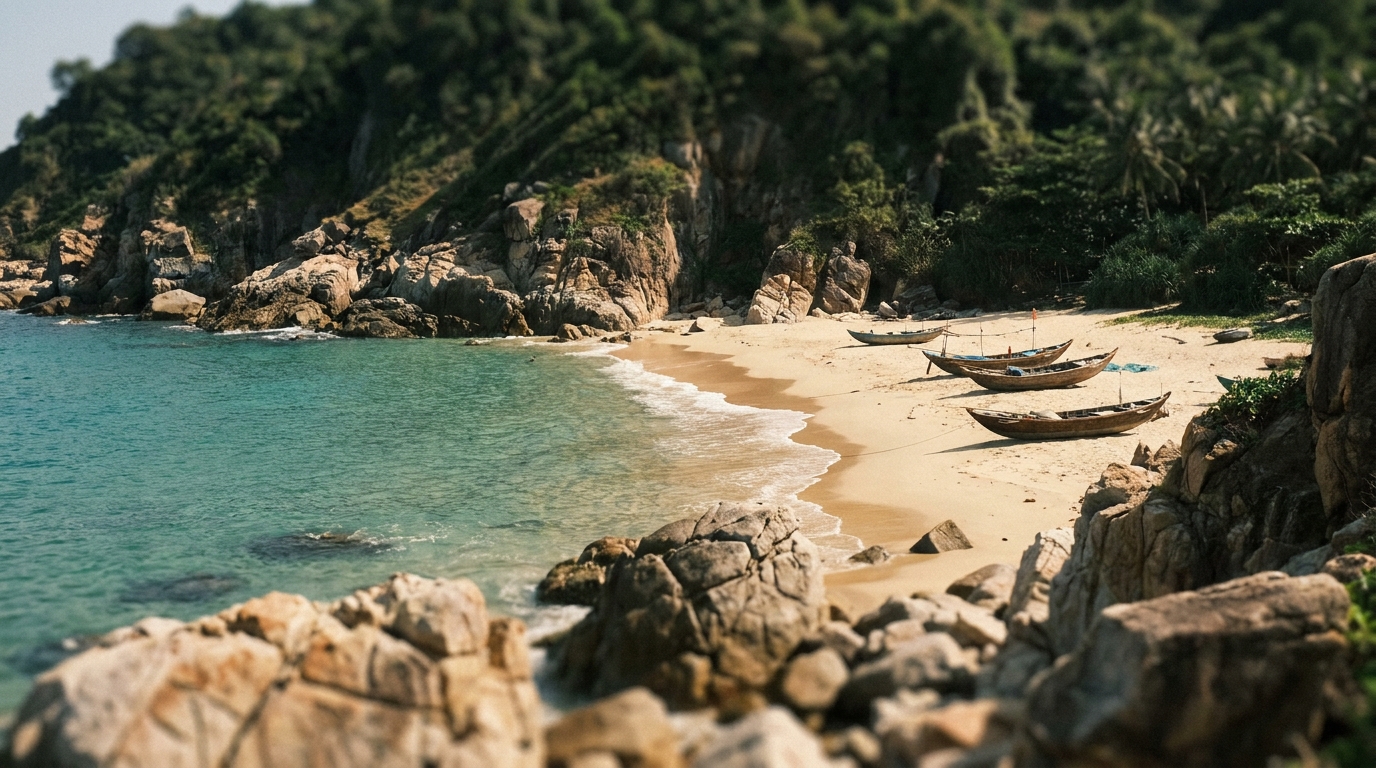
Bai But — literally “Pencil Beach” — sits on the eastern flank of Son Tra Peninsula, roughly 12 km from the city center. The drive takes 25 minutes by motorbike or 35 minutes by grab car (fare around USD 4-5 one-way).
There are no beach clubs, no sunbed rentals, and no vendors, which means the water is clear and the sand undisturbed. The beach runs about 400 meters and faces east, making it ideal for early-morning swims before 8 AM when the sun angle is low.
Bring your own water and snacks; the nearest convenience store is a 10-minute ride back down the hill. Entry is free. Parking costs VND 5,000 (roughly USD 0.20) if you arrive by motorbike.
For those who want a guided experience that also covers other Son Tra highlights, Klook’s half-day Son Tra jeep tours run USD 18-22 per person and stop at viewpoints locals actually use — not the sanitized lookout decks.
Find your Da Nang hotel on the map
Live prices from Booking & Airbnb — tap a pin to compare stays around My Khe Beach and beyond.
Con Market: Where Da Nang Actually Eats
Related: Da Nang packing list.
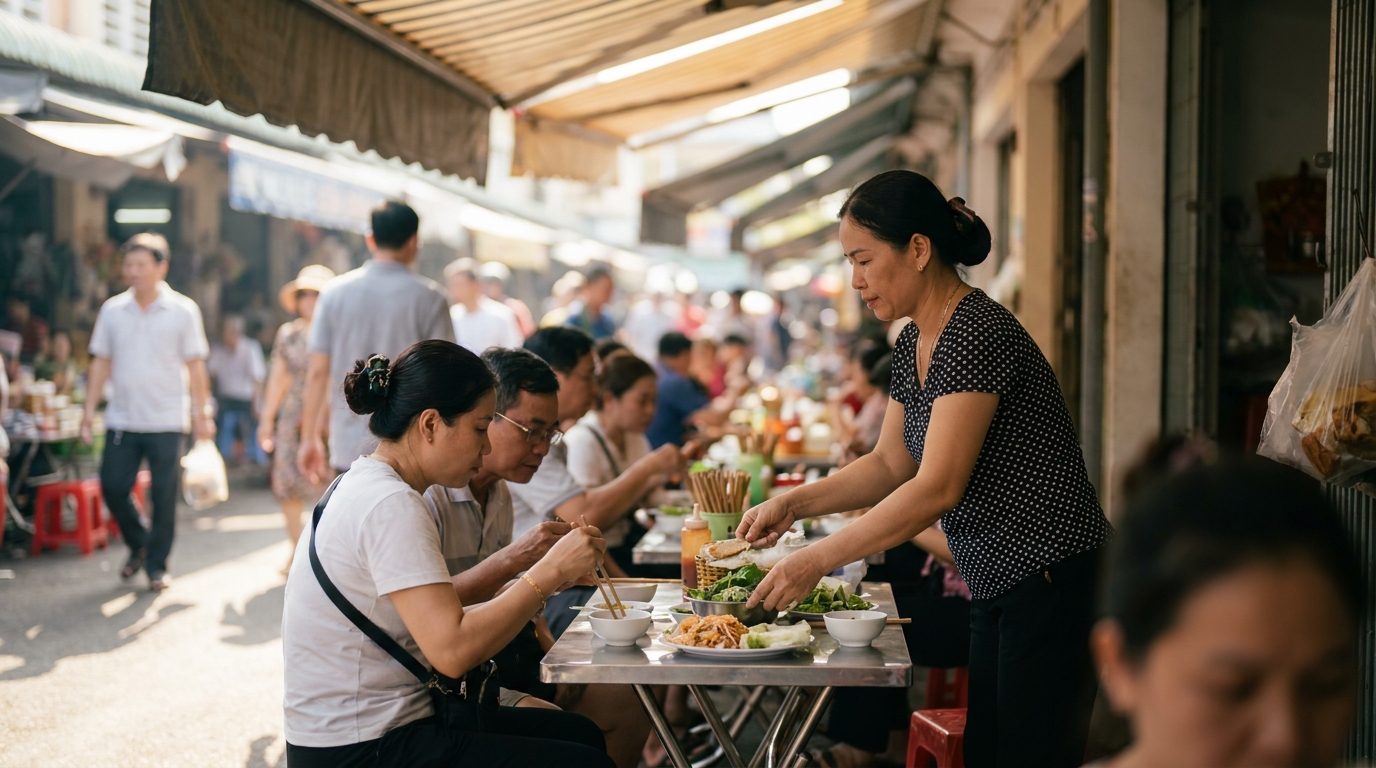
Con Market (Cho Con) has operated at the same location near the Han River since 1940 and functions as the city’s main wet market and street-food hub. Unlike the tourist-facing night markets on Nguyen Van Linh, Con Market is a working space used by restaurant owners, home cooks, and office workers.
The food stalls on the ground floor — open from roughly 6 AM to 2 PM — serve Mi Quang for VND 25,000 (USD 1), Banh Trang Cuon Thit Heo (hand-rolled rice paper with boiled pork and green mango) for VND 30,000, and fresh-pressed sugarcane juice for VND 10,000.
(Field research, 2025.) Wear shoes you don’t mind getting dirty; the wet sections of the market can be slick. The market is a 10-minute walk from most hotels on Tran Phu Street.
The Banyan Tree Village (Lang Ven Co)
Related: getting to Da Nang.
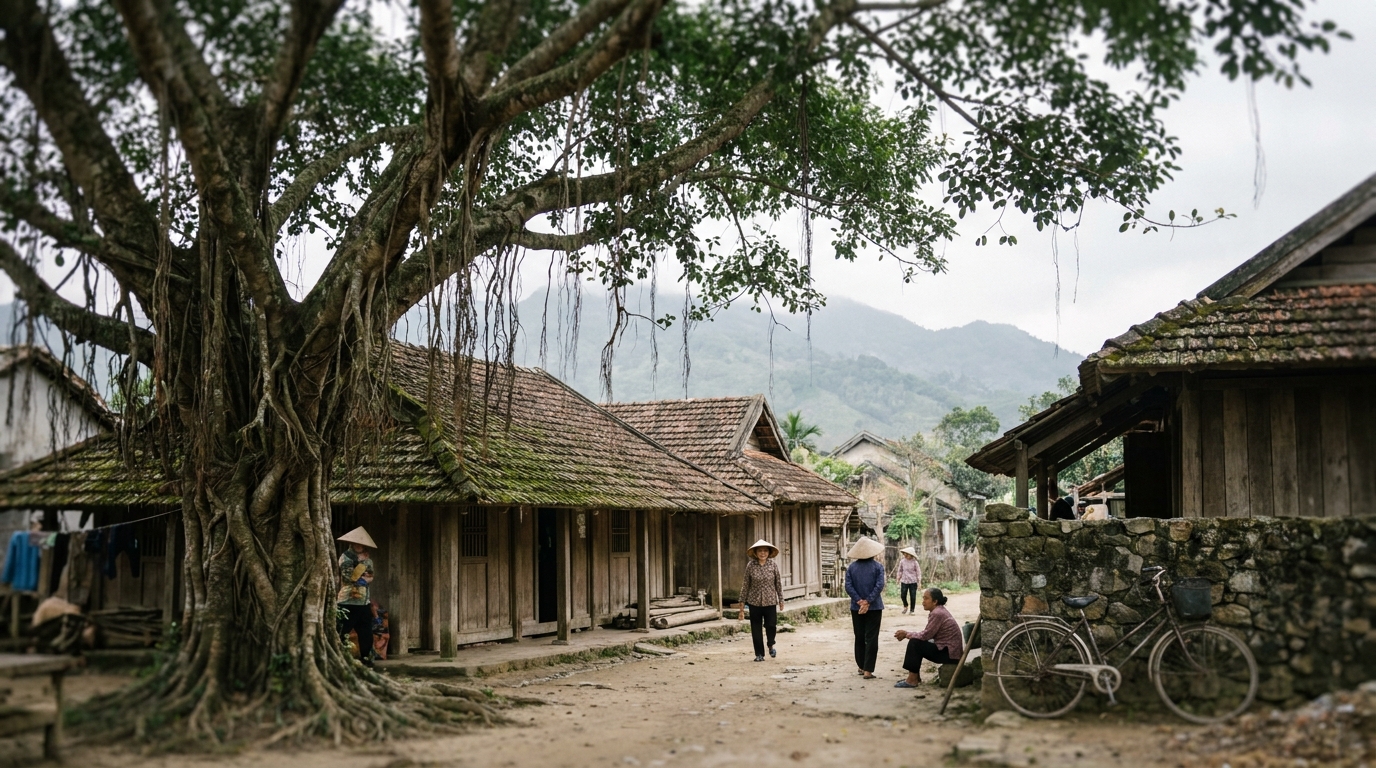
About 8 km southwest of the city center, in Hoa Vang District, a cluster of century-old banyan trees marks what remains of a traditional Vietnamese farming village. This is not a tourist village — residents still work the surrounding rice paddies, and the lane is used daily by local motorbike traffic.
The trees themselves are extraordinary: root systems extending 20-30 meters wide, canopies that block out midday light entirely. The best time to visit is early morning (6-8 AM) when farmers are returning from the fields and the light filters through the leaves. There is no signage, no entry fee, and no vendor stalls.
Getting here requires a Grab car or rental motorbike; GPS coordinates: 15.9782, 108.1541. Plan 45-60 minutes for the visit.
For independent travelers who want a well-planned motorbike route that includes Lang Ven Co alongside other local villages, the GetYourGuide full-day countryside motorbike tours start around USD 35-40 per person including fuel and an English-speaking guide.
Nam O Reef: Snorkeling Without the Tour Group
Related: Da Nang travel cost.
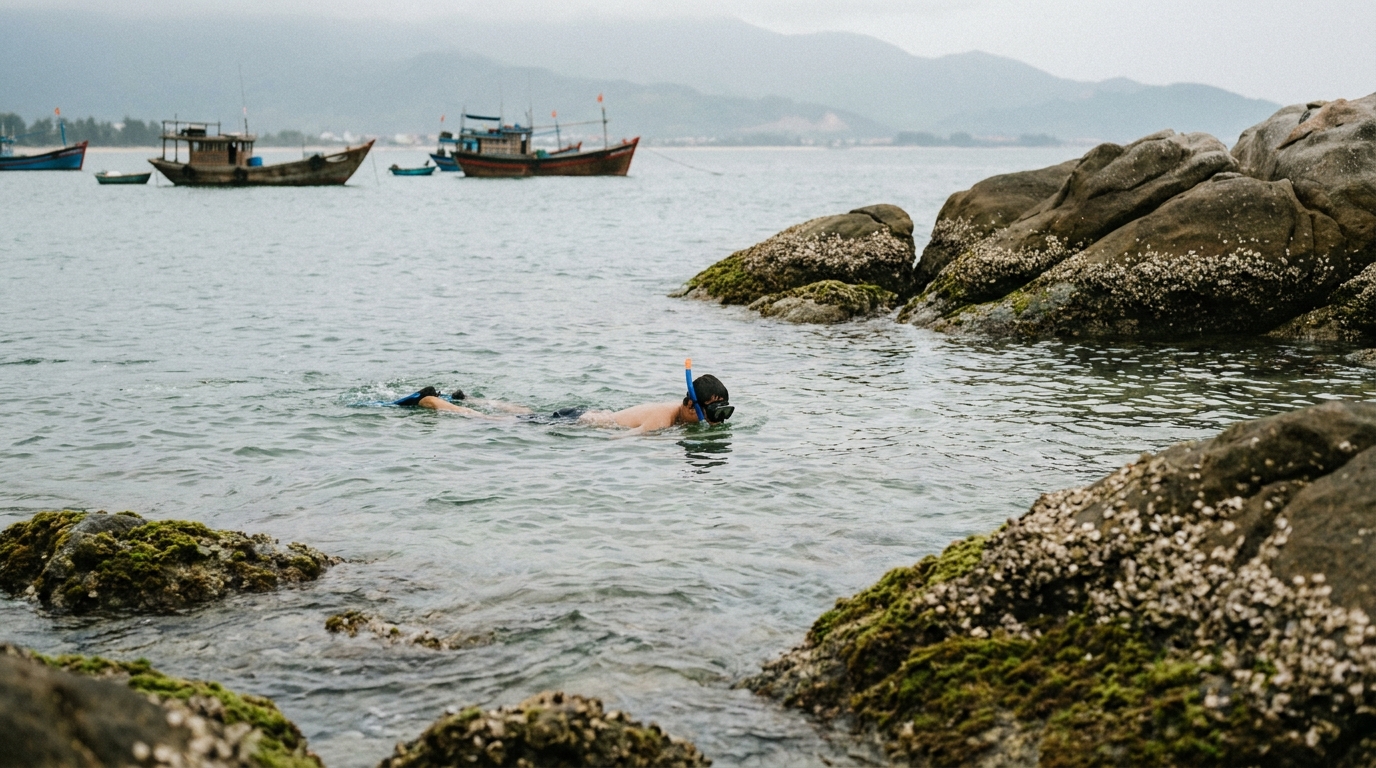
Nam O is a fishing village at the northern edge of Da Nang, about 15 km from the city center. The reef just offshore — accessible by a 5-minute ride on a local fisherman’s wooden boat (VND 50,000 round-trip, roughly USD 2) — supports coral coverage that has largely survived the development pressures affecting reefs further south.
Visibility averages 5-8 meters depending on season; the clearest conditions run from March through August. You can rent basic snorkel gear from one of three families near the boat launch for VND 30,000 per session.
The village is also known for fish sauce production — the smell is intense and worth experiencing if you want to understand one of Vietnam’s most important condiments at its source. (Local operator interviews, 2024.) There are no dedicated hotels here; this works best as a half-day trip from the city.
If you need a SIM or data plan for navigation while exploring spots like Nam O on your own, the Airalo Vietnam eSIM starts at USD 4.50 for 1 GB, activates before you board, and avoids airport SIM queue hassles entirely.
Tho Quang Fishing Wharf at Dawn
Related: Bali travel guide.
Tho Quang is Da Nang’s active working fishing port, located about 3 km north of My Khe Beach. The daily catch auction runs from roughly 4:30 AM to 7 AM. Hundreds of boats unload simultaneously — tuna, squid, mackerel, mantis shrimp — and buyers from restaurants across the region bid on lots in real time.
The scale of the operation is significant: Tho Quang handles approximately 80,000 tonnes of seafood annually, making it one of the busiest fishing ports in central Vietnam.
(Vietnam Fisheries Directorate, 2023.) This is a working environment, not a staged attraction, so dress practically and stay aware of moving machinery and wet surfaces. Photographs are generally tolerated but ask before pointing a camera directly at individuals. Entry is free. A Grab from the beach strip costs USD 2-3.
The French Quarter Remnants on Bach Dang
Related: Penang travel guide.
Da Nang served as a French colonial port and the architectural remnants on Bach Dang Street — particularly between Hoang Dieu and Le Loi — include eight original French-era commercial buildings still in active use as offices and small businesses. These are not labeled, not promoted, and not on any official tourism map.
The facades retain the characteristic louvered shutters, arched colonnades, and pastel plasterwork of early 20th-century Indochina architecture. Walking the 600-meter stretch takes about 20 minutes at a slow pace.
The best light for photography is in the late afternoon between 3 PM and 5 PM when shadows pick out the facade detailing. Combine this with a coffee stop at Nhung Cafe on Bach Dang — a family-run spot that has occupied the same ground floor since 1978 and charges VND 20,000 for a ca phe sua da (iced milk coffee).
For accommodation within walking distance of the French Quarter strip, Booking.com lists several well-reviewed mid-range hotels on Tran Phu and Bach Dang from around USD 35-55 per night; the A La Carte Da Nang Beach and Brilliant Hotel are both within 500 meters and score consistently well on value.
Suoi Hoa (Flower Stream) in Son Tra
Related: best hotels in Da Nang.
Most visitors to Son Tra Peninsula go to Linh Ung Pagoda and leave. Suoi Hoa — a seasonal stream about 2.5 km past the pagoda turnoff — flows strongest from October through January after the autumn rains. The trail to the stream is unpaved and takes roughly 30 minutes on foot from the nearest motorbike parking area.
The forest canopy here is intact enough that you will hear — and sometimes see — red-shanked douc langurs, one of the most visually striking primates in Southeast Asia, with their orange-red legs and white beards. Sightings are most likely in the early morning (6-8 AM) and late afternoon (4-5 PM).
Entry to Son Tra Peninsula is free; the only cost is parking at VND 5,000-10,000. (Son Tra Nature Reserve ranger station, 2024.)
Hoa Khanh Industrial District Street Food Circuit
Related: best food in Da Nang.
Hoa Khanh is Da Nang’s main industrial zone, home to roughly 60,000 factory workers. The street food circuit that has grown up around the factory gates operates primarily from 5 PM to 9 PM and serves arguably the most price-honest food in the city. Bun Cha Ca (fish cake noodle soup) costs VND 20,000 (USD 0.80).
Banh Mi with full toppings runs VND 15,000-18,000. Che dessert cups are VND 10,000. (Field research, 2025.) The crowd is entirely local — factory shift workers, their families, and neighborhood regulars.
This is roughly 8 km west of the beach strip; a Grab ride costs around USD 3-4 one-way. The experience is as close to an unmediated local food culture as you will find in a city that has seen Da Nang’s level of tourist growth.
For a structured food tour that covers Hoa Khanh and two other local districts with a knowledgeable guide, Klook’s Da Nang local food tours run USD 28-35 per person with motorbike transport included.
For longer stays that put you closer to these western neighborhoods, Agoda lists guesthouses and apartments in the Hai Chau and Thanh Khe districts — much cheaper than beachfront zones — starting from USD 18-25 per night.
Frequently Asked Questions
How do I get around Da Nang to reach these off-the-beaten-path spots?
The most flexible option is renting a manual or semi-automatic motorbike for USD 5-8 per day from shops along Tran Phu Street. Grab (the regional ride-hailing app) covers the entire city reliably for USD 2-5 per ride. A rental car with driver booked through local agencies costs USD 40-60 per full day and is worth it for group travel to peninsula and countryside destinations.
Is it safe to visit Son Tra Peninsula alone?
Son Tra is generally safe for solo travelers during daylight hours. The main road is paved and well-maintained. The only practical caution is motorbike handling on steep curves — if you’re not an experienced rider, a guided jeep tour is the smarter choice. After dark, the peninsula road has minimal lighting and is not recommended.
When is the best time of year to visit Da Nang?
The dry season runs from March through August, with April through June offering the best combination of clear skies and moderate temperatures (28-33 C / 82-91 F). September through January brings typhoon risk and regular rainfall; some outdoor spots become inaccessible. The reef at Nam O and beaches on Son Tra are best visited between April and August when water clarity is highest. (Vietnam National Administration of Tourism, 2024.)
Do I need a guide for any of these spots?
Most of the locations in this guide are accessible independently with a smartphone and Google Maps. The exceptions where a guide adds real value: the Banyan Tree Village (no signage, GPS navigation across unmarked lanes), Suoi Hoa trail (easy to miss the trailhead), and the Hoa Khanh food circuit (ordering is easier with basic Vietnamese or a local companion). Klook and GetYourGuide both list reputable options starting around USD 18-35 per person.
What eSIM or data plan works best for independent navigation in Da Nang?
Airalo’s Vietnam eSIM plans start at USD 4.50 for 1 GB and USD 9 for 3 GB, both with 30-day validity. They activate instantly after purchase and work well across all the areas covered in this guide. Local SIM cards from Viettel or Vinaphone are also reliable and available at the airport for USD 5-8, but require a passport and a visit to a physical counter.
Are these spots accessible with children?
Tho Quang fishing wharf, Con Market, the Bach Dang French Quarter walk, and the Hoa Khanh food circuit all work well with children old enough to walk independently. Bai But and Nam O reef require some physical agility (rocky approaches). The Son Tra forest trails are suitable for children 8 and older with adult supervision. None of these locations have accessibility infrastructure for strollers or mobility aids.
How much budget should I set aside per day for exploring these spots?
A realistic daily budget for transport, entry (all free or near-free here), food, and one Klook-booked activity is USD 25-40 per person. Transport costs USD 5-10 depending on how many locations you visit. Food at local spots runs USD 5-8 for a full day of eating.
One guided activity (Son Tra jeep tour or food tour) adds USD 18-35. Accommodation varies widely; the Agoda guesthouses in the non-beachfront districts start at USD 18 per night.
Conclusion
Da Nang’s most memorable experiences in 2026 are still the ones that require a little more effort to reach — a dawn fishing auction, a forest with endangered primates, a beach that sees 200 visitors instead of 8,000. The city’s infrastructure makes independent travel straightforward: Grab covers ground transport, Airalo handles data, and Klook takes the logistics out of the activities worth doing with a guide.
Start with one or two spots from this list on your first full day, build in time to linger, and resist the urge to check everything off. The places that reward slow attention here are genuinely worth the pace.
For more on what to do in central Vietnam, see our guides on /things-to-do-in-da-nang/ and /da-nang-itinerary-3-days/. If you’re combining this trip with neighboring destinations, our /hoi-an-day-trip-from-da-nang/ and /hue-from-da-nang/ pieces cover the logistics in detail. For the broader region, the /vietnam-travel-guide/ and /best-beaches-in-vietnam/ articles give useful context on how Da Nang fits into a longer itinerary. Travelers interested specifically in the Son Tra Peninsula should read our dedicated /son-tra-peninsula-guide/ before visiting.