Disclosure: Some links in this guide are affiliate links. If you book or buy through them, we may earn a small commission at no extra cost to you — it helps keep our guides free.
Quick answer: Stay on the hill road near the park entrance if you want the beaches and the monkeys on your doorstep; base in Quepos town if you want cheaper rooms, real restaurants, and do not mind a short bus ride to the sand.
Manuel Antonio is a small national park pressed right up against the sea, and the whole place hangs off one road. Deciding where to stay in Manuel Antonio really comes down to which end of that road you want to wake up on. Get that right and everything else, the beaches, the tours, the sloths, falls into place.
Affiliate Disclosure: This post contains affiliate links. We earn a small commission if you book through our links, at no extra cost to you.
The areas at a glance
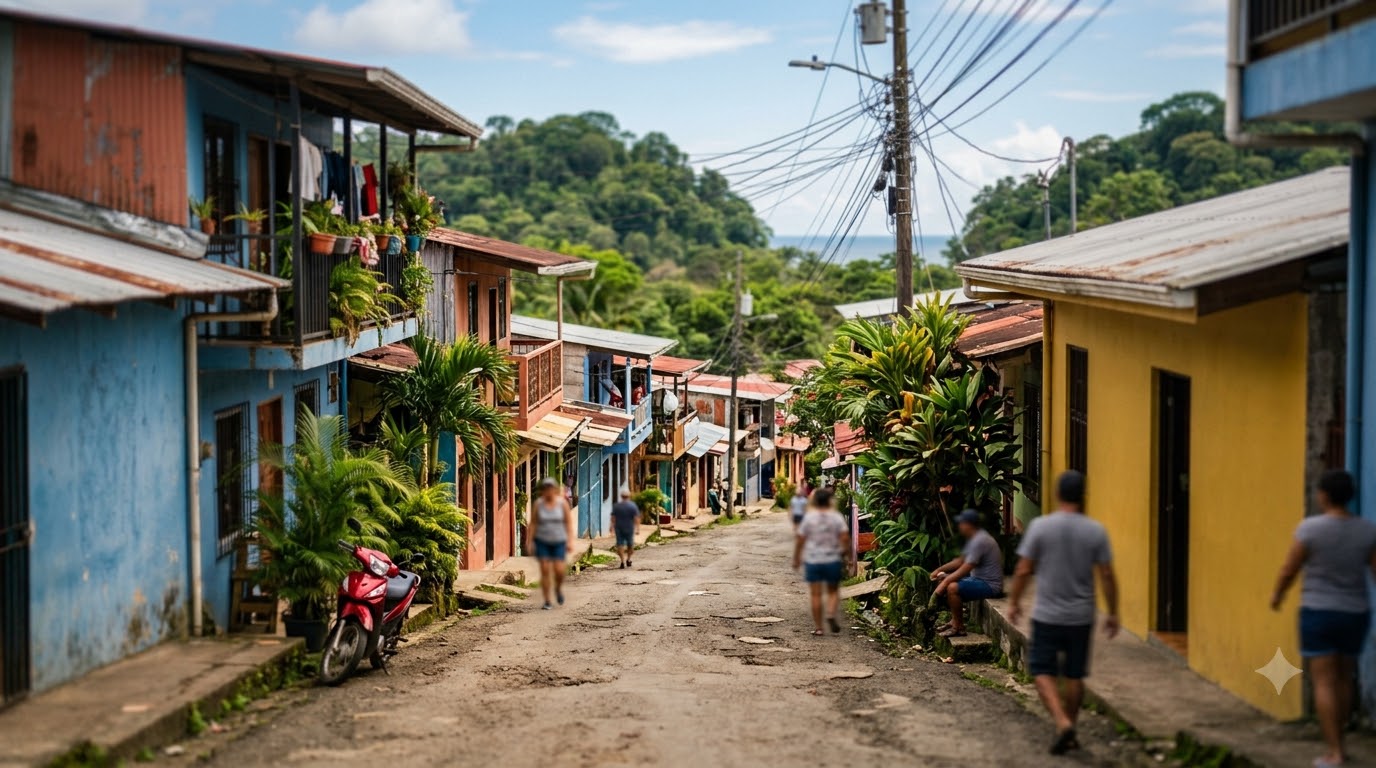
There are really four places you can sleep here, and they all sit on a single steep line. At the bottom, right by the park gate, is the hill road with the closest access to the beaches. Below that lies Playa Espadilla, the main public beach and the loudest, busiest strip. The middle and top of the hill hold most of the view hotels, spread up the ridge. And at the far end, down at sea level, is Quepos, the working town where the buses, the marina, and the affordable rooms are. The road connects all of it, and that road is the whole story.
The hill road near the park entrance
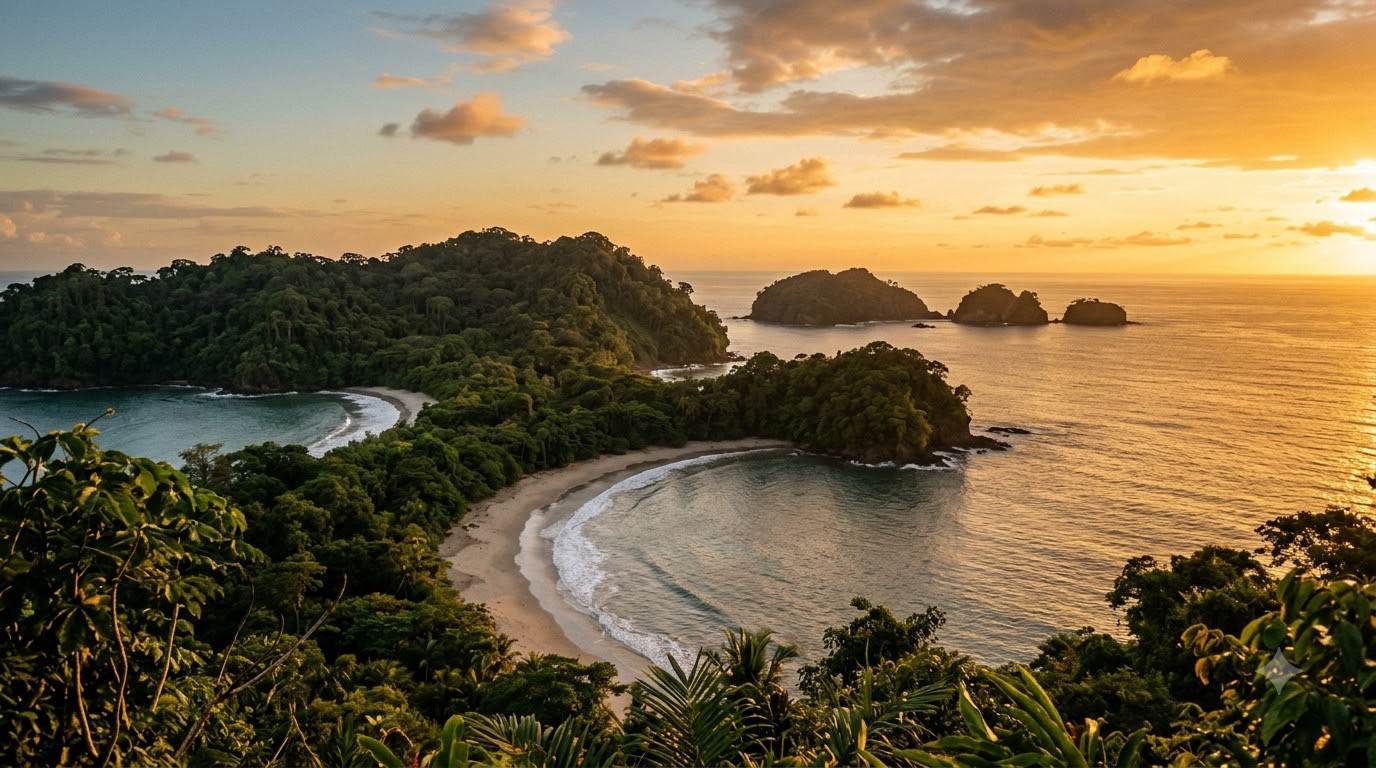
This is the closest you can sleep to the park, and for most first-time visitors it is the right call. You can walk to the entrance, walk to the beach, and be watching monkeys and sloths before the day-trip crowds arrive by bus. It suits couples and anyone whose whole reason for coming is the park itself. The vibe near the gate is busy and a bit touristy, with restaurants and tour desks lined up along the road.
Here is the trade-off the listing photos hide: this road is steep, narrow, and has almost no footpath. Walking down to the beach is easy. Walking back up in the afternoon heat, with the traffic squeezing past, is not. A room described as a short stroll from the beach can mean a hard, sweaty climb home. Check the elevation, not just the distance, before you book.
Playa Espadilla and the beach strip
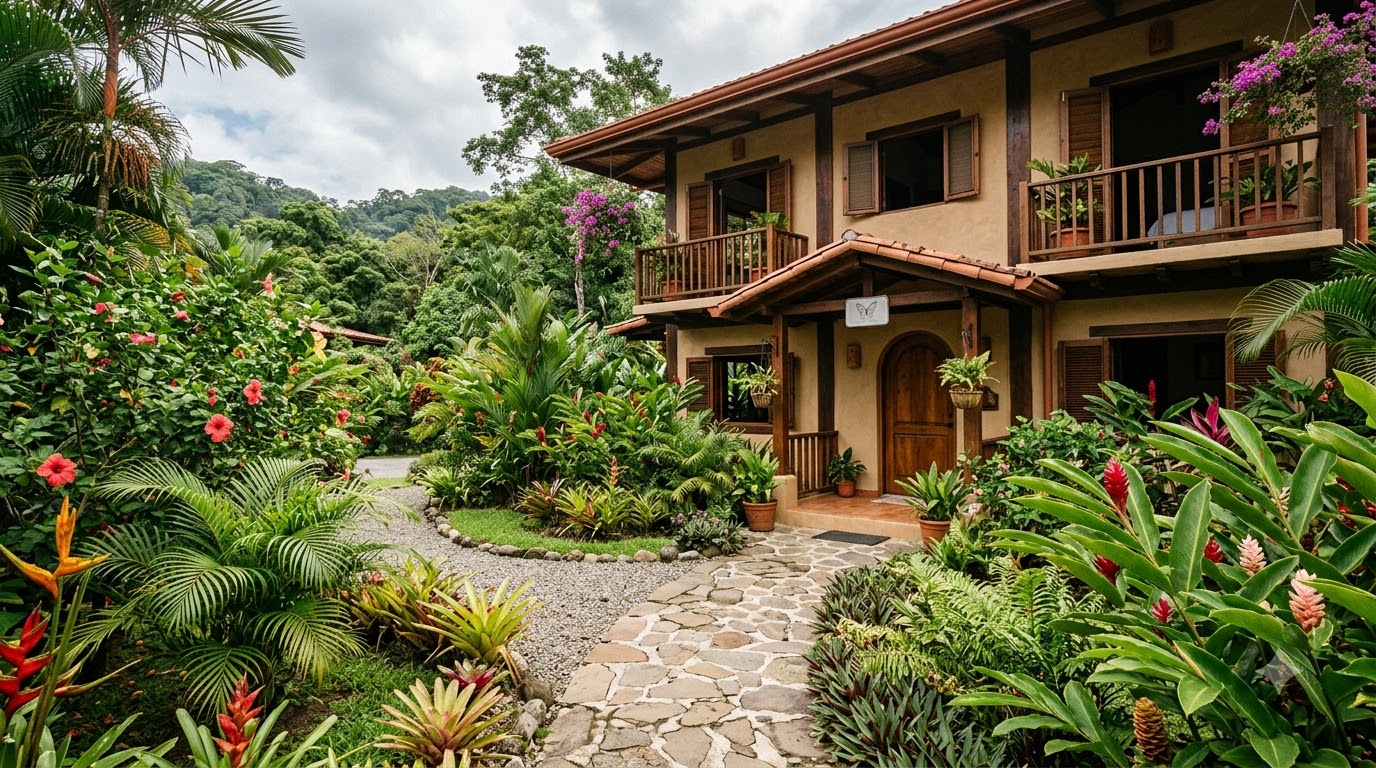
Playa Espadilla is the long public beach at the foot of the hill, and staying down here puts you on the flat, at sea level, with the sand a minute away. It is the easy choice for families with small kids and for anyone who does not want to deal with the hill at all. You get sunset swims, beach vendors, surf lessons, and a row of casual places to eat right behind the sand.
The catch is noise and crowds. This is the most public, most trafficked part of Manuel Antonio, so the beachfront blocks can be loud into the evening and busy all day. It is also the flood-prone low ground in heavy rain. Rooms a street or two back are quieter and often better value, and you lose almost nothing in walking time to reach the water.
The top of the hill
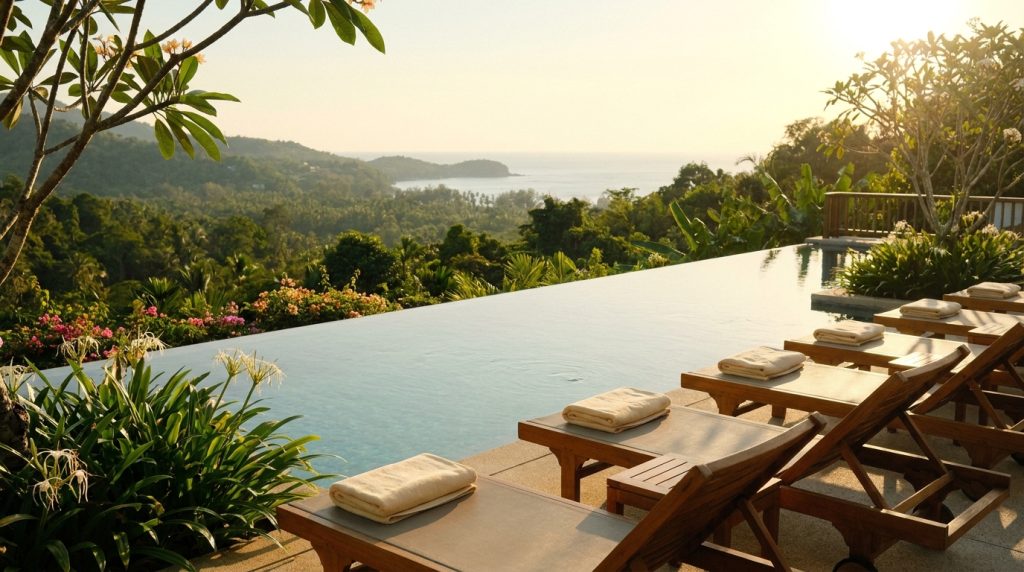
The upper ridge is where you go for the view, and the views up here are the ones that end up on postcards: jungle dropping straight into the Pacific. It suits couples on a honeymoon, anyone after a quiet, high-end base, and travellers who are happy to drive or catch the shuttle down for beach days. Many of the larger Manuel Antonio hotels sit up here, with pools that look out over the ocean and howler monkeys in the trees at breakfast.
The commitment is real, though. From the top you are not walking anywhere. Every beach trip, every dinner in town, means the car, a taxi, or the public bus that runs the hill road. That is fine if you planned for it. It is a daily frustration if you assumed you could stroll down and back. This is exactly the angle first-timers get wrong: the road between the two ends is one steep line, and whichever end you pick, you commit to it.
Quepos town
Quepos is the working town at the bottom of the hill, a few kilometres from the park, and it is where your money goes furthest. This is where locals actually live, so you get real sodas and restaurants at local prices, a supermarket, the marina, banks, and the bus terminal. It suits budget travellers, backpackers, longer stays, and anyone who wants dinner that is not aimed squarely at tourists. The public bus to the park runs frequently and cheaply along that main road.
The trade-off is obvious: you are not on the beach, and you are not in the jungle. You trade the postcard setting for lower prices and a more normal town. For a lot of people that is a fair deal, especially if you are staying several nights and want to eat well without the beachfront markup. If you have a car, Quepos becomes even easier, because parking here is far simpler than up the hill.
Which area is right for you
| Traveller type | Best area | Why |
|---|---|---|
| First-timer | Hill road near the park | Closest to the park gate and the beaches, easiest to get the highlights |
| Couples | Top of the hill | The ocean-and-jungle views, quiet, higher-end rooms |
| Families | Playa Espadilla | Flat, sand a minute away, no steep walk with kids |
| Budget / backpacker | Quepos town | Cheapest rooms, local food, cheap bus to the park |
| Car-free | Hill road near the park | You can walk to the gate and the beach without transport |
| Longer stays | Quepos town | Supermarket, real restaurants, better value over a week |
What to book first
Lock the room first, because Manuel Antonio is small and the good places by the park go quickly in the December-to-April dry season. Decide next whether you want a car: a car frees you to sleep anywhere on the hill and reach nearby beaches, but the public bus along the main road is cheap and constant, so car-free works fine if you stay near the park. Book any guided park walk or catamaran tour last, once you know which end of the hill you are on. The live map below shows real prices for each area so you can compare before you commit.
Live nightly prices from Booking, Airbnb, Hotels.com and more across every Manuel Antonio area — move the map or change your dates to compare.
Related where-to-stay guides
- Where to Stay in La Fortuna
- Where to Stay in Monteverde
- Where to Stay in Tamarindo
- Where to Stay in Nosara
- Where to Stay in Jaco
Frequently asked questions
Is Manuel Antonio expensive?
It is one of the pricier spots in Costa Rica, mostly because demand for the park is high and the hill has limited land. Beachfront and view rooms cost the most. You cut the bill a lot by sleeping in Quepos and eating at local sodas rather than on the beachfront strip.
Do you need a car in Manuel Antonio?
No, not if you stay near the park entrance. You can walk to the gate and the beach, and the public bus runs the hill road between Quepos and the park all day for very little. A car helps only if you want to sleep on the upper hill or explore beaches further out.
How many days do you need in Manuel Antonio?
Two to three nights is enough for most people. That gives you one full day in the national park, one beach day, and time for a tour like a catamaran trip or a guided night walk. Add a night if you want to slow down or wait out a rainy afternoon.
What is the best area for first-timers?
The hill road near the park entrance. It puts the beaches and the monkeys within walking distance, so you spend your time in the park instead of in transit. Couples wanting quiet and views can move up the hill, and budget travellers should look at Quepos town.
When should I visit Manuel Antonio?
The dry season runs roughly December to April and brings the busiest, priciest, sunniest conditions. The green season from May to November is cheaper and quieter, with wildlife still easy to spot, but expect afternoon rain. Check current park hours and closure days on the official SINAC national park site before you go, and the Costa Rica tourism board for wider trip planning.