Is the Philippines Expensive? An Honest Cost Verdict for Australians
By TravelguidestipUpdated 7 min readHow we earn
Hotel buttons open Stay22 (Booking.com, Agoda and others) and tour buttons open GetYourGuide. We may earn a commission at no extra cost to you.
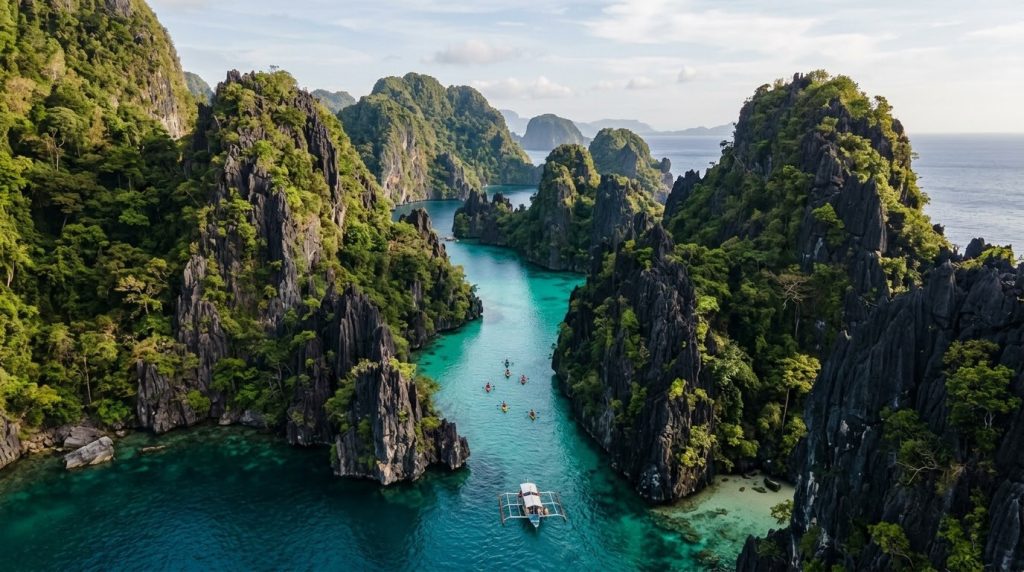
What a day costs
| Per day | Backpacker | Comfortable budget | Mid-range |
|---|---|---|---|
| Per day | AUD 39–57 · USD 28–41 (PHP 1,700–2,500) | AUD 57–80 · USD 41–58 (PHP 2,500–3,500) | AUD 103–195 · USD 74–140 |
Excluding international flights.
No, the Philippines is not expensive day to day: a comfortable traveller spends AUD 57–80 · USD 41–58 (PHP 2,500–3,500) a day, but island-hopping pushes the real total well above Vietnam. Food, local beer and guesthouses are cheap. What drains Australian budgets is moving between islands: domestic flights, bag fees, ferries and environmental fees stack up fast.
Stay on one or two islands and it is a bargain. Chase five and it costs more than Thailand.
| Cost | Reality in 2026 | What to do |
|---|---|---|
| Daily spend (comfortable) | AUD 57–80 · USD 41–58 (PHP 2,500–3,500) | Base yourself in Cebu or Bohol |
| Domestic flight + bag | AUD 50–149 · USD 36–107 per leg | Book 2–4 months out, limit legs |
| Boracay arrival + exit fees | AUD 17 · USD 12 (PHP 735) | Budget it, it is unavoidable |
| El Nido eco fee | AUD 9 · USD 6.50 (PHP 400) | One payment covers 10 days |
| Street food | AUD 1.40–5.50 · USD 1–4 | Eat local, skip Western menus |
The honest answer: cheap islands, expensive logistics
At the time of writing, AUD 1 buys about PHP 43.65 at the mid-market rate, so PHP 1,000 is roughly AUD 23 · USD 16.50. A dorm bed costs AUD 9–21 · USD 7–15 (PHP 400–900) and an air-conditioned double AUD 27–57 · USD 20–41 (PHP 1,200–2,500), per the 2026 cost guide at Philippines Tourism.
The catch is geography. The headline beaches sit on different islands, and every change means a flight or ferry, a port transfer and often a local fee. Two travellers with the same daily spend can come home with very different credit card statements.
The island-hopping trap, priced leg by leg
One-way domestic flights between major airports run AUD 34–115 · USD 25–83 (PHP 1,500–5,000) when booked two to four months ahead. Low-cost carriers then add AUD 16–34 · USD 12–25 (PHP 700–1,500) per 20kg checked bag, per leg. Three flights with a bag each comes to AUD 151–447 · USD 109–322 before you have done anything.
Then come the boats and fees:
– Cebu to Bohol fast ferry: OceanJet’s tourist class is AUD 22 · USD 16 (PHP 960) after the 10% fuel surcharge added in September 2026. – Boracay: foreigners pay a PHP 300 environmental fee (AUD 7 · USD 5), a PHP 150 terminal fee and a PHP 50 boat ticket at Caticlan Jetty Port on the way in.
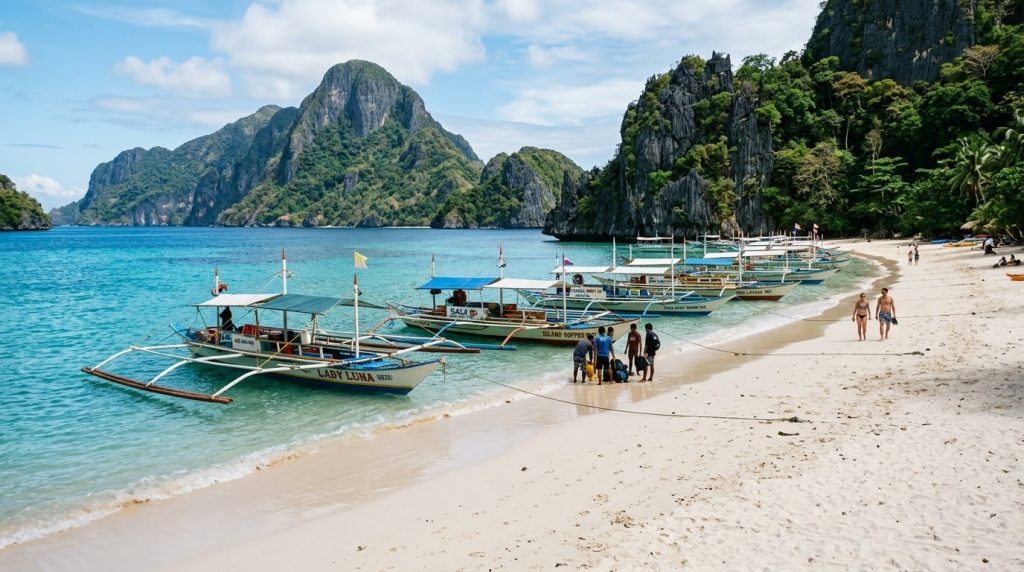
Leaving costs another PHP 235. Round trip: AUD 17 · USD 12 (PHP 735). – El Nido: the Eco-Tourism Development Fee is PHP 400 (AUD 9 · USD 6.50), valid for 10 days, and Big Lagoon adds about PHP 200 (AUD 4.60 · USD 3.30). – Getting to El Nido: AirSWIFT’s direct flight costs AUD 126–275 · USD 91–198 (PHP 5,500–12,000) and now leaves from Clark, not Manila.
The budget route is a flight to Puerto Princesa plus a 5–6 hour shared van at AUD 11–21 · USD 8–15 (PHP 500–900).
None of these is outrageous alone. Together they are why “cheap Philippines” budgets blow out, so plan a Philippines itinerary with fewer island transfers.
Boracay and El Nido cost more than Cebu and Bohol
The same 2026 cost guide puts Boracay at AUD 80–126 · USD 58–91 (PHP 3,500–5,500) a day, the priciest island in the country. El Nido follows at AUD 69–103 · USD 50–74 (PHP 3,000–4,500). Cebu and Moalboal sit at AUD 50–73 · USD 36–53 (PHP 2,200–3,200), and Siquijor or Camiguin drop to AUD 41–64 · USD 30–46 (PHP 1,800–2,800).
El Nido’s tours are fair value: a Tour A joiner boat costs AUD 27–34 · USD 20–25 (PHP 1,200–1,500) with lunch. The premium is in rooms and restaurants.
Cebu gives the best return per dollar: an international airport, Moalboal’s sardine run and a two-hour ferry to Bohol. See our Cebu travel budget breakdown for itemised costs.
Street food is cheap, imported goods are not
Local food is where you save. Nomadic Matt’s February 2026 guide puts street food at AUD 1.40–5.50 · USD 1–4 an item and local beer at AUD 2.80–4.20 · USD 2–3 in bars. A store-bought San Miguel is about PHP 45 (AUD 1 · USD 0.75). Carinderias (local canteens) are the cheapest sit-down meal.
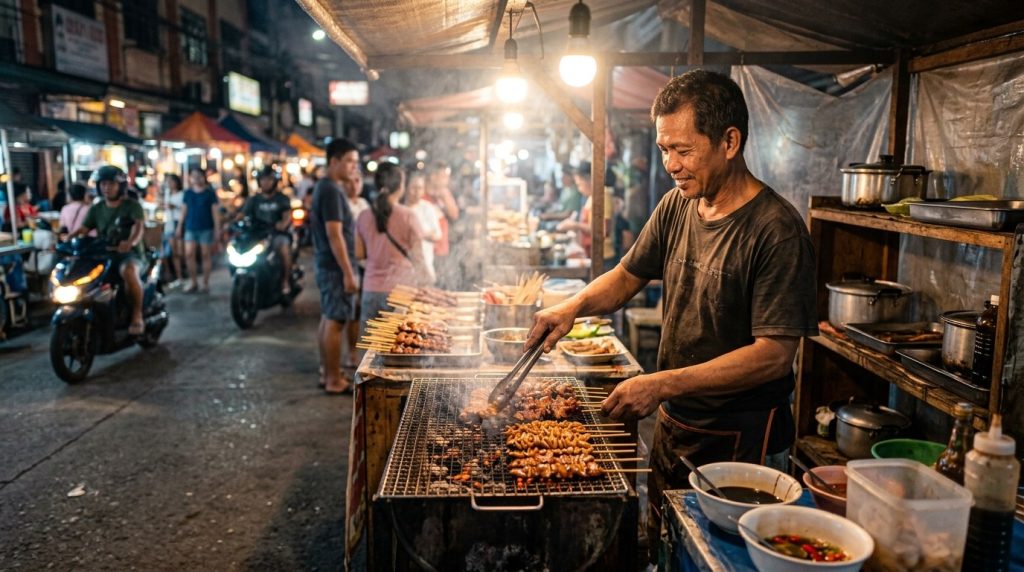
Prices jump once anything is shipped in. Western meals in tourist areas run AUD 8–28 · USD 6–20, close to home prices, and remote islands add a boat-freight markup on top. Pack sunscreen and toiletries from Australia.
How the Philippines compares with Thailand and Vietnam
| Daily backpacker budget | Philippines | Thailand | Vietnam |
|---|---|---|---|
| Typical day | AUD 39–57 · USD 28–41 | about AUD 72 · USD 52 (THB 1,750) | about AUD 32 · USD 23 (VND 600,000) |
| Getting between highlights | Flights and boats | Cheap buses, trains, ferries | Cheap sleeper buses and trains |
Day for day, the Philippines matches or beats Thailand, which Nomadic Matt prices at THB 1,750 a day for backpackers. Vietnam stays cheapest. The difference is transport: Thailand and Vietnam can be covered overland cheaply, while in the Philippines you almost always fly, so the total trip often ends up above Thailand’s.
Who should think twice about the Philippines on a tight budget
Skip it, or cut the plan right down, if you:
– Want five islands in ten days. You will spend more time and money in airports than on beaches. – Plan to live on Western food and imported drinks. You will pay close to Australian prices. – Have only a long weekend.
Cebu Pacific fares from Sydney to Manila start around AUD 268 · USD 193 and the flight takes about 8 hours 35 minutes, so a short trip barely pays off.
Typhoon season also adds cost through cancelled boats and rebooked flights. Check our guide to the best time to visit the Philippines before you lock in dates, and our Philippines safety guide for which regions to avoid.
Tipping, SIM Cards and Other Small Daily Costs
Tipping in the Philippines is not the fixed percentage ritual it is in the US. Most mid-range and upscale restaurants add a 10% service charge directly to the bill, and when that is already itemised, a further tip is a nice gesture rather than an expectation.
If no service charge appears, rounding up or adding roughly 10% is the usual local practice, and hotel porters and housekeeping appreciate a small daily tip left in the room rather than handed over in person.
Staying connected is cheap by Australian standards. A local SIM from Globe or Smart, bought at the airport or any convenience store, covers most tourist areas with reasonable data speeds; airport counters charge more than a 7-Eleven or mall kiosk in town, so wait until you reach your first stop if you can. eSIM plans bought before you fly start from around AUD 4 · USD 3 for a small data allowance, rising to around AUD 14 · USD 10 for a few days of unlimited data, which is worth comparing against a physical SIM if you are only island-hopping for a short trip and do not want to swap cards at every stop.
Money-Saving Strategies That Actually Work
Most of what makes the Philippines expensive is logistics, not daily living, so the biggest savings come from cutting transfers rather than cutting meals.
Book domestic flights two to four months ahead rather than closer to the date, since fares climb fast as seats fill, and weigh a 20kg checked bag against buying one large bag for the whole trip instead of several smaller carry-ons that each attract their own fee.
Basing yourself on fewer islands cuts far more cost than any individual discount. Two islands connected by a single ferry, such as Cebu and Bohol, avoid the flights, transfers and environmental fees that stack up on a five-island itinerary, and still leave room for a proper look at each place rather than a rushed one-night stop.
Eat where locals eat: a carinderia meal costs a fraction of a tourist-strip restaurant serving the same style of food, and local beer from a sari-sari store costs far less than the same bottle at a beachfront bar.
Withdraw cash in bigger hubs like Cebu or Manila before heading to smaller islands, where ATMs are scarcer and sometimes charge higher fees, and carry enough pesos to cover a few days rather than relying on finding a machine on a quiet island.
Where to stay in the Philippines
– Cebu City and Mactan: the best-value base for first-timers. Mactan has the international airport and resorts, Cebu City has cheaper rooms and ferry access to Bohol. – Panglao, Bohol: suits couples and families who want a beach without Boracay prices, reached by fast ferry from Cebu to Tagbilaran. – Moalboal: budget divers and backpackers. Rooms are cheap, and the sardine run is a swim from shore.
Find your Philippines hotel on the map
Live prices from Booking, Airbnb and more — move the map or change dates to compare stays across Philippines.
Frequently Asked Questions
How much money do I need per day in the Philippines?
Budget AUD 39–57 · USD 28–41 (PHP 1,700–2,500) a day as a backpacker and AUD 57–80 · USD 41–58 (PHP 2,500–3,500) for comfortable budget travel, excluding international flights. Mid-range travellers spend AUD 103–195 · USD 74–140. Add flights, ferries and island fees separately, because they are the most variable part of any Philippines trip.
Is the Philippines cheaper than Bali?
Day to day, the two are broadly similar for food and guesthouses. The Philippines usually ends up dearer overall because most itineraries need several domestic flights, while Bali trips mostly stay on one island. If you base yourself in Cebu or Bohol and limit transfers, the Philippines can match a Bali budget.
What fees do I pay to enter Boracay?
Foreigners pay a PHP 300 environmental fee once, a PHP 150 terminal fee and a PHP 50 boat ticket at Caticlan Jetty Port. Leaving costs PHP 235 (terminal fee, boat ticket and a small convenience fee). The round trip totals PHP 735, about AUD 17 · USD 12 per person.
Should I bring cash or use cards in the Philippines?
Bring both. Cards work in city malls and bigger hotels, but tricycles, carinderias, island tours and port fees run on cash. ATMs on small islands are fewer and less reliable, so withdraw pesos in Cebu or Manila before heading somewhere like Siquijor or El Nido.
Is El Nido worth the extra cost?
Yes, if you value scenery over savings. El Nido costs AUD 69–103 · USD 50–74 a day versus AUD 50–73 · USD 36–53 in Cebu, and getting there adds a van trip of up to 6 hours or an expensive direct flight. The lagoon tours themselves are fairly priced at PHP 1,200–1,500.