Is Manila Worth Visiting? (2026)
By TravelguidestipUpdated 7 min readHow we earn
Hotel buttons open Stay22 (Booking.com, Agoda and others) and tour buttons open GetYourGuide. We may earn a commission at no extra cost to you.
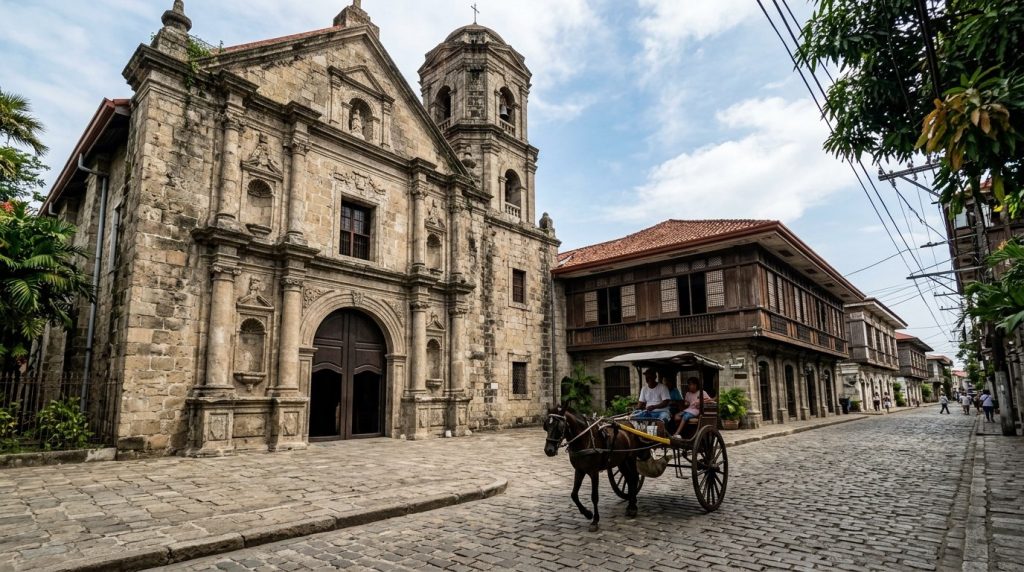
Manila is worth visiting for two to three nights if you want Intramuros, the National Museum and a food scene that beats anywhere else in the country, but not for the 143 hours a year TomTom says Metro Manila commuters lose to rush-hour traffic averaging 15.2 km/h.
Skip it entirely if your trip is built around beach time and your connecting flight leaves under three hours between the international and domestic terminals, because that gap alone can swallow the stopover.
| Traveller type | Worth it? | Nights to give it | Why |
|---|---|---|---|
| First-time Philippines visitor | Yes | 2 | Intramuros, National Museum and the food scene justify the stop |
| Beach-only traveller (El Nido, Boracay, Siargao) | No | 0 | Every hour here is an hour not on sand |
| Layover under 3 hours, same terminal | No | 0 | Too tight once security and boarding are counted |
| Layover under 3 hours, different terminal | No | 0 | The terminal transfer alone can eat the gap |
| History or food-focused traveller | Yes | 2-3 | Intramuros, San Agustin Church and BGC dining are genuinely good |
| Connecting to Cebu or Palawan same day | Depends on terminal | 0-1 | Only add a night if the airline change forces a terminal change |
What Manila genuinely has
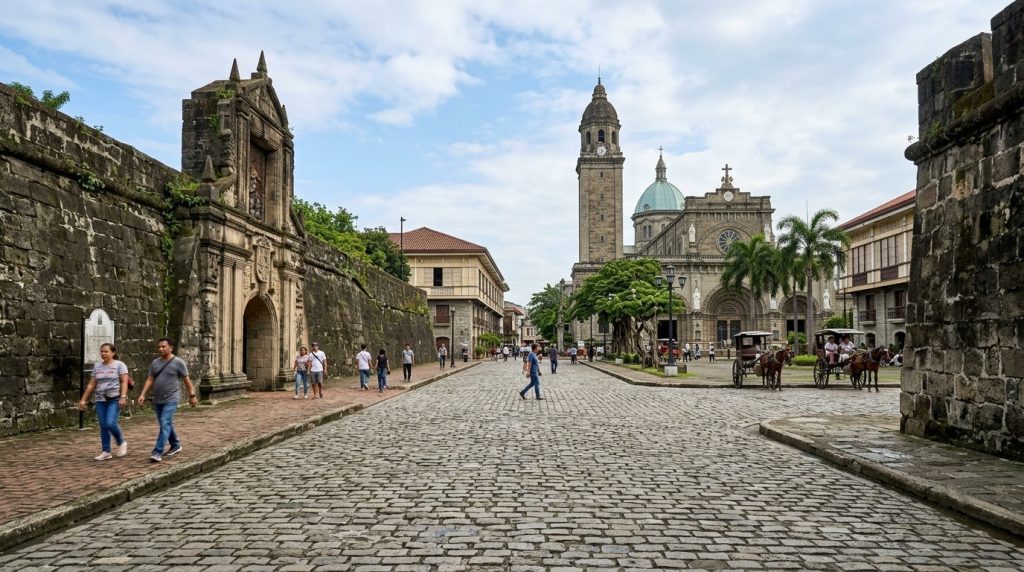
Manila’s case for staying rests on three things: Intramuros, the National Museum complex and a food scene that outranks the rest of the country, not on the city being pleasant to walk around.
Intramuros is the walled Spanish-era district on Manila Bay, and its main draw is San Agustin Church, a Baroque church inscribed on UNESCO’s World Heritage list alongside three other Philippine churches from the same colonial period.
The National Museum of the Philippines, a short walk from Intramuros near Rizal Park, charges no entrance fee at all and opens Tuesday to Sunday from 10am to 5pm, which makes it one of the few genuinely free full days in the city.
The food scene is Manila’s strongest card: Poblacion in Makati and the newer strips in BGC run everything from Michelin-recognised tasting menus to street-food carts serving isaw and fishball, and neither exists in the same depth on Boracay, Palawan or Siargao.
Rizal Park, the open green space next to Intramuros where national hero Jose Rizal was executed in 1896, adds a free half-day of historical context without a taxi ride, since it borders the walled city on foot.
None of this makes Manila pleasant to walk between sights, so treat it as a set of destinations to taxi or Grab between, not a strolling city.
Tagaytay as a half-day escape from the traffic
For travellers staying the recommended two to three nights, Tagaytay is the one realistic half-day trip out of the city, and it works precisely because it does not require fighting Manila’s own traffic to reach – it sits south of the metro on its own ridge road.
Tagaytay is roughly a two-hour drive from Manila each way, and the payoff is a cooler hilltop town with restaurants and lookout points facing straight down onto Taal Lake and the volcano sitting inside it.
It’s worth being clear about what this trip is and isn’t: the entire Taal Volcano Island in the middle of the lake remains an official Permanent Danger Zone, and PHIVOLCS has kept it off-limits to the public through 2026 given ongoing volcanic unrest, so the trip is a viewpoint day from Tagaytay’s ridge rather than a boat-and-hike visit onto the island itself, whatever older tour listings might suggest.
Because the round trip alone takes most of a day once Manila’s own traffic getting out of the city is added, Tagaytay works best as the single activity for that day rather than paired with an Intramuros or BGC visit on the same schedule – trying to stack both into one day repeats the itinerary mistake already flagged above, just with a longer drive this time instead of a cross-town one.
The traffic, honestly
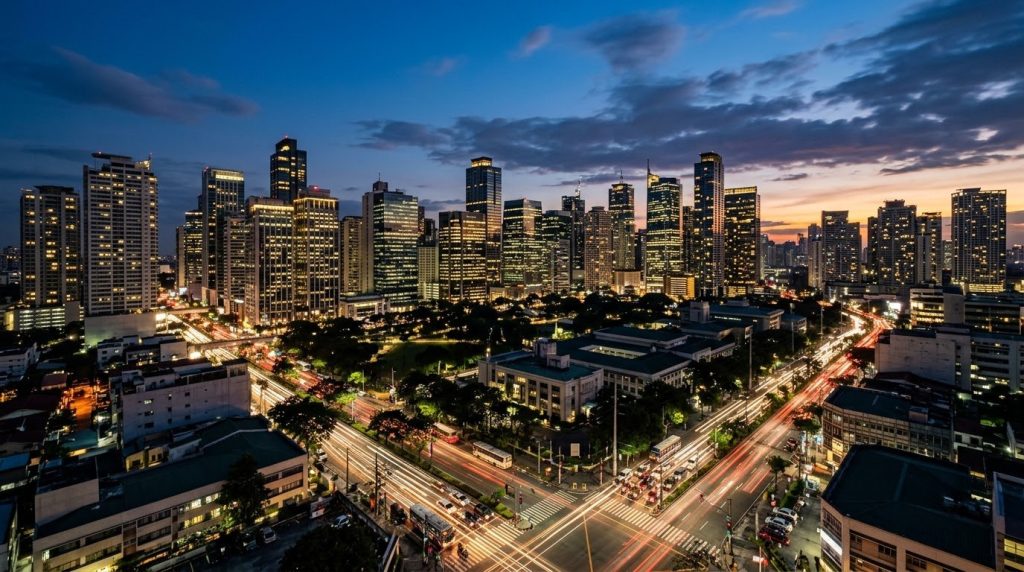
Manila’s reputation for traffic is earned, not exaggerated. TomTom’s 2025 Traffic Index put Manila’s average rush-hour speed at 15.2 km/h, with a 10-kilometre drive taking 31 minutes 45 seconds on average, and the city ranked as the 40th most congested in the world and 12th in Asia.
TomTom also calculated that the average Manila driver loses roughly 143 hours a year, close to six full days, sitting in rush-hour delays. In practice that means a trip between BGC or Makati and Ninoy Aquino International Airport can run 60 to 90 minutes in peak periods, even though the straight-line distance is under 15 kilometres.
Build a single traffic crossing into each day rather than planning to see Intramuros in the morning and BGC at night, because that itinerary sounds reasonable on a map and falls apart in a 5pm jeepney queue.
Traffic gets worse, not better, during the June-to-October wet season, when flash flooding on low-lying roads can add hours to a crossing that normally takes 30 minutes, so travellers stacking Manila onto a wider island trip should build a spare half-day around any crossing planned in those months.
The airport transfer problem that decides your itinerary
The single fact that decides whether Manila works as a stopover is that Ninoy Aquino International Airport’s four terminals are not linked airside, so an international-to-domestic connection across terminals means physically leaving the building.
Passengers changing terminals have two options: the free NAIA inter-terminal shuttle bus, which departs roughly hourly but runs on public roads and can take 30 to 60 minutes depending on traffic, or a Grab or taxi, which runs faster at 15 to 30 minutes between Terminal 1 and Terminal 3 for around AUD 6-11 · USD 4-8 (PHP 251-502) at today’s rate of 1 USD to 62.7 PHP.
Cebu Pacific keeps both its domestic and international flights at Terminal 3, while Qantas and most other Australian-departing international flights land at Terminal 1, so an Australia-to-Cebu or Australia-to-Palawan connection on separate tickets commonly means a terminal change.
The realistic minimum buffer is 3 hours for a single through-ticket and 4 hours for two separately booked tickets, and anything tighter is a real risk rather than a theoretical one.
NAIA is also adding a new Terminal 4 through 2026, which is already reshuffling which airlines sit where, so confirm your specific terminal on the airline’s own confirmation email rather than relying on last year’s blog post.
Anyone building a longer route through the islands should check the connection times in the Philippines itinerary guide before assuming a Manila layover is a free connection.
Where to base yourself if you do stay
Base in BGC or Makati if you’re staying, not Malate or a hotel near the airport, unless your only goal is a short connection before an early flight.
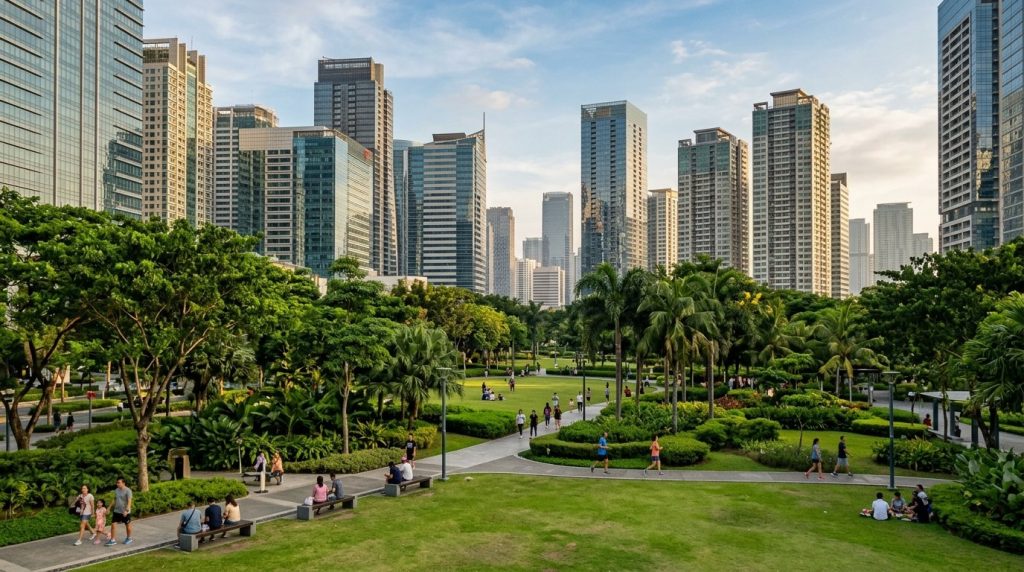
BGC and Makati sit closest to the food scene that makes Manila worth the nights in the first place, and both areas are safer to walk after dark than most alternatives in the city.
A bay-view room at somewhere like Conrad Manila runs AUD 250 · USD 180 (PHP 11,270) a night, while a budget guesthouse in Malate can run as low as AUD 35 · USD 25 (PHP 1,565), and the full breakdown of Manila’s best hotels covers the price tiers and neighbourhoods in more depth.
Only pick a hotel near the airport strip if your layover is genuinely short and the traffic numbers above make a same-day connection risky. Both BGC and Makati run well-lit, patrolled main streets at night, which matters in a city where the traffic and crowding above already add enough friction without adding a safety concern to the list.
Best time to visit Manila, in practical terms
The typhoon-season warning already given above is worth turning into an actual calendar rather than a general caution, since it changes how safely a Manila stopover can be timed.
The dry season runs roughly December through May, and this is the lower-risk window for anyone stacking a Manila stay onto a wider island trip, since flight disruption is far less likely to turn a one-night stopover into two.
The wet season runs roughly June through November, with the Philippines’ typhoon risk peaking from July through October – government weather forecasters put close to 70% of the country’s tropical cyclones forming in that four-month stretch, with August through October carrying the greatest individual risk of a direct hit.
None of this rules out a June-to-November trip outright, since most days in those months pass without a storm anywhere near Luzon, but it does mean a Manila stopover booked in that window deserves the spare half-day buffer already recommended above, and ideally a same-day or next-day backup flight option rather than a single non-refundable ticket with no slack if a typhoon grounds flights for a day.
Travellers with real flexibility over dates get the cleanest version of a Manila stop by aiming for the December-to-May window specifically, when both the flood-related traffic delays and the flight-disruption risk described above are at their lowest for the year.
Who should skip Manila
Skip Manila entirely if your trip is built around Boracay, El Nido or Siargao and nothing else, since every night spent here is a night not on sand and the city adds no diving, surfing or beach value of its own.
Skip it too if you’re travelling during typhoon season, since flight delays already eat into tight schedules and a Manila night can turn into two if a storm grounds the next leg; check the best time to visit the Philippines before locking in dates that assume a clean connection.
Budget travellers chasing value should also think twice, because a mid-range night in Manila buys less than the same money on the islands once food and activities are counted, and the Cebu travel budget shows how far a similar spend stretches once you’re past the capital.
Repeat visitors who have already done Intramuros and the National Museum should skip it a second time too, since none of the sights above change trip to trip and the traffic cost stays the same on visit three as it was on visit one.
If none of that describes you, and Intramuros, museums or food are genuinely part of the trip, Manila earns its nights.
Where to stay if you decide to go
Find your Manila hotel on the map
Live prices from Booking, Airbnb and more — move the map or change dates to compare stays across Manila.