Is Koh Samui Safe? An Honest Risk Guide for Australians (2026)
By TravelguidestipUpdated 8 min readHow we earn
Hotel buttons open Stay22 (Booking.com, Agoda and others) and tour buttons open GetYourGuide. We may earn a commission at no extra cost to you.
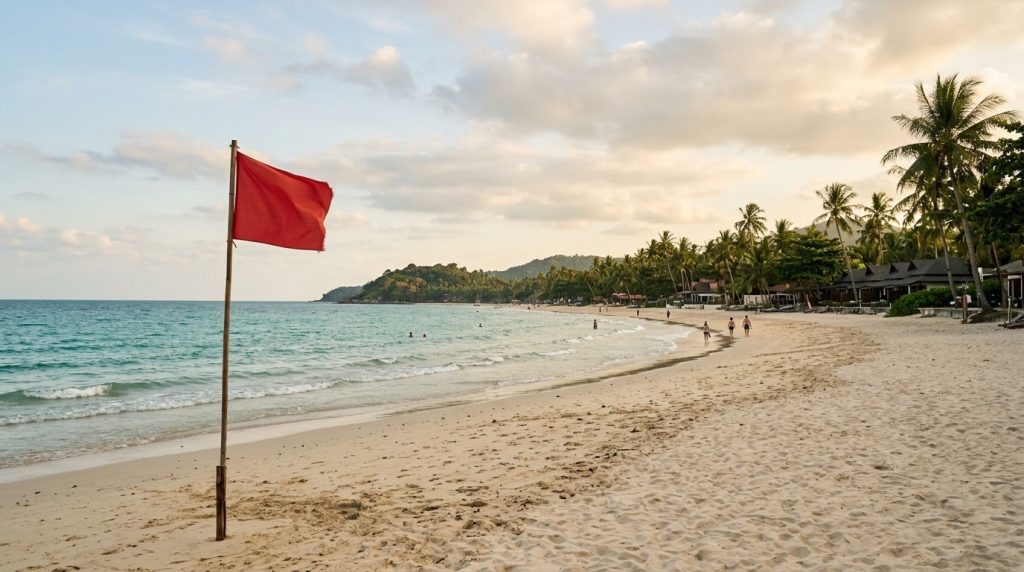
Yes, Koh Samui is safe for most travellers: Smartraveller keeps Thailand at Level 2, “exercise a high degree of caution”, in advice updated 29 September 2026, and Samui is not in any of the higher-risk zones. Violent crime against tourists is rare.
What actually hurts Australians here is ordinary and avoidable: scooter crashes on wet hills, rips off Chaweng and Lamai, jet-ski damage shakedowns, spiked or bootleg drinks and dengue in the wet months. Manage those five and Samui is an easy island.
| Risk | Reality | What to do |
|---|---|---|
| Scooter crashes | The number one cause of tourist injury on the island | Ride only with a motorcycle licence, or use Grab and taxis |
| Rip currents | Strongest on the east coast, Oct–Dec | Red flag means no swimming, full stop |
| Jet-ski scams | Damage claims at Chaweng and Lamai | Skip rentals, or photograph every panel first |
| Drink spiking, methanol | Possible in any party strip | Sealed, branded drinks; stay with your group |
| Taxi overcharging | No meters on Samui | Agree the fare before you get in |
| Dengue | Peaks in the rainy season | Repellent day and night, covered rooms |
What Smartraveller actually says about Koh Samui
The overall level for Thailand is “exercise a high degree of caution”, updated 29 September 2026 (still current on 1 October); the latest change covers heavy rain, flooding and Suvarnabhumi flight delays. The “do not travel” and “reconsider” zones are the Thailand-Cambodia border and the three far-southern provinces, nowhere near the Gulf islands.
Read the full Smartraveller Thailand advice before you book. Samui gets named for one thing: road accidents in resort areas.
Scooters: the biggest real risk on the island
Hiring a scooter looks cheap at AUD 6–10 · USD 4.5–7.5 (THB 150–250) a day, but this is where Samui trips go wrong. The ring road is busy, the side roads to viewpoints and waterfalls are steep, and a tropical downpour turns the bitumen slick in minutes.
In June 2026 a 25-year-old Melbourne sprinter died after her rented scooter lost traction on a wet curve in Bo Phut. Thailand’s tourism minister visited the island days later to review road safety.
Smartraveller is blunt: you need a valid motorcycle licence plus an International Driving Permit, whatever the rental shop says. Without it your insurer can refuse the claim, and hospitals want a deposit before admitting you. Helmets are compulsory but rarely handed over. Never leave your passport as a deposit.
If you do not ride at home, do not learn here. Grab works in Chaweng, Bophut and Lamai.
Rip currents and red flags at Chaweng and Lamai
Chaweng and Lamai are the two beaches most people swim at, and both face the open Gulf. During the northeast monsoon the swell builds, and rips form along the east coast. On 19 February 2026, lifeguards and hotel staff raised red flags along Chaweng and Lamai and banned swimming as 1–2 metre waves pounded the shore, according to Khaosod English.
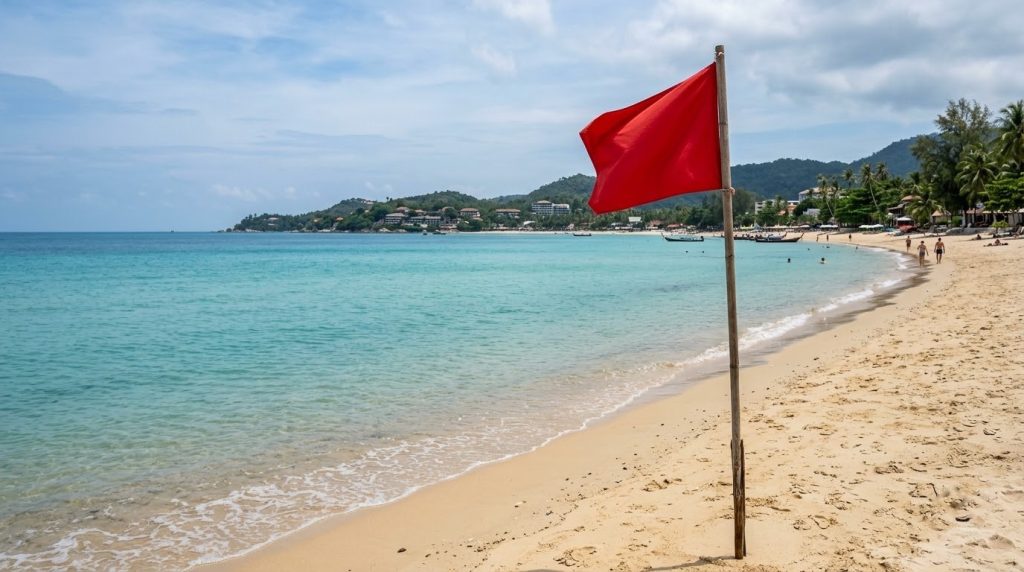
Smartraveller notes lifesaving services are rare and below Australian standards; there is no patrolled flag zone like Bondi. If a rip takes you, float, raise an arm, then swim parallel to the beach. Never swim after drinking.
Jet-ski scams, taxis and other money traps
The jet-ski scam is old and still running. You rent a ski on Chaweng or Lamai, and on return the operator “finds” damage, often old scratches under the hull, and demands a large repair bill. Our advice is to skip it. If you must ride, film every panel first, keep your passport at the hotel and call the Tourist Police on 1155 if a dispute escalates.
Samui taxis do not use meters. Fares run on zones, so agree the price before the door closes. Typical airport fares are AUD 8–12.5 · USD 6–9 (THB 200–300) to Chaweng and AUD 17–21 · USD 12–15 (THB 400–500) to Lamai, and they rise late at night.
Shared songthaews between beaches cost AUD 1.7–2.5 · USD 1.2–1.8 (THB 40–60). Our Koh Samui budget breakdown shows how transport fits into a daily spend.
Chaweng nightlife: drink spiking and methanol
Chaweng’s bar strip is loud and mostly harmless, but it is where things go wrong after midnight. Smartraveller warns that drink spiking happens and that Australians have died from methanol, where one shot can be fatal. Stick to sealed, branded drinks, skip cheap buckets of unknown spirits and leave with your group. If a friend seems far drunker than they should be, get medical help, not a taxi home.
Dengue and the October to December monsoon
Samui runs on a different rain calendar from Phuket. Average rainfall jumps to about 295 mm in October and 445 mm in November, making November the wettest month, before easing through December. Smartraveller lists Samui’s wet season as November to March and warns that dengue and other mosquito-borne illnesses peak then. Timing is the biggest caveat in our Koh Samui pros and cons, which weighs calmer, more polished beaches than Phuket against a pricier last leg.
For dengue, prevention is the plan: repellent morning and evening, long sleeves at dusk, a screened or air-conditioned room, and a doctor if a high fever hits. Heavy rain can also cut roads and delay ferries, so leave a buffer day. Our guide to getting to Koh Samui covers flights through Bangkok and Singapore and the ferry options.
Emergency contacts and medical care on Koh Samui
Save three numbers before you land: 191 for police, 1669 for an ambulance or any life-threatening medical emergency, and 1155 for the Tourist Police, who run a 24-hour English-language line and are the right first call for a jet-ski dispute, a theft or a scam rather than the regular police line.
The Tourist Police number is already mentioned above for jet-ski disputes; it covers the same role for any other tourist-targeted trouble.
Samui has private hospitals used to treating foreigners, which matters given how often scooter crashes and reef cuts show up in the risks above. Bangkok Hospital Samui sits in Bophut and Samui International Hospital is on North Chaweng Beach Road, both within easy reach of the main tourist strips.
Treatment is billed directly rather than bulk-funded like an Australian emergency room, and private hospitals in Thailand generally expect payment or insurance proof before non-emergency treatment, which is the practical reason travel insurance matters here, not just the cost of care itself.
Pharmacies are easy to find in Chaweng, Lamai and Bophut for everyday needs such as rehydration salts, antihistamines and basic wound care, so you do not need to pack a full medicine cabinet, just the essentials for the first few hours after an injury or a bad stomach.
Who should skip Koh Samui (or change their dates)
– Non-riders planning to “just rent a scooter”. Book drivers instead. – Beach-first swimmers in November. Rough seas, red flags and grey skies. Come from late December. – Anyone without travel insurance. Australia has no free healthcare deal with Thailand and evacuation is expensive.
If you want calm water and island time, our list of day trips from Koh Samui covers the boat days that run in good weather.
Safety for families with kids
Samui works well for families as long as the same five risks above are managed around children specifically. Scooters are the obvious one: do not put a child on the back of a rental bike, however short the ride, given how often crashes happen on wet hill roads. Use Grab or a booked driver for every trip instead.
At the beach, the rip and red-flag risk applies to kids even in shallow-looking water at Chaweng and Lamai; keep younger children on the sand or in a pool on red-flag days rather than wading in in the surf.
Bophut and the calmer west-coast beaches are the easier choice for a family with young swimmers, which is also why Bophut is recommended as a base later in this guide.
For mosquito-borne illness, cover prams and cots with netting at dusk and dawn, since children are treated the same as adults for dengue precautions, just with less margin for a missed dose of repellent.
Car seats are not standard in Thai taxis or Grab cars, so families used to always buckling in young children should bring a portable seat or booster if that matters to them, since it is not something you can assume a driver will have.
Where to stay for a safer, easier trip
– Bophut and Fisherman’s Village: flat streets, a walkable night market and calmer water. Best for families and couples. – Chaweng: the most walkable base, with restaurants, Grab cars and nightlife on your doorstep, so you never need a scooter. – Lamai: quieter than Chaweng with a good beach, but watch the flags here in monsoon season.
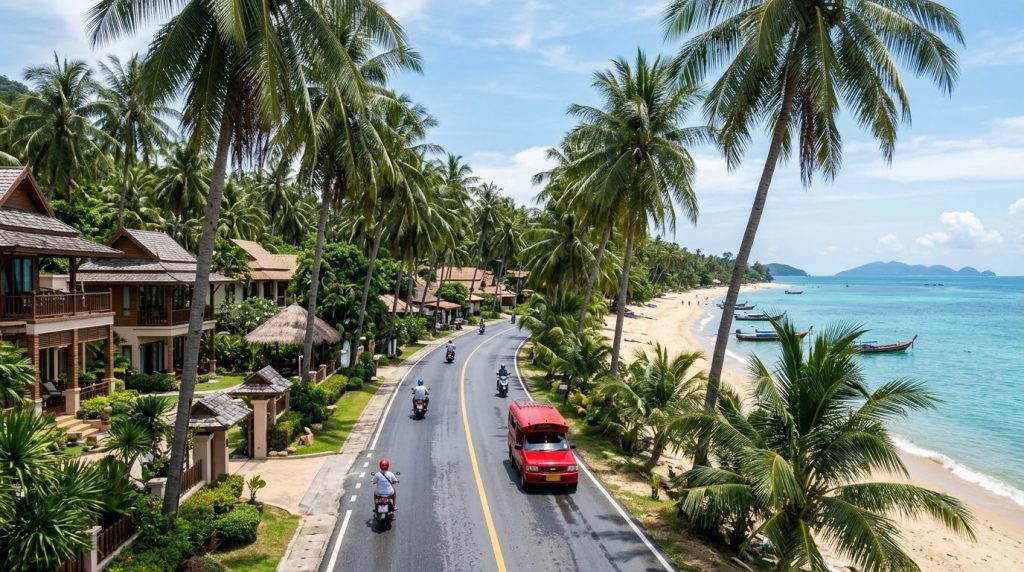
Compare resorts by area in our Koh Samui hotels guide.
Find your Koh Samui hotel on the map
Live prices from Booking, Airbnb and more — move the map or change dates to compare stays across Koh Samui.
Frequently Asked Questions
Is Koh Samui safe for solo female travellers?
Generally yes. Samui is relaxed and well set up for tourists, and serious crime against visitors is uncommon. The usual cautions apply more strongly late at night in Chaweng: watch your drink, avoid unsealed spirits, use Grab rather than a random scooter lift, and do not walk dark stretches of beach alone after the bars close.
Is it safe to swim at Chaweng Beach?
On calm days, yes, it is one of the island’s best swimming beaches. From October to December the northeast monsoon brings swell and rips, and lifeguard cover is patchy compared with Australia. Always check the flag: red means no swimming. Use the pool or a sheltered west-coast beach when the sea is rough.
Is it safe to rent a scooter on Koh Samui?
Only if you already hold a motorcycle licence and ride regularly. Road crashes are the main cause of tourist injury on the island, steep roads turn slippery in rain, and riding without the right licence can void your travel insurance. Wear a helmet every time, and never hand over your passport as a deposit.
Is Koh Samui safe in November?
It is safe, but it is the wettest month, with average rainfall around 445 mm. Expect heavy downpours, rough seas, red flags on east-coast beaches and occasional ferry or road disruption. Dengue risk also rises. If you are flexible, aim for late December to April for calmer conditions.
Do Koh Samui taxis use meters?
No. Taxis on Samui charge fixed zone fares, so agree the price before you get in. From the airport, expect roughly THB 200–300 to Chaweng and THB 400–500 to Lamai, more after dark. Grab operates in the main beach areas and is usually cheaper, though coverage on the west coast is thin.