Is Canggu Worth Visiting? (2026)
By TravelguidestipUpdated 7 min readHow we earn
Hotel buttons open Stay22 (Booking.com, Agoda and others) and tour buttons open GetYourGuide. We may earn a commission at no extra cost to you.
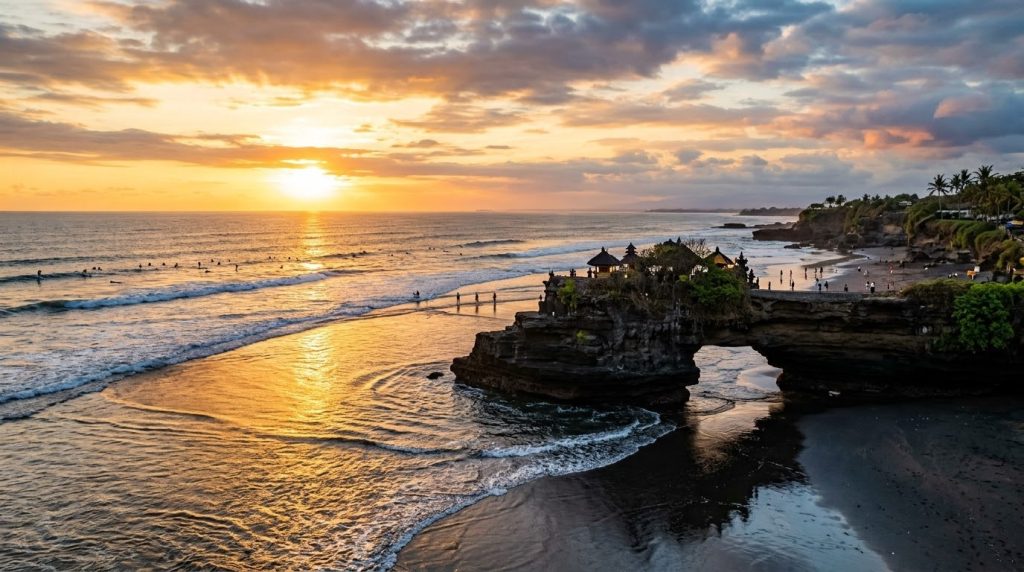
Canggu is worth visiting if what you actually want from Bali is a strong cafe and co-working scene, backed by more than 50 co-working spaces and a 20 to 30 minute run from the airport.
It stops being worth it the moment you want calm swimming water, quiet village life, or a break from other foreign travellers, because the area’s roads back up to a near-standstill most afternoons and its beach is built for surfing, not swimming.
| Traveller type | Worth it? | Nights to give it | Why |
|---|---|---|---|
| Remote worker or digital nomad | Yes | 5-7 | Bali’s densest co-working and wifi infrastructure, over 50 spaces |
| Surfer, beginner to intermediate | Yes | 3-5 | Batu Bolong and Echo Beach breaks, surf-first culture |
| Cafe, brunch and nightlife crowd | Yes | 3-4 | Heaviest bar, cafe and restaurant density on the island |
| First-timer wanting temples or village Bali | No | 0 | Canggu has neither, book Ubud instead |
| Traveller wanting a swimmable beach | No | 0 | Dark volcanic sand and surf, not calm water |
| Family with young kids | Caution | 1-2 | No sidewalks in most areas, heavy motorbike traffic |
Who Canggu is genuinely right for
Canggu genuinely suits people who came to Bali to work, surf or eat well among other travellers, not to get away from them. Remote workers get the island’s strongest infrastructure for the job, more than 50 co-working spaces and the best wifi coverage in Bali, concentrated around Berawa and Batu Bolong.
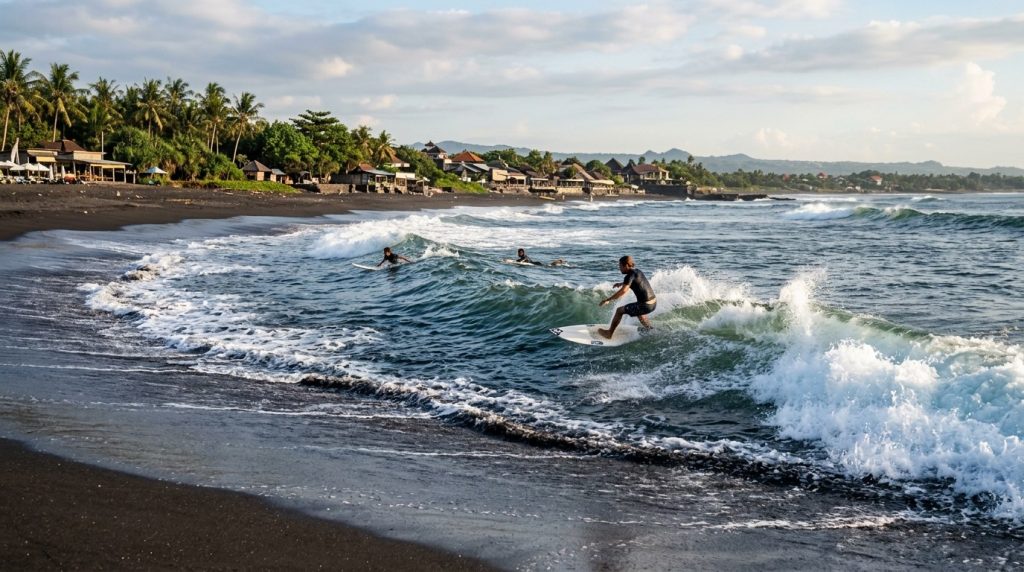
Surfers get an easy entry point too, Batu Bolong is a manageable beginner break and Echo Beach gives intermediate surfers something punchier without a long drive. The cafe, brunch and nightlife crowd gets the heaviest concentration of bars, coworking-adjacent cafes and restaurants on the island, spread across Batu Bolong, Berawa and Pererenan.
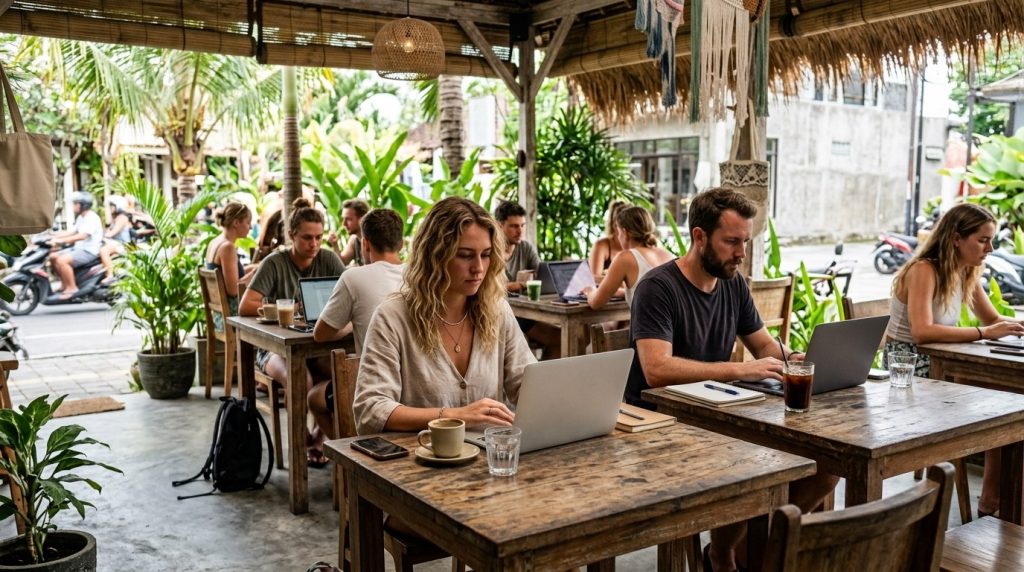
That density has a price. At today’s verified rate of 1 USD = 17,631 IDR, a plate of nasi goreng at a Canggu cafe runs AUD 5 · USD 4 (IDR 65,000), against AUD 1-2 · USD 1-2 (IDR 15,000-25,000) for the same dish at a warung a few streets over.
None of this is unique to Canggu on its own, Bali’s cafes generally cost more than its warungs, but Canggu has the highest concentration of exactly that kind of cafe on the island, so the markup shows up in almost every meal rather than the occasional treat.
If that gap matters to your trip, Bali’s full daily cost breakdown is worth reading before you book.
The overdevelopment criticism, and how fair it is
The overdevelopment complaint holds up, it isn’t exaggerated. Canggu went from a quiet surf village to its current built-up state in under five years, and rapid construction has steadily replaced rice paddies and agricultural land with villas, cafes and coworking spaces.
Research on the area backs up what locals describe on the ground, an influx of long-term foreign residents, rising noise pollution, worsening traffic and visible gentrification, all tied directly to how fast the area grew.
There’s a nuance worth sitting with. Canggu got crowded and built-up because it kept delivering exactly what people came for, fast wifi, good coffee and a surf break within walking distance, so the growth is the product working as intended rather than a broken promise.
What it means for you is simple, the “quiet surf village” version of Canggu that older blog posts describe is largely gone, and what’s left is a busy, commercial strip that some travellers will love and others will find exhausting within two days.
The traffic, honestly
The traffic is every bit as bad as Canggu’s reputation suggests. Peak-hour speeds on parts of Canggu’s main roads drop to little more than walking pace, and the drainage struggles badly enough in heavy rain that localised flooding is common.
The original Canggu Shortcut, a roughly 2-kilometre bypass linking Berawa to Batu Bolong, was built specifically to relieve that congestion, but it has become a daily route for so many riders that it now backs up too, especially in the evening. Avoid moving around the roughly 4pm to 7pm window if you can help it.
Even the basics take longer than the map suggests. An airport transfer into Canggu runs 20 to 30 minutes, noticeably longer than the straight-line distance implies, because there’s no fast road that avoids the area’s narrow, motorbike-choked streets.
Road safety is the part first-timers underrate most, the combination of narrow lanes, potholes and a high volume of inexperienced riders on rented scooters has made Canggu’s roads genuinely dangerous, not just slow, so factor that into whether you’re comfortable riding here yourself.
The beach – surf, not swimming
Canggu’s beaches are for surfing, not swimming, and that single fact disqualifies the area for a chunk of travellers before anything else does. The sand is dark volcanic sand rather than the white sand most people picture, and the water carries a strong, consistent surf break rather than the calm shallows needed for casual swimming.
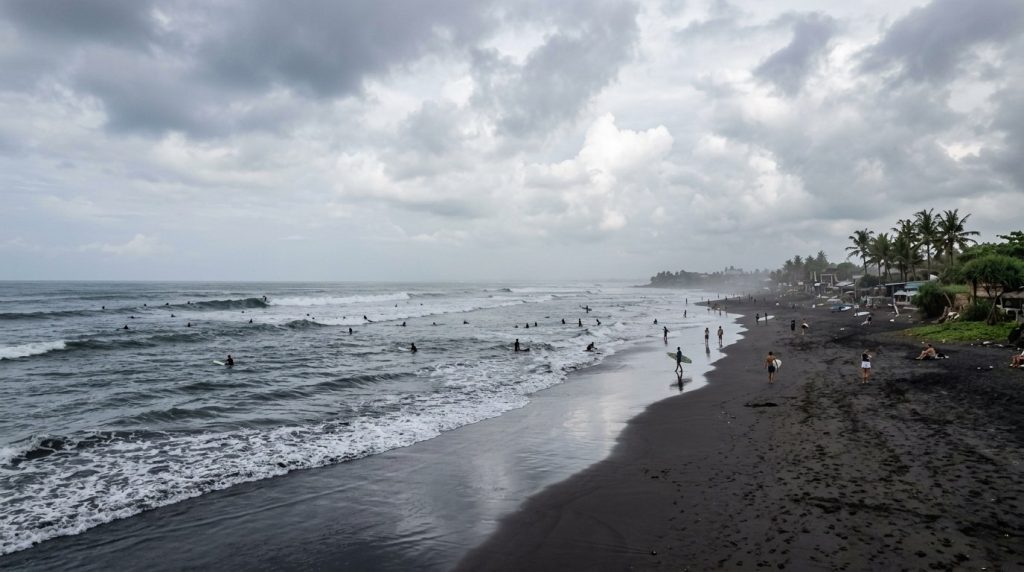
That’s good news if you surf, Batu Bolong is a manageable beginner break right in town and Echo Beach gives intermediate surfers a punchier option a short ride away. It’s bad news if you came for turquoise water and a float, that’s a different part of Bali’s south coast, not Canggu’s.
Who should skip Canggu
Skip Canggu if you’re chasing the version of Bali that involves temples, rice-terrace quiet or minimal foreign crowds, because Canggu offers none of the three. Culture-first travellers who want temples and daily Balinese life on display should book elsewhere, Canggu’s identity is expat cafe culture, not tradition.
Retirees or slow travellers hoping for a calm week should skip it outright, the traffic and construction noise work against exactly what that trip needs. Anyone who wants to swim rather than surf will find Canggu’s beach genuinely frustrating rather than a minor inconvenience.
Budget travellers should also know a nomad-driven food and drink scene comes with nomad-driven prices, a cafe meal here can cost several times the same dish at a warung two streets away. Families with young kids need to weigh the lack of sidewalks and constant motorbike traffic seriously before committing multiple nights.
What to actually do in Canggu
Surfing is the actual activity Canggu is built around, and Batu Bolong and Echo Beach, both already covered in this guide, are also where most surf schools and board rentals cluster for exactly that reason. A half-day lesson or a board rental is easy to arrange same-day rather than something that needs booking weeks ahead, which fits the area’s generally spontaneous, drop-in pace.
Pura Batu Bolong, the small clifftop temple at the end of Batu Bolong Beach, is Canggu’s one genuine cultural landmark, and it works as a short stop before or after a surf session rather than a half-day outing on its own.
For a fuller temple experience, Tanah Lot, Bali’s famous sea temple, sits roughly a 20 to 30 minute drive north of Canggu and charges foreign visitors IDR 75,000 (AUD 5.55 · USD 4) for adults and IDR 40,000 (AUD 3.10 · USD 2.25) for children; sunset is when it draws the heaviest crowds, so an earlier visit trades the golden-hour photo for a calmer walk around the rock formation.
Beyond surfing and the two temples, Canggu’s actual daily rhythm is cafes, co-working and the gym-and-wellness circuit that grew up around the long-stay crowd covered elsewhere in this guide: yoga studios, pilates reformer gyms and health-food menus are as much a part of “things to do” here as any single attraction.
Travellers who want a packed sightseeing day are generally better served by Ubud; Canggu rewards a slower daily loop between the beach, a workout, and a cafe instead.
FAQ about visiting Canggu
Do I need a scooter to get around Canggu?
Not strictly, but most visitors end up renting one anyway given how spread out Berawa, Batu Bolong and Pererenan are and how unreliable ride-hailing pickups can be on the area’s narrower streets. Given the road safety concerns already covered in this guide, first-time riders in Bali specifically should weigh that risk seriously rather than treat a scooter as the default choice.
Is Canggu safe at night?
For ordinary tourist-area safety, yes, Berawa and Batu Bolong stay busy with other travellers well into the evening. The bigger practical risk after dark is the road itself: unlit stretches, potholes and the same inexperienced-rider traffic covered above make walking or riding after dark the main thing to be careful about, not crime specifically.
Is Canggu good for a first trip to Bali?
Only if the goal is cafes, surf and a co-working base rather than temples or village culture, both already flagged as reasons to skip Canggu elsewhere in this guide. First-timers who want a broader taste of Bali typically do better pairing a few Canggu nights with Ubud, rather than basing the whole trip here.
How far is Canggu from Seminyak and Uluwatu?
Seminyak is the closer of the two at roughly 10 kilometres, but the drive still ranges from about 20 minutes in light traffic to close to an hour during Canggu’s congested afternoon stretch covered above.
Uluwatu is the longer trip; a typical drive runs 1 to 2 hours depending on departure time, and the 3pm-to-6pm window can push it past 2.5 hours, so timing the drive around the traffic patterns already described in this guide matters more than the raw distance on a map.
Where to stay if you decide to go
If Canggu’s case holds up for your trip, book in Berawa or Batu Bolong to stay inside the density that makes the area worth visiting in the first place, and expect to pay a bit more than the island average for it.
On the budget end, Canggu Beach Inn runs AUD 35 · USD 25 (IDR 448,000) per night, 350 metres from Batu Bolong Beach and popular with surfers watching their spend. For the full range of picks in the area, see where to stay in Canggu.
If you’re still deciding between Canggu and another part of the island, where to stay across Bali compares the areas directly, and Bali’s best hotels island-wide covers the higher-end options Canggu itself is thinner on.
Find your Canggu hotel on the map
Live prices from Booking, Airbnb and more — move the map or change dates to compare stays around Canggu.