Affiliate Disclosure: This article contains affiliate links. If you book through them, we may earn a small commission at no extra cost to you. We only recommend services we’d use ourselves.
Bangkok moves fast — and if you don’t know the city’s transport network, it’ll leave you stuck in gridlock traffic while your hotel is four stops away on an air-conditioned Skytrain. We’ve mapped out every option, from airport rail links to canal boats, so you’ll spend less time in traffic and more time actually exploring. Here’s everything you need to know.
Key Takeaways
– Bangkok’s BTS and MRT cover most tourist zones with fares starting at 16 THB (~$0.45 USD)
– A Suvarnabhumi Airport Rail Link ticket costs 45 THB and takes 30 minutes to Phaya Thai
– Grab rideshare is available citywide and typically costs 20–30% less than unmetered taxi quotes
– River boats on the Chao Phraya cut travel time significantly during peak traffic hours
Airports Serving Bangkok: Suvarnabhumi vs Don Mueang
Knowing which Bangkok airport you land at is the first step to planning your transfer — the two airports are 30 km apart and served by completely different transport links, so mixing them up costs time and money.
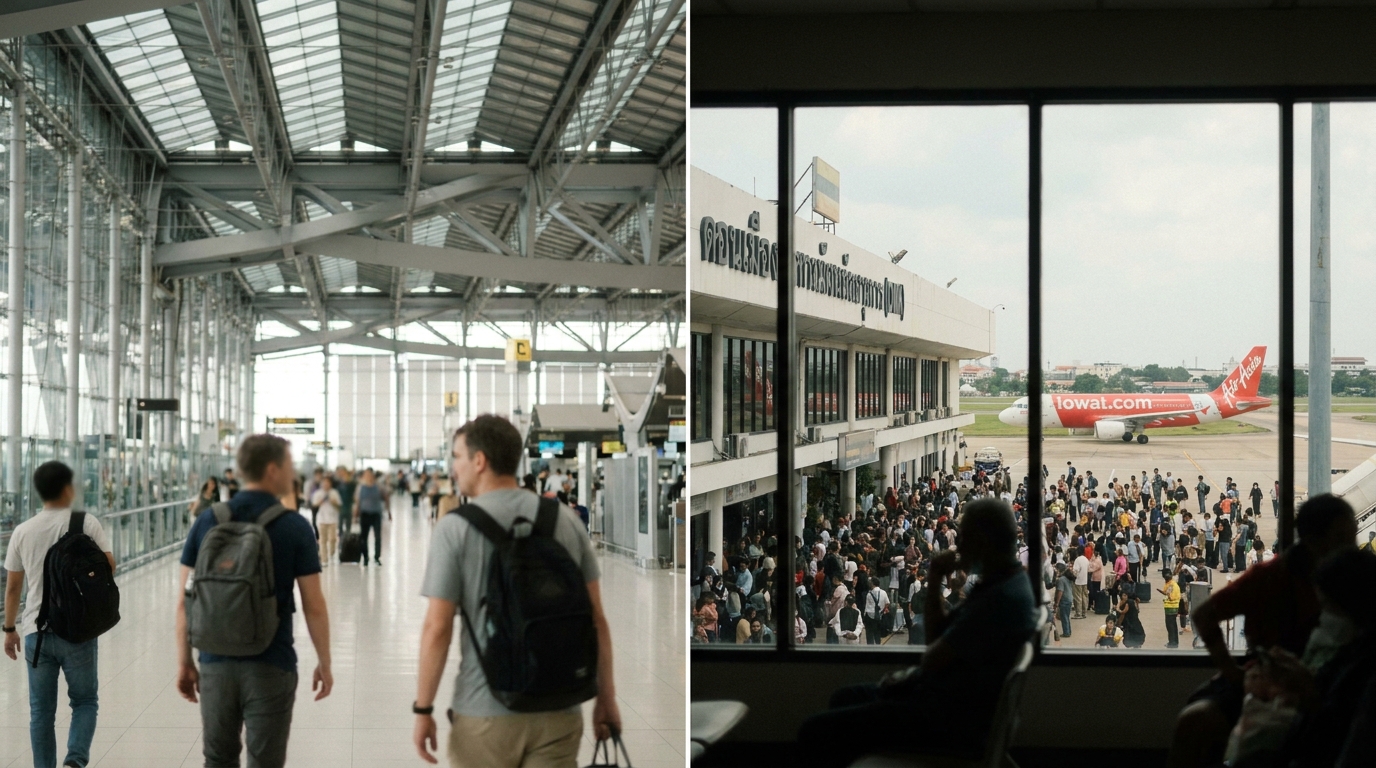
Suvarnabhumi Airport (BKK) is Bangkok’s primary international hub, located about 30 km east of the city center in Samut Prakan province. It handles the majority of long-haul international flights, including Thai Airways, Singapore Airlines, Emirates, and most major carriers. The Airport Rail Link runs directly from its basement, making it one of the most accessible airports in Southeast Asia.
Don Mueang Airport (DMK) sits roughly 24 km north of central Bangkok and serves low-cost carriers almost exclusively. AirAsia, Nok Air, Thai Lion Air, and several budget regional operators use this terminal. If you’ve booked a cheap flight within Southeast Asia, there’s a good chance you’re landing here. Importantly, there is no direct rail link from Don Mueang into the city — you’ll rely on buses, metered taxis, or a connecting journey to the BTS Mo Chit station.
| Airport | IATA | Distance to City Center | Estimated Transfer Time | Rail Link? |
|---|---|---|---|---|
| Suvarnabhumi | BKK | ~30 km | 30–45 min (rail) | Yes — Airport Rail Link |
| Don Mueang | DMK | ~24 km | 45–75 min (road/bus) | No direct rail |
Source: Airports of Thailand Public Company Limited (AOT), official terminal information, 2024.
If you’re transiting between the two airports for a connecting flight, budget at least 2–3 hours and use the free AOT shuttle bus, which runs every 30 minutes from both arrival halls.
Airport to City: Taxi, Train, Bus & Private Transfer
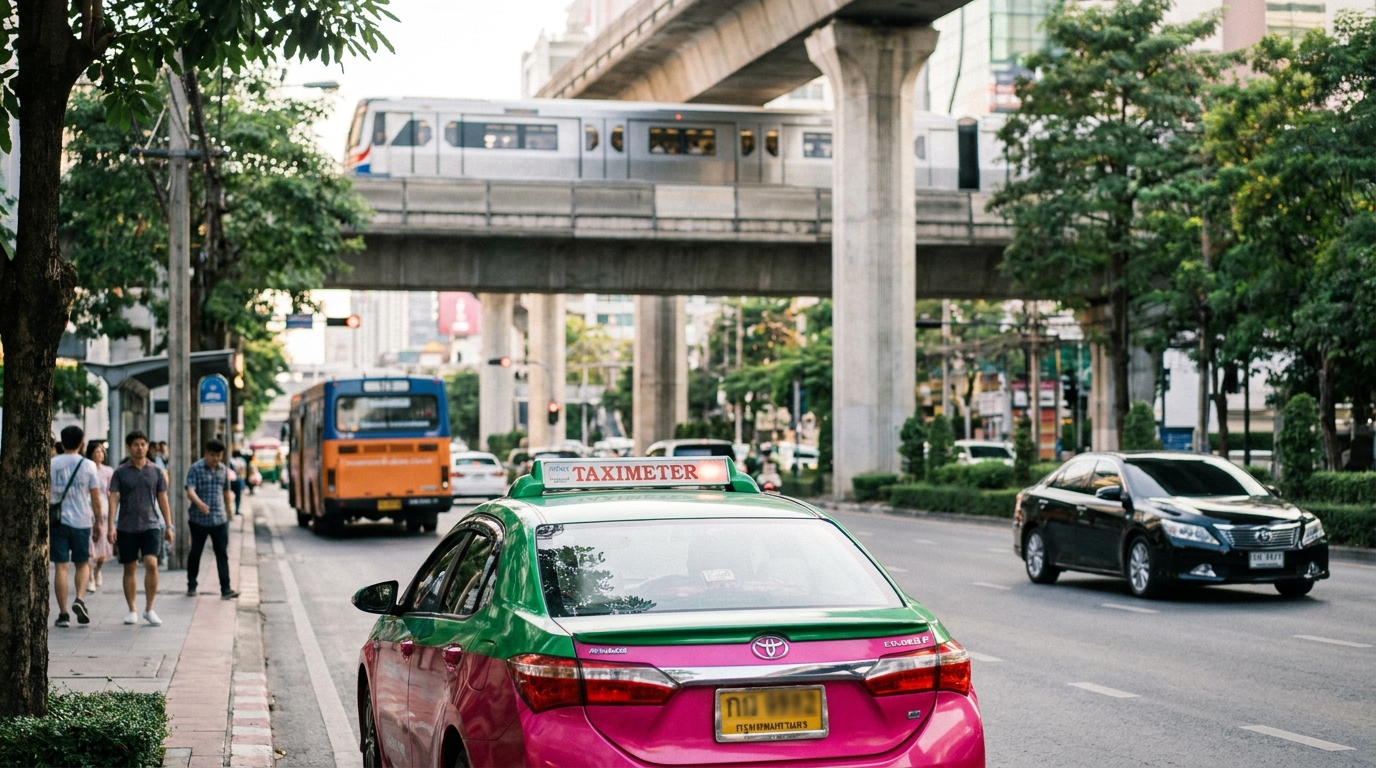
The fastest and cheapest way from Suvarnabhumi into the city is the Airport Rail Link — but the right choice depends on your luggage, destination, and the time of day.
Airport Rail Link (Suvarnabhumi only): The train departs from basement level B of Suvarnabhumi every 10–15 minutes. The City Line stops at eight stations, terminating at Phaya Thai where you can transfer directly to the BTS Skytrain. The fare is a flat 45 THB (~$1.25 USD), and the journey takes around 30 minutes. Tickets are purchased at automated machines using cash or card. This is the single best value transfer for solo travelers or those with compact luggage.
From Don Mueang: Take the A1 bus to BTS Mo Chit (Northern Bus Terminal stop) or the A4 bus toward the city, both costing around 30 THB. Alternatively, local train lines 1 and 2 connect Don Mueang to Hua Lamphong via Bang Sue, but schedules are infrequent. Most travelers find a metered taxi the most practical option from DMK.
Metered taxi: Both airports have official, metered taxi queues on the arrivals level. Never accept offers from touts inside the terminal. At Suvarnabhumi, follow signs to “Public Taxi” on level 1. The meter starts at 35 THB, and total cost to central Bangkok typically runs 200–350 THB plus expressway tolls of 25–75 THB (paid by the passenger). Total cost: roughly $7–11 USD including tolls.
Private transfer / Klook airport transfer: Pre-booked private transfers through Klook Bangkok airport transfers remove all the guesswork. Prices start around $20–30 USD for a sedan, and you’ll have a driver waiting with a name board in arrivals. This is worth it for families, late-night arrivals, or first-time visitors.
Scam warning: Anyone approaching you in arrivals offering a “fixed price” ride is not an official taxi. Always use the designated queue or a pre-booked transfer.
Source: Airport Rail Link Co., Ltd., official fare schedule, 2024; Bangkok taxi meter rate card, Department of Land Transport Thailand, 2023.
How to Get Around Bangkok by Train: BTS & MRT Explained
Bangkok’s two rail systems cover the areas tourists visit most, and once you understand how they connect, getting around becomes straightforward and cheap.
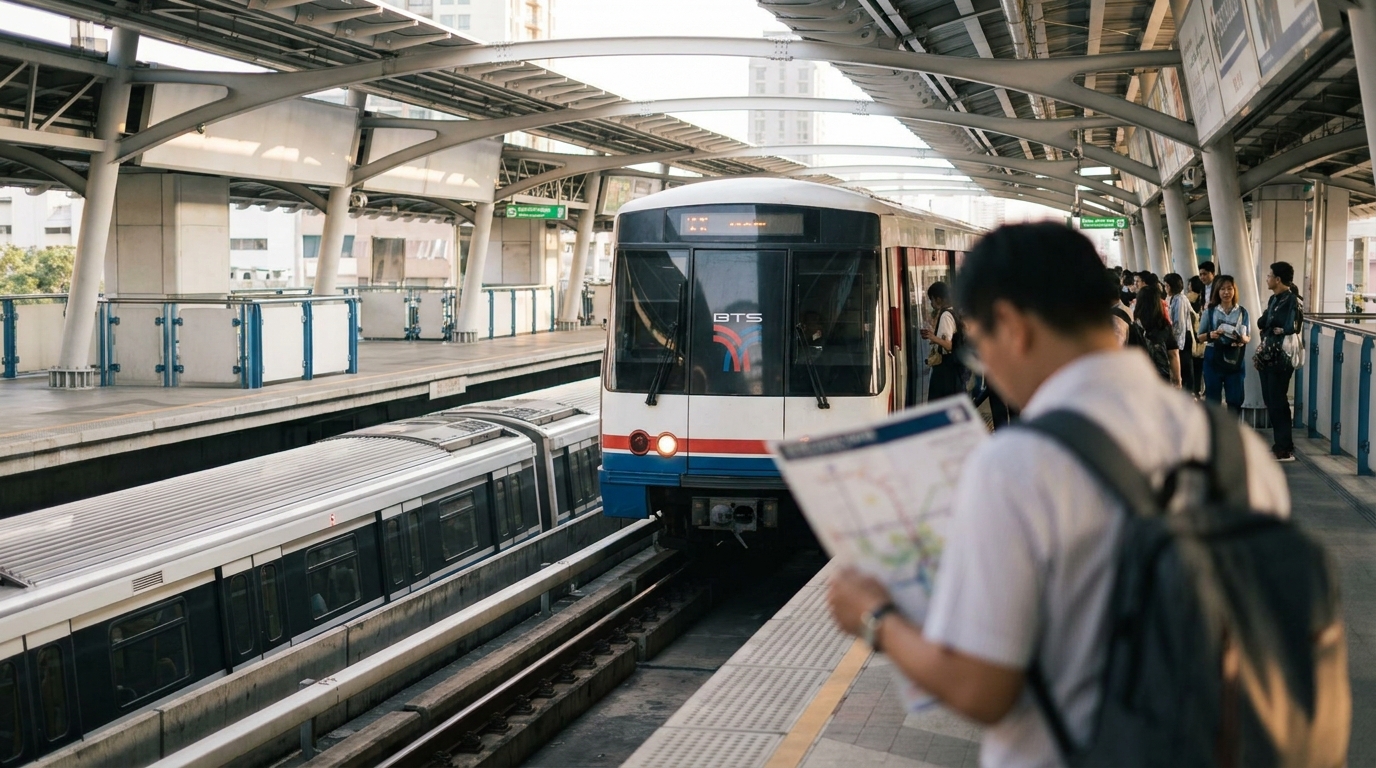
BTS Skytrain operates two main lines. The Sukhumvit Line (light green) runs northeast from Mo Chit through Asok, Nana, and Phrom Phong toward Bearing and beyond. The Silom Line (dark green) runs from Mo Chit/National Stadium through Siam and on to Bang Wa. Siam station is the interchange point between both lines. Fares range from 17–59 THB depending on distance, and trains run approximately 05:30–00:00 daily.
MRT Blue Line forms a loop through older parts of the city, connecting Hua Lamphong, Silom, Sukhumvit, and Chatuchak Park. The MRT Yellow Line extends southeast toward Lat Phrao and Samrong. Key interchange stations where BTS and MRT overlap include Asok/Sukhumvit, Mo Chit/Chatuchak Park, and Sala Daeng/Si Lom. MRT fares start at 16 THB.
Cards and passes:
- Rabbit Card (BTS): Available at any BTS station booth for a 100 THB deposit + 100 THB initial load. It saves time and offers a small discount over single-journey tickets. You can also use it for purchases at 7-Eleven and partner merchants.
- MRT stored-value card: Available at MRT station service counters for 180 THB (includes 50 THB deposit, 30 THB admin, and 100 THB stored value).
- MRT Tourist Pass: Costs approximately 300 THB for 3 days of unlimited MRT rides — solid value if you’re riding the Blue Line more than five times per day.
The Skywalk network connecting Siam, Asok, and nearby stations provides free, covered pedestrian access across several blocks — a genuine advantage during Bangkok’s rainy season.
Source: BTS Group Holdings, official fare schedule 2024; MRTA Tourist Pass, Metropolitan Rapid Transit Authority, 2024.
Getting Around Bangkok by Boat: Chao Phraya & Khlong Boats
River boats are one of Bangkok’s most underused transport options — and during peak traffic hours, a 15-minute boat ride can beat a 45-minute taxi easily.
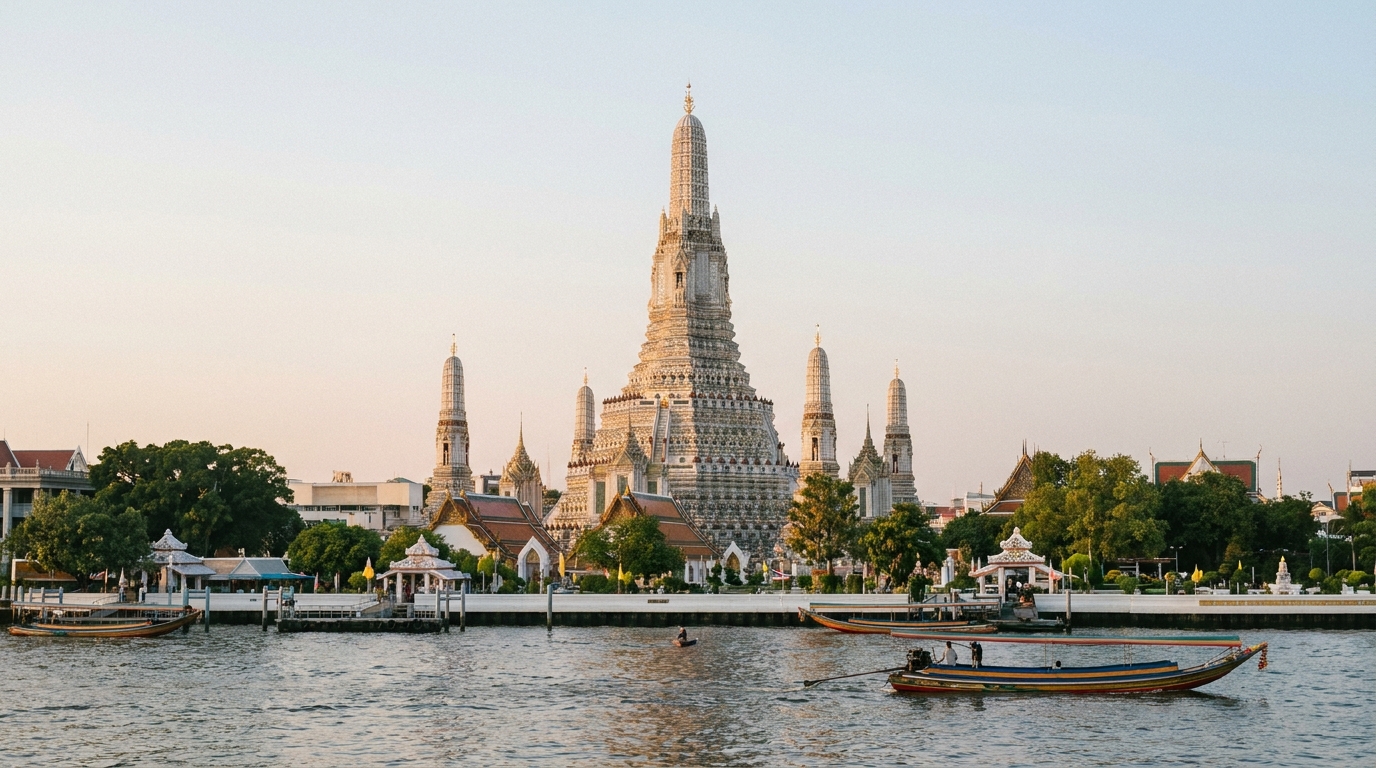
Chao Phraya Express Boat operates a color-coded flag system along the river. The Orange Flag line (local) runs all day and stops at nearly every pier for 15 THB. The Yellow Flag line is slightly faster, fares up to 20 THB. Key piers include Sathorn/Central Pier (connects to BTS Saphan Taksin), Tha Tien (Wat Pho), and Phra Athit (Khao San Road area). Buy tickets on board from the vest-wearing staff after boarding.
Khlong Saen Saep canal boat runs east–west across the city on a narrow canal, connecting Pratunam Market with the Jim Thompson House area and points further east. Fares run 10–20 THB, and during rush hour it’s genuinely the fastest way to cross Bangkok’s central district. Transfers between Khlong and river boats require a short walk at the Golden Mount pier.
The tourist boat (blue flag, ~180 THB all-day hop-on-hop-off) is convenient if you’re visiting Wat Pho, the Grand Palace, and Wat Arun in a single day. For everything else, use the local orange-flag boat and save the difference for food.
Boarding tip: step onto the boat quickly — stops are brief. Keep small change ready.
Source: Chao Phraya Express Boat Co., Ltd., fare schedule and route map, 2024.
Grab, Bolt & Taxis: Rideshare Apps vs Metered Cabs
For most tourists navigating Bangkok outside rail coverage zones, Grab is the default — and for good reason.
Grab is the dominant rideshare app in Southeast Asia. Download it, register with your phone number, and add a card before you arrive. Fares in Bangkok typically run 80–150 THB for 3–7 km trips in normal conditions. The app shows your price upfront, so there’s no meter dispute. Surge pricing applies during rain and rush hour — sometimes 1.5–2x standard fare. Make sure you have a working local or eSIM data connection; an Airalo Thailand eSIM works perfectly for this.
Bolt is cheaper than Grab for many routes, particularly in central Bangkok. Coverage is growing but is not yet as reliable as Grab outside the core tourist zones. The booking interface is nearly identical. Worth checking prices on both apps before confirming.
Metered taxis are the local standard and genuinely affordable when the driver uses the meter. The starting fare is 35 THB, with 5.5 THB per km after the first 1 km. Always say “meter, please” as you get in — or “mit-ter” in Thai. If the driver refuses, get out and try the next cab. Taxis are a smart call when Grab surge is active.
Tuk-tuks are not a practical daily transport option. They’re open to the elements, unmetered, and drivers frequently offer to take tourists on detours to commission-paying shops. For short hops between two specific streets, they can be charming — but agree on a price of 60–120 THB before getting in.
Source: Grab Thailand, estimated fare data, 2024; Department of Land Transport Thailand, taxi meter regulations, 2023.
Tuk-Tuks, Motorbike Taxis & Songthaews: Street-Level Transport
Street-level transport fills the gaps the rail and rideshare networks don’t reach — but each option comes with specific trade-offs you should know upfront.
Tuk-tuks cover short trips within a neighborhood, but the gem shop scam is still active: a friendly driver offers an “almost free” tour that always ends at a gem or tailor shop. Stick to fixed, short hops — 60–150 THB is realistic for under 2 km.
Motorbike taxis (orange vests) are stationed at designated ranks near BTS exits and market entrances. For a 1–3 km trip in heavy traffic, they charge 10–50 THB and weave through gridlock faster than any car. Always wear the helmet offered. Avoid these if you’re uncomfortable with traffic, carrying fragile items, or unsure of the route.
Songthaews (shared pickup trucks with bench seating in the back) operate on loose routes in outer Bangkok districts like Bang Na, Lat Krabang, and Min Buri. Flag one heading your direction, tell the driver your stop, and pay 8–15 THB on exit.
Avoid all street transport during heavy rain, on elevated expressways, and for any journey over 8 km.
Apps & Cards: What to Download Before You Arrive
Setting up the right tools before landing saves real time on arrival day.
Essential apps:
- Grab — rideshare, food delivery, and taxis in one
- Bolt — budget rideshare alternative
- Google Maps — download an offline Bangkok map before you fly
- Moovit — the most reliable app for real-time BTS and MRT routing with step-by-step platform directions
Transit cards:
- Rabbit Card — purchase at any BTS station booth; minimum load 100 THB; refunds available at major stations with receipt
- MRT stored-value card — available at all MRT station counters; non-transferable
For navigation and app usage throughout Bangkok, a reliable data connection is non-negotiable. We recommend setting up an Airalo eSIM for Thailand before departure — plans start from around $4.50 USD for 1 GB and activate instantly.
Google Maps handles walking and BTS/MRT routing well. Moovit is better for complex multi-line journeys including MRT Yellow Line connections.
Bangkok Transport Safety & Common Scams to Avoid
Bangkok is a safe city by most measures, but transport-related scams target tourists consistently — knowing the patterns removes most of the risk.
The top three scams:
- Fixed-price taxi touts at arrivals — always use the official metered queue
- Tuk-tuk sightseeing detours — any driver who mentions a “special temple” is heading to a gem shop
- “BTS is closed today” — this lie is told near Siam, Wat Pho, and Grand Palace to redirect tourists into tuk-tuks; the BTS is almost never fully closed
Night safety: After midnight, stick to Grab or Bolt in areas you don’t know well. Avoid unmarked vans or informal shared taxis near nightlife zones.
Motorbike taxis: Always wear the helmet provided. Thailand recorded over 900 road fatalities per 100,000 registered motorbikes annually — helmets matter.
US travelers: The US State Department currently rates Thailand at Level 1 (“Exercise Normal Precautions”), which is the lowest advisory level. Standard tourist awareness applies.
The TAT Tourist Police can be reached at 1155 (24-hour hotline, English available).
Source: US State Department Thailand Travel Advisory, 2024; WHO Global Road Safety Report, 2023.
Frequently Asked Questions
How much is the 3-day MRT tourist pass in Bangkok and is it worth it?
The MRT Tourist Pass costs approximately 300 THB (~$8.50 USD) for 3 days of unlimited rides on the Blue and Purple lines. It’s worth buying if you plan more than four or five MRT trips per day. Occasional visitors who primarily use the BTS may find a stored-value card more flexible.
Is Grab a good way to get around Bangkok compared to taxis?
Yes. Grab shows upfront pricing, accepts card payment, and eliminates meter disputes or language barriers. It costs roughly 20–30% more than a metered taxi in normal conditions, but the transparency and convenience are worth it — especially at night or with luggage.
What is the cheapest way to travel around Bangkok?
The cheapest options are the MRT and BTS Skytrain, with fares starting at 16–17 THB. Canal boats on Khlong Saen Saep cost 10–20 THB per trip. For neighborhoods without rail coverage, motorbike taxis at 10–50 THB are the most affordable ground option.
Can I get around Bangkok without a car?
Absolutely. Bangkok’s public transport network — BTS, MRT, buses, river boats, and rideshare apps — covers every major tourist area. Most visitors spend their entire trip without needing a private car. A car is only useful for day trips outside the city.
How do I use the BTS Skytrain for the first time?
Buy a single-journey ticket at the automated machines on the mezzanine level using coins or notes. Select your destination station, pay, and tap the token at the turnstile. Alternatively, a Rabbit Card speeds up boarding. Trains run every 3–7 minutes during peak hours.
Is $100 a day enough to cover transport and travel costs in Bangkok?
Yes — comfortably. A typical day of transport (BTS, one Grab ride, a boat trip) costs well under $10 USD. Budget travelers often spend $2–5 USD per day on transport using rail and boats exclusively. $100 USD covers transport, food, and entrance fees with room to spare for most itineraries.
How do I get from Suvarnabhumi Airport to central Bangkok by train?
Take the Airport Rail Link City Line from Suvarnabhumi basement level B to Phaya Thai station — 45 THB, about 30 minutes. At Phaya Thai, transfer to the BTS Sukhumvit Line to reach Siam, Asok, or any central station. Trains run every 10–15 minutes from approximately 06:00–midnight.
Conclusion
Bangkok’s transport network rewards anyone who takes 20 minutes to understand it. The BTS and MRT handle the heavy lifting for central Bangkok; river boats cut through traffic along the waterfront; and Grab fills every gap in between. Arm yourself with a Rabbit Card, download Moovit and Grab before you board your flight, and pick up an Airalo Thailand eSIM so your navigation apps work the moment you land.
For airport arrivals, pre-booking a Klook private airport transfer is the smoothest option if you’re traveling with family or arriving late. Ready to plan the rest of your trip? Browse our Bangkok travel guide, find the best areas to stay in Bangkok, or follow our Bangkok 3-day itinerary to make the most of every day. For budget planning, check our Thailand budget travel tips and day trips from Bangkok.