Chiang Mai Packing List 2026: What To Bring and Skip
By TravelguidestipUpdated 9 min readHow we earn
Hotel buttons open Stay22 (Booking.com, Agoda and others) and tour buttons open GetYourGuide. We may earn a commission at no extra cost to you.
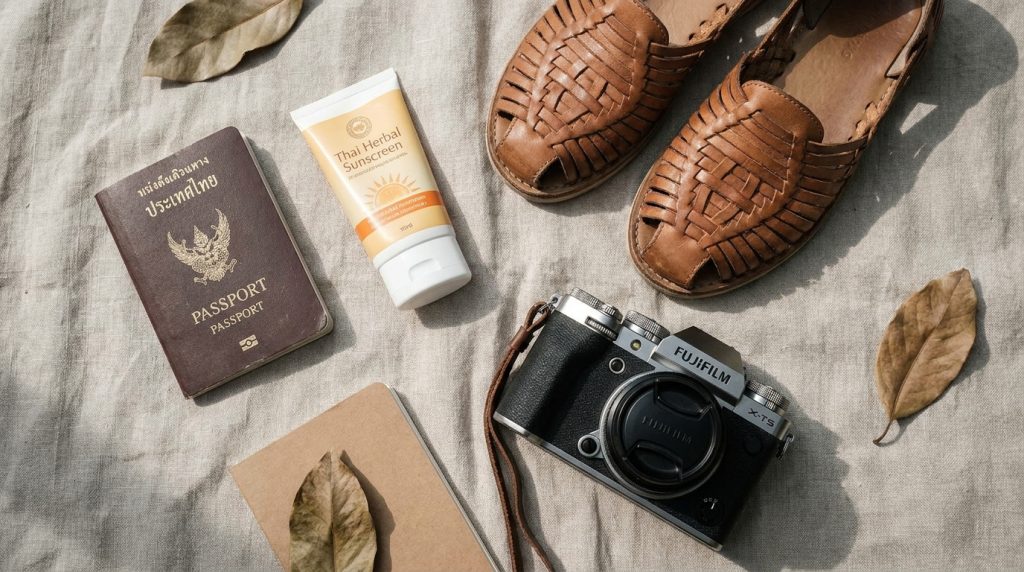
In short
- Chiang Mai averages 35°C (95°F) in April–May; temperatures drop to 10–14°C (50–57°F) on winter nights — layering is essential (Thai Meteorological Department, 2025)
- The average carry-on traveler saves $40–60 USD in checked baggage fees on budget carriers like AirAsia between Bangkok and Chiang Mai (AirAsia fare data, 2025)
- Lightweight clothing costs 60–80% less in Chiang Mai’s Night Bazaar and Warorot Market than equivalent Western retail prices (Numbeo, 2025)
- Tap water is not safe to drink in Chiang Mai; filtered water stations charge 1–2 THB per liter ($0.03–0.06 USD) across the city (WHO Thailand Report, 2024)
- Airalo eSIMs for Thailand start at $4.50 USD for 1 GB/7 days — no physical SIM swap needed on arrival (Airalo, 2026)
Packing for Chiang Mai comes down to two realities: tropical humidity most of the year and surprisingly cool mountain nights from November through February. We put together this complete Chiang Mai packing list to tell you exactly what earns its place in your bag — and what wastes space and weight.
Clothing: What the Weather Actually Demands
Quick answer: Pack light, breathable clothing for Chiang Mai’s tropical heat, but always add one warm layer for cool-season nights (November–February) and chilly mountain mornings at Doi Inthanon or Doi Suthep. Bring an outfit that covers shoulders and knees for temple visits, a packable rain layer for the wet season, and mosquito repellent — and if you travel February to April, a KN95 or N95 mask for burning-season haze.
Related: best food in Chiang Mai.
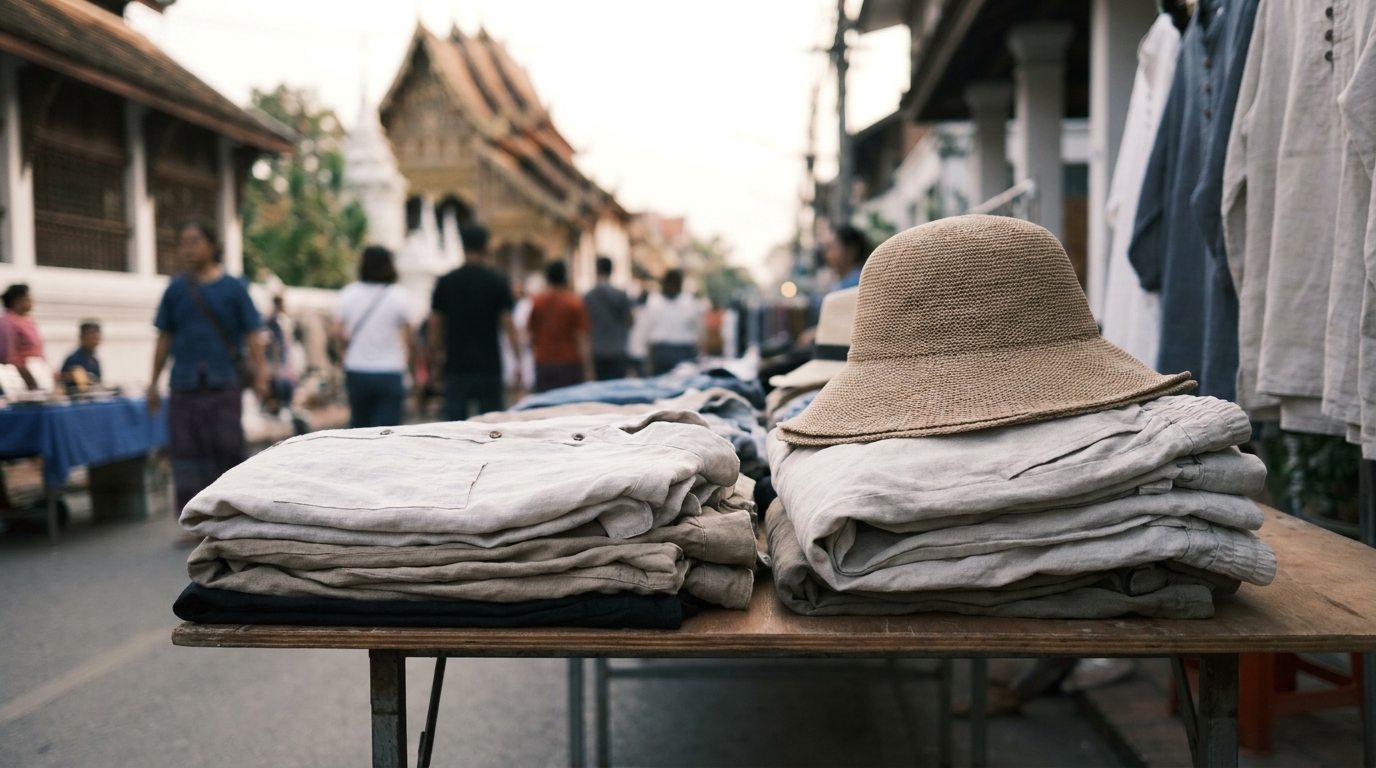
Pack for two climates in one trip — hot and humid days plus genuinely cold evenings if you visit between November and February. For a one-week trip we recommend 3–4 lightweight T-shirts, 2 breathable button-down shirts (temple-ready), 2 pairs of quick-dry pants or linen trousers, 1 light fleece or thin down jacket for cool nights, and a packable rain poncho.
Shorts are fine for the city but long pants are required at Doi Suthep temple and most wats. Cotton dries slowly in humidity; go for merino wool or synthetic blends when possible.
| Season | Months | Avg Temp (Day) | Avg Temp (Night) | Key Clothing |
|---|---|---|---|---|
| Hot Season | Mar–May | 34–38°C (93–100°F) | 24–26°C (75–79°F) | Breathable tees, wide-brim hat, UV shirt |
| Rainy Season | Jun–Oct | 28–32°C (82–90°F) | 22–24°C (72–75°F) | Poncho, quick-dry pants, sandals |
| Cool Season | Nov–Feb | 25–28°C (77–82°F) | 10–15°C (50–59°F) | Fleece, light down jacket, long trousers |
Pro tip: if you under-pack clothing, replace or supplement at Warorot Market (Kad Luang) near the Night Bazaar — a linen shirt costs 150–250 THB ($4–7 USD).
Footwear: Two Pairs Maximum
Related: best hotels in Chiang Mai.
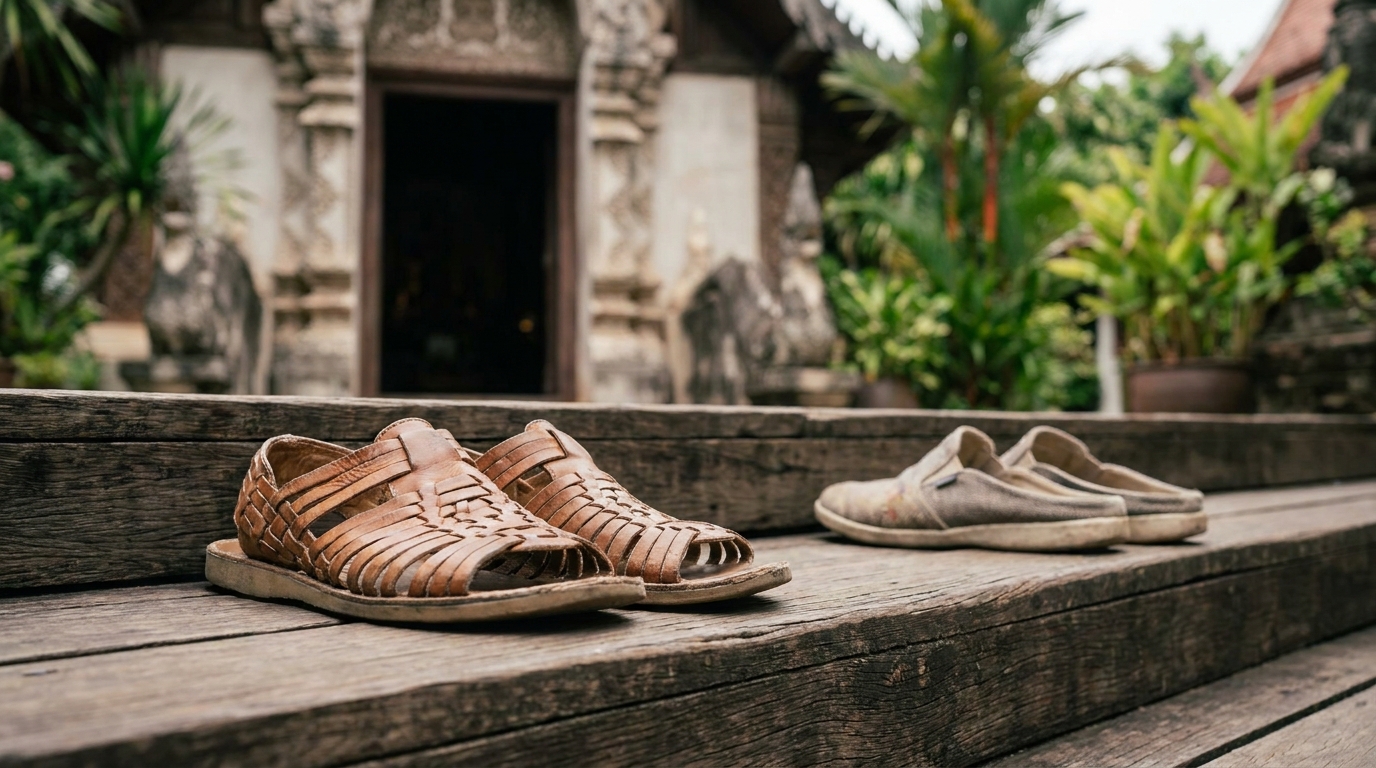
Two pairs of shoes cover every situation in Chiang Mai. A pair of supportive sandals (we like Teva or Chaco-style) handles temple visits, street food markets, and the moat-side walking paths. Your second pair should be closed-toe sneakers or trail shoes for Doi Inthanon National Park (2,565 m / 8,415 ft — Thailand’s highest peak) or any trekking day trips.
Flip-flops are sold everywhere for 60–100 THB ($1.75–3 USD) but offer zero arch support on cobbled old city lanes. Leave the dress shoes at home — there is no formal dining culture in the city that demands them.
If you plan a multi-day trekking tour into the hill tribe villages north of the city, ankle support matters more than weight savings. Guided 2-day trekking packages that cover transport, meals, and homestay are available — compare current options on GetYourGuide. See also chiang mai trekking tours for our full trekking guide.
Toiletries and Health Essentials
Related: getting to Chiang Mai.
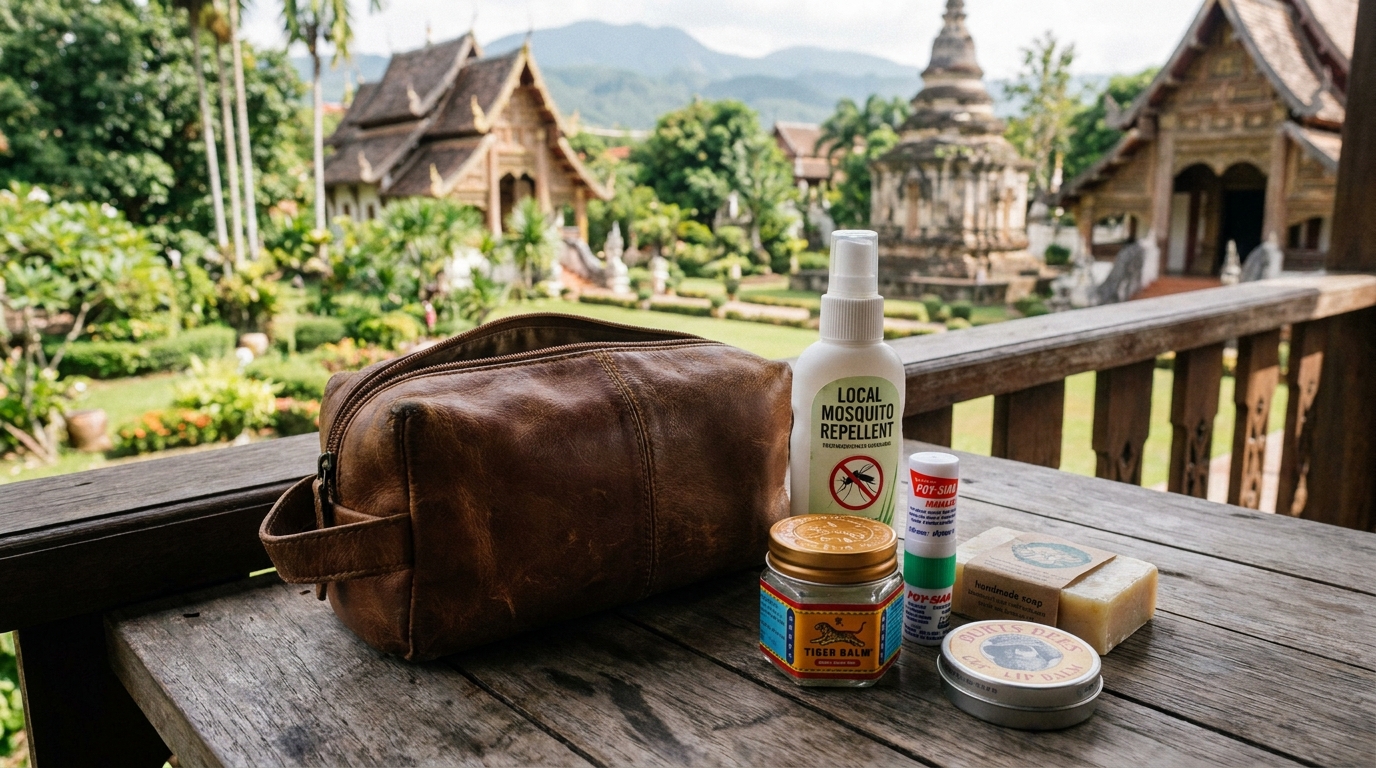
Bring a minimal kit and buy the rest locally for less. Sunscreen SPF 50+ is the single most important item — UV index reaches 12–14 in Chiang Mai during hot season (WHO UV Index, 2025). Western brands like Banana Boat cost 180–250 THB ($5–7 USD) at Tops Supermarket inside Maya Mall on Nimman Road.
Insect repellent with DEET or Picaridin is essential April through October; local OFF! spray costs 89–129 THB ($2.50–3.60 USD). A basic antihistamine and ORS (oral rehydration salts) round out a practical health kit.
| Item | Buy at Home? | Local Cost (THB) | Local Cost (USD) |
|---|---|---|---|
| Sunscreen SPF 50+ | Yes (or local) | 180–250 | $5–7 |
| DEET Insect Repellent | Optional | 89–129 | $2.50–3.60 |
| Electrolyte Sachets | Yes (pack 5–6) | 5–10 each | $0.15–0.30 |
| Lip Balm SPF | Yes | 70–120 | $2–3.40 |
| Reusable Water Bottle (1 L) | Yes | 200–350 if buying local | $5.60–10 |
Note: Most hotels at the $20–40/night range on Booking.com Chiang Mai — particularly guesthouses in the Nimmanhaemin and Old City areas — provide basic toiletries and hair dryers. Check amenities before overpacking.
Find your Chiang Mai hotel on the map
Live prices from Booking & Airbnb — tap a pin to compare stays around the Old City and Nimman and beyond.
Electronics and Connectivity
Related: hidden gems in Chiang Mai.
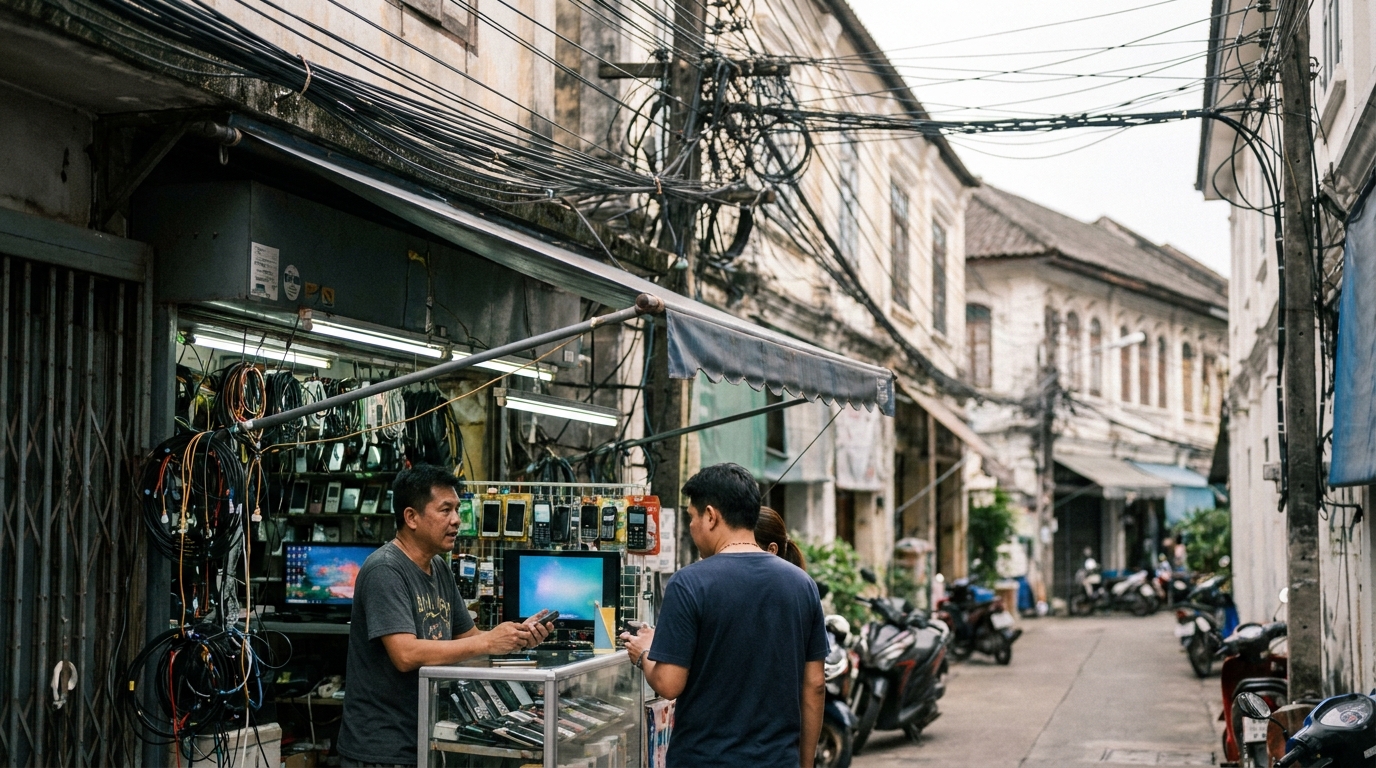
Thailand uses Type A, B, and C outlets at 220V. Bring a universal adapter if you carry European or British plugs. A power bank of 10,000–20,000 mAh is practically mandatory for long temple-hopping days or Doi Inthanon trips where charging stops are few.
For data, we strongly recommend an Airalo eSIM over buying a physical SIM at the airport. Airalo Thailand plans start at $4.50 USD for 1 GB / 7 days, scaling to $15 USD for 10 GB / 30 days — and you activate before you land.
Physical SIMs from DTAC or True Move H cost 299–599 THB ($8.50–17 USD) at the airport but require swapping your home SIM. See thailand esim guide for a full comparison.
A lightweight laptop or tablet is worth bringing for digital nomads — Chiang Mai’s co-working scene (CAMP at Maya Mall, Yellow, MANA) offers excellent WiFi at 60–150 THB ($1.70–4.30 USD) per session. Camera gear: a mirrorless body with a 24–70mm equivalent lens handles street photography and temple interiors; leave the tripod unless you specifically plan to photograph Doi Inthanon’s misty mornings.
Day Pack and Luggage Strategy
Related: best day trips from Chiang Mai.
A 40–50 L carry-on backpack or roller eliminates checked bag fees on AirAsia and Nok Air Bangkok-to-Chiang Mai routes, saving $20–40 USD each way (carrier fee schedules, 2025). Inside, a smaller 15–20 L daypack fits inside your main bag for airport transit and doubles as your city exploration bag daily. The Osprey Daylite Plus (20 L) weighs just 370 g and costs around $45 USD — a practical choice.
For accommodation with secure storage, guesthouses and boutique hotels in the chiang mai old city hotels and Nimman corridor offer luggage rooms for late checkout. Agoda’s last-minute filter for under $30/night properties in Chiang Mai Old City consistently returns rated properties with on-site storage — browse current options at Agoda Chiang Mai.
What To Skip (Leave These at Home)
Related: Chiang Mai travel cost.
Overpacking is the most common Chiang Mai mistake. Items that consistently waste space: hair dryers (hotels supply them), full-size shampoo or conditioner (buy 40–80 THB travel sizes locally), formal or business attire (no occasion demands it), multiple pairs of jeans (one at most — they dry slowly and weigh 600–700 g each), and a physical guidebook (offline maps via Google Maps or Maps.me plus a downloaded itinerary cover everything).
A rain jacket heavier than 400 g is overkill — a $3 poncho from any 7-Eleven works fine for the rainy season.
Also skip the bulky first aid kit — Chiang Mai Ram Hospital on Bumrungrat Road and McCormick Hospital near the Night Bazaar are well-equipped Western-standard facilities, and Boots Pharmacy has 15+ locations in the city center carrying everything from bandages to prescription medications.
Booking Experiences: What To Pre-Book vs. Walk-In
Related: things to do in Chiang Mai.
Pre-book cooking classes and the Elephant Nature Park — both fill weeks ahead in high season (Nov–Feb). The famous Thai Farm Cooking School runs morning and afternoon sessions at $35–45 USD per person. Elephant Nature Park sanctuary day visits are $80–100 USD and book out 2–3 weeks ahead in December. Use elephant nature park chiang mai for booking tips.
Walk-in options include the Night Bazaar (every evening, free entry), Sunday Walking Street on Wualai Road, Saturday Walking Street near Pratu Chiang Mai, and most Doi Suthep temple visits (50 THB / $1.40 USD entry for foreigners). For a full activity planning checklist, see chiang mai itinerary 7 days.
| Experience | Price (USD) | Pre-Book? | Platform |
|---|---|---|---|
| Elephant Nature Park Day Visit | $80–100 | Yes — 2–3 weeks ahead | Direct / online |
| Thai Cooking Class (half-day) | $35–45 | Yes — 1 week ahead | GetYourGuide |
| Doi Inthanon Day Tour | $25–40 | Recommended | Online |
| Doi Suthep Temple Visit | $1.40 entry | No | Walk-in |
| Night Bazaar + Walking Streets | Free entry | No | Walk-in |
GetYourGuide also covers cooking schools and trekking; compare both platforms for the best rates on your travel dates.
Frequently Asked Questions
Related: Bali travel guide.
Do I need a visa to visit Chiang Mai in 2026?
Most Western passport holders — including US, UK, EU, Australian, and Canadian citizens — receive a 30-day visa exemption on arrival in Thailand since 15 September 2026, cut from the previous 60-day limit and extendable once by 30 days (Smartraveller, 2026). A valid passport with at least 6 months validity is required. Check current rules at the official Thai e-Visa portal before travel, as policies can change.
Is Chiang Mai safe for solo travelers?
Chiang Mai consistently ranks among Thailand’s safest cities for solo travelers, including women traveling alone. The Old City, Nimman, and Santitham neighborhoods have active street life until 10–11 PM. Standard precautions apply: use metered taxis or Grab (ride-hailing app), avoid unlit side streets after midnight, and keep a photocopy of your passport separate from the original.
What currency should I bring to Chiang Mai?
Thai Baht (THB) is the only widely accepted currency. ATMs are available at all major intersections and inside 7-Eleven stores — withdrawal fees run 220 THB ($6.20 USD) per transaction at most foreign-card ATMs. We recommend arriving with $50–100 USD exchanged at a SuperRich or Gold Exchange booth in Bangkok or at the airport, then using ATMs sparingly.
How much does accommodation cost in Chiang Mai?
Budget guesthouses in the Old City and Nimman run $8–18 USD per night. Mid-range boutique hotels cost $25–55 USD on Booking.com or Agoda. Luxury properties like the Anantara Chiang Mai Resort run $150–250 USD per night. chiang mai budget guide covers full daily cost breakdowns.
What is the baggage allowance on flights to Chiang Mai?
Budget airlines (AirAsia, Nok Air, Lion Air) flying Bangkok–Chiang Mai routes include 7 kg carry-on only in base fares. Checked bags cost $10–20 USD extra per leg if added at booking, rising to $30–40 USD at the airport. Full-service carriers like Thai Airways and Bangkok Airways include 20–30 kg checked allowance. Packing carry-on only saves $40–80 USD round-trip on budget carriers.
Can I rent clothes or gear in Chiang Mai?
Yes — trekking pants, rain jackets, and small daypacks rent from guesthouses and trekking operators near Tha Phae Gate for 50–100 THB ($1.40–2.80 USD) per day. Formal wear for specific occasions can be rented on Nimman Soi 1 at tailoring shops for 200–400 THB ($5.60–11 USD) per outfit. This makes it easy to pack lighter and source what you need on the ground.
Do I need travel insurance for Chiang Mai?
We strongly recommend travel insurance covering medical evacuation — costs for air ambulance back to your home country from Thailand can exceed $50,000 USD without coverage. World Nomads and SafetyWing both offer Southeast Asia plans starting around $40–60 USD per month. Check that adventure activities like trekking and motorbiking are included, as these are popular in Chiang Mai and often excluded from basic plans.
Conclusion
Related: Da Nang travel guide.
A smart Chiang Mai packing list fits in a 40–50 L carry-on, covers two climates, and leaves room for market finds. Prioritize lightweight breathable clothing, a good pair of sandals, SPF 50+ sunscreen, and a reliable eSIM through Airalo.
Pre-book standout experiences like the Elephant Nature Park and cooking classes through GetYourGuide before you arrive, and search current hotel rates on Agoda or Booking.com to match your budget. For a deeper explore planning, see chiang mai travel guide for our complete destination overview.