Best Time to Visit Brisbane in 2026: Month-by-Month Guide
By TravelguidestipUpdated 9 min readHow we earn
Hotel buttons open Stay22 (Booking.com, Agoda and others) and tour buttons open GetYourGuide. We may earn a commission at no extra cost to you.
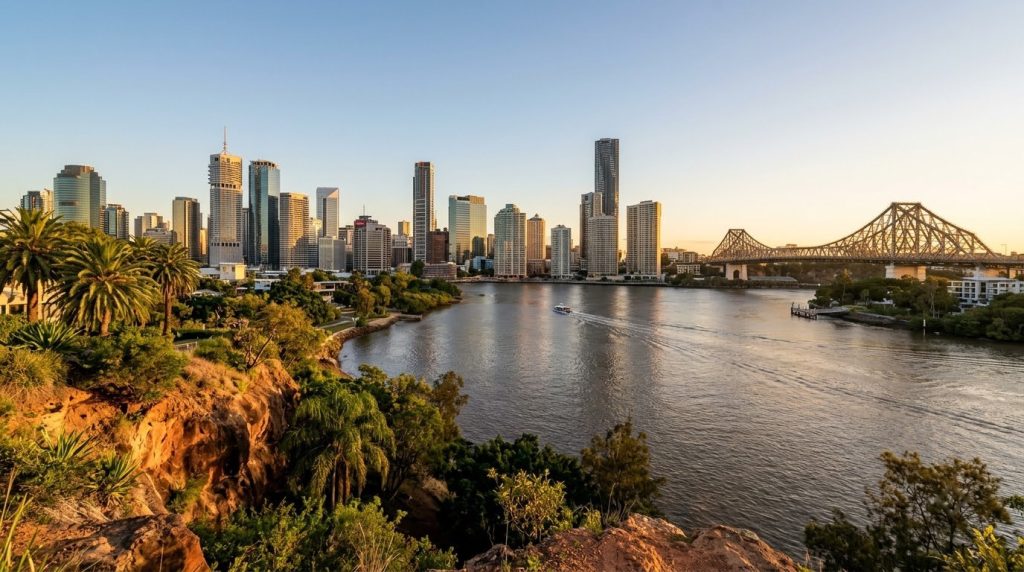
In short
- Best overall: September to November, with sunny days of roughly 20-27C and low humidity.
- Winter works: June to August is dry and mild, with daytime highs around 21-22C and cool nights.
- Avoid if you dislike heat: December to February brings about 29C highs, high humidity, and afternoon storms.
- Events: the Brisbane Festival and Riverfire fireworks land in September, one of the best months to be in town.
- Day trips: Gold Coast beaches peak in summer, but Moreton Island and whale watching are better in the cooler months.
The best time to visit Brisbane is spring (September to November) and autumn (March to May), when days are warm at roughly 20-27C, humidity drops, and the afternoon storms of summer are rare. Winter (June to August) is a close third: mild, mostly dry, and the quietest season for the city’s main attractions.
Brisbane is in the Southern Hemisphere, so the seasons run opposite to Europe and North America. Summer means December to February, and it is hot, sticky, and stormy. This guide covers each month, the crowd and price pattern, the best weather for day trips to the Gold Coast and Moreton Island, and the events worth timing a trip around. All climate figures are approximate and vary year to year.
We’ve visited Brisbane in both January and September. The January trip meant two or three sticky afternoons ending in a sudden downpour, and we spent them in air-conditioned museums. In September we walked the riverside paths in a T-shirt every day, ate outdoors each evening, and barely checked a forecast. If you can choose, we’d choose the second one.
When is the best time to visit Brisbane?
The best time to visit Brisbane is September to November, with daytime highs of about 20-27C (approximate), sunny skies, and far less humidity than summer. Autumn from March to May is nearly as good. Both seasons suit walking the river, climbing the Story Bridge, and taking outdoor day trips.
Brisbane has a humid subtropical climate. That means plenty of sunshine through most of the year, a wet season that peaks from about January to March, and a dry season that stretches through winter into spring. Spring has a bonus: jacarandas typically bloom purple across the suburbs in late October and November, though the exact timing shifts.
Here is how the seasons compare at a glance.
| Season | Months | Typical highs (approx.) | Rain and humidity | Crowds and prices |
|---|---|---|---|---|
| Spring | Sep-Nov | 24-27C | Low humidity, warming, some storms by November | Moderate; school holiday bump in late September |
| Summer | Dec-Feb | 29-30C | Hot, humid, afternoon storms | Peak around Christmas and January |
| Autumn | Mar-May | 24-28C, cooling | Rain eases by April, comfortable | Moderate; Easter is busy |
| Winter | Jun-Aug | 21-22C | Mostly dry, cool nights near 10C | Quietest; July school holidays busier |
Source: National weather service climate averages and regional tourism board, 2026
What is Brisbane’s weather like month by month?
Brisbane’s weather is warm all year. Average daytime highs range from about 21C in July to 30C in January, nights rarely drop below 9C, and the wettest months are typically January to March. Here is a month-by-month snapshot so you can match your dates to what you want to do.
Keep in mind these are broad ranges. A hot spell in spring or a cool, wet week in March is entirely possible.
| Month | Daytime high (approx.) | Feel and conditions | Good for |
|---|---|---|---|
| January | 29-30C | Hot, humid, storms | Indoor attractions, beaches early morning |
| February | 29-30C | Hot, humid, wettest period | Museums, evening river walks |
| March | 28C | Still warm, rain easing | Shoulder-season travel |
| April | 26C | Pleasant, less humid | Walking, ferries, Easter events |
| May | 23-24C | Dry, mild | Sightseeing, hiking at Mt Coot-tha |
| June | 21-22C | Dry, crisp mornings | Koala sanctuary, whale season starts |
| July | 21C | Coolest month, dry | Quiet city, whale watching |
| August | 22-23C | Dry, windy at times | Ekka fair, Moreton Island |
| September | 24-25C | Sunny, low humidity | Brisbane Festival, Riverfire |
| October | 26C | Warm, clear | Outdoor dining, climbs |
| November | 27-28C | Warming, storms return | Jacarandas, early summer |
| December | 29C | Hot, humid, busy | Beach days, festive season |
Source: National weather service climate averages (approximate, rounded), 2026
If you want one rule of thumb: pick any month from April to October for comfortable sightseeing, and pick September or October for the best mix of weather, events, and manageable crowds.
Is summer a bad time to visit Brisbane?
Summer is not bad, but it is the hardest season for comfort. December to February brings highs near 29C, high humidity, and a real chance of afternoon thunderstorms, so outdoor sightseeing works best early or late in the day. Lodging costs also climb during the Christmas and January school holidays.
Storms here can be dramatic. We’ve sat out heavy downpours that cleared in under an hour, leaving steamy air behind. The wider tropical cyclone season in Queensland runs roughly November to April, and while direct hits on Brisbane are uncommon, heavy rain and flooding can occur in some years. Check the national weather service forecast before you travel.
Summer does have upsides. The Gold Coast beaches are at their liveliest, river swimming spots and city pools are open, and long evenings are great for dining outside once the heat breaks. If you come in summer, plan indoor stops like the Queensland Museum at South Bank for the hottest part of the afternoon.
What is the cheapest time to visit Brisbane?
Prices are usually lowest in the shoulder months of May and early June, and again in late August, when school is in session and domestic demand dips. Expect higher rates around Christmas, January, Easter, and during state school holidays in late June to July and late September. Exact dates vary, so check the Queensland school calendar.
Why is winter a smart time to visit Brisbane?
Winter is a smart time to visit Brisbane because it is the driest, sunniest, and least crowded season, with daytime highs around 21-22C and cool nights near 10C (approximate). You can walk all day without heat fatigue, and popular spots like South Bank and Lone Pine Koala Sanctuary are noticeably calmer.
This is also when Brisbane feels most like a relaxed river city rather than a steamy tropical one. A light jacket is enough for evenings, and rain is generally scarce from about June to September. If you’re traveling from a cold northern winter, the contrast is a real treat.
Winter is a good moment for wildlife. Lone Pine Koala Sanctuary, which houses more than 100 koalas, is easier to enjoy with fewer visitors, and a day pass starts at about US$38 (approximate, check current rates). Humpback whales also migrate along the Queensland coast from roughly June to October, so whale watching trips from Moreton Island become an option.
What are the best events to plan a Brisbane trip around?
The two biggest drawcards are the Brisbane Festival and Riverfire in September, and the Ekka (the Royal Queensland Show) in August. Brisbane Festival fills the city with arts, music, and outdoor performances, and Riverfire is a large fireworks and aircraft display over the river that draws big crowds.
Riverfire is the standout. It usually closes the festival in late September, with the best viewing along South Bank, Kangaroo Point, and the city riverbanks. Arrive early, bring a picnic, and expect transport to be crowded. Accommodation near the river fills fast in that week, so book early if you want it.
Other seasonal draws include jacaranda blooms in late October and November, the Easter weekend in autumn, and summer beach events. Dates change each year, so confirm with the festival and city council websites before you lock in flights.
Is autumn or spring better in Brisbane?
Both are excellent, and the choice comes down to rain and events. Spring (September to November) is drier and brings the festival season, while autumn (March to May) is warmer in the sea but can still have lingering showers in March. Both offer highs of roughly 24-28C (approximate) and comfortable evenings.
Spring suits travelers who want events and long, clear days. The festival calendar is busiest in September, and the weather is reliably pleasant until storms start returning in November. Autumn suits people who prefer a quieter pace. By April the humidity has eased, ferries and parks feel relaxed, and the Easter weekend is the main crowd spike.
We lean toward spring for first-time visitors, simply because the odds of a perfect day are highest. Autumn wins if you’re watching your budget, since midweek rates are often lower once the summer holidays are over. Either way, pack a light rain layer, because Brisbane weather can surprise you in any month.
When is the best time for day trips from Brisbane?
For day trips, spring and autumn win overall, because you get calm seas, comfortable temperatures, and fewer thunderstorms. Gold Coast beaches are about an hour south by road and are busiest in summer. Moreton Island and its Tangalooma wrecks suit most months of the year.
Here is how we’d match common day trips to the calendar:
- Gold Coast (about 1 hour south): swimming and surf are best from November to March, but spring and autumn are easier on crowds and heat.
- Moreton Island and Tangalooma: the wreck snorkeling, sandboarding, and dolphin feeding work year-round, with whale watching in the cooler months.
- Mt Coot-tha and the CityCat ferry: clear, dry months from April to October give the best sunset views over the city and river.
- Story Bridge Adventure Climb: about 1.5 hours with dawn, day, twilight, and night sessions, from about A$150 (approximate, check current rates), best on dry, clear days.
If you have a free day, the Moreton Island trip is our favorite. The water is clear, the boat ride is short, and it feels far from the city. Note that ferry timetables change with the season, so check current schedules.
What should you pack for each season?
Pack lightweight, breathable clothes year-round, plus sun protection. In summer, add a compact rain jacket and quick-dry fabrics. In winter, bring a light sweater or jacket for evenings. Sunscreen, a hat, and sunglasses matter in every season, because the Queensland sun is strong even on mild days.
- Summer (Dec-Feb): shorts, linen, a hat, a small umbrella, and swimwear.
- Autumn and spring: T-shirts, a light layer, comfortable walking shoes, and swimwear for the coast.
- Winter (Jun-Aug): jeans, a light jacket for evenings, and layers for early whale-watching boats.
Mosquitoes can be active in warm, wet weather, so a basic repellent is sensible from November to April. For ocean swimming, always swim between the red and yellow flags on patrolled beaches.
So, when should you go?
Our recommendation is September or October. You’ll get sunny days of roughly 24-27C, low humidity, Brisbane Festival and Riverfire in town, and the jacarandas just starting. April and May are the next best pick, with settled weather and fewer crowds. Avoid late December and January unless you love the heat.
If budget is your priority, aim for May or August. If wildlife is the goal, choose June to October for whales. And if you want the Gold Coast at its liveliest, accept the summer heat and storms in return.
Find your Brisbane hotel on the map
Live prices from Booking, Airbnb and more — move the map or change dates to compare stays across Brisbane.
Frequently Asked Questions
What is the best month to visit Brisbane?
September and October are the best months for most travelers. Daytime highs are about 24-27C (approximate), humidity is low, skies are mostly clear, and events like Brisbane Festival and Riverfire add energy. April and May are a strong alternative if you want fewer crowds and lower prices.
Is Brisbane worth visiting in winter?
Yes. Winter in Brisbane is mild, dry, and sunny, with highs around 21-22C. Crowds are smaller at South Bank and Lone Pine Koala Sanctuary, and whale watching begins around June. It’s too cool for most swimming in the sea, but it’s excellent for walking, sightseeing, and wildlife.
When is the wet season in Brisbane?
Brisbane’s wet season typically runs from about December to March, with the heaviest rain often in January and February. Storms tend to arrive in the afternoon and clear quickly. The wider cyclone season runs roughly November to April, so check the national weather service before booking.
How many days do you need in Brisbane?
Three to four days covers the main city sights, with one extra day each for Moreton Island or the Gold Coast. Plan around the weather: save indoor attractions for hot or rainy afternoons, and outdoor climbs and river walks for clear mornings.
When is Riverfire in Brisbane?
Riverfire is held in late September as the closing event of Brisbane Festival. Exact dates change each year, so confirm with the festival’s official site. Book accommodation near the river early and arrive well before dusk for a good viewing spot.
Brisbane rewards flexible planners. Pick September or October for the best weather and events, April or May for value, and winter for quiet and wildlife. Whatever month you choose, bring sunscreen, leave a gap in your schedule for a storm, and enjoy a city that’s easy to like.