
Disclosure: Some links in this guide are affiliate links. If you book or buy through them, we may earn a small commission at no extra cost to you — it helps keep our guides free.
Best Food in Hanoi: What To Eat and Where 2026
Quick answer: Hanoi’s must-eat dishes are pho (the northern beef or chicken noodle soup that locals eat mostly at breakfast), bun cha (grilled pork with a dipping broth, herbs, and noodles, best at lunch), plus banh mi and banh cuon for quick bites. Finish with ca phe trung, the city’s famous egg coffee, and eat where the crowds gather on the tiny plastic stools.
Hanoi’s food scene is one of the most rewarding in Southeast Asia — every alley hides a decades-old stall, and a full meal rarely costs more than $3. This guide covers the essential dishes, the best streets to eat on, trusted restaurants across every budget, and practical tips for navigating the city’s food culture in 2026.
Key Takeaways
– Hanoi has more than 2,000 registered street food vendors in the Old Quarter alone (Hanoi Tourism Authority, 2025)
– A bowl of pho at a local stall costs 30,000–55,000 VND ($1.20–$2.20); tourist-facing restaurants charge $4–$7 (Vietnam National Administration of Tourism, 2025)
– Bun cha — grilled pork noodle soup — is the city’s most-ordered lunch dish, with peak service from 11 a.m. to 1 p.m. (Foody.vn, 2024)
– Hanoi’s food delivery market grew 34% year-on-year in 2024, yet 78% of visitors still prefer eating on-site at street stalls (Nielsen Vietnam, 2024)
– Food tours via Klook average $22–$35 per person and cover 6–8 dishes across 3–4 hours — a fast way to orient yourself on arrival
Affiliate Disclosure: We include affiliate links at no extra cost to you.
The Non-Negotiable Dish: Pho Bo and Pho Ga
Related: hidden gems in Hanoi.
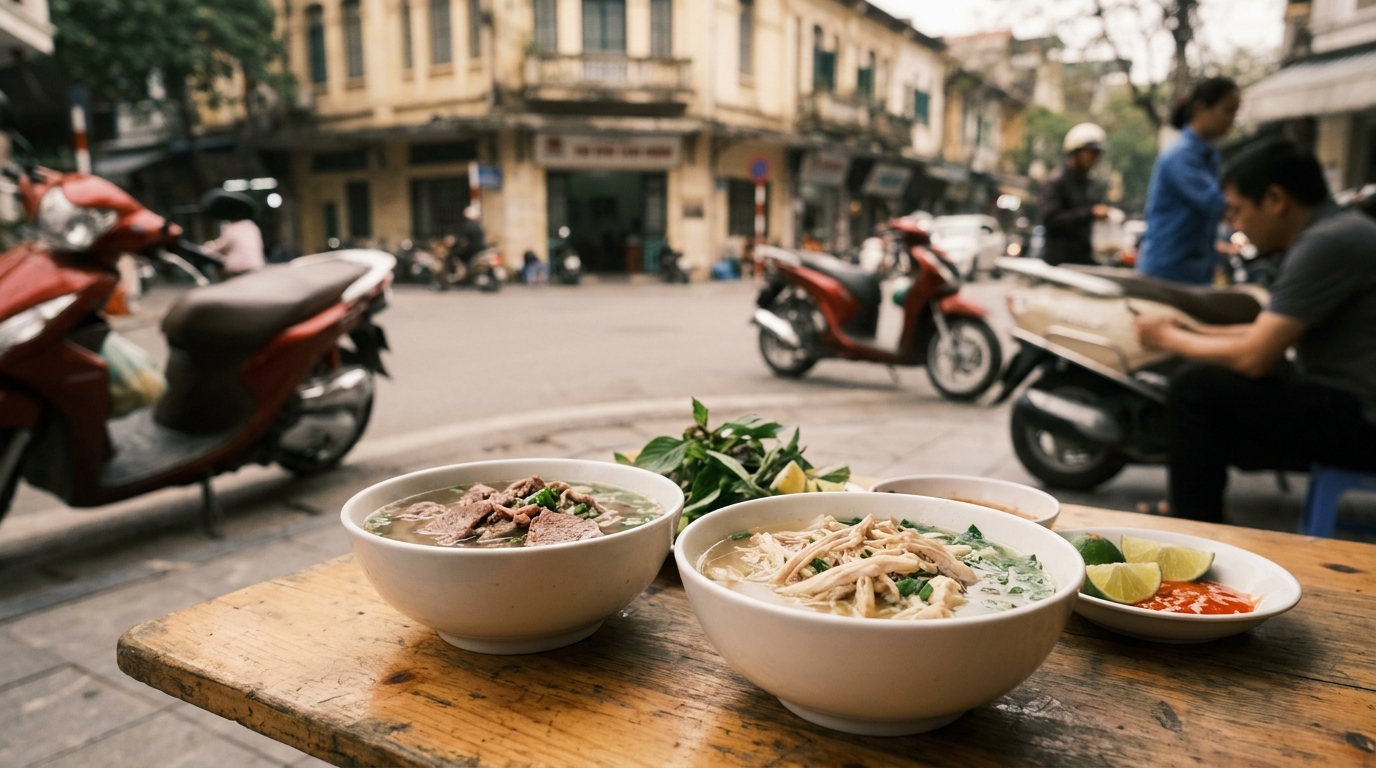
Pho is the first dish every visitor should eat in Hanoi, and the northern version here is noticeably different from what you find in Ho Chi Minh City. Hanoi pho uses a clearer, less sweet broth built on charred ginger, star anise, and hours of simmering beef bones, served with thinner rice noodles and minimal garnish — just fresh onion and a squeeze of lime.
The most respected pho spots open at 6 a.m. and often sell out before 10 a.m. Pho Thin on Lo Duc Street has been ladling bowls since 1979; a standard bowl of pho bo (beef) costs 60,000 VND ($2.40).
Pho Bat Dan on Bat Dan Street in the Old Quarter queues early — arrive before 7:30 a.m. for the best broth. For chicken pho (pho ga), Pho Gia Truyen on Hang Gai Street is a reliable choice at 55,000 VND ($2.20) a bowl (TripAdvisor, 2025).
If you want a guided introduction to pho alongside other northern dishes, Klook’s Hanoi street food morning tour pairs pho with banh mi and bun oc for around $25 per person.
Bun Cha: Hanoi’s Iconic Grilled Pork Noodle Soup
Related: best day trips from Hanoi.
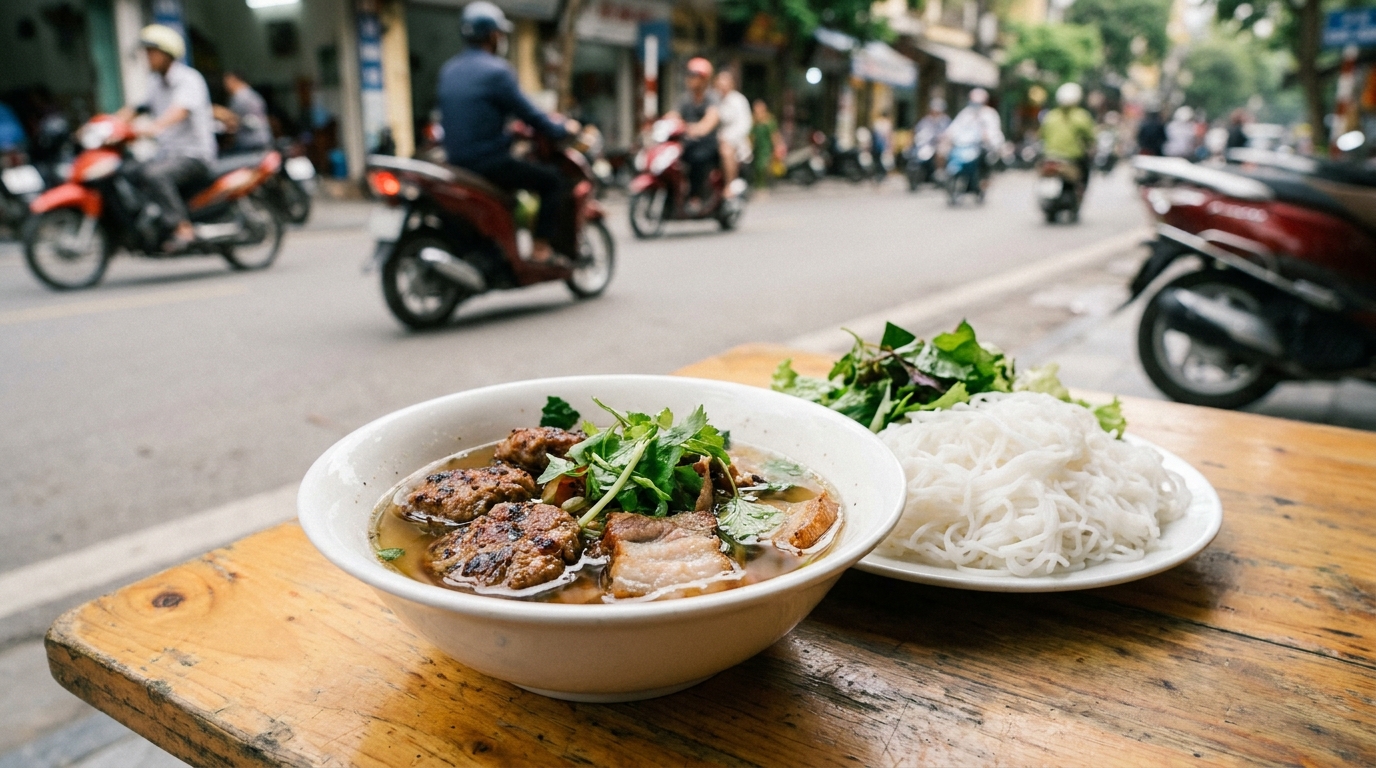
Bun cha is Hanoi’s lunch institution — grilled fatty pork patties and sliced pork belly served in a light, vinegar-forward dipping broth with a plate of vermicelli noodles and fresh herbs on the side. The dish is eaten between 11 a.m. and 1 p.m. almost exclusively; most stalls close once they run out.
Bun Cha Huong Lien on Le Van Huu Street became internationally famous after a 2016 visit by a US president, but the food quality genuinely holds up — a full set costs 80,000 VND ($3.20) including nem cua be (crab spring rolls). Expect a queue of 10–20 minutes at peak lunch.
A more local alternative is Bun Cha 34 Hang Than in the Old Quarter, where a set runs 65,000 VND ($2.60) and turnover is fast (Foody.vn, 2025).
Banh Mi and Banh Cuon: The Quick Bite Options
Related: Hanoi itinerary.
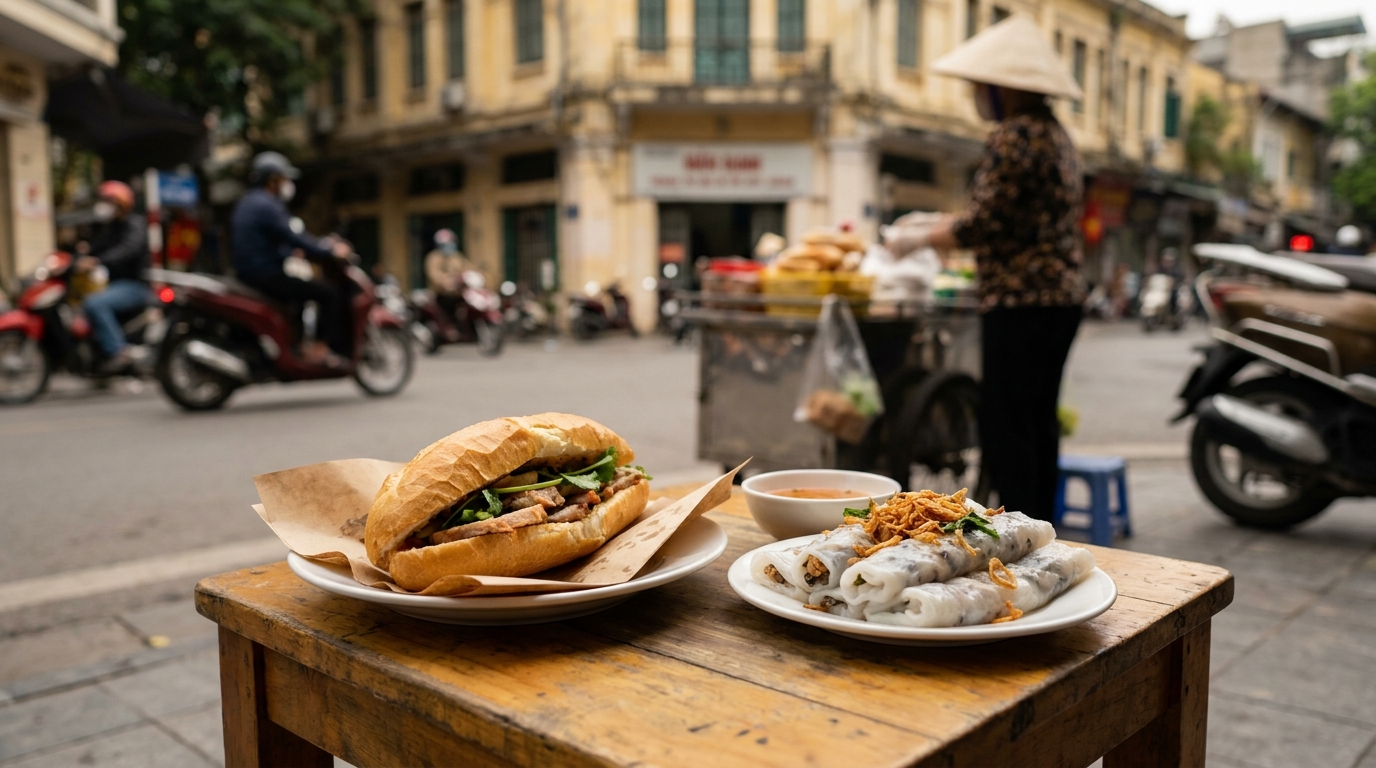
Hanoi’s banh mi is crustier and less sweet than the Saigon version — the baguette has a more pronounced char, and fillings lean toward pate, cold cuts, and pickled daikon rather than the sweeter sauces used further south. A banh mi from a street cart costs 20,000–35,000 VND ($0.80–$1.40).
Banh Mi 25 on Hang Ca Street in the Old Quarter is the most consistently recommended vendor for visitors — open from 7 a.m. to 10 p.m., with a customizable filling menu and English signage. A loaded banh mi costs 35,000 VND ($1.40).
For a lighter option, banh cuon (steamed rice rolls filled with minced pork and wood-ear mushroom, topped with fried shallots) is a breakfast staple available at Banh Cuon Ba Hanh on Ngo Sy Lien Street for 45,000 VND ($1.80) per portion (Vietnam Foodies, 2025).
Find your Hanoi hotel on the map
Live prices from Booking & Airbnb — tap a pin to compare stays across the Old Quarter and beyond.
The Old Quarter’s Best Street Food Streets
Related: best beaches in Hanoi.
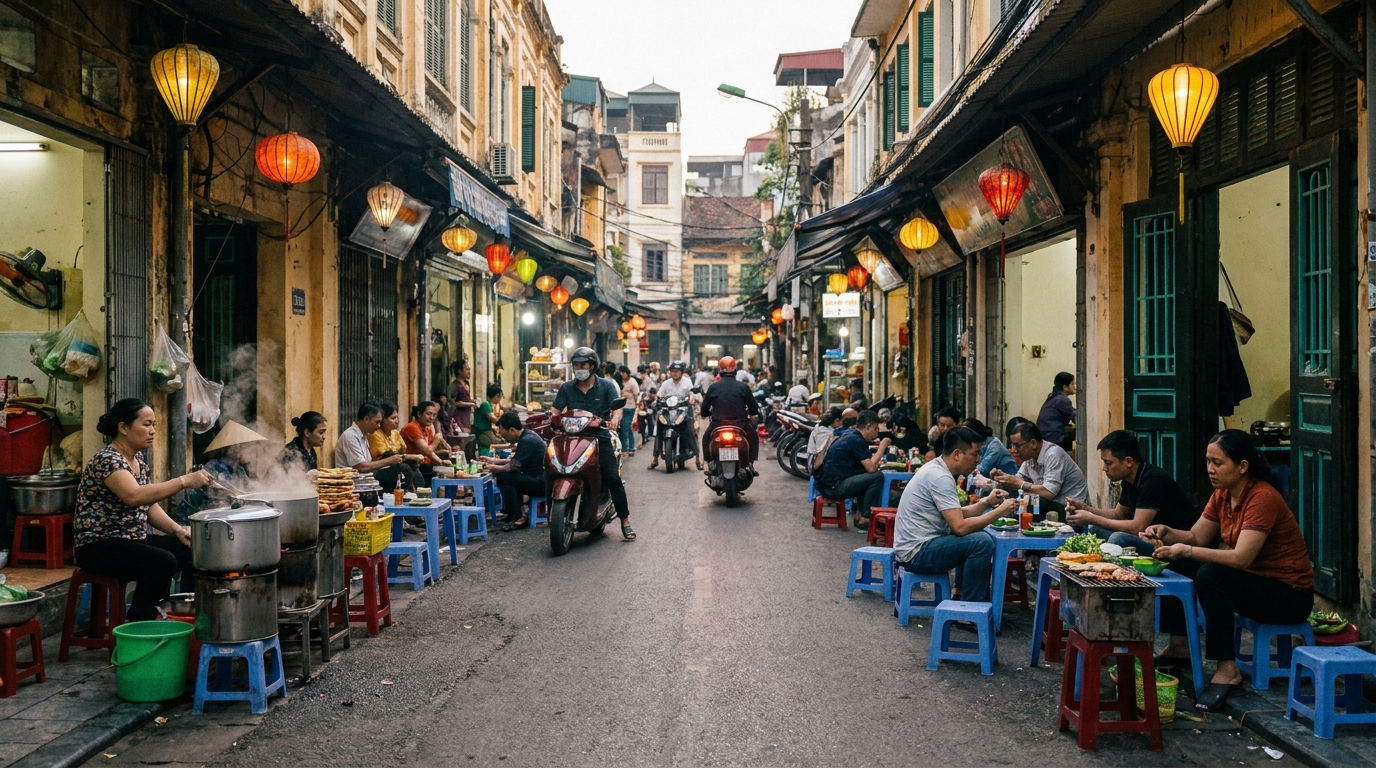
The Old Quarter concentrates Hanoi’s most accessible street food within a walkable grid of roughly 36 streets, each historically dedicated to a trade. Today the food is everywhere, but a few streets are worth prioritizing specifically for eating.
Hang Buom Street runs a dense stretch of snack vendors selling banh trang nuong (Vietnamese pizza — grilled rice paper with egg, dried shrimp, and spring onion) for 15,000–20,000 VND ($0.60–$0.80) each. Ta Hien Street is the nightlife-adjacent beer street where you can get a bia hoi (fresh draft beer) for 5,000–7,000 VND ($0.20–$0.28) alongside grilled corn and skewers.
Dinh Liet Street is the best source for che — sweet Vietnamese dessert drinks with coconut milk, jellies, and beans — at 20,000–30,000 VND ($0.80–$1.20) a cup.
For a self-guided evening walk that hits all three, we recommend staying somewhere central — Agoda’s Old Quarter listings filter hotels under $40/night within 500 meters of Hoan Kiem Lake, which puts you within a 5-minute walk of everything above. Alternatively, Booking.com’s boutique guesthouses in the Old Quarter area show strong value in the $25–$60 range.
Mid-Range Restaurants Worth Booking
Related: Bali travel guide.
Not every meal needs to be a street-side plastic-stool experience. Hanoi has a growing tier of sit-down restaurants that use traditional recipes with better sourcing and air-conditioning, priced between $8 and $20 per person.
Cha Ca La Vong on Cha Ca Street is the home of cha ca Hanoi — turmeric-marinated snakehead fish fried tableside in butter and dill, served with rice noodles, peanuts, and shrimp paste.
A single-dish meal for two runs 320,000–380,000 VND ($13–$15) per person; reserve a table, as wait times exceed 45 minutes without a booking (Cha Ca La Vong, 2025).
Quan An Ngon on Phan Boi Chau Street assembles stalls from different Vietnamese provinces under one roof — a reliable way to sample bun bo Hue, mi Quang, and cao lau without leaving Hanoi; budget 150,000–200,000 VND ($6–$8) per person.
For [where to stay in hanoi old quarter] recommendations that keep you close to both restaurant tiers, we have a dedicated guide.
Hanoi Coffee Culture: Ca Phe Trung and Beyond
Related: Hanoi packing list.
Hanoi invented egg coffee (ca phe trung) — a thick, meringue-like foam of whipped egg yolk and condensed milk spooned over strong richa espresso. It tastes like a cross between tiramisu and a cafe au lait and costs 35,000–55,000 VND ($1.40–$2.20).
Cafe Giang on Nguyen Huu Huan Street has been serving egg coffee since 1946 and remains the most cited original source; a hot ca phe trung costs 35,000 VND ($1.40) and is consumed seated on low wooden stools in a narrow room.
Cafe Dinh on Dinh Tien Hoang Street has a better view over Hoan Kiem Lake and charges 45,000 VND ($1.80). Beyond egg coffee, Hanoi’s ca phe da (iced black coffee) poured over condensed milk is the everyday standard — roadside drip setups charge 15,000–20,000 VND ($0.60–$0.80).
If you’re heading to other Vietnamese cities, compare hanoi vs ho chi minh city food to see how the two food cultures differ.
Food Tours: Organized vs. Self-Guided
Related: things to do in Hanoi.
A structured food tour makes sense on your first full day in Hanoi — it eliminates the decision fatigue of navigating a new city’s food geography and typically covers 6–8 dishes you might not find independently.
Klook’s evening street food tour runs $22–$28 per person and covers the Old Quarter on foot for 3 hours, including bun cha, banh cuon, bun oc (snail noodle soup), and bia hoi — guides explain ordering customs and handle the street-stall communication. GetYourGuide lists a comparable morning version for $29 that adds a wet market visit.
For a self-guided approach, buy an Airalo Vietnam eSIM before landing (Airalo Vietnam plans start at $4.50 for 1 GB / 7 days) so you have Google Maps and translation tools working from the moment you exit the airport.
Frequently Asked Questions
Related: Da Nang travel guide.
Is street food safe to eat in Hanoi?
Street food in Hanoi is generally safe when you choose stalls with high turnover — busy vendors restock ingredients frequently, reducing the risk of spoilage. Stick to cooked-to-order items, avoid raw salads at unfamiliar stalls, and carry oral rehydration salts as a precaution. Most visitors eat street food daily without issues.
How much should I budget for food per day in Hanoi?
A full day of eating — breakfast, lunch, dinner, two coffees, and a snack — costs $7–$12 if you eat exclusively at local stalls and markets. Add mid-range restaurants for one meal and the daily budget rises to $15–$20. A food tour adds $22–$35 as a one-off expense on day one.
What is the best area in Hanoi for food?
The Old Quarter (Hoan Kiem District) has the highest density of street food options within walking distance of each other. Ba Dinh District, around Truc Bach Lake, is better for local-only spots with fewer tourists. Tay Ho (West Lake) has the best upscale Vietnamese and international dining from $15 per person upward.
Can I do a food tour without speaking Vietnamese?
Yes. Most Klook and GetYourGuide operators employ English-speaking guides, and the Airalo Vietnam eSIM keeps Google Translate available for independent ordering. Major street food stalls in the Old Quarter have laminated picture menus for common dishes. Pointing at neighboring diners’ bowls is universally understood and effective.
What foods should I avoid as a first-time visitor?
Avoid raw blood pudding (tiet canh) and uncooked shellfish from vendors without obvious refrigeration if you have a sensitive stomach. Prioritize fully cooked dishes — pho, bun cha, banh cuon, cha ca — which are lower-risk and represent the core of Hanoi’s food identity anyway.
When is the best time to eat street food in Hanoi?
Mornings from 6–9 a.m. are best for pho and banh cuon. Lunch from 11 a.m. to 1 p.m. is peak bun cha time. Evenings from 6–9 p.m. are when the Old Quarter snack streets come alive with banh trang nuong, grilled skewers, and sweet drinks. Most stalls close by 10 p.m.
Are there vegetarian options in Hanoi?
Hanoi has a strong Buddhist vegetarian tradition — look for com chay (vegetarian rice) restaurants, concentrated around Hang Bai Street and near Tran Quoc Pagoda. On the first and fifteenth of each lunar month, many local restaurants run full vegetarian menus. A vegetarian com binh dan (mixed rice plate) costs 35,000–50,000 VND ($1.40–$2.00).
Plan Your Hanoi Food Trip
Related: getting to Hanoi.
Hanoi rewards travelers who eat the way locals do — early mornings at a pho stall, midday bun cha, afternoon egg coffee, and a slow evening walk through the Old Quarter snack streets. The city’s food is inexpensive, deeply regional, and almost impossible to replicate elsewhere. Start with a guided food tour to get your bearings, then use this guide to fill the rest of your days independently.
Book a centrally located hotel via Booking.com or Agoda to keep all the best eating within a short walk, grab an Airalo eSIM so navigation and translation are ready from day one, and reserve your Klook food tour for your first full evening. The only thing left is to show up hungry.