Best Food in Chiang Mai: What To Eat and Where 2026
By TravelguidestipUpdated 11 min readHow we earn
Hotel buttons open Stay22 (Booking.com, Agoda and others) and tour buttons open GetYourGuide. We may earn a commission at no extra cost to you.
In short
- Khao soi, Chiang Mai’s signature curry noodle soup, costs 50-80 THB ($1.40-$2.20) at most local shops — compared to 150-200 THB at tourist-facing restaurants. (Lonely Planet, 2025)
- Chiang Mai hosts over 5,000 registered food stalls and restaurants, making it one of Thailand’s densest food cities per capita. (TAT, 2025)
- A full day of street food eating in Chiang Mai costs as little as $8-12 USD per person without any sacrifice in quality. (Numbeo, 2026)
- The Saturday and Sunday Walking Streets (Wualai and Thanon Khon Muan) draw an average of 10,000+ visitors each weekend and host 200+ food vendors each. (Chiang Mai Municipal Office, 2024)
- Northern Thai cuisine uses 35+ distinct herbs and spices not commonly found in Central Thai cooking, including makhwaen pepper and dok kae flowers. (Food Culture Thailand, 2024)
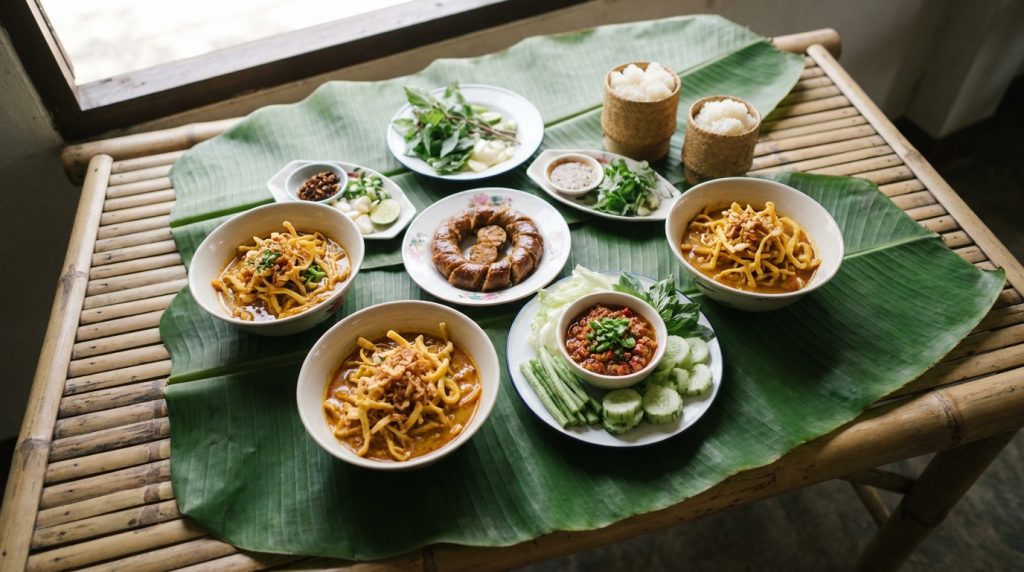
Quick answer: Chiang Mai’s signature plate is khao soi, a coconut curry noodle soup crowned with crispy fried noodles that defines Northern Thai cooking. Round it out with sai ua (herby grilled sausage), nam prik noom (roasted green-chili dip eaten with sticky rice), and gaeng hang lay (Burmese-influenced slow-cooked pork belly curry) — all earthier and more fermented than the Bangkok dishes most travelers know.
Chiang Mai’s food scene is one of the most distinctive in Southeast Asia — Northern Thai cuisine differs sharply from Bangkok dishes, with earthier spices, fermented sauces, and slow-cooked meats defining nearly every plate. This guide covers the 20 dishes you need to eat, where to find them, what to pay, and which neighborhoods deliver the best value in 2026.
What Makes Chiang Mai Food Different From Bangkok
Related: best day trips from Chiang Mai.
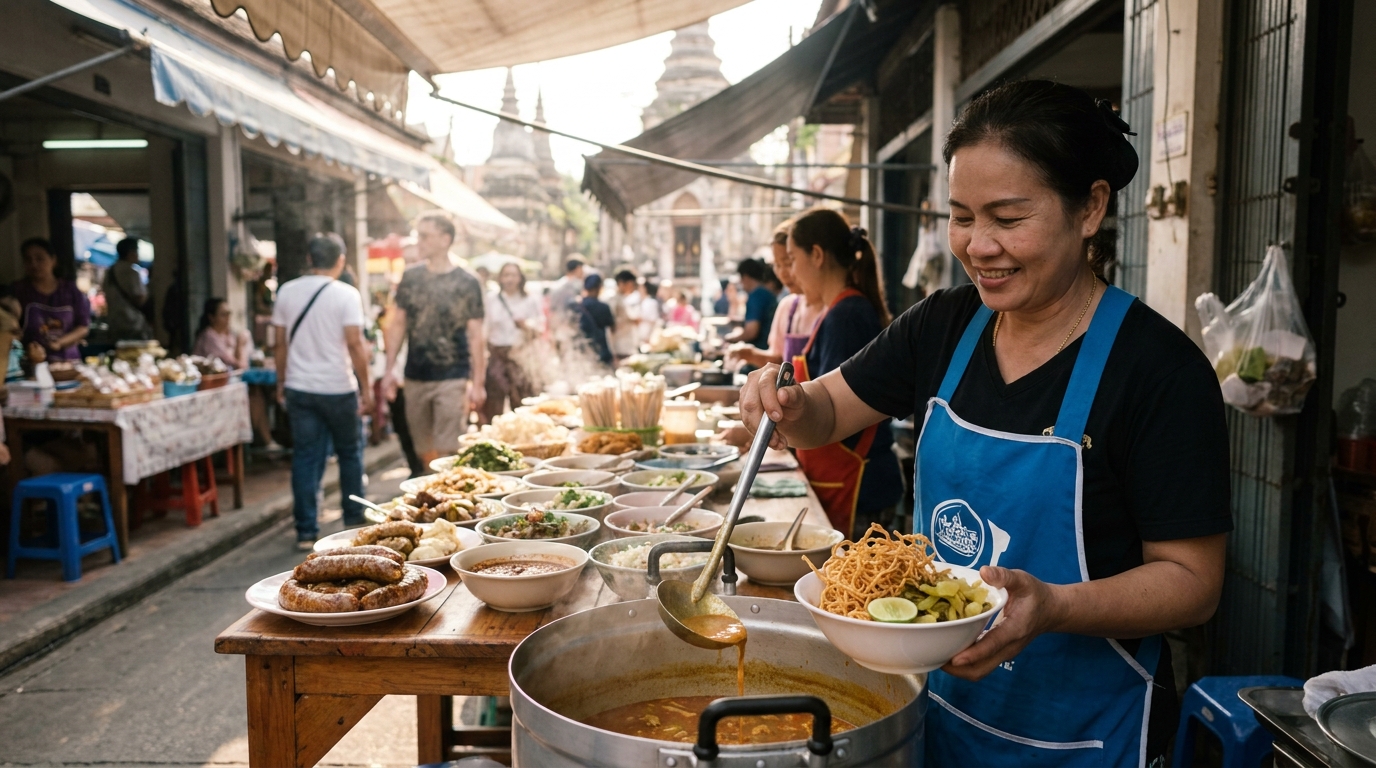
Northern Thai food stands apart because of its use of fermented ingredients, bitter greens, and dry spice pastes rather than the coconut-heavy curries popular in the south. A meal in Chiang Mai typically costs 40-150 THB ($1.10-$4.20) at a street stall or local restaurant, and the flavor profiles lean earthier and more herbal compared to Bangkok’s sweeter sauces.
The Lanna Kingdom, which ruled this region for 600 years until the late 19th century, shaped a cuisine that borrowed from Burmese, Yunnan Chinese, and Laotian traditions simultaneously. That fusion still shows up on every menu today. Key staples include nam prik ong (tomato-pork relish), sai ua (herbed sausage), and gaeng hang lay (Burmese-influenced pork curry).
Most dishes arrive with sticky rice rather than jasmine rice, and portions are designed for sharing rather than individual plates.
Khao Soi: The One Dish You Cannot Skip
Related: Chiang Mai packing list.
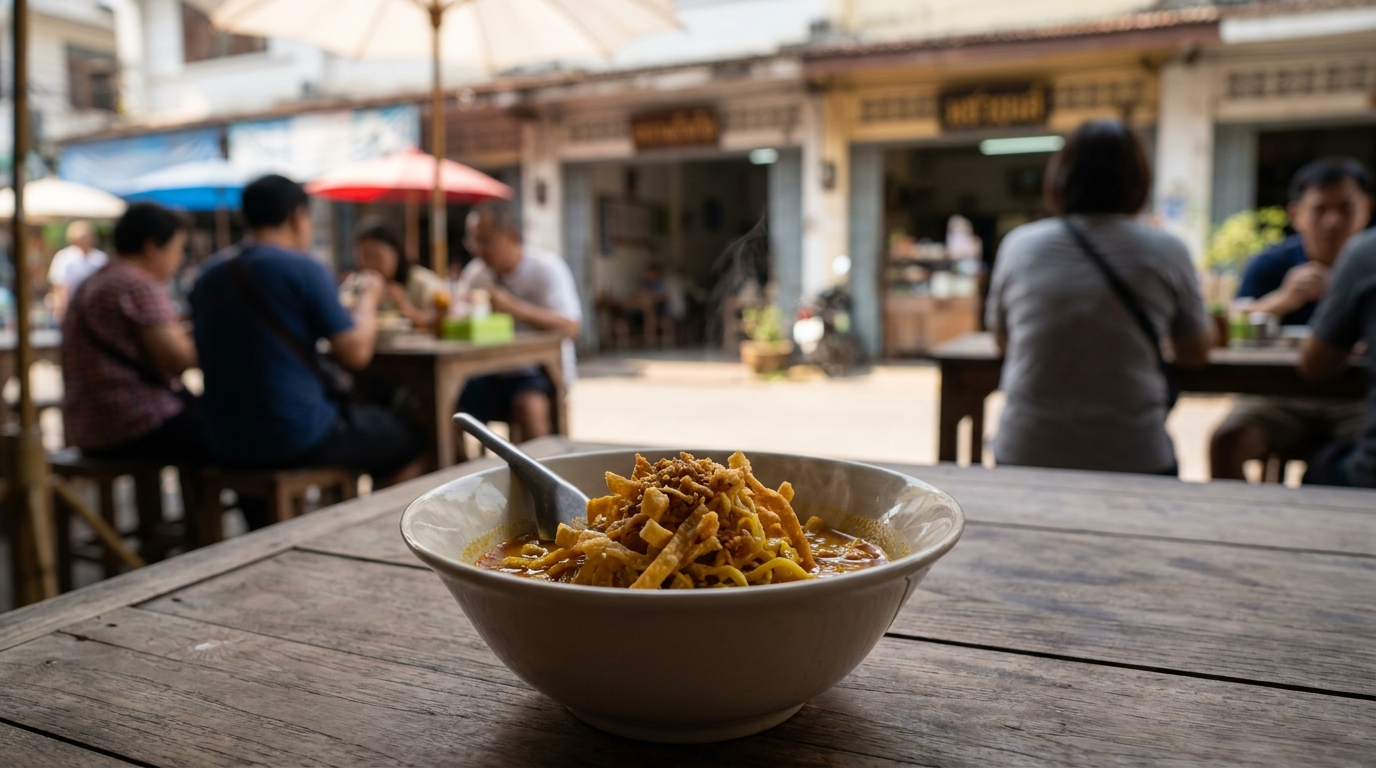
Khao soi is Chiang Mai’s most iconic dish — a rich, coconut-curry broth served over egg noodles with crispy fried noodles on top, pickled mustard greens on the side, and your choice of chicken, beef, or tofu. Every visitor should eat it at least twice. Expect to pay 60-80 THB ($1.65-$2.20) at local spots and up to 160 THB ($4.50) at sit-down restaurants.
Best spots we recommend:
- Khao Soi Mae Sai (Charoenrat Road, near Ping River): a 40-year-old shophouse serving the chicken version for 65 THB. Open 8am-3pm, closed Thursdays.
- Khao Soi Khun Yai (Nimman Soi 7): a favorite with local office workers. Bowl costs 70 THB, add an extra drumstick for 30 THB more.
- Khao Soi Islam (Chang Phueak area): halal version using beef shank, 80 THB. (Source: Thai Taste Road, 2025)
If you want a guided introduction to khao soi and other Northern specialties in one session, book a Chiang Mai street food evening tour on GetYourGuide with a local guide who explains each dish.
Find your Chiang Mai hotel on the map
Live prices from Booking & Airbnb — tap a pin to compare stays around the Old City and Nimman and beyond.
Chiang Mai Night Bazaar and Sunday Walking Street: Where To Graze
Related: things to do in Chiang Mai.
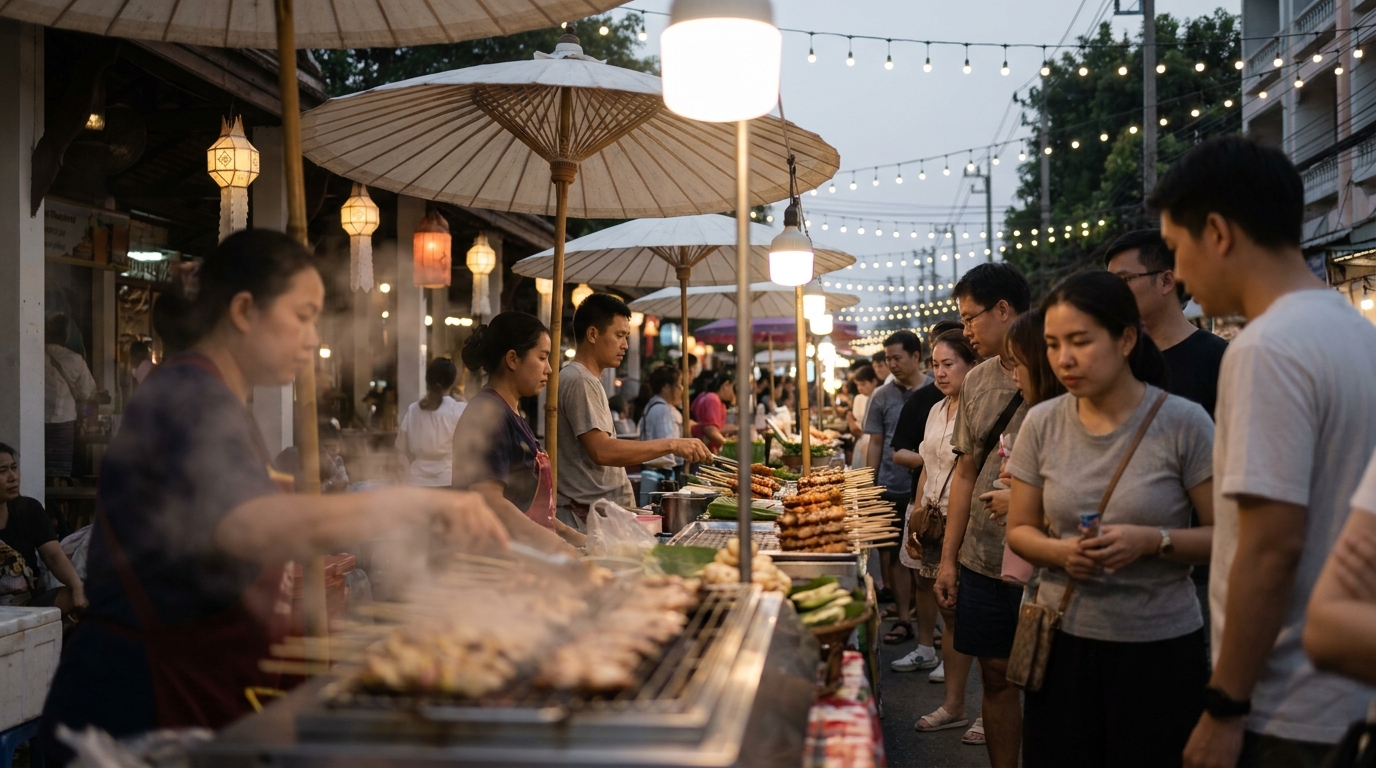
The two best street food events in Chiang Mai happen on weekends, and each has a different character. Both are worth attending if your schedule allows. Budget 150-300 THB ($4.20-$8.40) for a full evening of grazing at either.
Sunday Walking Street (Thanon Wualai): Runs every Sunday from 4pm to midnight on Wualai Road in the Old City’s south gate area. Roughly 200 stalls line 1.2 km of closed road. Food vendors cluster at the northern end — look for sai ua grilled over charcoal (40 THB/link), tod man pla fish cakes (5 THB each), and fresh coconut ice cream (50 THB).
Saturday Night Bazaar (Wualai Night Bazaar): A smaller but less tourist-heavy version, also on Wualai Road. Locals shop for ceramics and silverwork while grabbing mango sticky rice (60 THB) and pad kra pao from portable wok stations (50-70 THB).
Chiang Mai Night Bazaar (Chang Khlan Road): Open nightly, not just weekends. More tourist-facing, but Ploen Ruedee Night Market inside the compound is excellent — 80+ food and drink vendors in an outdoor courtyard setting. Try the northern-style naem nueng spring roll set for 120 THB.
For a focused food walk through these markets with English commentary, GetYourGuide’s Chiang Mai Night Food Tour offers a 3-hour guided route with a local chef for approximately $30 per person. (Source: GetYourGuide, 2026)
Best Restaurants in Nimman Area (Mid-Range to Budget)
Related: hidden gems in Chiang Mai.
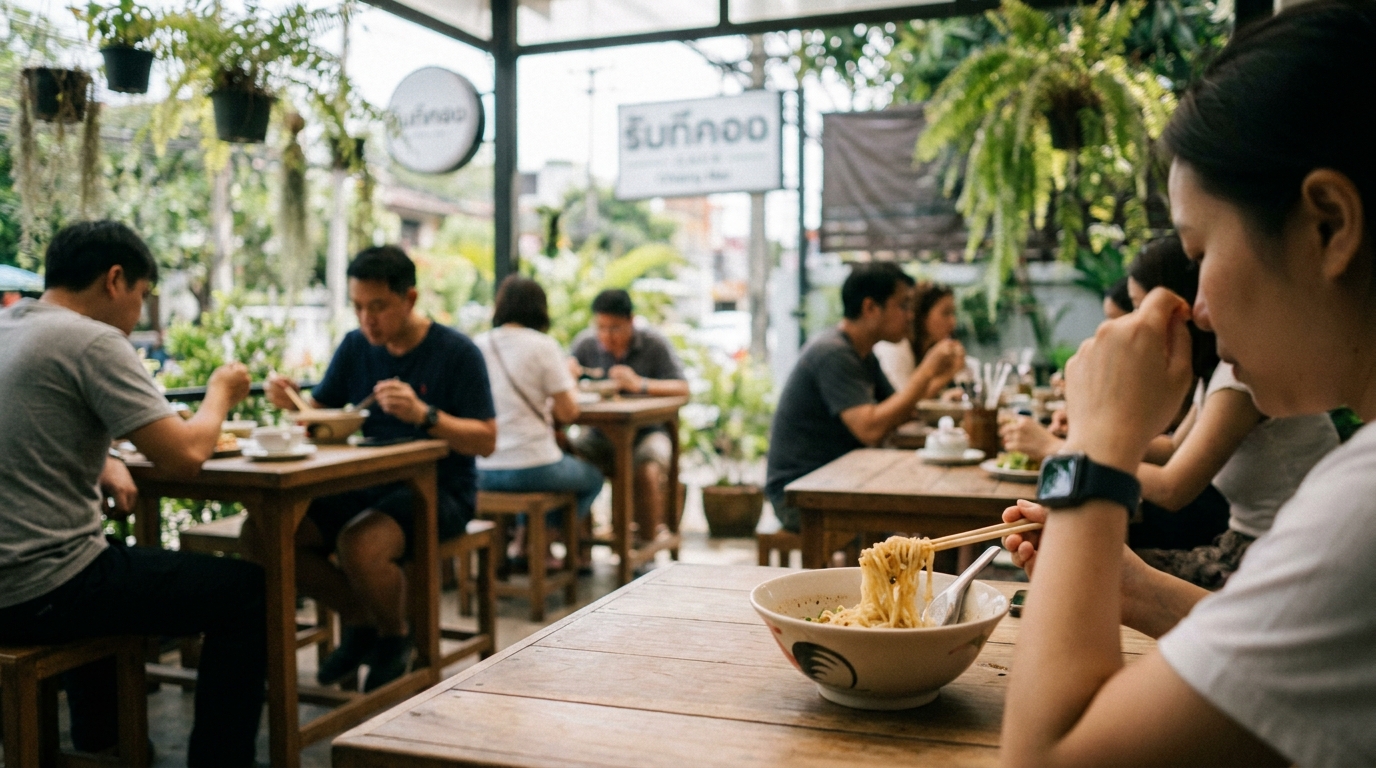
Nimmanhaemin Road and its sois (side streets) form Chiang Mai’s most concentrated dining district, running from Soi 1 to Soi 17 off the main road. You can eat well here for 150-400 THB ($4.20-$11) per person and find everything from Northern Thai set meals to Japanese ramen to Vietnamese pho within a 15-minute walk.
Restaurants worth your time in Nimman:
| Restaurant | Specialty | Avg. Price (THB) | Best For |
|---|---|---|---|
| Tong Tem Toh | Northern Thai set meals | 120-180 | Authentic local taste |
| Dash! Restaurant | Lanna fusion | 200-350 | Dinner with ambiance |
| Tong Khao | Khao gaeng (rice + curry) | 80-120 | Lunch on a budget |
| SP Chicken | Rotisserie chicken + sticky rice | 100-150 | Quick takeaway meal |
| Tara Restaurant | Vegetarian Northern Thai | 120-200 | Plant-based travelers |
Accommodation note: If you are staying in Nimman, Booking.com’s Chiang Mai Nimman listings include several guesthouses in the 600-1,200 THB ($17-$34) range within walking distance of all the above. Alternatively, Agoda regularly lists boutique properties in the Old City area at competitive rates for the same price bracket.
Warorot Market and Talat Ton Lamyai: Daytime Food Hunting
Related: Chiang Mai travel cost.
Warorot Market (Kad Luang) is the oldest and largest covered market in Chiang Mai, operating since 1910 on the east bank of the Ping River. It opens at 6am and winds down by 6pm.
The ground floor is the best place to eat before noon — vendors serve hot bowls of kanom jeen (fermented rice noodles with curry) for 40-50 THB, deep-fried patongo donuts with condensed milk dip (20 THB for 4 pieces), and fresh-squeezed sugarcane juice (25 THB).
Adjacent to Warorot is Talat Ton Lamyai, a smaller open-air market running along the riverbank. This is where we found some of the best khanom krok (coconut rice pancakes, 30 THB for 6) and mango sticky rice at 50 THB — cheaper than the tourist-area price of 80-100 THB for the same dish. Go before 10am for the freshest stock and the most active vendors.
Northern Thai Dishes Beyond Khao Soi
Related: Bali travel guide.
Most visitors stop at khao soi and miss the broader depth of Northern Thai cuisine. These are the six dishes we recommend ordering at least once during your stay, with where to find them and what to pay.
Nam Prik Noom (green chili dip): A roasted green chili paste served with pork rinds and raw vegetables. Essential at every Northern Thai set meal. Found at Talat Pratu Chiang Mai market for 40 THB per portion.
Sai Ua (Northern Thai sausage): Grilled herbed pork sausage loaded with lemongrass, kaffir lime, and galangal. Best purchased at Chiang Mai Gate Market (30-40 THB per link) or at any walking street. It keeps well wrapped for a few hours if you buy it as a snack to carry.
Gaeng Hang Lay (Burmese pork curry): A slow-cooked pork belly curry with ginger and tamarind. Unlike most Thai curries, it contains no coconut milk. A full portion with sticky rice runs 80-100 THB at most Northern Thai restaurants.
Kanom Jeen Nam Ngio: Rice noodles in a spiced tomato-pork broth with dried chilies and fermented tofu. Closer to a Shan-influenced soup than a mainstream Thai dish. Available at Warorot Market stalls for 45-55 THB.
Laab Moo Khua (Northern-style laab): Drier and spicier than Isaan laab, using toasted rice powder and bile-based seasoning. Not for the faint-hearted but genuinely excellent. Served at Ruen Tamarind restaurant near Tha Phae Gate for 120 THB.
Miang Kham: A leaf-wrapped snack bite with shrimp, peanuts, lime, ginger, shallots, and sweet sauce. More of a starter than a meal but popular at upscale Northern Thai restaurants. Around 80-100 THB for a set of 10 pieces. (Source: True Thai Food, 2025)
Cafes and Specialty Coffee in Chiang Mai
Related: best hotels in Chiang Mai.
Chiang Mai is one of Southeast Asia’s most serious coffee cities, producing Arabica from surrounding highland farms in Doi Inthanon, Doi Chaang, and Mae Salong. The third-wave cafe scene that took root here in the early 2010s now supports over 300 specialty coffee shops citywide. (Chiang Mai Coffee Association, 2025)
A single-origin pour-over at a specialty cafe costs 90-130 THB ($2.50-$3.60), and most cafes also serve fresh-baked goods and simple Northern Thai breakfast plates. Three reliable spots:
- Ristr8to (Nimmanhaemin Soi 3): One of the original specialty roasters in the city. Espresso from 70 THB, cold brew from 90 THB.
- Akha Ama Coffee (Hussadhisawee Road): Direct-trade roaster sourcing from Akha hill tribe farmers. Filter coffee from 90 THB, and the story behind each batch is printed on the packaging.
- Graph Cafe (Old City, near Tha Phae Gate): Strong espresso, shaded outdoor seating, 80-110 THB per drink.
For travelers spending 5+ days in Chiang Mai, an Airalo Thailand eSIM covers 5 GB of data for approximately $5.50, enough to navigate cafe locations, check maps, and stay connected without relying on hotel Wi-Fi. Pick one up at Airalo before you travel.
Cooking Classes: Learn to Recreate These Dishes at Home
Related: Da Nang travel guide.
Chiang Mai is one of the most popular cities in Asia for cooking classes, and the quality-to-price ratio is genuinely high. A half-day class covering 4-6 dishes, including a market tour and all ingredients, typically runs 1,000-1,500 THB ($28-$42) per person.
Most classes begin at 8:30am with a walk through a local market to select fresh ingredients — this portion alone is educational. Instructors explain ingredient sourcing, substitutions for home cooks outside Thailand, and the flavor logic behind each dish. Khao soi, pad thai, tom kha gai, and green curry appear on nearly every class menu.
Classes we recommend booking in advance:
- Thai Farm Cooking School (Nimman area pickup): 1,200 THB for a half-day, 1,800 THB full-day. Farm-based setting 20 minutes from the city.
- Asia Scenic Thai Cooking (Ratchamanka Road, Old City): 1,000 THB half-day, strong reviews for instructor quality.
Compare Chiang Mai cooking classes on GetYourGuide.
Frequently Asked Questions
What is the most famous food in Chiang Mai?
Khao soi is the single most famous dish associated with Chiang Mai — a coconut curry noodle soup with both soft and crispy noodles in the same bowl. You will find it at nearly every Northern Thai restaurant for 60-80 THB. Beyond khao soi, sai ua sausage and nam prik noom chili dip are equally representative of the local cuisine.
How much does food cost per day in Chiang Mai?
A realistic daily food budget is $8-15 USD per person eating at street stalls and local restaurants three times a day. Budget 40-80 THB for breakfast, 60-100 THB for lunch, and 80-150 THB for dinner. Specialty coffee, cooking classes, or upscale restaurant meals push the daily total higher but are not necessary to eat extremely well.
Is Chiang Mai food safe to eat?
Street food in Chiang Mai is generally safe for most travelers when basic precautions are followed — choose stalls with high turnover and hot, freshly cooked food. The Walking Streets and Warorot Market are among the cleaner vendor concentrations. Carry hand sanitizer and avoid raw salads from stalls that look low-traffic. Most travelers eat street food daily without any issues.
What time do food markets open in Chiang Mai?
Warorot Market operates 6am-6pm daily. The Sunday Walking Street runs 4pm-midnight Sundays. The Saturday Wualai Night Bazaar runs 4pm-midnight Saturdays. The Chiang Mai Night Bazaar on Chang Khlan Road opens from roughly 5pm to midnight nightly. Chiang Mai Gate Market is busiest on weekend mornings from 6am-noon.
Where should vegetarians eat in Chiang Mai?
Chiang Mai has a strong vegetarian scene, especially around the Old City and Nimman. Look for the yellow flag with a red letter outside restaurants indicating vegan or vegetarian food (the Thai Vegetarian Festival tradition has left a network of these shops citywide). Tara Restaurant and Anchan Vegetarian Restaurant both serve Northern Thai dishes adapted for plant-based diets at 100-200 THB per dish.
Can I find international food in Chiang Mai?
Yes. Chiang Mai has a large expat community supporting Japanese, Italian, Mexican, Indian, and Vietnamese restaurants, concentrated in Nimman and the Old City. Prices for international food run 150-400 THB ($4.20-$11) per dish, roughly double street Thai food prices but still affordable by Western standards.
Is it worth taking a food tour in Chiang Mai?
A structured food tour is worth it for a first-time visitor who wants to cover multiple dishes efficiently, understand what they are eating, and get vetted recommendations from a local guide. Budget $20-30 for a 2-3 hour evening tour. Compare evening street food tours on GetYourGuide.
Your Chiang Mai Food Journey Starts Here
Related: getting to Chiang Mai.
Chiang Mai’s food culture rewards explorers who step away from the main tourist corridors. The city’s best plates are in covered markets at 7am, at sausage stalls on walking street evenings, and at unassuming shophouses where khao soi has been simmering since before you woke up.
Work through this guide one neighborhood at a time — Old City for market mornings, Nimman for lunch and coffee, and the walking streets for weekend evenings.
For the full Chiang Mai experience, pair this food guide with our recommendations on where to stay and what to do. If you are still planning accommodation, check Booking.com’s Chiang Mai listings for options near the Old City that put you within walking distance of most stops in this guide.
Stay connected throughout your trip with an Airalo Thailand eSIM — set it up before you fly and you will have working data from the moment you land at CNX.