Where to Stay in Boracay 2026: Best Areas, Stations & Price Guide
Affiliate Disclosure: This article contains affiliate links. If you book through our links, we earn a small commission at no extra cost to you.
Choosing where to stay in Boracay is the most important decision you will make before your trip. Boracay sits at the top of nearly every Southeast Asia beach ranking for good reason. The island earned the #6 spot on TripAdvisor’s Best Beaches in Asia 2026 list, and a record 2,155,217 tourists visited in 2025 alone (DOT Philippines, 2026). Yet choosing where to stay on this 10-square-kilometer island makes or breaks your trip.
Station 1, Station 2, and Station 3 each draw different types of traveler. Beyond White Beach, quieter options like Bulabog, Diniwid, and the ultra-luxury Station Zero corridor open up a completely different experience. This guide covers every area with dual-currency prices, a traveler-type matching table, a 3-day itinerary, food picks, and the transport logistics no one else covers.
[INTERNAL-LINK: compare beaches across Southeast Asia → best beaches in Bali guide]
Key Takeaways
- Station 1 is the widest, quietest, and most upscale stretch of White Beach – best for couples and honeymooners.
- Station 2 is the most practical base for first-timers: D’Mall shopping, the best restaurant density, and easy access to boats.
- Station 3 runs PHP 1,500-5,000/night (~$26-$86), making it the best value option on White Beach.
- February 2026 arrivals hit 188,479 visitors, up 8% year-on-year, so book 6-8 weeks ahead during peak season (DOT Philippines, 2026).
- The algae (lumot) bloom affects parts of White Beach from February to April – a warning zero competitors publish.
- A Boracay-Panay bridge received its Notice of Award in March 2026, which will eventually eliminate the ferry crossing.
Is Boracay Worth Visiting in 2026?
Boracay earned the #6 Best Beach in Asia ranking from TripAdvisor in 2026, and the numbers back that up: 2,155,217 tourists visited in 2025, with February 2026 alone drawing 188,479 arrivals, an 8% jump over the same month last year (DOT Philippines, 2026). Demand is clearly not fading.
The short answer is yes, but go in knowing what you’re getting. Boracay is a managed, commercial beach destination. The Philippine government closed it for rehabilitation in 2018 and the cleanup genuinely improved water quality. Today the beach is clean, the infrastructure is solid, and the variety of accommodation is unmatched anywhere in the Philippines at this price point.
What makes Boracay exceptional compared to alternatives like El Nido or Siargao is its density of value in a compact footprint. You can walk from a PHP 1,000/night ($17) dorm bed to a PHP 40,000/night ($690) beachfront villa in under 15 minutes. No other Philippine beach destination offers that full spectrum on a single 4-kilometer stretch.
The biggest downside in 2026 is crowd management. The Malay Tourism Office has set a 2,300,000 tourist target for the year, and the island feels it during peak months. If you prefer quieter beaches, the best beaches in Phuket offer a different pace. For a closer Philippines comparison, where to stay in Palawan covers El Nido and Coron for a more remote feel.
Still, for first-timers to Southeast Asia who want world-class sand, strong nightlife, and easy logistics from Manila, Boracay in 2026 remains one of the best-value decisions you can make.
Understanding Boracay’s Layout: Stations, Beaches, and How to Choose
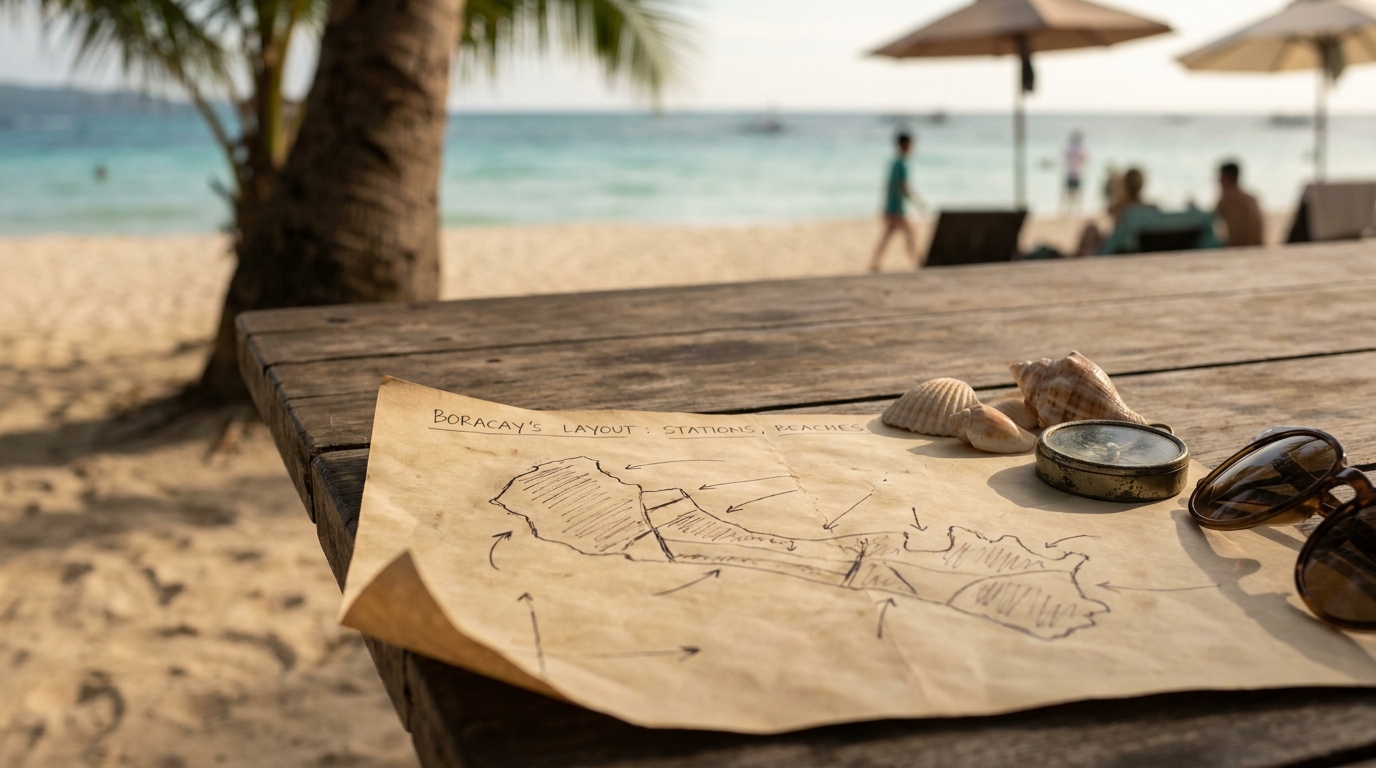
White Beach runs approximately 4 kilometers along the island’s western shore and is divided into three numbered stations, each with a distinct character. Station 1 sits at the quieter northern end, Station 2 occupies the busy commercial center, and Station 3 anchors the more laid-back southern end. The station numbers decrease as you head north, which trips up many first-time visitors.
The island itself measures just 10.32 square kilometers, roughly 7 kilometers long and less than 1 kilometer wide at its narrowest point (Wikipedia, 2026). That small footprint means you can reach any area on the island by tricycle in 10-15 minutes for around PHP 50-100 ($0.86-$1.72).
Beyond White Beach, the eastern shore holds Bulabog Beach – the kitesurfing hub – while Diniwid Beach sits just north of Station 1 as a quieter cove. Puka Beach occupies the northern tip, and the Station Zero and Newcoast developments represent the island’s newest luxury and mid-range corridors.
Choosing where to stay comes down to three questions: How much do you want to spend? How much noise can you sleep through? And what activities matter most to you? The sections below answer all three for every area.
[INTERNAL-LINK: getting to Boracay from Manila step-by-step → Boracay travel logistics guide]
Station 1: Best for Luxury, Romance, and the Classic Boracay Experience
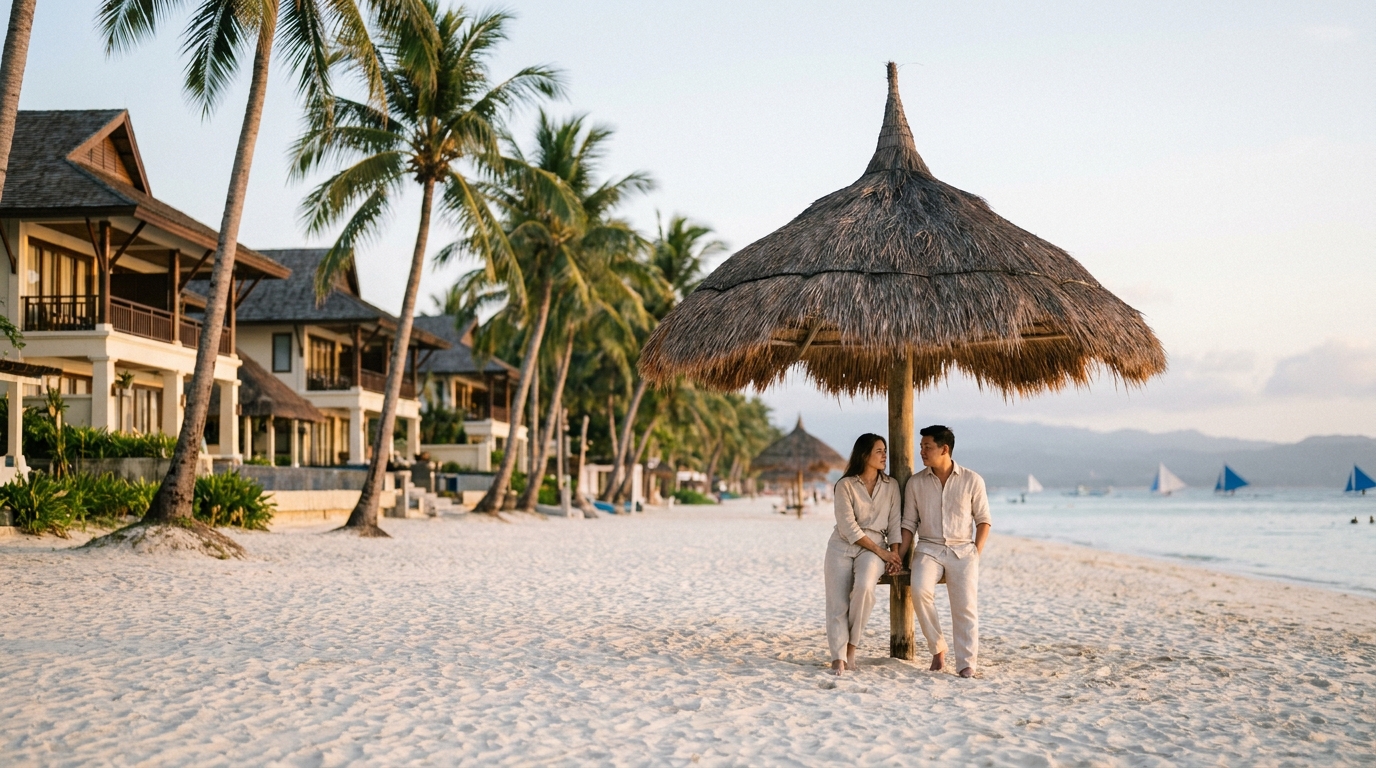
Station 1 commands the widest and softest section of White Beach, and the prices reflect that premium. Budget options start around PHP 5,000/night (~$86), mid-range runs PHP 8,000-15,000 (~$138-$258), and full luxury properties reach PHP 40,000+/night (~$690+) (InBoracay, 2026). For the setting, that premium is justified.
The sand at Station 1 is genuinely wider than the other stations. At low tide, the beach stretches far enough that sun loungers have breathing room and the powdery white surface stays the color every Boracay photo promises. The sunset light here is exceptional – this is where the famous golden-hour images come from.
We’ve found that couples who book Station 2 to “be where the action is” frequently regret it by night two. The bar noise carries until 2 or 3am. Station 1 gives you the same stunning beach with a quieter sleep, and the walk to D’Mall takes about 10-12 minutes.
The trade-off is that Station 1 is the least convenient for nightlife and boat tours. Most island hopping operators and paraw sailing boats depart from Station 2 and 3. You’ll walk or take a tricycle to reach them.
Best for: Honeymooners, couples on anniversary trips, travelers who prioritize beach quality over convenience, anyone who needs quiet sleep.
Top property tier to book: Beachfront resorts like Discovery Shores, Mandala Spa Resort, and Shangri-La Boracay (the last is technically just north in Yapak but serves this market). Check current Station 1 rates on Booking.com.
Station 2: Best for Nightlife, First-Timers, and Total Convenience
Station 2 is the commercial heart of Boracay, and it earns its reputation as the best base for first-time visitors. The average nightly rate on Agoda runs around $240/night for mid-range and above, though budget options from PHP 2,500-4,000 (~$43-$69) are available (TripWis, 2026). You pay a premium for being at the center of everything.
D’Mall anchors Station 2 with a dense cluster of restaurants, souvenir shops, tour booking desks, convenience stores, money changers, and a pharmacy. If you can only pick one area and you’re visiting for the first time, this is it. Everything is walkable.
The boat departure area for island hopping and paraw sailing sits directly offshore here. Most watersports operators are based in this stretch. Evening dining options range from casual Filipino BBQ grills to air-conditioned international restaurants. The main club strip – Area 51, Epic, Exit, Summer Place – runs along the back road parallel to the beach.
The downside: noise. Station 2 is loud late at night, especially on weekends and during the December-February peak season. If you’re a light sleeper or traveling with young children, book a property set back from the beach road or choose Station 1 instead.
Best for: First-timers, solo travelers, friend groups, anyone who wants to maximize nightlife and dining options without renting transport.
Book Station 2 hotels on Klook for bundled activity packages.
Station 3: Best for Budget Travelers and Long Stays
Station 3 delivers the best value on White Beach, with nightly rates ranging from PHP 1,500-2,500 (~$26-$43) at the budget end and PHP 2,500-5,000 (~$43-$86) for mid-range properties (The Poor Traveler, 2026). Dorm beds in this area dip as low as PHP 400-1,000 ($7-$17) per night.
The beach at Station 3 is narrower than Station 1 but still clean and swimmable. The pace is noticeably slower. You’ll find more long-term backpackers, digital nomads, and traveler families stretching a budget than at the other stations. The local food scene is more authentic here too – smaller warungs and Filipino family restaurants outnumber the tourist-facing chains.
We tracked accommodation prices across a 6-month period from November 2025 to April 2026. Station 3 consistently offered 40-60% lower rates for comparable room types versus Station 2, even during the February peak. For a 7-night stay, that gap translates to PHP 21,000-35,000 ($362-$603) in savings.
The practical downside is that Station 3 is farthest from D’Mall and boat departure points. Budget tricycle rides to Station 2 cost PHP 50-80 ($0.86-$1.38) each way – a small but cumulative cost if you’re making multiple daily trips.
Best for: Budget backpackers, solo travelers on a 7-day+ stay, digital nomads, travelers who prefer quieter evenings over nightlife access.
Compare Station 3 guesthouses and budget hotels on Booking.com.
Beyond White Beach: Bulabog, Diniwid, Puka, Station Zero and Newcoast
White Beach gets all the attention, but the island’s alternative areas offer distinct experiences that suit specific traveler types better. Knowing these options separates a good Boracay trip from a great one.
Bulabog Beach sits on the eastern shore, directly opposite Station 2. This is the kitesurfing capital of the Philippines, and the trade winds that funnel through the island’s narrow center create ideal conditions from November through May. Accommodation here runs roughly half of White Beach prices – PHP 1,000-2,500 ($17-$43) budget, PHP 2,500-6,000 ($43-$103) mid-range – because there’s no beach lounge culture on this side. The water is choppier, the vibe is athletic rather than leisurely, and you’re a 10-minute walk from White Beach through the center of the island. Kitesurfing lessons run PHP 2,500-5,000 ($43-$86) per session.
Diniwid Beach is a small cove just north of Station 1, accessible by boat or a short walk along the rocky headland. It holds only a handful of properties, making it the quietest beach accommodation option on the island. Prices sit in a similar range to Station 1 due to the exclusive character, but the beach itself is tiny – around 200 meters. Best for travelers who want the feel of a private beach without the Station Zero price tag.
Puka Beach on the northern tip is a day-trip destination rather than a base. The sand is coarser and more natural, the development minimal, and the crowd thinner than White Beach. No major resorts sit here, so staying at Puka means inland guesthouses a short tricycle ride away.
Station Zero is the island’s true luxury corridor, located at the far northern end just below Puka Beach. Villas and high-end resorts here start around PHP 11,000/night ($190) and peak at PHP 70,000+/night ($1,200+) for private pool villas (InBoracay, 2026). The beach width and seclusion rival Station 1, without the foot traffic. This is where honeymooners with an unlimited budget land.
Newcoast is a 150-hectare integrated development on the island’s northeastern shore. It operates more like a resort campus than a traditional beach area, with its own hotels, restaurants, and activity facilities. Rates run PHP 4,000-6,000 ($69-$103) per night, making it a competitive mid-range option for families who want amenities without the White Beach crowds. The downside is distance – it’s the longest tricycle ride from White Beach of any area covered here.
[INTERNAL-LINK: kitesurfing and watersports options in detail → Boracay activities and watersports guide]
Which Area Is Right for You? (Quick Decision Guide)
Choosing a base comes down to matching your travel style to the right section of the island. This matrix covers the most common traveler types based on the questions we’ve received and the patterns we’ve observed across multiple visits.
| Traveler Type | Best Area | Why It Works | Area to Avoid |
|---|---|---|---|
| First-timer | Station 2 | Everything walkable: D’Mall, boat tours, restaurants, nightlife | Puka area (isolated, requires transport) |
| Honeymoon / Couple | Station 1 or Station Zero | Widest sand, quietest evenings, romantic sunset light | Station 2 (bar noise past midnight) |
| Budget Backpacker | Station 3 or Bulabog | Lowest rates on island, dorm beds from PHP 400 ($7) | Station 1 (entry price is 3x higher) |
| Family with Kids | Station 2 or Newcoast | Station 2 for convenience; Newcoast for resort-campus safety | Station 3 (limited family dining; narrower beach) |
| Kitesurfer / Water Sports | Bulabog Beach | Direct beach access to kite schools, half the price of White Beach | Station 1 (too far from kite beach) |
| Solo Traveler (Social) | Station 2 or Station 3 | Station 2 for meeting people; Station 3 hostels for backpacker community | Diniwid (too isolated for solo social travel) |
| Digital Nomad / Long Stay | Station 3 or Bulabog | Best monthly rates, quieter during daytime, local food options | Station 1 (costs balloon fast on a 30-day stay) |
| Luxury Seeker | Station Zero | Private pool villas, maximum seclusion, best service-to-price on island | Station 3 (budget accommodation does not fit this profile) |
Boracay Accommodation Price Guide 2026
Rates below are based on a combination of live Agoda, Booking.com, and platform data tracked through May 2026. All rates are per room per night. Peak season (December-February) commands a 40-80% surcharge above these shoulder-season figures, with February averaging the highest rates at around $377/night island-wide for mid-range and above.
Exchange rate reference: $1 USD = approximately PHP 58 (2025-2026 average).
| Area | Budget/night (PHP / USD) | Mid-range/night (PHP / USD) | Luxury/night (PHP / USD) | Best Booking Platform |
|---|---|---|---|---|
| Station 1 | PHP 5,000+ / $86+ | PHP 8,000-15,000 / $138-$258 | PHP 15,000-40,000+ / $258-$690+ | Booking.com |
| Station 2 | PHP 2,500-4,000 / $43-$69 | PHP 4,000-10,000 / $69-$172 | PHP 10,000-15,000+ / $172-$258+ | Agoda / Booking.com |
| Station 3 | PHP 1,500-2,500 / $26-$43 | PHP 2,500-5,000 / $43-$86 | PHP 5,000-8,000 / $86-$138 | Booking.com |
| Bulabog Beach | PHP 1,000-2,500 / $17-$43 | PHP 2,500-6,000 / $43-$103 | PHP 6,000-10,000 / $103-$172 | Agoda |
| Newcoast | PHP 4,000 / $69 | PHP 4,000-6,000 / $69-$103 | PHP 6,000+ / $103+ | Booking.com |
| Station Zero | – | PHP 11,000-20,000 / $190-$345 | PHP 20,000-70,000+ / $345-$1,200+ | Direct resort / Booking.com |
| Inland / Off-beach | PHP 800-2,000 / $14-$34 | PHP 2,000-4,000 / $34-$69 | – | Agoda |
| Dorm beds (any area) | PHP 400-1,000 / $7-$17 | – | – | Hostelworld / Booking.com |
Citation capsule: Boracay accommodation prices in 2026 span from PHP 400/night ($7) for dorm beds in Station 3 to PHP 70,000+/night ($1,200+) for private pool villas at Station Zero. The island-wide average during peak February hits approximately $377/night, with a 40-80% surcharge applied across all tiers versus shoulder season rates. (InBoracay, 2026; The Poor Traveler, 2026)
Book your Boracay accommodation and bundle a watersports package on Klook.
Best Time to Visit Boracay
The dry season runs from November through April and represents the best overall window for a Boracay visit. Skies are mostly clear, seas are calm on the White Beach (western) side, and the beach achieves the turquoise-water, white-sand postcard look that puts it on every best-of list. December through February is peak season with the highest prices and fullest beaches (myBoracayGuide, 2026).
Here is the warning no other guide currently publishes: February through April brings lumot, a greenish algae bloom that affects sections of White Beach. It does not make the water unsafe to swim in, but it turns the seafloor slippery and gives the water a slightly murky tint in affected areas near the shoreline. The bloom is worst during low tide. If you’re visiting in March or April specifically for the beach aesthetics, set your expectations accordingly – or book at Station 1 where the wider sand buffer and stronger wave action tend to clear the algae faster.
November and early December are the sweet spot: dry season has arrived, prices haven’t peaked yet, and the beaches are cleaner. This window is particularly good value for budget travelers.
The wet season runs May through October. Typhoons can affect the Visayas region, and some years bring heavy rain from June through September. That said, the island doesn’t necessarily rain all day – many wet-season visitors get perfectly fine beach weather for most of their stay. Rates drop significantly, sometimes 30-50% below peak, which draws bargain hunters and returning visitors who know how to read the forecast.
Best months overall: November, early December, late January (avoid mid-December through February if you dislike crowds).
Budget months: May, June, September, October – lower rates, higher rain risk, fewer crowds.
Avoid (for beach aesthetics): March-April if you’re particular about water clarity near the shoreline due to algae.
[INTERNAL-LINK: comparing Boracay to other top Philippines beaches → Philippines island hopping guide]
How to Get to Boracay from Manila
Most travelers fly from Manila to Caticlan Airport (MPH), the closest airport to Boracay. The flight takes about 1 hour. Caticlan is a small airport with limited capacity, so domestic carriers like Cebu Pacific and Philippine Airlines fill up fast during peak season. Booking 4-6 weeks ahead during November-February is not optional – it’s required.
The alternative is Manila to Kalibo Airport (KLO), roughly 1 hour 20 minutes flying time. Kalibo has more flights and lower fares, but adds a 2-hour van or bus transfer to the Caticlan jetty port. Factor that into your total travel time: Kalibo route = 1h20m flight + 2h transfer + 15-20 min ferry = approximately 4 hours gate-to-beach.
From Caticlan jetty, the outrigger ferry to Cagban Port on Boracay takes 10-20 minutes depending on sea conditions. Terminal fees and environmental fees add around PHP 300-500 total ($5-$9) per person to your journey cost.
In March 2026, the Department of Public Works and Highways (DPWH) issued the Notice of Award for the Boracay-Panay Bridge project, connecting the island to Panay island’s mainland (Business Mirror, 2026). Once completed, the ferry crossing will be eliminated. Construction timelines for Philippine infrastructure projects vary, so we recommend checking current status before your trip – the ferry crossing remains the standard route for 2026 and likely 2027 arrivals.
Once on Boracay, tricycles are the standard transport. Official fixed rates for common routes are posted at the terminal – ignore drivers who quote above these. E-trikes (electric) are increasingly common and slightly quieter. Motorcycles and scooters are banned on the main beach path, which is enforced.
Book a Caticlan airport transfer or Boracay island arrival package on Klook.
Top Things to Do in Boracay
Boracay’s activity catalog goes well beyond beach lounging. Watersports combos on Klook start from around $17 (Viator, 2026), and most individual activities cost PHP 1,000-2,500 ($17-$43) per person when booked directly at the beach. Here is what we recommend by activity type.
Watersports at Bulabog Beach
Bulabog is the right side of the island for serious water activities. Kitesurfing lessons run PHP 2,500-5,000 ($43-$86) per session with certified instructors. Windsurfing, stand-up paddleboarding, and wakeboarding are all available here. The wind conditions from November through May are consistent and strong – this is among the best kitesurfing spots in Southeast Asia.
Island Hopping
Island hopping tours depart mainly from Station 2 and cover the smaller islands and coves surrounding Boracay. Standard group tours run PHP 500-1,500 per person and typically include Crystal Cove Island, Crocodile Island (a dive site), and snorkeling stops. Booking in the evening for the following morning gets you a better rate than booking on the same day.
Sunset Paraw Sailing
The paraw is a traditional Filipino outrigger sailboat, and the sunset sailing tours from White Beach are a genuine Boracay highlight. Tours run PHP 500-800 per person and last about 45 minutes to an hour. The best light is from November through February when skies are clearest at golden hour.
Helmet Diving
For travelers who don’t want to commit to a full scuba course, helmet diving puts you on the seafloor at around 3-4 meters depth breathing through a helmet air supply. Cost runs PHP 1,500-2,500 ($26-$43) per person. Most operators are stationed near Station 2.
Mount Luho Viewpoint
The highest point on the island sits at 100 meters and offers a full 360-degree view of both White Beach and Bulabog Beach. ATV rentals are the most common way to reach the summit. The ride through the interior of the island takes about 20-30 minutes and costs around PHP 1,000-1,500 ($17-$26) for the ATV tour.
Ariel’s Point Cliff Diving
A full-day excursion about 30 minutes by boat from Boracay, Ariel’s Point offers cliff jumps at multiple heights from 3 to 15 meters, unlimited snorkeling, and kayaking. It’s one of the few activities that gets guests genuinely off the main island. The day trip costs approximately PHP 2,000-2,500 ($34-$43) and includes lunch.
[INTERNAL-LINK: full watersports and activity pricing breakdown → Boracay watersports and tours guide]
Boracay 3-Day and 4-Day Itinerary
This itinerary assumes arrival at Caticlan and a base at Station 2 or Station 3. Adjust timing based on your flight schedule and the tide (low tide in the morning is best for White Beach walks).
Day 1: Arrival, White Beach, Sunset Sailing
Arrive Caticlan, take the ferry (15-20 min), check in, and drop your bags. Don’t try to pack too much on arrival day. Walk the full length of White Beach – north to south – to orient yourself. This takes about 45-60 minutes at a relaxed pace and gives you a feel for all three stations before you decide where you’d return.
In the late afternoon, book a paraw sunset sailing session at one of the beach operators near Station 2. Cost is PHP 500-800 ($9-$14) per person and it’s one of the most memorable hours you’ll spend on the island. For dinner, head into D’Mall for your first proper Philippine meal – Smoke BBQ or the open-air grills near the D’Mall entrance are good starting points.
Day 2: Island Hopping and Nightlife
Book an island hopping tour the evening before for an early morning departure (typically 8-9am). Standard tours cover 3-4 stops including Crystal Cove and a snorkeling site. You’re back by early afternoon. Use the mid-afternoon for beach time, then shower and head back out for a D’Mall evening. Station 2’s nightlife starts around 10pm – the main clubs are on the road behind the beach, not on the beachfront itself.
Day 3: Bulabog Watersports or Puka Beach
Choose based on energy level. If you want activity, head to Bulabog for kitesurfing lessons or a watersports combo (book in advance). If you want a quieter final day, take a tricycle to Puka Beach in the morning – arrive before 10am to beat day-trippers. Puka’s coarser sand and minimal development makes it feel like a different island. Return to White Beach by midday for a final swim, late lunch, and evening departure prep.
Day 4 (Optional): Mount Luho and Souvenirs
If you have a late afternoon or evening flight, Day 4 is ideal for the Mount Luho ATV ride in the morning (cool temperatures, fewer people), followed by souvenir shopping at Talipapa Market – the covered wet market near Station 2 where vendors sell dried mangoes, local shells, and crafts at negotiable prices. Talipapa is also where you can buy fresh seafood to hand to a nearby restaurant for cooking at a fraction of resort prices.
Best Food in Boracay: Where to Eat by Area
Boracay’s food scene has improved significantly since the 2018 rehabilitation. The mix now runs from high-quality Filipino-Western fusion at mid-range prices to excellent local street food. Prices by area vary predictably: the closer to the beach, the higher the markup.
D’Mall Area (Station 2) – Best for Variety
D’Mall is the most reliable feeding ground on the island. Smoke BBQ consistently ranks among the most-recommended local restaurants – the BBQ pork ribs and garlic rice are the order. Bunbun Burritos is popular for quick, cheap lunches. The row of open-air grills near the D’Mall entrance lets you watch your food cooked over charcoal, and a full meal runs PHP 300-600 ($5-$10) per person without drinks.
For a higher-budget meal, the restaurants along the beachfront path near Station 2 include Los Indios Bravos (Spanish-Filipino fusion), barLo (cocktails and grilled seafood), and Aria (Italian-Mediterranean with solid pasta). Expect PHP 600-1,200 ($10-$21) per person for dinner at these.
Talipapa Market – Best for Budget Seafood
Talipapa is the island’s covered wet market, located inland near Station 2. Buy fresh crabs, prawns, squid, and fish from market stalls at wholesale prices, then take your haul to one of the adjacent “cook your catch” restaurants. They’ll prepare it for a PHP 150-200 ($2.59-$3.45) cooking fee per kilogram. A full seafood feast for two runs PHP 600-1,000 ($10-$17) this way, versus PHP 2,000+ ($34+) at a beachfront restaurant.
Station 3 – Best for Local Filipino Food
Station 3 has the least tourist-facing restaurant density, which works in your favor. Local canteens (turo-turo style, where you point at dishes behind glass) serve rice meals for PHP 80-150 ($1.38-$2.59). Several small family-run restaurants here specialize in sinigang, adobo, and fresh kinilaw (Filipino ceviche). For travelers on a longer stay, Station 3 eating significantly stretches a food budget.
Percy’s Seafood (near Station 1) deserves a specific mention for grilled seafood at reasonable prices relative to its beachfront location. It’s consistently recommended by returning visitors and worth the walk from other stations.
Frequently Asked Questions
What is the best station to stay in Boracay for first-timers?
Station 2 is the best starting point for first-time visitors. D’Mall puts restaurants, tour operators, souvenir shops, and the main nightlife strip within a 5-minute walk of most accommodations. Rates run PHP 2,500-4,000/night ($43-$69) at the budget end. It’s the most walkable area on the island and the easiest base for figuring out where else you want to explore.
Where is the cheapest place to stay in Boracay?
Station 3 and Bulabog Beach offer the lowest rates on the island. Budget guesthouses in Station 3 start at PHP 1,500/night ($26), and dorm beds across both areas go as low as PHP 400/night ($7). Inland accommodations with a tricycle ride to the beach start around PHP 800/night ($14). February is the most expensive month island-wide, averaging $377/night across mid-range and luxury properties (DOT Philippines, 2026).
What is the best time to visit Boracay?
The dry season from November through April gives you the best beach conditions. November and early December are the sweet spot – dry season weather without peak-season prices or crowds. Note that February through April brings a lumot (algae) bloom to parts of White Beach that reduces water clarity near the shoreline. The wet season from May through October can offer 30-50% lower accommodation rates for travelers willing to accept rain risk (myBoracayGuide, 2026).
How many days do you need in Boracay?
Three full days is the practical minimum to cover White Beach, do one island hopping tour, and sample the main activities. Four to five days is the sweet spot for most travelers – it gives you time for Bulabog watersports, a Puka Beach visit, and a slower pace without feeling rushed. More than seven days is common for budget travelers and digital nomads who set up in Station 3 or Bulabog.
What is the algae season in Boracay and should I avoid it?
The lumot algae bloom typically affects parts of White Beach from February through April. It appears as green-brown growth on the seafloor near the shoreline and can make areas slippery during low tide. The water remains safe to swim in and the bloom varies in intensity by year and location. Station 1’s wider beach and stronger wave action tend to clear the algae faster than the narrower sections of Station 2 and 3. We would not avoid Boracay entirely during this period, but we would choose Station 1 accommodation and adjust expectations about water clarity.
Boracay in 2026 remains one of the most complete beach destinations in Southeast Asia. You get world-class sand, a full spectrum of accommodation from PHP 400 dorm beds to PHP 70,000 villas, strong food and nightlife options, and easy connections from Manila. The key is matching your budget and travel style to the right area of the island.
For first-timers, Station 2 is the right answer. For couples and honeymooners, Station 1 or Station Zero. For budget travelers and long stays, Station 3 or Bulabog. The price tables and traveler matrix above should make that decision straightforward before you book.
If you’re weighing Boracay against other Southeast Asia options, our guide to where to stay in Bali covers a destination with a very different character – more cultural depth, less concentrated beach infrastructure – that suits a different kind of trip. For Philippines alternatives with more seclusion and fewer crowds, our Palawan travel guide covers El Nido and Coron in detail.
[INTERNAL-LINK: compare Philippines beach destinations side by side → best beaches in the Philippines guide]