Disclosure: Some links in this guide are affiliate links. If you book or buy through them, we may earn a small commission at no extra cost to you — it helps keep our guides free.
Siem Reap is more than the gateway to Angkor Wat — it’s a city with floating villages, circus performers, jungle temples, and a night market scene that runs until the small hours. Whether you’re here for three days or two weeks, knowing which experiences actually deserve your time and money changes everything.
We only recommend services our team has vetted or used firsthand. Check our complete Siem Reap travel guide for more tips.
In this guide, we’ve ranked 20 of the best things to do in Siem Reap in 2026, covering temples, nature, nightlife, food, and genuinely off-the-beaten-path activities. We’ve included updated entry fees, practical logistics, and honest crowd warnings so you can plan with confidence.
Key Takeaways
- Siem Reap welcomed 2.6 million international visitors in 2023, with numbers recovering toward pre-pandemic levels by 2025.
- An Angkor 3-day pass costs $62 USD and covers all major temple complexes.
- A minimum of 3 days is recommended; 5 days lets you combine temples, Tonle Sap, and nightlife.
- Budget travelers can fill entire days for under $10 using free temples, markets, and riverside walks.
- The dry season (November–February) offers the best conditions for nearly every activity on this list.
What Makes the Best Things to Do in Siem Reap in 2026
Quick answer: The top things to do in Siem Reap are exploring the Angkor temple complex (Angkor Wat at sunrise, Bayon, and jungle-clad Ta Prohm on a multi-day pass), catching the acrobatic Phare Cambodian Circus, and boating through a Tonle Sap floating village. Round out a trip with the night market and Pub Street scene, off-the-beaten-path jungle temples, and budget riverside walks. Plan a minimum of three days to cover the essentials without rushing.
Choosing the right activities in Siem Reap means balancing cultural weight, accessibility, price, crowd levels, and how much genuine value each experience delivers. We evaluated every item on this list against those five criteria, drawing on current visitor data and on-the-ground research to give you a realistic picture.
The list mixes temple visits, nature excursions, nightlife, food experiences, and quieter local spots. Not everything here requires an Angkor Pass. Several of the most rewarding stops are free or cost less than a coffee back home.
On the Angkor Pass: Angkor Enterprise, the official body managing the Archaeological Park, currently prices passes at $37 (1-day), $62 (3-day), and $72 (7-day) for 2025–2026. Passes are sold at the official ticket center on Road 60 and must be purchased before entering any temple zone. Children under 12 enter free.
Source: Angkor Enterprise official pricing, 2025
Crowd levels have shifted post-pandemic. Sunrise at Angkor Wat is busy year-round, but temples like Preah Khan and Banteay Srei remain noticeably quieter on weekday mornings. Visiting the big temples before 8:00 AM or after 4:00 PM consistently delivers a calmer experience.
For itinerary planning, our 3-day Siem Reap itinerary maps out a logical temple sequence that avoids backtracking. If this is your first time, three days cover the essential temple circuit; five days add the lake, countryside, and a proper night out. Solo travelers, couples, and families will all find workable options across this list — we’ve flagged family-suitability and budget thresholds throughout.
How many days is enough to visit Siem Reap? Three days is the practical minimum for the main temples. Five days is the sweet spot if you want temples, Tonle Sap Lake, and evening activities without feeling rushed.
The 3-Day Siem Reap Itinerary
The plan we use ourselves — sent straight to your inbox.
- Day-by-day route
- Where to stay
- Real 2026 costs
Free · No spam · Unsubscribe anytime
1–5: Iconic Angkor Temple Experiences You Can’t Skip
The Angkor Archaeological Park holds over 1,000 temples across roughly 400 square kilometers. These five are the ones that justify the journey — each for different reasons.
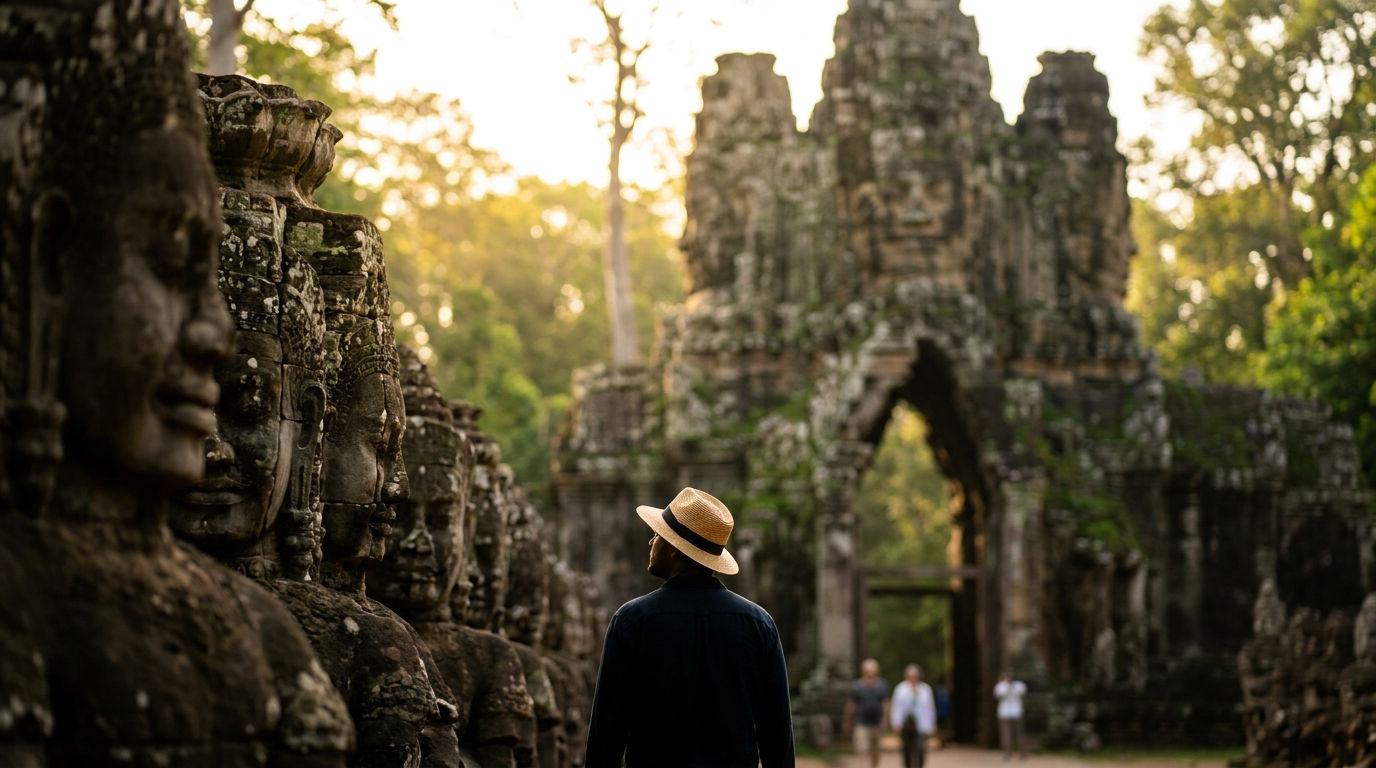
1. Angkor Wat (13.4125° N, 103.8670° E) is the world’s largest religious monument and the centerpiece of any Siem Reap visit. Sunrise here is genuinely worth the early alarm: arrive by 5:15 AM to secure a spot at the reflection pond on the left side of the causeway. The temple opens at 5:00 AM for pass holders. Dress code is strict — shoulders and knees must be covered. Lightweight linen trousers and a long-sleeved shirt work well in the heat. Detailed photography advice and temple layout maps are in our full Angkor Wat travel guide.
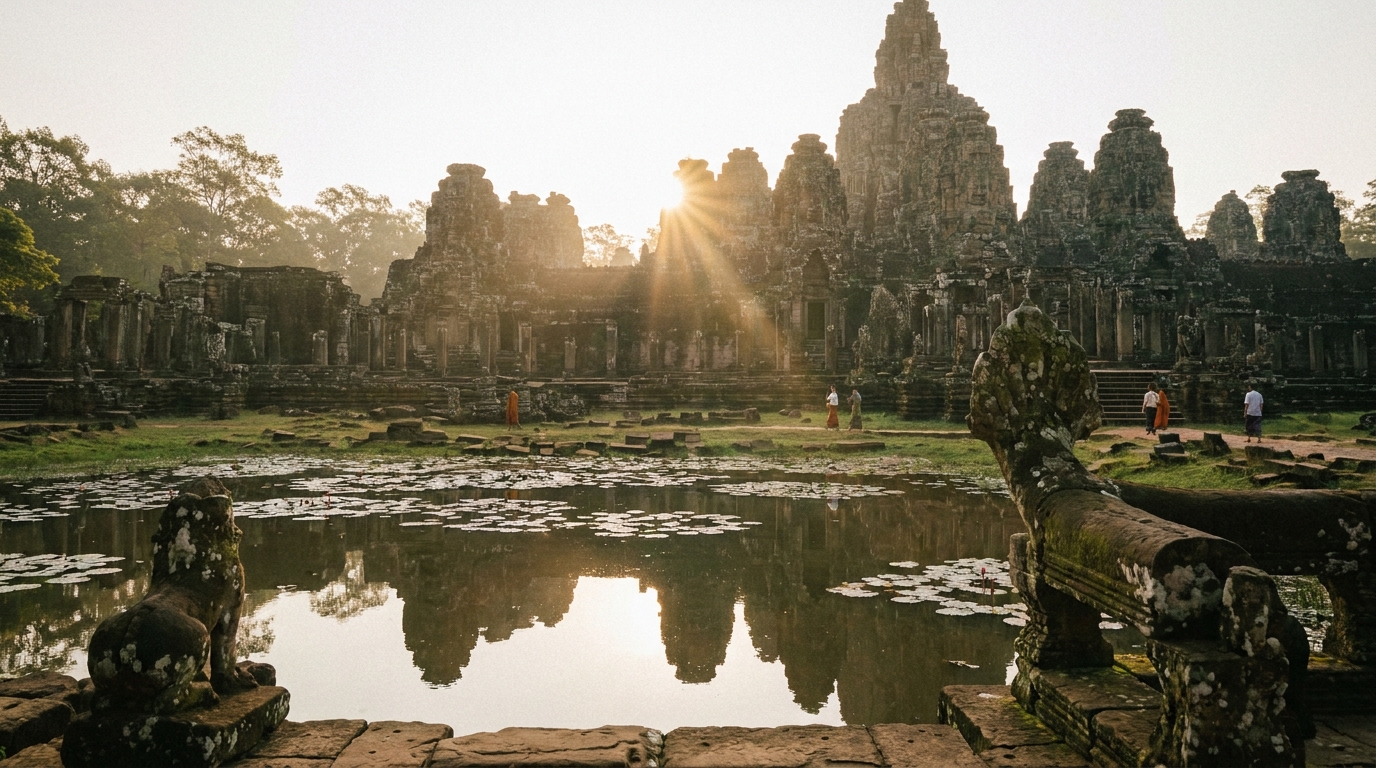
2. Bayon Temple, at the center of Angkor Thom, is famous for its 216 massive stone faces gazing in every direction. Visit between 7:00–9:00 AM on weekdays to avoid the tour bus peak. The upper terrace, where faces cluster most densely, requires climbing steep narrow stairs — wear grip-soled shoes.
3. Ta Prohm is where the jungle has been deliberately left to reclaim the stonework. Enormous strangler fig and silk-cotton tree roots split walls and drape across galleries. This is the temple featured in the 2001 film Lara Croft: Tomb Raider starring Angelina Jolie, specifically the courtyard near the Hall of Dancers. Arrive before 8:00 AM; by 10:00 AM the main tree-root corridors are packed.
4. Preah Khan is the temple that rewards those who push past the big three. A long, straight processional walkway lined with stone warriors leads to a complex that feels exploratory rather than managed. Fewer vendors, fewer crowds, and genuinely atmospheric corridors make this a highlight for repeat visitors.
5. Banteay Srei sits about 25 km northeast of Siem Reap (13.5985° N, 103.9673° E) and requires a separate half-day trip. The carvings here — in pink sandstone — are finer than anything at the main complex. The “Citadel of Women” moniker refers to the delicacy of the work, not its history. A hired tuk-tuk for the return trip costs around $20–$25 USD.
Source: UNESCO World Heritage site documentation for Angkor, 2024; Angkor Enterprise visitor guidelines, 2025
Book a guided Angkor Wat sunrise tour via Klook to handle transport, timed entry, and commentary in one booking — particularly useful for first-time visitors who want context without planning stress.
6–10: Best Things to Do in Siem Reap Beyond the Temples
What to do in Siem Reap besides Angkor Wat is one of the most common questions we see — and the answer is: quite a lot.
6. Tonle Sap Lake is Southeast Asia’s largest freshwater lake and home to several floating villages where entire communities live on the water year-round. The best season for boat tours is October through December, when water levels are highest and villages are most accessible. Tours typically depart from Chong Kneas village, about 15 km south of Siem Reap. Half-day tours run $15–$25 USD per person. Our Tonle Sap Lake tour guide covers which villages are genuine communities versus tourist-only setups. You can also book a well-reviewed Tonle Sap floating village tour on Klook with transport included.
Source: Mekong River Commission seasonal water level data, 2024
7. Phnom Kulen National Park, about 50 km from town, is sacred to Khmer Buddhists and features a reclining Buddha carved directly into the summit rock, riverbed carvings of thousands of lingas, and a waterfall where locals swim. Entry is $20 USD for foreigners. Go on a weekday — weekends draw Cambodian domestic visitors in large numbers.
8. Cambodia Landmine Museum (13.5009° N, 103.9489° E) was founded by former child soldier Aki Ra, who now works to demine rural Cambodia. The museum is sobering and essential for understanding the country’s recent history. Entry is donation-based, with a suggested contribution of $5 USD. It sits near Banteay Srei, making a logical half-day combination.
9. Cambodian Cultural Village provides a compressed introduction to all 16 of Cambodia’s ethnic groups through reconstructed village settings and scheduled traditional dance performances. It’s pitched at tourists, but the Apsara and folk dance shows are legitimately well-produced. Entry is around $15 USD; shows run at set times throughout the day — check the posted schedule at the gate.
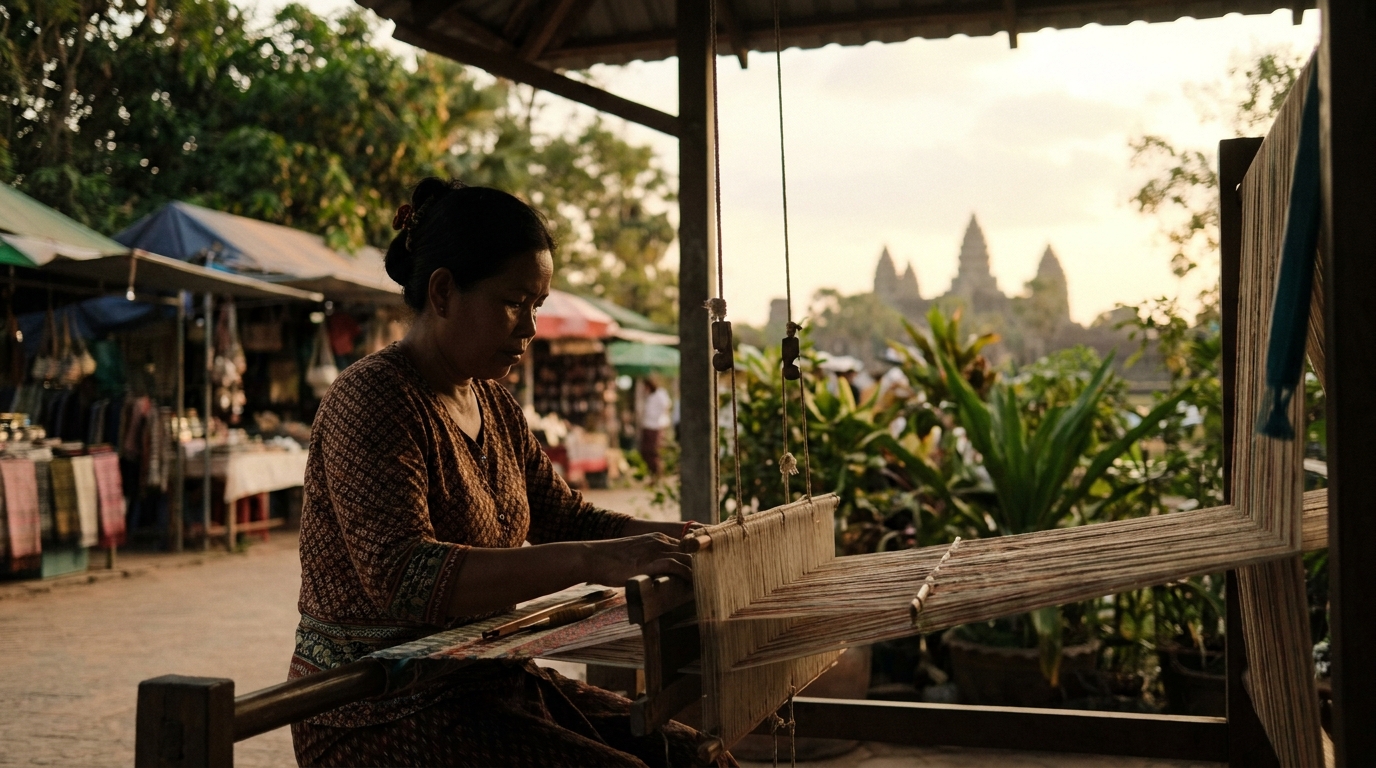
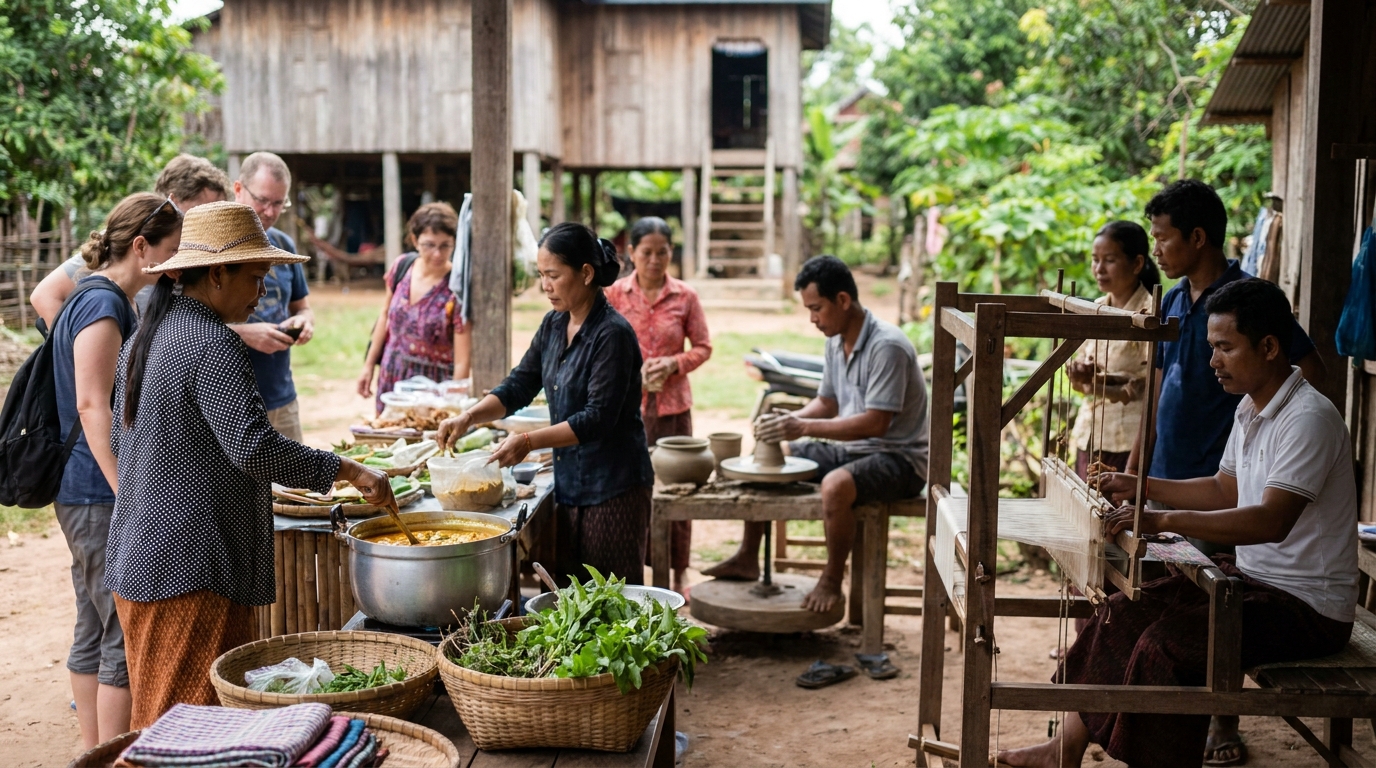
10. Artisans Angkor in the town center offers free guided workshops where you can watch craftspeople produce silk textiles, lacquerware, stone carvings, and silver jewelry using techniques passed down through generations. The social enterprise trains disadvantaged young Cambodians. The shop sells certified fair-trade goods. No booking required for the tour; just show up between 7:30 AM and 5:30 PM.
The 3-Day Siem Reap Itinerary
Hour-by-hour plan, where to stay and what it really costs — free PDF.
Free · No spam · Unsubscribe anytime
11–15: Unique & Off-the-Beaten-Path Things to Do in Siem Reap
For travelers who’ve done the temple circuit and want something less catalogued, these five activities deliver experiences that most Siem Reap visitors never attempt.
11. Sunrise hot-air balloon ride over the Angkor rice fields offers a perspective on the landscape that no temple tower matches. Flights typically run October through April, launching at dawn from sites near the park perimeter. Prices range from $120–$150 USD per person for a 45-minute flight. Operators including Cambodian Balloons run regular departures — book at least two days ahead during peak season (November–January).
12. Quad biking through rural Khmer villages is a half-day experience that covers red-dirt tracks, rice paddies, and small communities that see almost no independent travelers. Tours run approximately $45–$65 USD per person. During the wet season (June–September) the mud adds challenge; during the dry season the routes are more accessible for beginners. Several Klook-listed operators offer quad bike tours around Siem Reap with helmets, guide, and water included.
13. Traditional Khmer cooking class combines a morning market visit with hands-on instruction in dishes like fish amok, green mango salad, and lok lak. Classes typically run 9:00 AM–1:00 PM and cost $25–$35 USD. Highly rated schools include Cooks in Tuk Tuks and Le Tigre de Papier, both operating near the Old Market area.
Source: TripAdvisor operator ratings for Siem Reap cooking classes, 2025
14. Phare Cambodian Circus performs nightly at their purpose-built big top on Charles de Gaulle Road. The shows blend acrobatics, theater, and live music, and the performers are graduates of a social arts school in Battambang. Tickets cost $18–$38 USD depending on seating. Book online at least 48 hours in advance during high season — shows regularly sell out.
15. Cycling the countryside at dawn requires only a rented bicycle ($2–$5 USD/day from guesthouses) and an early alarm. Routes heading northeast from town toward the temple complex pass through rice fields, stilted wooden houses, and morning market activity that disappears by 7:30 AM. The 12 km loop via the back roads to Angkor Thom is flat and easy to navigate.
16–20: Best Things to Do in Siem Reap at Night
Siem Reap’s evenings are structured, affordable, and considerably more varied than Pub Street’s reputation suggests.
16. Pub Street and Bar Street form the obvious starting point. The pedestrianized strip runs between the Old Market and The Lane and is walkable, well-lit, and safe for solo travelers. Draft Angkor beer costs around $1 USD at most bars. The atmosphere peaks between 8:00–11:00 PM. Skip the first-floor tourist bars and head one block north for cheaper local spots.
17. Angkor Night Market operates nightly from approximately 5:00 PM to midnight, set back from Sivatha Boulevard. Over 200 stalls sell crafts, clothing, and street food. Live acoustic music plays on the central stage most evenings. Admission is free; budget $10–$15 USD for a mix of food and souvenirs.
Source: Angkor Night Market operator listings, 2025
18. Siem Reap River Road food stalls run along the western bank of the Siem Reap River and offer the most authentic and affordable eating in the city after dark. A full meal of grilled fish, rice, and a local beer costs under $5 USD. Stalls set up around 5:30 PM and most pack down by 10:00 PM.
19. Temple illumination events at Angkor Wat occur during select national holidays and cultural festivals — notably Khmer New Year (April) and the Water Festival (November). During these events, the temple is lit and traditional performances take place in the outer courtyard. Regular admission tickets cover entry; check the Angkor Enterprise website for the annual events calendar.
20. Apsara dance dinner show combines a set-menu Khmer dinner with a full traditional Apsara performance. Recommended venues include Rosana Broadway (approx. $25 USD including dinner) and the Apsara Theatre at the Angkor Village Hotel ($30–$40 USD). Smart casual dress is appropriate; performances typically run 7:00–9:00 PM.
Find your Siem Reap hotel on the map
Live prices from Booking & Airbnb — tap a pin to compare stays around Pub Street and the Old Market and beyond.
Free & Budget Things to Do in Siem Reap Under $5
Budget travelers will find that some of Siem Reap’s most rewarding experiences cost nothing at all.
Wat Bo Pagoda, on Wat Bo Road east of the river, is an active Buddhist temple with well-preserved 19th-century murals depicting scenes from the Ramayana. Entry is free. Visit in the morning to see monks in residence. Dress modestly — the same rules that apply at Angkor apply here.
Phsar Leu (Siem Reap Central Market) is where locals actually shop. Browse for free and snack on bai sach chrouk (grilled pork rice) for under $2 USD. The market runs from early morning through early afternoon and is most active before 9:00 AM.
The Old French Quarter around Pokambor Avenue retains colonial-era shophouses and administrative buildings from the French protectorate period. A self-guided walk takes about 45 minutes and costs nothing. The contrast with the temple architecture makes for an interesting hour of urban history.
The riverside park along the Siem Reap River near Sivatha Bridge is a genuine local gathering spot at sunset. Families, students, and couples fill the benches from around 5:30 PM. Completely free, and a useful counterpoint to the tourist-heavy areas nearby.
The Royal Residence exterior on Vithei Charles de Gaulle can be viewed and photographed from the street at no cost. The grounds are not open to the public, but the architecture and ceremonial gates are visible and worth a short stop.
For broader money-saving context across Cambodia, our Cambodia travel tips guide covers ATM fees, SIM card costs, and transport bargaining.
Practical Tips: Dress Code, Passes & How Many Days You Need
Planning efficiently reduces the frustration that catches many first-time visitors off guard.
Dress code at Angkor Wat: Shoulders and knees must be covered at all Angkor temples. Lightweight cotton or linen trousers and a short-sleeved shirt with a scarf to cover bare shoulders is the practical solution in Cambodia’s heat. Guards at the main causeway will turn away visitors who don’t comply — this is enforced consistently in 2025–2026.
Do you have to wear pants at Angkor Wat? Full-length trousers are not required. Any clothing that covers the knee is acceptable — shorts that fall below the knee work fine. The key rule is no bare shoulders and no exposed knees.
Angkor Pass options:
| Pass Type | Price (USD) | Best For |
|---|---|---|
| 1-Day | $37 | Transit visitors or single-day layovers |
| 3-Day | $62 | Most first-time visitors |
| 7-Day | $72 | Photographers, repeat visitors, slow travelers |
Source: Angkor Enterprise official ticket prices, 2025–2026
The 3-day pass is the best value for the majority of visitors. Days do not need to be consecutive — you have one week to use them.
Getting around: A tuk-tuk for a full temple day costs $15–$20 USD. A hired car with driver runs $40–$50 USD and makes sense for Banteay Srei or Phnom Kulen day trips. Cycling is viable for the main Angkor circuit (12–15 km loop) in the cooler months. Bicycle rental runs $2–$5 USD/day from most guesthouses.
Best time to visit: November through February offers dry weather, lower humidity, and temperatures around 25–30°C. March through May is the hottest period. The wet season (June–October) brings lush green landscapes but muddy roads and afternoon downpours. Full seasonal breakdown is in our best time to visit Cambodia guide.
To protect your data connection on arrival, we recommend picking up a Cambodia eSIM through Airalo before you fly — a 7-day 3GB plan costs around $6 USD and activates the moment you land.
Book Your Siem Reap Trip
Use these trusted platforms to book your Siem Reap trip at the best prices:
- Tours & Activities: Browse Siem Reap experiences on Klook — day trips, food tours, skip-the-line tickets.
- Hotels: Compare Siem Reap hotels on Booking.com — free cancellation on most bookings.
- eSIM / Stay Connected: Airalo eSIM — affordable data plans, no roaming fees.
Frequently Asked Questions
What shouldn’t I miss in Siem Reap on a short trip?
On a short trip, prioritize Angkor Wat at sunrise, Bayon Temple, and Ta Prohm — these three temples represent the core of the archaeological park. Add Tonle Sap Lake if you have a fourth day. In the evenings, the Angkor Night Market and a River Road dinner are worth your time without requiring advance planning.
How many days is enough to visit Siem Reap and see the temples?
Three days covers the main Angkor temple circuit comfortably using a 3-day pass. Five days is ideal if you want to include Tonle Sap Lake, Phnom Kulen, a cooking class, and evenings at Phare Circus or the night market. One day is possible but rushed.
Do I have to wear pants at Angkor Wat or is any modest clothing fine?
Full-length pants are not required. Any clothing covering the knees is acceptable — below-the-knee shorts work fine. Shoulders must also be covered. Loose linen or cotton fabric is practical in the heat. Guards enforce this rule at the main entrance gate without exceptions.
Which movie was filmed at Angkor Wat and which temple specifically?
The 2001 film Lara Croft: Tomb Raider was filmed primarily at Ta Prohm, not Angkor Wat itself. The scenes featuring tree roots growing over collapsed stone doorways were shot in Ta Prohm’s Hall of Dancers courtyard. The temple’s maintained-ruin status made it ideal for the production.
What are the best free things to do in Siem Reap on a budget?
Wat Bo Pagoda, the Old French Quarter walk, the riverside park at sunset, and the exterior of the Royal Residence are all free. Phsar Leu market is free to browse with snacks under $2 USD. These activities fill a full morning or evening without spending anything meaningful.
What is there to do in Siem Reap at night besides Pub Street?
The Angkor Night Market runs nightly with free entry, live music, and street food. River Road food stalls serve authentic local meals under $5 USD. Phare Cambodian Circus performs nightly with advance booking. Apsara dance dinner shows at dedicated venues run most evenings from 7:00 PM.
Is Siem Reap worth visiting beyond Angkor Wat in 2026?
Yes. Tonle Sap Lake, Phnom Kulen National Park, Artisans Angkor workshops, the Cambodia Landmine Museum, and Phare Circus all stand independently as worthwhile experiences. The city’s food scene and night market add further depth. Siem Reap rewards travelers who stay five days and look beyond the temple circuit.
Conclusion
Siem Reap in 2026 delivers one of Southeast Asia’s most layered travel experiences — ancient temple complexes, a genuine floating village ecosystem, world-class circus performances, and an evening food scene that costs almost nothing. The 20 activities in this guide range from free riverside walks to sunrise balloon flights, giving every type of traveler something concrete to plan around.
Start with a 3-day Angkor Wat sunrise tour booked through Klook to lock in transport and timing, then build your remaining days around the lake, countryside, and night experiences in this list. Cross-reference our detailed Angkor Wat travel guide for temple-by-temple logistics, and grab an Airalo eSIM before departure so you’re connected the moment you land. Siem Reap rewards preparation — and this list gives you everything you need to make that preparation count.
Citation capsule: According to the Cambodia Tourism (2025), Siem Reap continues to be one of the world’s most visited destinations, drawing millions of international travelers each year.
Citation capsule: According to the Cambodia Tourism (2025), Siem Reap continues to be one of the world’s most visited destinations, drawing millions of international travelers each year.
Citation capsule: According to the Cambodia Tourism (2025), Siem Reap continues to be one of the world’s most visited destinations, drawing millions of international travelers each year.
Related: Siem Reap vs Phnom Penh 2026: Which Cambodia City Wins? | Best Day Trips from Siem Reap 2026: 8 Must-Visit Escapes | Best Siem Reap Tours 2026: Top 15 Klook Experiences