Affiliate Disclosure: This article contains affiliate links. If you book through our links, we may earn a small commission at no extra cost to you. We only recommend properties and services we’d genuinely suggest to fellow travelers. Check our complete Bangkok travel guide for more tips.
Bangkok rewards travelers who pick the right neighborhood — and quietly punishes those who don’t. Stay too far from a BTS station and a 3 km trip can swallow 45 minutes in traffic. Park yourself in the wrong district and you’ll spend your budget on taxis instead of street food. In this guide, we break down every major area worth considering for 2026, with real price ranges, honest pros and cons, and specific hotel picks so you can stop second-guessing and start booking. If you’re planning a trip and researching best areas to stay bangkok, this guide covers everything you need.
Key Takeaways
– Bangkok has 6 distinct stay zones, each with a different vibe and price tier
– BTS/MRT access is the single biggest factor affecting your daily experience
– Budget stays start around $8/night (Khao San hostels); luxury peaks at $400+/night (Riverside icons)
– Sukhumvit hosts the largest share of tourist accommodation in the city
– First-timers consistently rate Old City and Siam as the most convenient bases
Bangkok Neighborhoods Overview: How to Pick Your Base
The best part of Bangkok to stay in depends entirely on your travel style — there’s no single winner. Bangkok’s six main zones each have a distinct personality: Sukhumvit for nightlife and convenience, Silom/Sathorn for business and rooftop glamour, Old City for culture and backpacker energy, Siam/Pratunam for shopping, Riverside for romance, and Thong Lo/Ekkamai for a hip, local-cool scene.
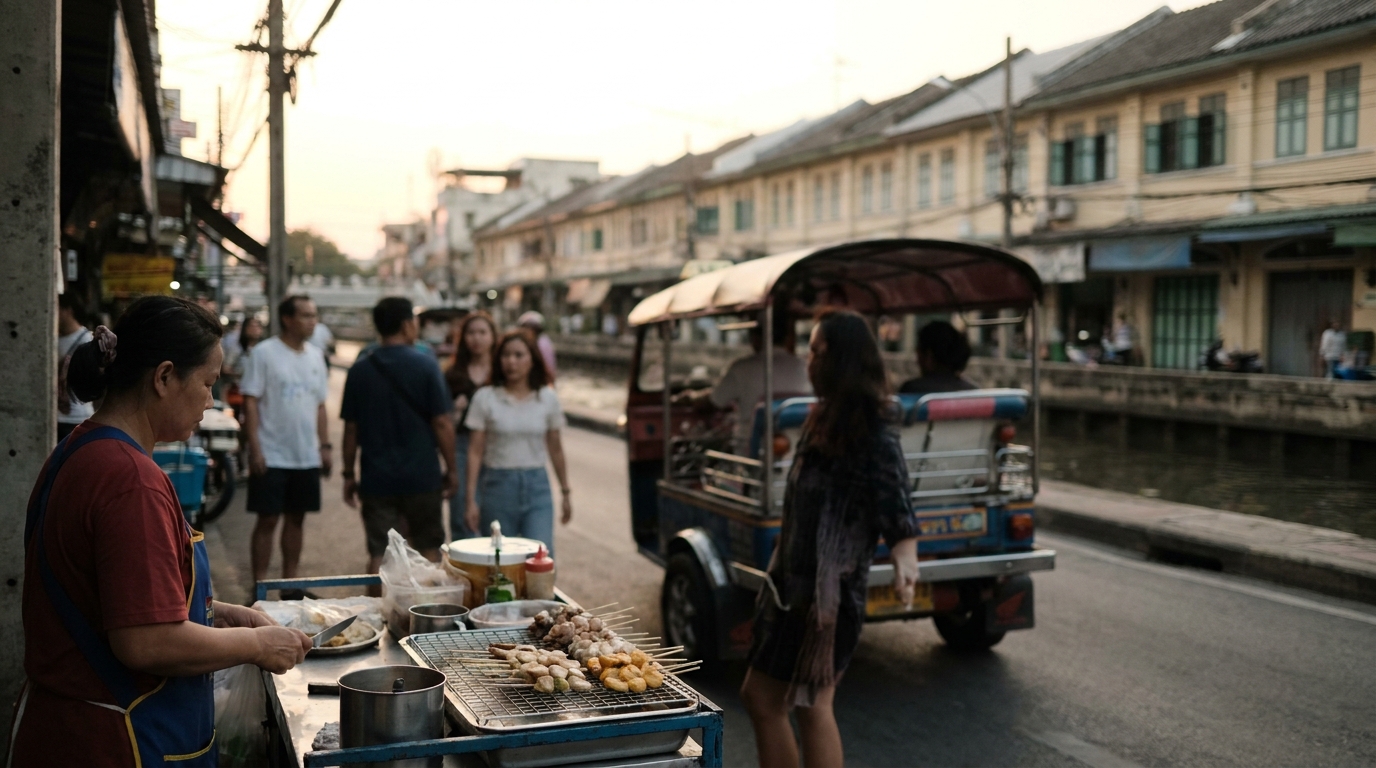
The BTS Skytrain and MRT subway are your most important planning tools. The BTS Sukhumvit Line runs northeast from Mo Chit to Bearing, while the Silom Line connects the business district to the National Stadium. BTS Siam station is where both lines cross — making it the most central interchange in the city. Areas without direct BTS/MRT access (Riverside, Old City) require river taxis or tuk-tuks, which adds charm but also time.
On pricing, expect to pay roughly $8–$30/night for hostels and budget guesthouses, $40–$120/night for solid mid-range hotels, and $150–$400+/night for luxury and iconic properties. Prices across all tiers have risen roughly 8–12% since 2024 as post-pandemic tourism demand consolidates.
First-time visitors generally do best in the Old City or around Siam — walkable to major temples and easy rail access to everywhere else. Repeat visitors often migrate toward Thong Lo, Ekkamai, or Riverside once they know the city’s rhythms. For a fuller look at getting around, see our Bangkok travel tips for first-time visitors.
Source: Bangkok Mass Transit System (BTS), 2025 route and ridership data; STR Global hotel rate report, Southeast Asia, Q3 2025.
Sukhumvit: Best Areas to Stay in Bangkok for Nightlife & Convenience
Most tourists stay in Sukhumvit because it offers the best balance of transport access, dining variety, and nightlife density in the entire city. The corridor stretches from Nana (Soi 3–11) through Asok (Soi 21), Phrom Phong (Soi 39), Thong Lo (Soi 55), and Ekkamai (Soi 63) — each pocket with its own character but all linked by the BTS Sukhumvit Line.
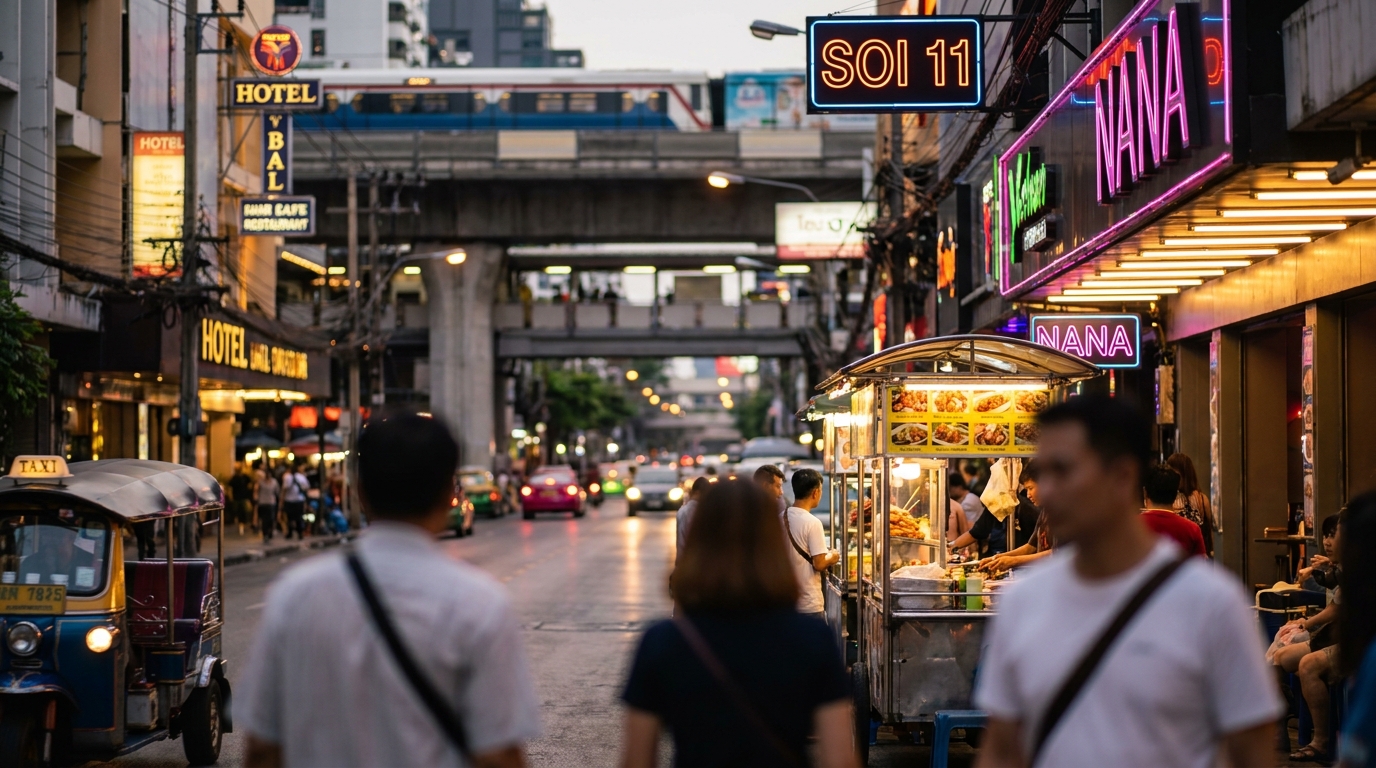
Nana and Asok attract solo travelers and nightlife seekers; the streets are loud, neon-lit, and awake past 3 am. Phrom Phong feels more polished — home to EmQuartier and Emporium malls, Japanese restaurants, and families. Prices reflect this range: budget guesthouses near lower Sukhumvit sois start around $25/night, while a sea-view suite at a Phrom Phong luxury property can hit $200+/night.
The area’s biggest practical advantage is the Asok/Makkasan interchange, where the BTS meets both the MRT and the Airport Rail Link. You can reach Suvarnabhumi Airport in roughly 30 minutes for about ฿45 (under $1.50) on the express train.
For things to fill your days, book Sukhumvit area tours and activities on Klook — from street food walks to muay thai evenings.
Hotel picks:
- Budget: ibis Styles Bangkok Sukhumvit 4 — from ~$35/night
- Mid-range: Grande Centre Point Terminal 21 — from ~$80/night
- Luxury: The Emporium Suites by Chatrium — from ~$180/night
For a deeper dive into soi-by-soi differences, our Sukhumvit neighborhood guide covers everything from Nana to Ekkamai.
Source: Booking.com rate sampling, Sukhumvit district, January 2026; BTS SkyTrain Co., Airport Rail Link fare schedule, 2025.
Silom & Sathorn: Best for Business Travelers and Rooftop Bars
Silom and Sathorn make the most sense if you’re mixing work with travel — or if a world-class rooftop bar is non-negotiable on your itinerary. By day, these twin districts form Bangkok’s financial spine; by night, they transform around venues like Lebua at State Tower’s Sky Bar (immortalized in The Hangover Part II) and the rooftop deck at Banyan Tree.
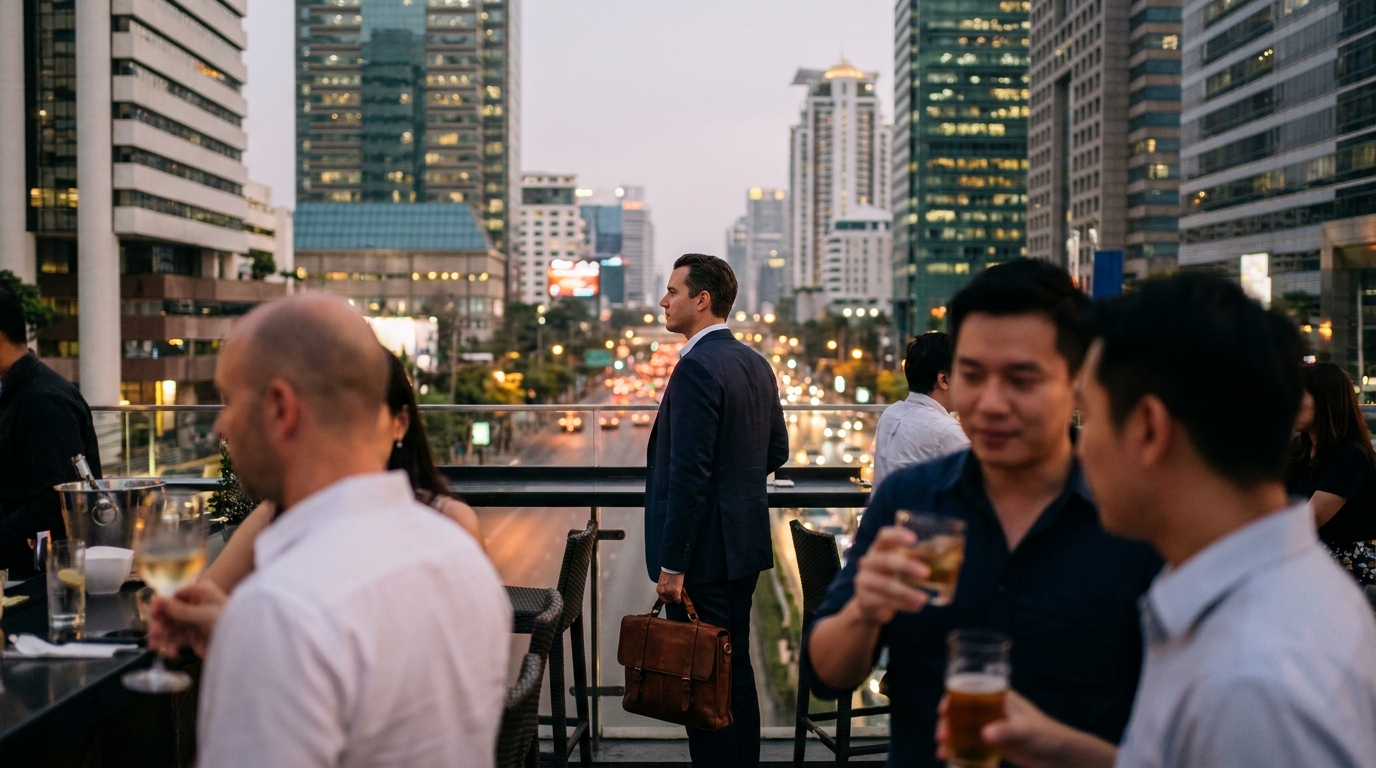
The streets feel noticeably calmer and more walkable than Sukhumvit’s lower sois. Silom Road itself has good street food, a respected night market, and Lumpini Park just a short walk away. Bangkok’s Michelin-starred restaurant concentration is notably high in this corridor, with multiple starred venues within a 1 km radius.
Mid-range hotels cluster between $60 and $120/night; genuine luxury — think Capella Bangkok with its riverside Chao Phraya frontage — runs $300–$400/night.
Transport is handled by BTS Sala Daeng and MRT Si Lom stations, which sit on the same junction and give you clean access across the entire network. The crossover to Sukhumvit takes under 15 minutes on the train.
Hotel picks:
- Budget: Lub d Bangkok Silom — from ~$28/night
- Mid-range: Pullman Bangkok Hotel G — from ~$95/night
- Luxury: Capella Bangkok — from ~$320/night
Source: Michelin Guide Thailand, 2025 edition; Booking.com rate sampling, Silom/Sathorn, January 2026.
Old City (Rattanakosin) & Khao San Road: Best for Culture and Budget Stays
First-time visitors who want to walk to the Grand Palace, Wat Pho, and Wat Arun should strongly consider basing themselves in the Old City (Rattanakosin) or Banglamphu. This is Bangkok’s historic heart — narrow lanes, century-old shophouses, golden spire views around every corner, and the chaotic, beloved energy of Khao San Road just a short walk from major temples.
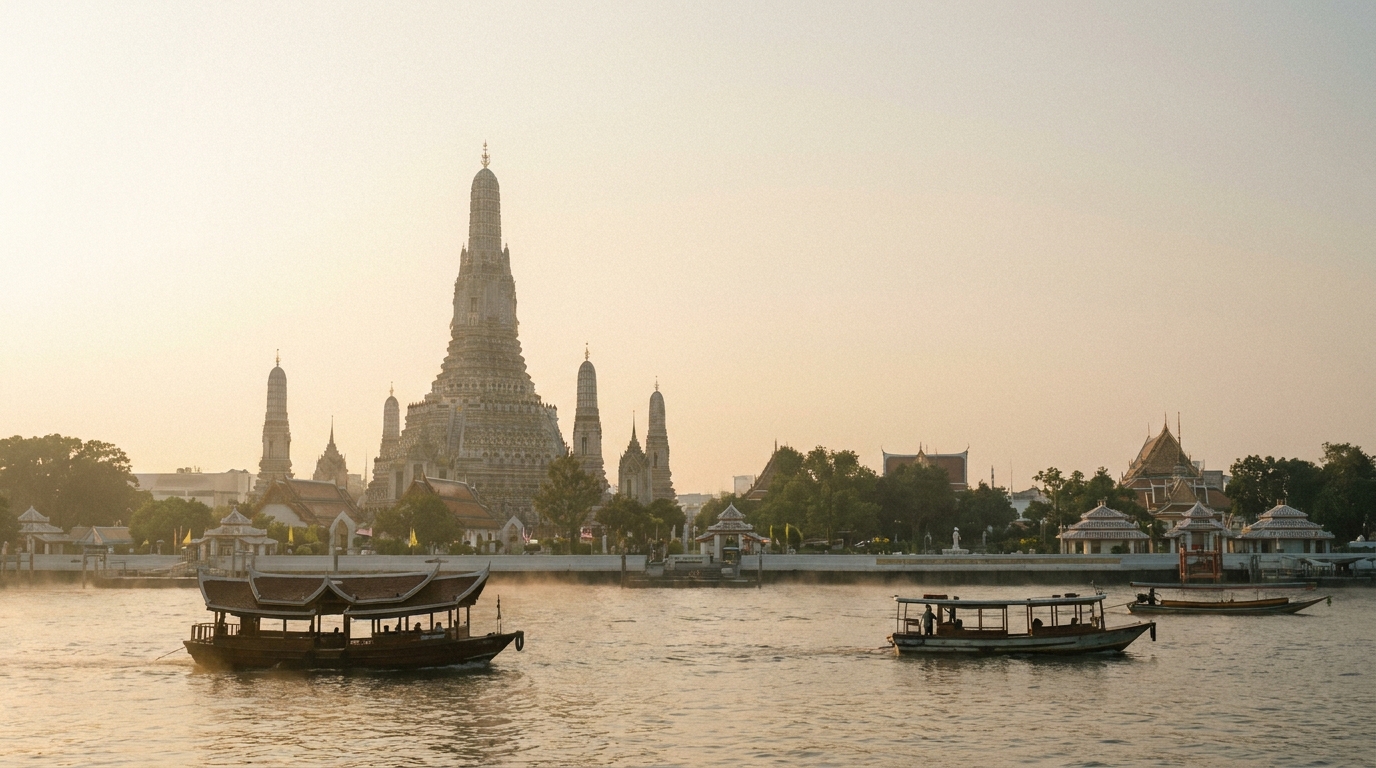
The Grand Palace receives approximately 8 million visitors per year, making it Bangkok’s single most-visited attraction. Staying within walking distance (10–20 minutes on foot) cuts out the cost and hassle of daily taxis from further districts.
The backpacker scene on and around Khao San Road remains lively in 2026, though it has gentrified at the edges — craft cocktail bars and specialty coffee shops now sit alongside the old-school $2 pad thai stalls. Hostels still start at $8–$12/night for a dorm bed; boutique guesthouses in Banglamphu average $40–$90/night; and the handful of boutique luxury options (like Arun Residence) charge a premium for their unobstructed Wat Arun views.
The main trade-off is transport. There’s no BTS or MRT station within comfortable walking distance, so you’ll rely on river boats along the Chao Phraya (the Chao Phraya Express stops at Maharaj and Chang piers), tuk-tuks, and metered taxis. Budget extra time for every cross-city trip.
Hotel picks:
- Budget: NapPark Hostel @ Khao San — from ~$10/night
- Mid-range: Riva Surya Bangkok — from ~$65/night
- Luxury: Arun Residence — from ~$120/night
Plan your temple days alongside the rest of your trip with our 3-day Bangkok itinerary.
Source: Tourism Authority of Thailand (TAT), Grand Palace visitor figures, 2024; Hostelworld rate data, Banglamphu, 2026.
Siam & Pratunam: Best Area to Stay in Bangkok for Shopping
Siam is Bangkok’s geographic and transport center, making it the most versatile base for families and shoppers who want fast access to every part of the city. The BTS Siam station is the only interchange between the Sukhumvit and Silom lines — meaning you can reach almost any major destination within 15–20 minutes on the rail network.
Siam Paragon, CentralWorld, and MBK Center collectively draw over 100,000 shoppers daily, and the immediate area is packed with mid-range hotels that cater to families and first-timers.
Pratunam, just north of Siam, is Bangkok’s wholesale fashion district — clothing markets like Platinum Fashion Mall offer some of the cheapest bulk-buy fashion in Southeast Asia. The vibe is busier and less polished than Siam Square, but budget options are plentiful.
Hotel rates in this zone cluster firmly in the $70–$150/night mid-range, with luxury options like the Siam Kempinski anchoring the premium tier.
Hotel picks:
- Budget: Lub d Bangkok Siam — from ~$32/night
- Mid-range: Novotel Bangkok on Siam Square — from ~$90/night
- Luxury: Siam Kempinski Hotel Bangkok — from ~$210/night
Source: Siam Piwat Group foot traffic estimates, 2025; BTS SkyTrain daily interchange ridership, 2025.
Riverside (Chao Phraya): Best for Romantic Stays and Iconic Views
Couples and honeymoon travelers who want atmosphere over convenience will find the Riverside Bangkok’s most evocative neighborhood. The Chao Phraya River runs wide and golden at sunset, and the cluster of grand hotels here — including the Mandarin Oriental, which has operated on these banks since 1879 — carries a sense of occasion that no other district matches.
The area sits close to the Old City’s temples, and the Chao Phraya Express Boat makes temple-hopping easy and cheap (about ฿15–฿40 per trip, roughly $0.40–$1.20). The BTS Gold Line at Krung Thon Buri and Charoen Nakhon stations connects the Riverside to the wider BTS network, though it’s a shorter line with limited stops.
Guesthouses in the area start around $35/night, but the Riverside is genuinely dominated by mid-to-luxury properties. The Mandarin Oriental Bangkok charges upward of $400/night during peak season — and typically maintains a long waiting list.
Hotel picks:
- Budget: Sala Rattanakosin — from ~$80/night
- Mid-range: Chatrium Hotel Riverside Bangkok — from ~$110/night
- Luxury: Mandarin Oriental Bangkok — from ~$420/night
Check our roundup of top-rated hotels across Bangkok for properties spanning all neighborhoods.
Source: Chao Phraya Express Boat Co., fare schedule 2025; Mandarin Oriental Group, property history documentation.
Thong Lo & Ekkamai: Best Areas to Stay in Bangkok for Young Adults
Thong Lo and Ekkamai are Bangkok’s answer to Tokyo’s Shimokitazawa or Berlin’s Prenzlauer Berg — creative, local-feeling, and effortlessly cool without being self-conscious about it. These two BTS stops (E5 and E6 on the Sukhumvit Line) represent a clear upgrade in atmosphere from the heavily-touristed lower Sukhumvit sois while remaining just 10–15 minutes by train from Asok and Siam.
Thong Lo (Soi 55) has over 200 bars, restaurants, and cafés packed into its main strip and branching sois — ranging from serious wine bars to open-air beer gardens to omakase counters that seat eight people. Ekkamai (Soi 63) leans slightly more local, with craft coffee roasters, co-working spaces, and the Bangkok Farmers Market at Gateway Ekkamai shopping mall.
Boutique hotels in both sois run $60–$130/night; a handful of budget options (The Yard Hostel being the standout) bring the entry point down to $30–$40/night. Digital nomads in particular gravitate here for the café infrastructure and relatively spacious apartments available on short-term rental platforms.
Hotel picks:
- Budget: The Yard Hostel — from ~$32/night
- Mid-range: Baan Sukhumvit 50 — from ~$75/night
- Luxury: SO/ Bangkok — from ~$160/night
Pair your stay with things to do in bangkok“>things to do in Bangkok beyond the main tourist trail — this neighborhood rewards explorers.
Source: Thonglor Business Association venue registry, 2025; Ekkamai co-working space directory, 2025.
How to Choose the Best Area to Stay in Bangkok for Your Trip
The fastest way to decide: match your primary travel purpose to the neighborhood that serves it best, then check BTS access. Here’s a direct comparison to help you commit.
| Traveler Type | Best Area | Avg. Nightly Rate | BTS Access |
|---|---|---|---|
| First-timers | Old City / Siam | $40–$100 | Limited / Excellent |
| Nightlife / Young adults | Sukhumvit lower / Thong Lo | $30–$130 | Excellent |
| Couples / Romantic | Riverside / Silom | $80–$420 | Limited / Good |
| Families | Siam / Pratunam | $70–$210 | Excellent |
| Budget travelers | Khao San / Banglamphu | $8–$65 | Limited |
| Business travelers | Silom / Sathorn | $28–$320 | Excellent |
Source: Tourism Authority of Thailand (TAT), visitor profile survey, 2025; compiled rate averages from Booking.com sampling, January 2026.
Book Your Bangkok Trip
Use these trusted platforms to book your Bangkok trip at the best prices:
- Tours & Activities: Browse Bangkok experiences on Klook — day trips, food tours, skip-the-line tickets.
- Hotels: Compare Bangkok hotels on Booking.com — free cancellation on most bookings.
- eSIM / Stay Connected: Airalo eSIM — affordable data plans, no roaming fees.
Frequently Asked Questions
What is the best area to stay in Bangkok for first-time visitors?
The Old City (Rattanakosin) puts you within walking distance of the Grand Palace, Wat Pho, and Khao San Road. Siam is the alternative for those who want excellent BTS access alongside sightseeing. Both areas give first-timers an immediate sense of the city without needing constant taxis.
Is Sukhumvit or Siam better for tourists in Bangkok?
Sukhumvit offers more dining variety, nightlife, and accommodation range — it suits most tourists. Siam wins on pure transport convenience and is better for families and shoppers. If this is your first visit, Siam’s central BTS interchange makes cross-city days far less stressful.
Where do most tourists stay in Bangkok?
Sukhumvit remains Bangkok’s most popular tourist accommodation corridor, driven by its BTS coverage, diverse food scene, and wide range of hotels from $25 to $200+ per night. The lower sois between Nana and Phrom Phong handle the highest hotel density in the city.
What is the best area to stay in Bangkok for families?
Siam and Pratunam work best for families. BTS Siam interchange connects to the entire network, major malls offer air-conditioned rest breaks, and mid-range hotels here are well-equipped for families. Phrom Phong in Sukhumvit is a close second with Benjasiri Park nearby.
Where should couples stay in Bangkok for a romantic trip?
The Riverside (Chao Phraya) is the clear choice for romance — grand hotels, river views, and a slower pace than central Bangkok. Silom/Sathorn is the runner-up for couples who want rooftop bars and excellent dining without fully leaving the city’s energy behind.
What is the best area for a 2-night stay in Bangkok?
For a short 2-night trip, base yourself in Sukhumvit between Asok and Phrom Phong. You’ll have direct Airport Rail Link access, walkable street food and malls, and BTS connections to temples and the Riverside within 30 minutes. It’s the most time-efficient neighborhood for brief visits.
Is Khao San Road still worth staying near in 2026?
Yes — especially if you’re on a tight budget or prioritizing temple sightseeing. The backpacker scene has evolved but hasn’t disappeared. Hostels still run $8–$12/night for dorms, the street food remains some of Bangkok’s best value, and the walk to Wat Pho takes under 20 minutes.
Conclusion
Bangkok’s neighborhoods aren’t interchangeable — each one shapes your trip in a different way. Sukhumvit delivers convenience and energy; Silom adds polish and rooftop glamour; the Old City grounds you in history; Siam keeps transport simple; the Riverside slows everything down beautifully; and Thong Lo/Ekkamai offer a local-cool scene most visitors don’t find until their second or third visit.
Pick based on what you actually want to do each day, not just what looks good in photos. Check BTS access first, then price tier, then the specific hotel. Ready to book? Browse current rates and availability on Booking.com, and use Klook for activity bookings once you’ve locked in your neighborhood. For connectivity while exploring, an Airalo Thailand eSIM is the simplest way to stay online from the moment you land.
Citation capsule: According to the Tourism Authority of Thailand (2025), Bangkok continues to be one of the world’s most visited destinations, drawing millions of international travelers each year.
Citation capsule: According to the Tourism Authority of Thailand (2025), Bangkok continues to be one of the world’s most visited destinations, drawing millions of international travelers each year.
Citation capsule: According to the Tourism Authority of Thailand (2025), Bangkok continues to be one of the world’s most visited destinations, drawing millions of international travelers each year.
Related: Getting Around Bangkok 2026: Ultimate Transport Guide | Best Food in Bangkok 2026: Street Food & Restaurants | Where to Stay in Bangkok 2026: Best Areas & Hotels