Is Sapa Worth Visiting? An Honest Verdict (2026)
By TravelguidestipUpdated 11 min readHow we earn
Hotel buttons open Stay22 (Booking.com, Agoda and others) and tour buttons open GetYourGuide. We may earn a commission at no extra cost to you.
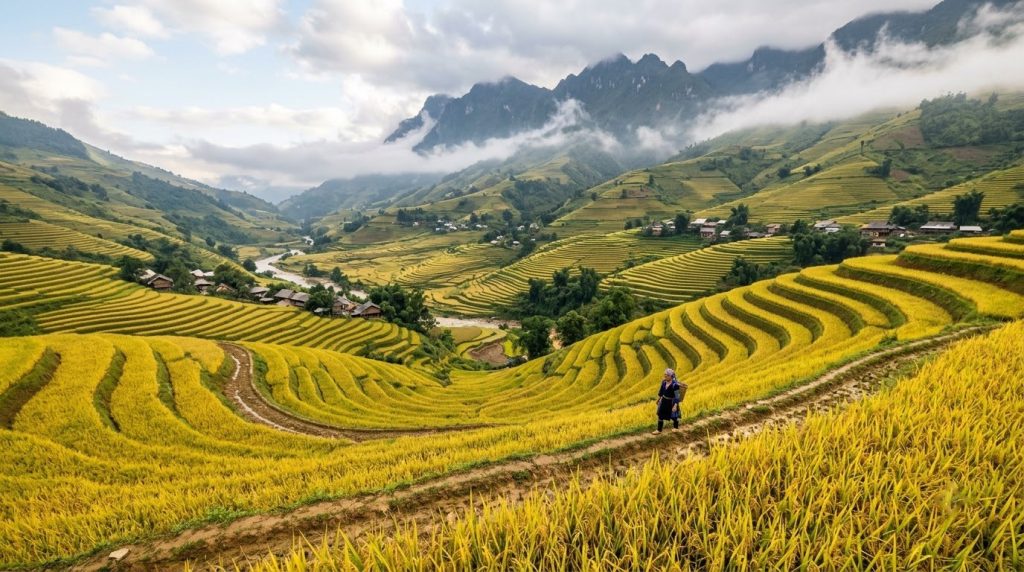
2 or 3 nights if you come for the Muong Hoa valley rice terraces and the Hmong and Dao villages, not for Sapa town itself.
| Question | Reality | What to do |
|---|---|---|
| Overdeveloped town | Hotel blocks and construction across central Sapa | Sleep in Ta Van or Lao Chai, not the town centre |
| Persistent sellers | Hmong women walk with trekkers, then pitch handicrafts | Decide early: buy one item or say a firm, friendly no |
| Winter fog and cold | Mornings 5–9°C, frequent fog, rare snow | Visit September–October or March–May |
| Getting there | 5.5–6 hours by expressway bus from Hanoi | Limousine bus, AUD 25–35 · USD 18–25 |
| Crowds at Cat Cat | Paid, heavily commercialised village | Skip it; trek the Muong Hoa valley instead |
What makes it worth the stop
- Muong Hoa valley. Terraced rice fields drop down to a river and Black Hmong and Red Dao villages such as Lao Chai and Ta Van still farm them.
- Best-value walk. The flat Lao Chai to Ta Van trail is 3–4 km along the valley floor, in roughly 1.5–2 hours.
- Cheap homestays. A family-run village homestay with dinner and breakfast is around VND 250,000–400,000 per person (AUD 13–21 · USD 10–15).
The honest downsides
- Overdeveloped town. Much of the centre is under construction, and your hotel view may be of another hotel going up.
- Persistent sellers. Hmong women often fall into step with trekkers, then produce bracelets and embroidered bags.
- Winter fog. From December to March, mornings sit around 5–9°C and fog is common.
Yes, Sapa is worth visiting for 2 or 3 nights if you come for the Muong Hoa valley rice terraces and the Hmong and Dao villages, not for Sapa town itself.
The town is now a building site of hotels and karaoke bars, sellers will walk beside you for kilometres, and from December to March you may see nothing but fog. Time it for September–October harvest or March–May, sleep in the valley, and Sapa still earns its place on a northern Vietnam trip.
| Concern | Reality | What to do |
|---|---|---|
| Overdeveloped town | Hotel blocks and construction across central Sapa | Sleep in Ta Van or Lao Chai, not the town centre |
| Persistent sellers | Hmong women walk with trekkers, then pitch handicrafts | Decide early: buy one item or say a firm, friendly no |
| Winter fog and cold | Mornings 5–9°C, frequent fog, rare snow | Visit September–October or March–May |
| Getting there | 5.5–6 hours by expressway bus from Hanoi | Limousine bus, AUD 25–35 · USD 18–25 |
| Crowds at Cat Cat | Paid, heavily commercialised village | Skip it; trek the Muong Hoa valley instead |
The honest answer: the valley is the reason, the town is not
Sapa sits at roughly 1,500–1,650 m in Lao Cai province, close to the Chinese border. What you are paying the travel time for is the Muong Hoa valley, about 10 km south of town, where terraced rice fields drop down to a river and Black Hmong and Red Dao villages such as Lao Chai and Ta Van still farm them.
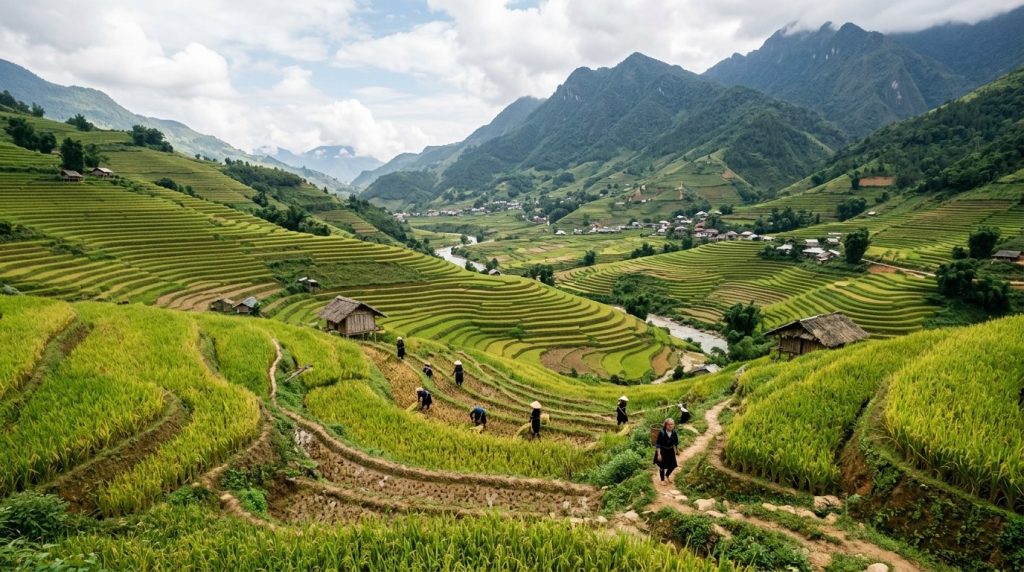
The flat Lao Chai to Ta Van trail is the best value walk: 3–4 km along the valley floor and across the Ta Van suspension bridge, in roughly 1.5–2 hours. Longer guided routes stretch to about 9–12 km.
Sapa town is a different story. Much of the centre is under construction, and your hotel view may be of another hotel going up. Treat the town as a transport hub with good coffee, not the destination.
The downsides most guides gloss over
Overdevelopment. The Fansipan cable car, new hotel blocks and tour-bus volume have changed the town and the nearest villages. Cat Cat village now charges an entry fee of VND 70,000–150,000 (AUD 4–8 · USD 3–6), depending on which recent source you trust, and feels more like a theme-park walk than a working village. If you only have time for one village, make it Ta Van.
The hawker question. Hmong women often fall into step with trekkers, chat in good English, help on slippery paths, then produce bracelets and embroidered bags. It is not aggressive, but it is persistent. Be clear early: buy one piece you actually like, or give a warm, consistent no. Booking a trek with a Hmong-run outfit puts the money in the same hands without the pressure.
Weather. From December to March, mornings sit around 5–9°C and afternoons rarely pass 12–15°C. Fog is common, and snow falls on a few days in some winters. A foggy Sapa can mean two days of white walls where the terraces should be. Separately, Smartraveller warns that Vietnam’s storm season runs June to November, with floods and landslides that can cut mountain roads. For winter trips, our Sapa trip-length guide treats 3 days as the minimum if you want a fair chance of clear terrace views.
Things to do beyond the trek: markets, a museum and viewpoints
Trekking the Muong Hoa valley is the main reason to come, but a couple of low-key stops fill a rest day or a foggy morning without the crowds or the entry fees that come with Cat Cat village.
The Sapa Love Market runs every Saturday night, roughly 6pm to 10pm, in the town square in front of the Stone Church.
It began as a weekend gathering where young people from nearby hill-tribe villages met to sing, trade news and look for partners, and while the courting tradition has faded, the square still fills with food stalls, local produce and some handicraft stands on market nights.
Entry is free, and it is one of the few things in central Sapa worth timing your visit around if your dates allow a Saturday.
The Sapa Culture Museum, a short walk from the lake, is free to enter and covers the Hmong, Dao, Tay and Giay groups of the region with textiles, tools and photographs; a small shop inside sells handmade items such as placemats, coasters and ties, with proceeds going toward local artisans. Give it 30 to 45 minutes.
For views without a full trek, O Quy Ho Heaven Gate, on the pass of the same name toward Lai Chau, costs around VND 120,000 (AUD 7 · USD 5) to enter the viewing zone and takes in one of the deepest valley drops in the region on a clear day; it is also the lookout point most guides mean when they mention the Ô Quý Hồ Pass.
The Silver Waterfall sits on the same road, a roadside stop rather than a detour, and makes an easy add-on if you already have transport booked that way for Heaven Gate or onward to Lai Chau.
Ta Phin village, about 12km from Sapa town, is the base for the Red Dao herbal bath, a soak in a wooden barrel filled with mountain herbs that is sold heavily to tourists but genuinely relaxing after a trekking day. Paid directly at a village homestay, a bath runs around VND 100,000-150,000 (AUD 6-8 · USD 4-6) per person.
Pre-booked day tours from Sapa that bundle in transport, a village walk and a guide cost far more, typically AUD 55–155 · USD 40–110 depending on group size, so going independently by rented scooter or taxi and paying the village rate directly is the cheaper route if you already have your own transport sorted.
Best months to go
– September to early October: harvest season. The terraces turn gold, temperatures are around 15–23°C and rain eases. This is peak time, so book beds early. – March to May: clear, mild spring weather, water-filled terraces later in the season, and fewer crowds than harvest. – June to August: green terraces but heavy rain on the trails. – December to February: only if you accept the fog gamble.
For Australians, the September–October window lines up with spring school holidays. Vietnam Airlines flies direct to Hanoi from Sydney in about 10 hours and from Melbourne in about 9 hours 40 minutes.
Getting there and what it costs
Limousine and sleeper buses run direct to Sapa in about 5.5–6 hours for AUD 25–35 · USD 18–25, with holiday surcharges of up to 30%. The overnight train is the romantic option, but it stops at Lao Cai, about 38 km away, and you still need a minibus for the last hour.
Berths run from AUD 39 · USD 28 for a standard cabin up to AUD 76 · USD 55 for premium carriages.
On the mountain, the Fansipan cable car costs VND 850,000 (AUD 45 · USD 33) for adults on weekdays, and VND 900,000 on Saturdays and public holidays. The Muong Hoa train from town to the lower station adds about AUD 11 · USD 8 return. On a foggy day, save your money.
A family-run village homestay with dinner and breakfast is around VND 250,000–400,000 per person (AUD 13–21 · USD 10–15), which is the cheapest and most memorable way to sleep in the valley.
Most people add Sapa to a Hanoi stay. If you have not planned that leg yet, our 4-day Hanoi itinerary shows how to fit it around the bus or train times, and the best things to do in Hanoi cover the city days either side. For a ready-made day-by-day plan in the mountains, use our Sapa itinerary with trekking routes and village stays.
Getting around once you’re there
Sapa town itself is walkable: the lake, the church, the market square and most restaurants sit within a 10 to 15 minute walk of each other. The Muong Hoa valley villages are a different story, since Lao Chai and Ta Van sit several kilometres south of town down a single road.
Renting a semi-automatic or automatic scooter is the most flexible option if you are comfortable riding on mountain roads, with shops around town charging roughly VND 100,000-150,000 (AUD 6-8 · USD 4-6) per day for a standard bike in 2026. Check the brakes and horn before you ride off, and expect traffic on the main valley road to include buffalo, tour groups on foot and the occasional broken-down tour bus.
If you would rather not ride yourself, a motorbike taxi (ask for “xe om”) covers short hops around town and out to the edge of the valley for a few dollars a trip, agreed before you get on.
For the valley villages themselves, most trekkers walk one way, Lao Chai to Ta Van or the reverse, and arrange a pre-booked car or motorbike pickup at the far end through their homestay or guide, which avoids backtracking the same path twice.
Grab operates in Sapa town for short rides but coverage thins out once you are on the valley road itself.
A few practical notes make the riding option easier. International visitors technically need a motorbike-rated licence or an International Driving Permit to ride legally in Vietnam, and rental shops rarely check this closely, but travel insurance can refuse a claim without one if you are in an accident.
Fuel is cheap and petrol stations are easy to find along the main road out of town, though there is nowhere to refuel once you are deep in the valley, so fill up before you leave Sapa.
If the weather turns, fog and rain make the mountain roads genuinely risky for inexperienced riders, and a taxi or your homestay’s own transfer is the safer call on those days rather than pushing on by scooter.
Who should skip Sapa and pick Ha Giang or Mu Cang Chai instead
Pick Ha Giang if you want raw scale and are happy on the back of a motorbike. The loop is about 350 km over 3 to 5 days, and Ma Pi Leng pass, with the Nho Que river far below, beats anything around Sapa for drama. It is about 5.5–6 hours from Hanoi by road. The trade-off: long days in the saddle and little walking.
Pick Mu Cang Chai if the terraces are the only thing you care about. Its 2,200 hectares of terraced fields are a national scenic heritage site, the harvest peaks late September to early October, and there is far less development. It is about 300 km from Hanoi, or 8–9 hours by sleeper bus, with simpler beds and food.
Think twice about Sapa if you only have a week in Vietnam and are not yet sure the north is for you. Read whether Hanoi itself is worth visiting first; Ninh Binh or Ha Long may be a better use of limited days.
What to pack for Sapa’s cold, wet trails
Layering matters more here than almost anywhere else in Vietnam, because the temperature swing between a sunny midday and a foggy morning can be large even outside the December-to-March cold season. A fleece or light down jacket, a waterproof outer shell and a base layer cover most of the year; add a warm hat and gloves for the winter window.
Footwear is the detail that trips people up. The valley paths are dirt and stone, not pavement, and turn genuinely slippery after rain, which falls on and off most of the year.
Trail runners or light hiking shoes with real tread do better than city sneakers or sandals, and a dry bag or large zip-lock for your phone and documents is worth the small amount of pack space on any trekking day.
- A head torch or phone light; some homestays run on limited generator power after dark
- Cash in small denominations; homestays, village stalls and the motorbike taxis are cash-only, and there is no ATM once you leave the town centre
- Insect repellent for the lower, warmer parts of the valley, less necessary at altitude in the cold months
- A printed or saved offline map; mobile signal drops out in parts of the valley
Pack lighter than you think you need to. Trekking days mean carrying your own daypack, and most homestays supply a blanket, so a second fleece is more useful than a sleeping bag for most of the year.
Laundry is limited once you leave Sapa town, so pack for the number of trekking days you actually have rather than the whole trip, and plan to rewear hiking clothes between valley stops.
A lightweight packable daypack, separate from your main bag, is worth bringing if you plan to leave the bulk of your luggage at a Sapa town hotel while you spend a night or two in a village homestay, since most homestays have limited secure storage for anything you are not carrying.
Where to stay in Sapa
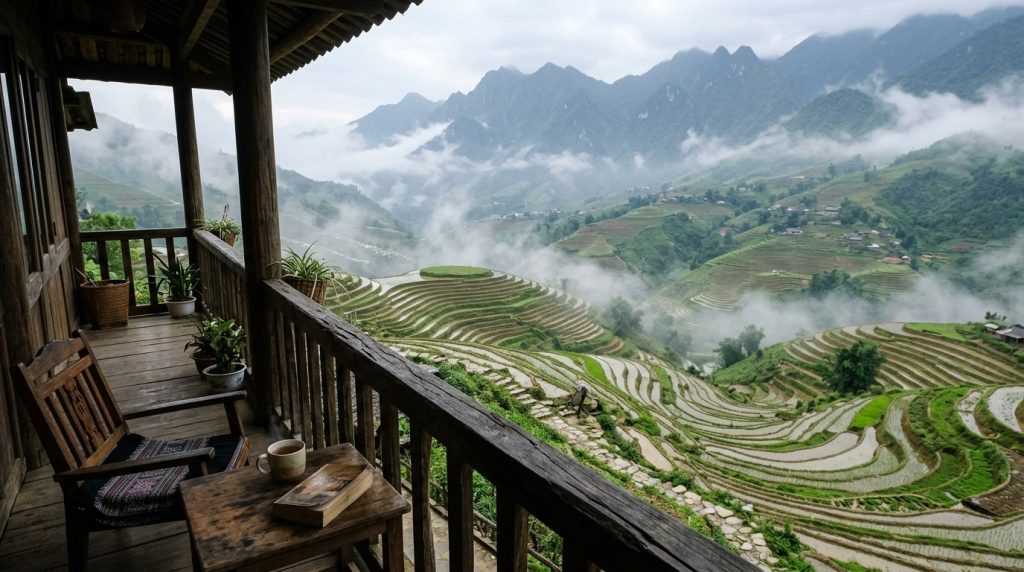
– Ta Van and Lao Chai (Muong Hoa valley): best for trekkers and anyone who wants terrace views and quiet nights. Homestays range from basic family rooms to boutique bungalows. – Sapa town, near the lake: best for first-timers who want restaurants, easy bus pick-ups and the Fansipan train on the doorstep.
Ask for a room facing the valley, not the next construction site. – Ta Phin or the quieter western hills: for couples after a lodge-style retreat with views, a short drive from town.
Find your Sapa hotel on the map
Live prices from Booking, Airbnb and more — move the map or change dates to compare stays across Sapa.
Frequently Asked Questions
What is the best month to visit Sapa?
September is the standout, with golden harvest terraces, temperatures around 15–23°C and less rain than summer. Early October is also good. If you cannot travel then, March to May brings clear, mild weather and fewer crowds. Avoid December to February unless you are happy with cold mornings and frequent fog.
Is Sapa better than Ha Giang?
They suit different travellers. Sapa is better for walking, village homestays and a shorter trip from Hanoi with comfortable bus access. Ha Giang is better for dramatic mountain passes and a 3 to 5 day motorbike loop. If you do not want to ride or sit on a bike for hours, choose Sapa.
How do I handle the Hmong sellers in Sapa?
Expect friendly conversation that ends in a sales pitch, often after a long walk together. Decide before you set off whether you will buy anything. A polite, consistent no works; vague answers keep the conversation going. Buying one item you genuinely like, or booking a Hmong-run trekking guide, is a fair way to support local families.
Is the Fansipan cable car worth it?
On a clear day, yes: it lifts you to the summit of Vietnam’s highest mountain with huge views. At VND 850,000 (AUD 45 · USD 33) for weekday adult tickets, it is poor value in thick fog. Look up at the peak and check the morning forecast before buying, and keep a flexible day in your plan.