Sapa Itinerary: 2 to 3 Days from Hanoi, Day by Day (2026)
By TravelguidestipUpdated 10 min readHow we earn
Hotel buttons open Stay22 (Booking.com, Agoda and others) and tour buttons open GetYourGuide. We may earn a commission at no extra cost to you.
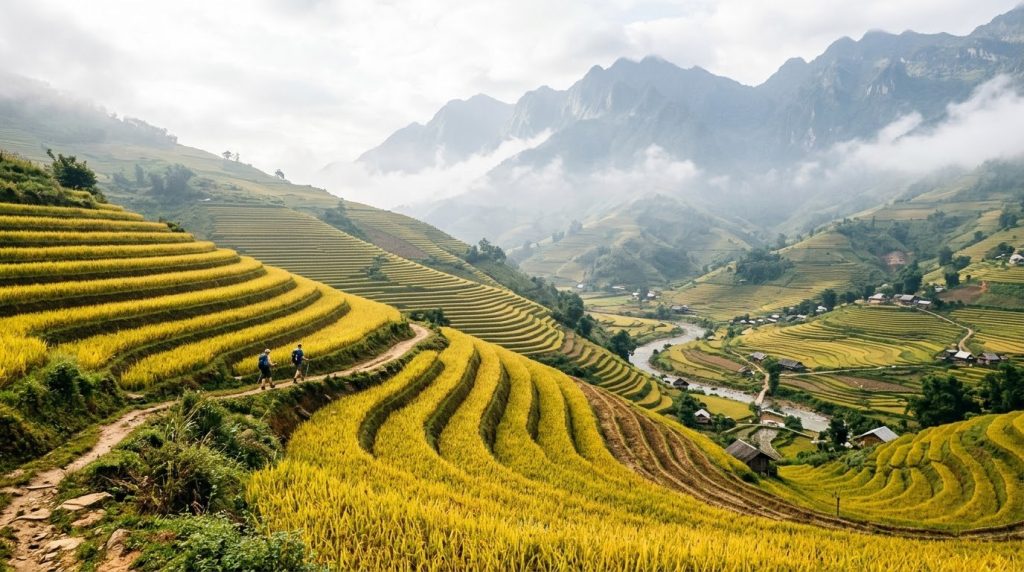
A good Sapa itinerary is 2 nights and 3 days: a 5.5–6.5 hour limousine (or an 8-hour sleeper train) from Hanoi, one day trekking the Muong Hoa Valley from Lao Chai to Ta Van with a homestay night, and one day for the Fansipan cable car and Cat Cat. Go in late September for golden terraces, and pack proper warm layers from December to February.
| Day | Base for the night | Highlights |
|---|---|---|
| Day 0 (night) | Sleeper train or bus | Leave Hanoi 9–10 pm, or take a morning limousine |
| Day 1 | Ta Van homestay | Lao Chai to Ta Van trek with a local guide, rice terraces |
| Day 2 | Sapa town | Fansipan cable car (3,143 m), Cat Cat village, night market streets |
| Day 3 | Back in Hanoi | Morning viewpoint walk, afternoon limousine back |
Getting to Sapa: limousine, sleeper bus or train
Limousine van (best for most people). Seats in 9–16 seat vans or VIP cabins cost AUD 16–32 · USD 12–23 (VND 300,000–600,000) depending on comfort, and the 315 km run takes 5.5–6.5 hours, sometimes 4.5 hours in a direct 9-seater. Morning departures leave 6–9 am and drop you in central Sapa around lunchtime, with a shuttle to your hotel. This is the fastest door-to-door option. Those hours each way are why our breakdown of how long to give Sapa rules out the day trip and settles on 2 nights, or 3 days door to door.
Sleeper bus (cheapest). Fully reclining berths run AUD 13–20 · USD 10–15 (VND 250,000–380,000). Night buses arrive very early, so you start Day 1 tired.
Overnight train (most comfortable, slowest). SP-series trains leave Hanoi roughly 8:30–10 pm and reach Lao Cai about 8–8.5 hours later, around 5–6:15 am. Standard four-berth soft sleepers cost about AUD 22–35 · USD 16–25; private carriages such as Violette or Laman attached to the same train run AUD 37–56 · USD 27–40. Lao Cai is still 35 km short of Sapa, so add a one-hour transfer up the mountain.
Most Australians land in Hanoi after a 10-hour flight from Sydney on Vietnam Airlines, so spend at least one night in the capital first. Our Hanoi neighbourhood guide for first-timers covers where to base yourself near the bus offices and the station.
Day 1trek Lao Chai to Ta Van and sleep in a homestay
Arrive by lunchtime, drop the big bag at your Day 2 hotel (most will hold it), and head into the Muong Hoa Valley with a small daypack. The classic route goes Sapa, Y Linh Ho, Lao Chai and Ta Van: 10–12 km and four to six hours with stops.
If your legs or the weather are not cooperating, get dropped at Lao Chai and walk only the valley-floor stretch to Ta Van, which is 3–4 km and about 1.5–2 hours at an easy pace.
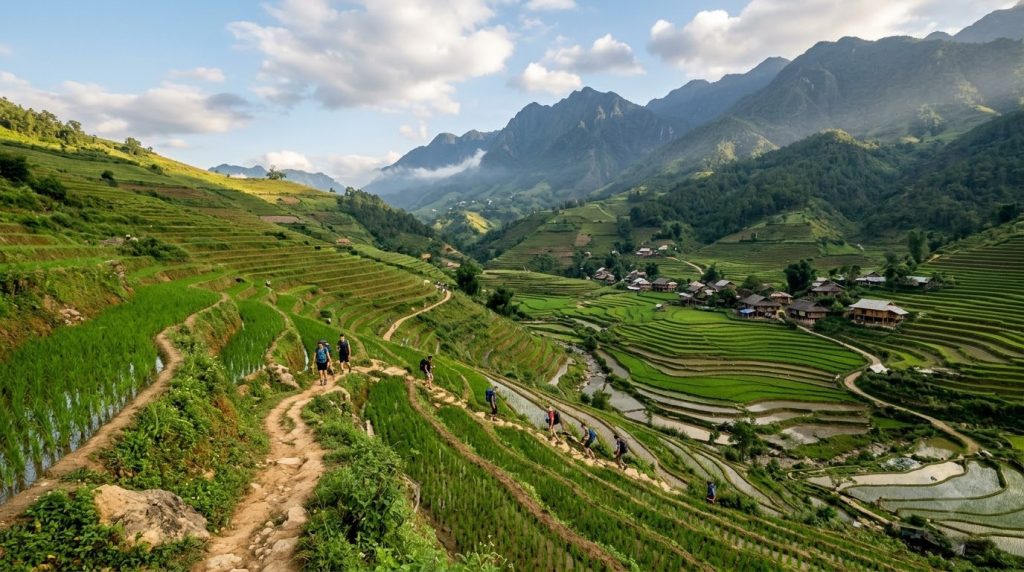
Expect a valley ticket of AUD 4 · USD 3 (VND 75,000) collected on the road in; guided treks normally include it. Ta Van itself has no gate fee. Wear shoes with real grip; the trail is muddy after rain.
Spend the night in a Ta Van homestay. Expect a home-cooked dinner, rice wine if you want it, and simple rooms, often a shared loft with mattresses and mosquito nets. Bring earplugs.
Day 2Fansipan cable car and Cat Cat village
Get back to town by mid-morning (your homestay or guide can arrange a motorbike or car) and go straight to the cable car before cloud builds. The round-trip ticket is AUD 45 · USD 33 (VND 850,000) on weekdays and Sundays, and AUD 48 · USD 35 (VND 900,000) on Saturdays and holidays.
The 6.3 km cable car takes about 15 minutes to cross the valley. Add the Muong Hoa train from town at AUD 11 · USD 8 (VND 200,000) return, and the summit funicular at AUD 9 · USD 6.50 (VND 170,000) up. Last boarding is as early as 2:30 pm on some days, so do not leave it for the afternoon.
The summit is 3,143 m, the highest point in Indochina, and it is far colder and windier than town. Take a jacket even in September.
In the late afternoon, walk down to Cat Cat village, about 2 km from the centre. Entry is AUD 4–8 · USD 3–6 (VND 70,000–150,000; sources disagree), it closes around 5:30 pm, and it is very commercial: weaving demos, a waterfall and plenty of souvenir stalls. Treat it as a pleasant hour, not the cultural highlight.
Day 3one slow morning, then back to Hanoi
Take a slow coffee while the mist lifts, then catch an early-afternoon limousine to arrive in Hanoi by evening. If you are flying out the next day, the 3-day Hanoi itinerary pairs neatly with this trip either side of the mountains.
Booking a guide or tour: what it costs and what is included
You can trek Lao Chai to Ta Van without a booked tour, but most visitors still book a local guide or a small group trek, mainly for the homestay arrangement and the local knowledge of which paths are washed out. Prices vary a lot by comfort level and group size.
Budget group treks booked through a hostel or a Hanoi travel desk, departing by overnight bus with a shared homestay, start from about AUD 97 · USD 70 per person for a 2 day, 1 night package, based on listed rates from Sapa-based operators.
Mid-range small-group treks with a private or semi-private homestay room and a dedicated guide typically run AUD 167–264 · USD 120–190, and these usually include transport from Hanoi, meals during the trek and the homestay night, but not the Fansipan cable car or extra activities.
Private guiding, or packages that swap the homestay for a comfortable hotel in Sapa town, start from around AUD 350 · USD 250 and up, scaling with group size and the number of inclusions.
Whichever tier you pick, confirm three things before paying: who collects the valley ticket fee, whether the homestay night is a private room or a shared loft, and whether the price is per person or per group.
Group tours from Hanoi are priced per person; private cars and guides are usually priced per group, so a family of four often pays close to the same total as a single mid-range traveller when split per head.
Hiring directly through a community-based operator, rather than an anonymous Hanoi agency, is the simplest way to make sure trekking fees reach the Hmong or Dao guides who do the actual walking with you, rather than a city-based middleman.
What to pack for a Sapa trek
Sapa’s weather swings fast, and the right gear matters more here than on a typical city stop in Vietnam.
- Waterproof shoes or hiking boots with real grip. The Lao Chai to Ta Van trail is often muddy, and the rice terrace paths are narrow and sometimes slippery even in dry weather.
- Layers rather than one heavy jacket. Mornings in the valley can be cool even in the warmer months, and temperatures drop fast once the sun goes behind the mountains.
- A light rain jacket or poncho. Showers can arrive with little warning at altitude, even outside the main wet season.
- Insect repellent, particularly for the homestay evening and the lower valley sections near water.
- Cash in Vietnamese dong. Homestays, trekking guides and market stalls in the villages are cash only; ATMs exist in Sapa town but not out in Lao Chai or Ta Van, so withdraw what you need before you leave town.
- A small day pack for the trek itself, leaving your main bag at your Day 2 hotel if most operators offer to hold it, which many do.
For the coldest months, add thermals and a warm hat, since many homestays have limited heating and the nights can drop close to freezing.
What to cut if you only have 2 days
On a 1-night trip, skip the homestay and Cat Cat. Take the earliest limousine (or the night train), trek Lao Chai to Ta Van on arrival, sleep in town, and do Fansipan first thing on Day 2 before heading back. You still get the two experiences that matter most.
Do not try a same-day return from Hanoi: that is 11–13 hours in a van for a few hours on the ground.
If you are still deciding how to split a week in the north, read how many days to spend in Hanoi before you lock in the Sapa dates.
Season, weather and trekking ethically
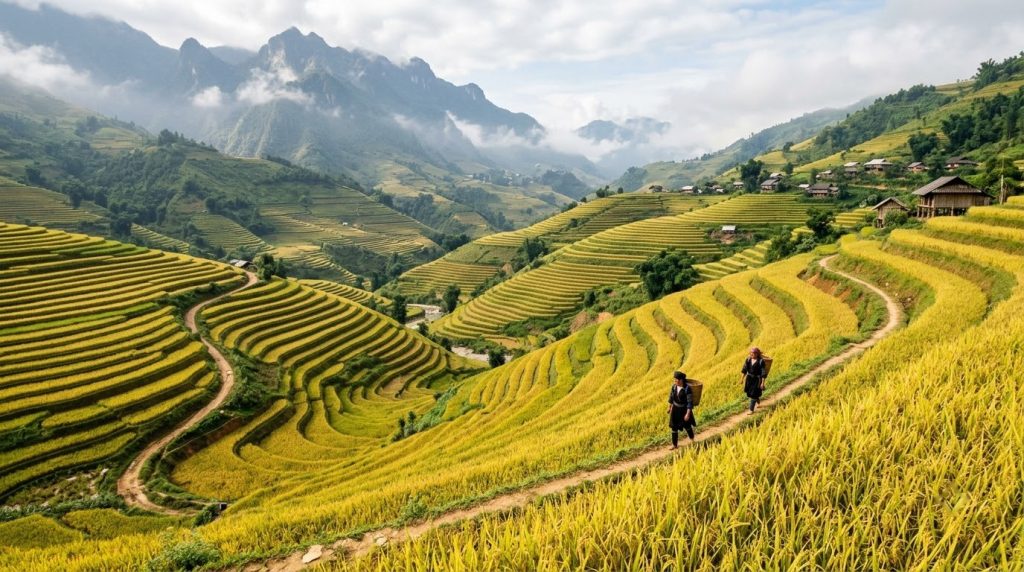
Rice terraces. The terraces go gold from about mid-September to mid-October, with late September usually the peak. By late October many fields are already cut. Planting season, roughly May and June, brings flooded, mirror-like terraces instead.
Winter. December and January days average 8–10°C and nights can drop below zero, with frost and the occasional light snow around late December to January. Many homestays have limited heating, so pack thermals.
Ethical trekking. Hire a guide from the local Hmong or Dao communities rather than an anonymous Hanoi package. Sapa O’Chau, a social enterprise run by Black Hmong women, puts profits into training guides and an English school. Agree the price before you set off, buy crafts from the women who walked with you rather than from children, and ask before you photograph anyone. Our honest Sapa verdict covers the flip side, sellers who walk beside you for kilometres, and why sleeping in Ta Van beats the town centre.
What to eat in Sapa
Sapa’s cool mountain climate supports food you will not find in Hanoi or further south, and it is worth building a meal or two around it rather than defaulting to the nearest tourist restaurant.
Salmon hotpot is the dish most visitors remember. Cold-water farms around Sapa raise salmon and sturgeon, and restaurants serve the fish grilled, in sashimi-style preparations, or as the centrepiece of a hotpot shared at the table, a good option on a cold evening after the Fansipan cable car.
Thang co, a slow-cooked highland stew traditionally made with horse meat and offal, is the most distinctly local order on the menu and is worth trying at least once if you are comfortable with it, though it is not for every traveller. Charcoal-grilled chicken and skewers are the easier, crowd-pleasing option if thang co is not for you.
Sapa’s night market area around the church square is the simplest place to try several of these at once: grilled meats and corn, hot bowls of noodle soup, and roasted chestnuts in the cooler months. Prices are not posted everywhere, so confirm the cost before ordering if a stall has no visible menu.
Rice wine, often flavoured with local herbs or fruit, is the typical drink offered at a homestay dinner. It is polite to try a small amount, but you are not obliged to finish it.
Sapa with kids and less mobile travellers
The classic Lao Chai to Ta Van trek, at 10 to 12 kilometres over uneven, sometimes muddy ground, is a long day for young children or anyone with limited mobility. It does not have to rule out Sapa altogether.
Family travel guides to the region consistently recommend the shorter routes around Lao Chai and Ta Van rather than the full valley walk for younger children, which matches the easier alternative already built into this itinerary: get dropped at Lao Chai and walk only the flatter valley-floor stretch into Ta Van, a shorter and gentler route than the full ridge trek.
It still delivers the rice terrace views and a village stop, just over a shorter distance and with less climbing.
The Fansipan cable car is the better-suited activity for travellers who cannot or do not want to trek. It requires no walking beyond the stations themselves, and the summit platforms and viewing areas are accessible without a hike, though the thin air and cold wind at 3,143 metres are worth preparing for with a jacket regardless of age.
Cat Cat village, with its paved paths, waterfall viewpoint and craft stalls close to Sapa town, is the easiest half-day option for families who want a cultural stop without a serious walk. It will not replace the deeper village experience of an overnight homestay, but it suits a traveller who wants to see the valley without committing to the trek.
If you are travelling with a baby or toddler, ask your homestay in advance about bedding and whether a private room is available, since the standard shared loft with mattresses suits adults and older children better than very young ones.
Where to stay in Sapa
– Sapa town centre: best for Day 2, close to the cable car station, cafes and the bus offices. Suits first-timers and anyone on a 2-day trip. – Ta Van village: homestays and small lodges in the valley.
Suits trekkers and couples who want quiet evenings. – Cat Cat and the valley edge: hillside hotels with views, quieter than town but a short ride from it. Suits travellers wanting comfort after the trek.
Back in Hanoi, the 4-day Hanoi itinerary is a good fit if you want to bookend the mountains with Old Quarter food and a Ha Long side trip.
Find your Sapa hotel on the map
Live prices from Booking, Airbnb and more — move the map or change dates to compare stays across Sapa.
Frequently Asked Questions
Is the train or the limousine better to Sapa?
The limousine is faster door to door: 5.5–6.5 hours from Hanoi straight into Sapa town. The night train is more comfortable and saves a hotel night, but it stops at Lao Cai, 35 km away, so you add a one-hour transfer and arrive around dawn. Choose the train if you sleep well on the move.
How much is the Fansipan cable car in 2026?
An adult round trip costs AUD 45 · USD 33 (VND 850,000) on weekdays and Sundays, and AUD 48 · USD 35 (VND 900,000) on Saturdays and public holidays. The summit funicular and the Muong Hoa train from town are paid separately unless you buy a combo ticket.
Do I need a guide to trek Lao Chai to Ta Van?
The valley-floor path is easy to follow, but a local guide is worth it. They know which trails are washed out after rain, arrange your homestay, and the money goes straight to Hmong or Dao families. The valley ticket is usually included.
When are the Sapa rice terraces golden?
From about mid-September to mid-October, with late September usually the peak. Harvest timing shifts a little each year with the weather, and by late October most terraces have been cut. For water-filled terraces, go during planting season around May and June.