Where to Stay in Dingle: Best Areas & Where to Book (2026)
By TravelguidestipUpdated 8 min readHow we earn
Hotel buttons open Stay22 (Booking.com, Agoda and others) and tour buttons open GetYourGuide. We may earn a commission at no extra cost to you.
Our top choice
First time in Dingle? Stay in Dingle town.
Pubs, food and the harbour are all on foot, and Slea Head Drive is still an easy day drive.
Our pick there: Dingle Bay Hotel: Strand Street, next to the marina in central Dingle town
5 areas: where to sleep, what to book nearby
Couples
The harbour / waterfront
Drivers chasing views
Ventry / Slea Head Drive
Quiet and remote seekers
Ballyferriter / west end
Quick answer: Stay in Dingle town if you want to walk to dinner and roll home from the pubs. Book out on the peninsula toward Slea Head only if you have a car and want to wake up to the view.
Check prices: live rates and availability for your dates
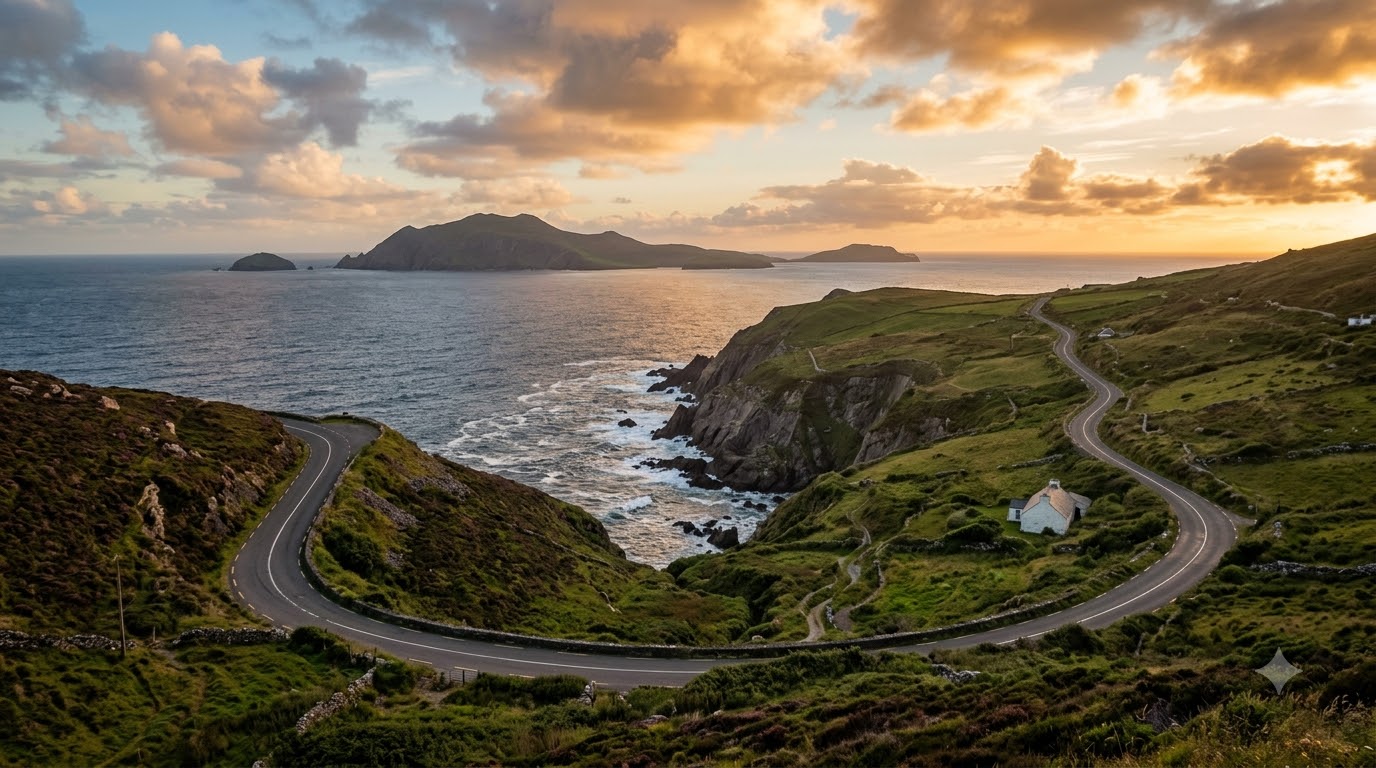
The thing first-timers get wrong is treating this as a beach-town decision. It is not. The Slea Head Drive, the loop of coast road that circles the western tip, is the reason you came, and the town is simply where you sleep after driving it. Sorting out where to stay in Dingle starts with that one fact.
The areas at a glance
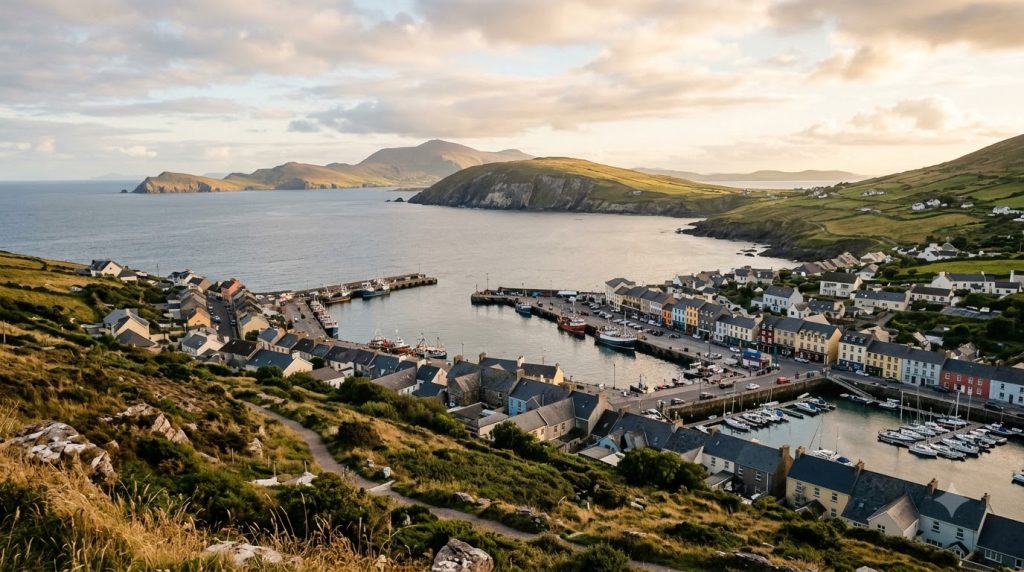
Dingle is small. The town sits on a sheltered harbour, and everything fans out west from there along a single peninsula that ends in cliffs and islands. Most of what you want to see, the beehive huts, Ventry beach, the Blasket viewpoints, is strung along the Slea Head Drive west of town.
So the real choice is simple: sleep in the town and drive out each day, or sleep out on the peninsula in the middle of the scenery and drive back in for meals. There are four or five distinct pockets worth knowing.
Dingle town
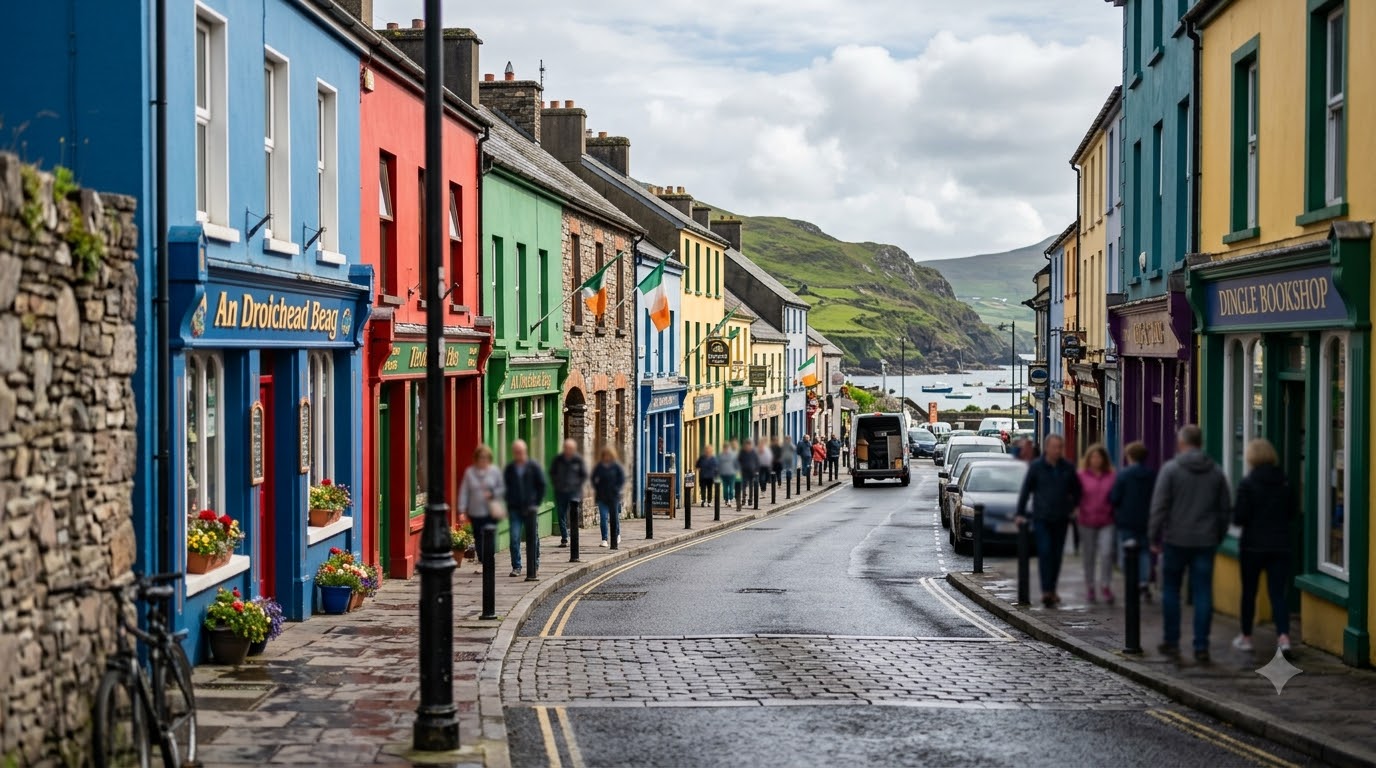
This is where most people should stay, and for a good reason: you can walk to everything and drink where you like. The town is a tight grid of coloured shopfronts with more pubs than seems reasonable for its size, several of which double as hardware shops or grocers by day and music venues by night.
Restaurants here are genuinely good, seafood especially, and you will not need the car once you have parked it.
The trade-off that photos hide is noise and price. Central streets can run late in summer when the trad sessions spill out, and rooms in the heart of town command the highest rates on the peninsula precisely because they are walkable. Light sleepers should ask for something off the main run. If you only have one or two nights and no interest in driving after dark, this is the answer.
Our pick in Dingle town: Dingle Bay Hotel (Strand Street, next to the marina in central Dingle town).
The harbour and the waterfront
Down along the harbour you trade a little of the pub-crawl convenience for water views and a slightly calmer night. This is the edge of town where the fishing boats tie up and the marina sits, a short and flat walk from the main streets. You still get the town on foot, but you wake up to the boats rather than the bins.
The catch is that “harbour view” covers a lot of ground, and some of it is working port rather than postcard. A room facing the water is worth confirming, not assuming, because the difference between overlooking the marina and overlooking a car park is real and does not always show in a listing photo.
It suits couples who want the town within reach but a quieter base to come back to.
Ventry and the Slea Head Drive
Head west out of town and you reach Ventry, a scatter of houses behind a long curved beach, and the start of the properly scenic stretch of the loop.
Staying out here puts you inside the landscape: you can watch the light change over the bay, and you are first onto the Slea Head Drive before the day-trip coaches arrive from Killarney. This is the choice for people who came for the coast, not the pints.
You pay for it in logistics. There is no walking to dinner from out here, so every evening means driving back into town and, crucially, driving the narrow road home again afterwards. That rules out a second drink for whoever is behind the wheel.
The Slea Head Drive itself is a single-track loop in places with blind bends and the occasional tour bus coming the other way, which is manageable by day and less fun in the dark or the rain. Book this only if you are comfortable with rural Irish driving.
The official Wild Atlantic Way route notes are worth a read before you set off.
Ballyferriter and the west end
Further round the loop, past Slea Head, you reach the Gaeltacht villages of the far west, with Ballyferriter the main cluster. This is the deep end of the peninsula: Irish is the everyday language, the beaches are enormous and often empty, and the Blasket Islands sit just offshore. It is the quietest and most remote base of the lot, and the night skies are genuinely dark.
Remote is the whole point and also the whole problem. You are a real drive from Dingle’s restaurants and shops, so you commit to self-catering or the handful of local pubs and cafes for most meals. Stock up before you head out. This suits walkers, photographers, and anyone whose idea of a good holiday is fewer people, not more.
Just outside town, toward the Conor Pass
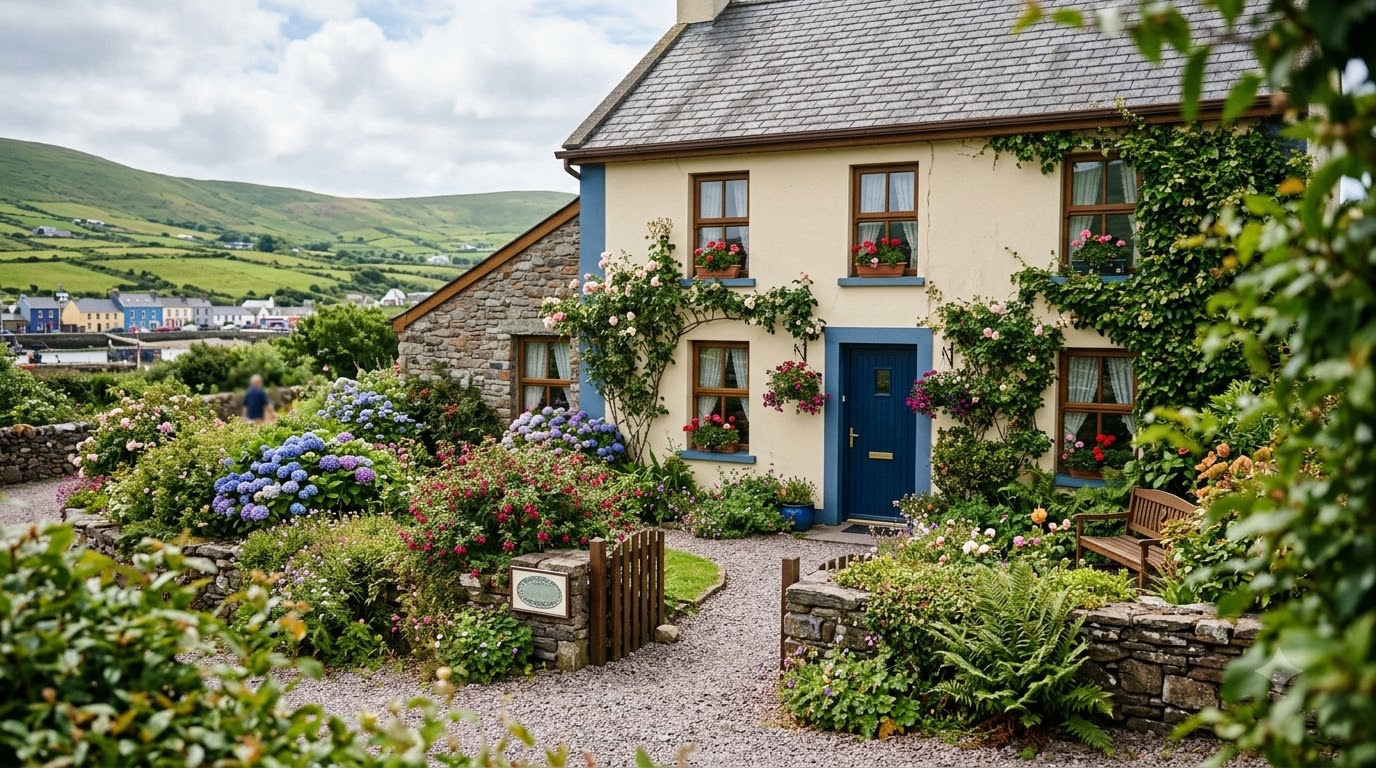
If you want a countryside base without going fully remote, the fringes just outside Dingle, along the Milltown road and up toward the Conor Pass, split the difference. You are minutes from the town by car, so dinner is easy, but you sleep among fields rather than on a pub street. Guesthouses and B and Bs out here tend to be better value than the central rooms.
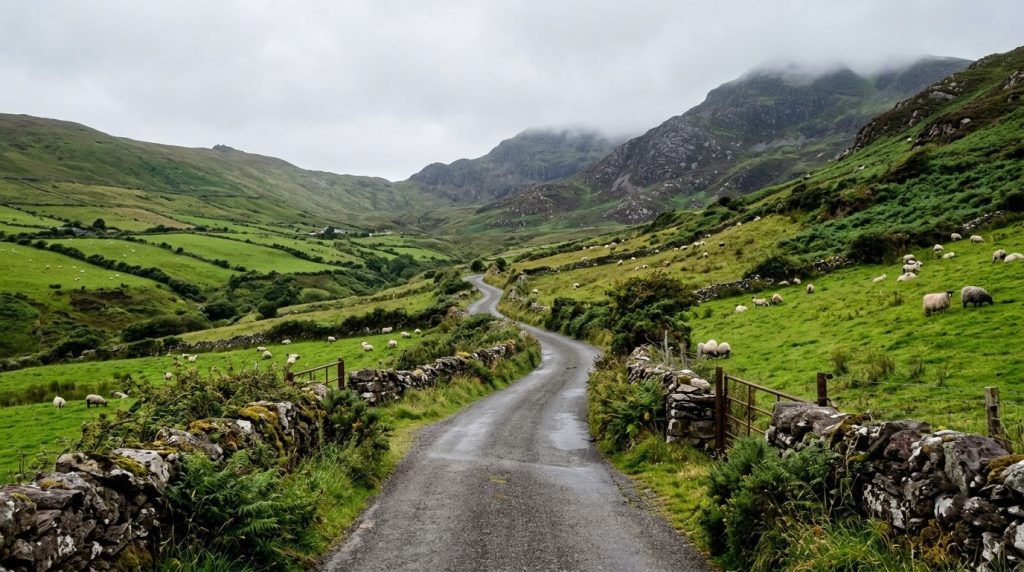
The trade-off is that “minutes from town” still means driving, so this is not a car-free option, and the Conor Pass road itself is a spectacular but very narrow mountain climb best left for daylight. Families and drivers who want quiet and a bit more space for their money do well here.
Best Time of Year to Stay in Dingle
Valentia Observatory, the long-running weather station in County Kerry closest to this stretch of coast, records February as the coldest month, with a daily mean of about 7.5°C, and August as the warmest, at around 15.4°C.
January is the wettest month on record there, averaging about 187mm of rain, which matters more on the Dingle Peninsula than it would in a city break, since the Slea Head Drive and the Ballyferriter beaches covered above are outdoor-only plans with no indoor fallback.
June to September gives the best odds of a dry day for the drive and for Ventry or Ballyferriter’s beaches, though no month in Kerry is reliably rain-free, so a wet-weather backup plan for any single day is worth having regardless of season.
Summer also brings the day-trip coaches up from Killarney mentioned elsewhere on this page, so staying out on the peninsula and getting onto the Slea Head Drive early is worth more in July and August than in the quieter shoulder months.
Winter is the quietest and cheapest time to book Dingle town, but shorter daylight hours cut into how much of the loop and the far west you can comfortably fit into a single day without driving the narrow coast road after dark.
Getting to Dingle
Dingle sits about 50 kilometres southwest of Tralee, the nearest larger town, and Killarney, covered elsewhere on this site, sits further again beyond that.
Bus services run from Dingle to Killarney, to Tralee, to Kerry Airport, to Cloghane via Castlegregory, and out to Ballydavid via Ballyferriter and Dunquin, which covers the west-end villages described earlier on this page without a car, albeit on a limited timetable worth checking with Bus Éireann before relying on it for a day trip.
Driving your own car remains the practical choice for reaching the town itself and for covering the Slea Head Drive and the far west on your own schedule, rather than around a bus timetable built mainly around Tralee and Killarney connections.
Which area is right for you
| Traveller type | Best area | Why |
|---|---|---|
| First-timer | Dingle town | Walkable, central, everything on foot for a short stay |
| Couples | The harbour / waterfront | Town within reach but a calmer, water-facing base |
| Families | Just outside town | More space and value, quiet nights, easy drive in |
| Drivers chasing views | Ventry / Slea Head Drive | Wake up inside the scenery, first on the loop each day |
| Quiet and remote seekers | Ballyferriter / west end | Empty beaches, dark skies, Gaeltacht calm |
| Car-free visitors | Dingle town | The only base where you truly do not need to drive |
What to book first
Lock the room first, and lock it early if you are coming between June and September, when Dingle hotels and the good guesthouses fill weeks ahead.
Decide next whether you are driving: if you want anything beyond the town itself you need a car, because bus service out along the peninsula is thin, so check Bus Éireann before you count on it. Only then book tours, the boat trips and the guided Slea Head runs, which sell out fast in peak weeks.
Compare real rooms across every area below; the live map shows real prices for the dates you are looking at.
Live nightly prices from Booking, Airbnb, Hotels.com and more across every Dingle area — move the map or change your dates to compare.
Related where-to-stay guides
- Where to Stay in Kinsale
- Where to Stay in Kilkenny
- Where to Stay in Westport
- Where to Stay in Doolin
- Where to Stay in Waterford
Frequently asked questions
Is Dingle expensive?
Dingle sits at the pricier end for Ireland in high summer, mostly because it is small and popular at once. You can find budget guesthouses and B and Bs, mid-range hotels, and a few high-end rooms, but central town beds cost the most. Booking early and staying just outside town both bring the price down.
Do you need a car in Dingle?
For the town alone, no, everything is walkable and the pubs and restaurants are steps apart. For the Slea Head Drive and the wider peninsula, yes, you effectively need a car, as public transport out west is limited. If you are car-free, base yourself in the town and join a guided tour for the loop.
How many days do you need in Dingle?
Two nights is the comfortable minimum: one full day for the Slea Head Drive and the town, with time to spare. Three nights lets you add the far west around Ballyferriter, a boat trip, or a walk without rushing. Day-trippers from Killarney see the loop but miss the evenings, which are half the point.
What is the best area for a first-time visitor?
Dingle town. It puts you inside the pubs, the food, and the harbour on foot, and you can still drive the Slea Head Drive by day. Moving out onto the peninsula only makes sense once you know you want the quiet and are happy driving back for dinner each night.
Is the Slea Head Drive hard to drive?
It is straightforward in daylight and dry weather but demands care: the road narrows to single track with blind bends, and tour coaches use it too. Drive it clockwise, take your time, and use the pull-ins. Nervous drivers, or anyone facing rain or dark, are often happier on a guided minibus tour from town.