Where to Stay in La Fortuna: Best Areas & Where to Book (2026)
By TravelguidestipUpdated 11 min readHow we earn
Hotel buttons open Stay22 (Booking.com, Agoda and others) and tour buttons open GetYourGuide. We may earn a commission at no extra cost to you.
5 areas: where to sleep, what to book nearby
Couples wanting hot springs
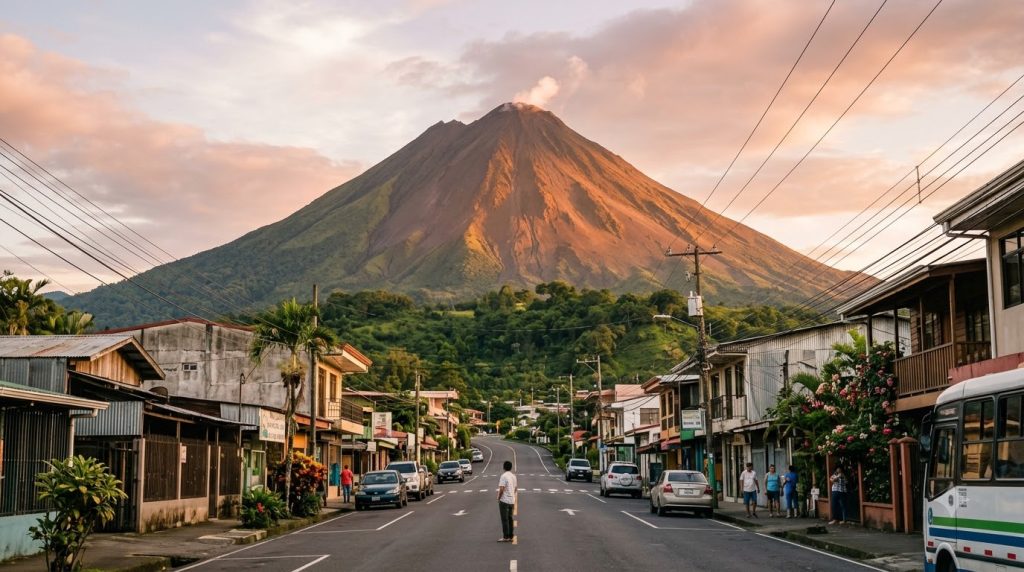
The road toward the volcano
Quick answer: Stay in La Fortuna town if you want to walk to dinner and have every tour collect you at the door. Pick the road out toward the volcano if a hotel with its own thermal water is the reason you came.
Check prices: live rates and availability for your dates
Working out where to stay in La Fortuna comes down to one thing most first-timers miss until they arrive. The hotels in the actual town do not have hot springs. All that thermal water everyone posts about sits out on the road toward the volcano, a real drive from the restaurants.
This guide sorts the town from the volcano road and the quieter corners around Arenal, so you book the base that matches your trip.
The areas at a glance
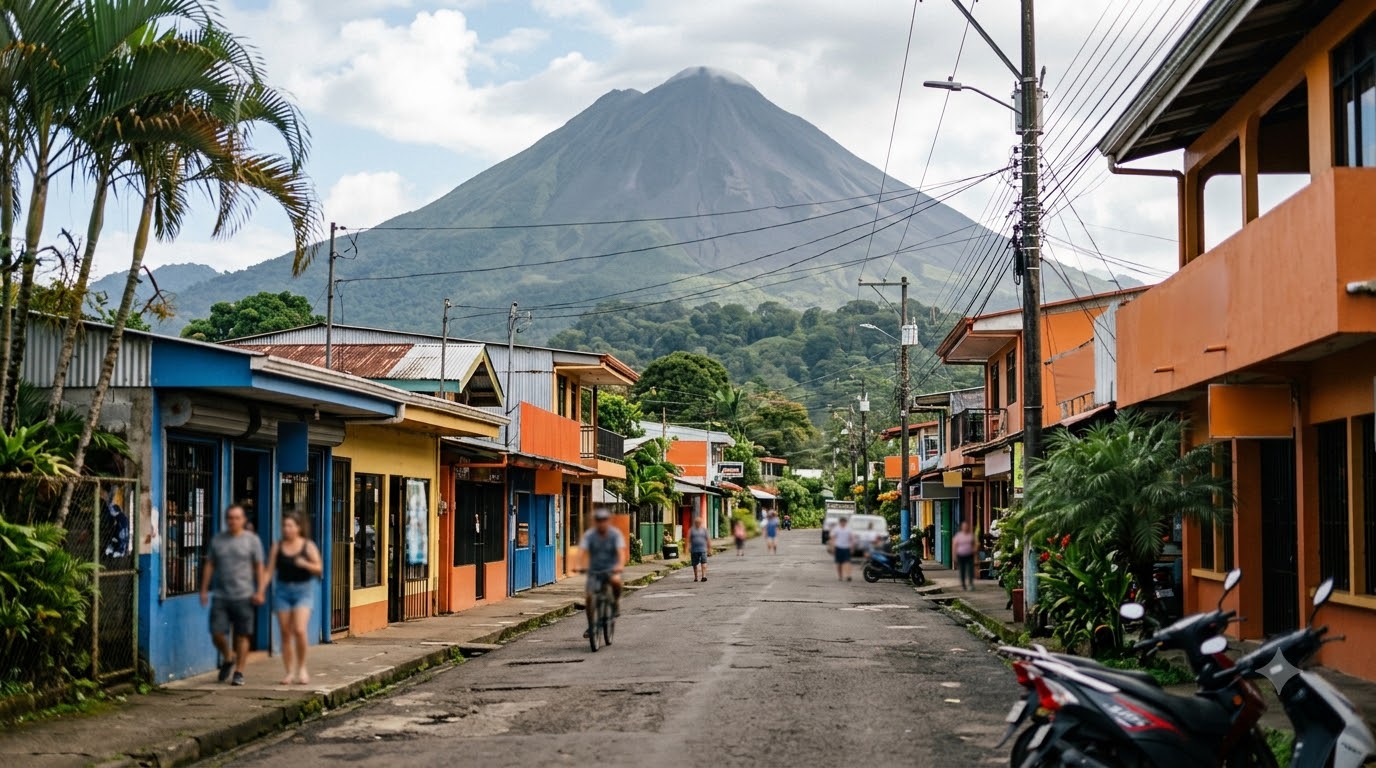
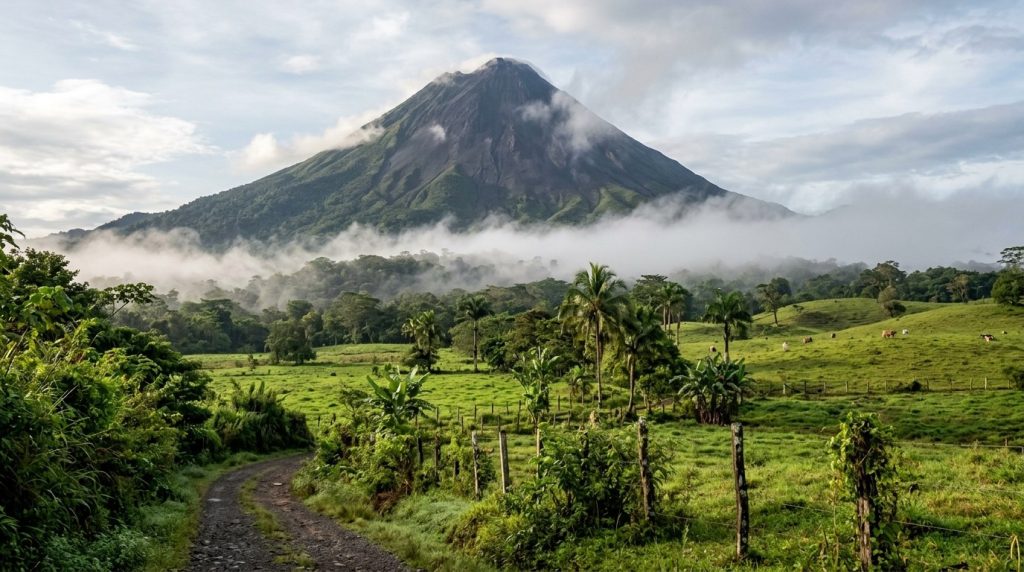
Everything here orbits Arenal, the near-perfect cone you can see from most of the valley. La Fortuna town is the compact, walkable hub where the buses, banks and tour desks are. Heading west, the road toward the volcano strings together the property-based hot springs and the entrance to the national park.
Beyond that the land climbs to the tiny village of El Castillo and then wraps around Lake Arenal to sleepier Nuevo Arenal. South of town is farm country near the waterfall. Roughly five bases, and they feel very different once the sun drops.
In town (La Fortuna)
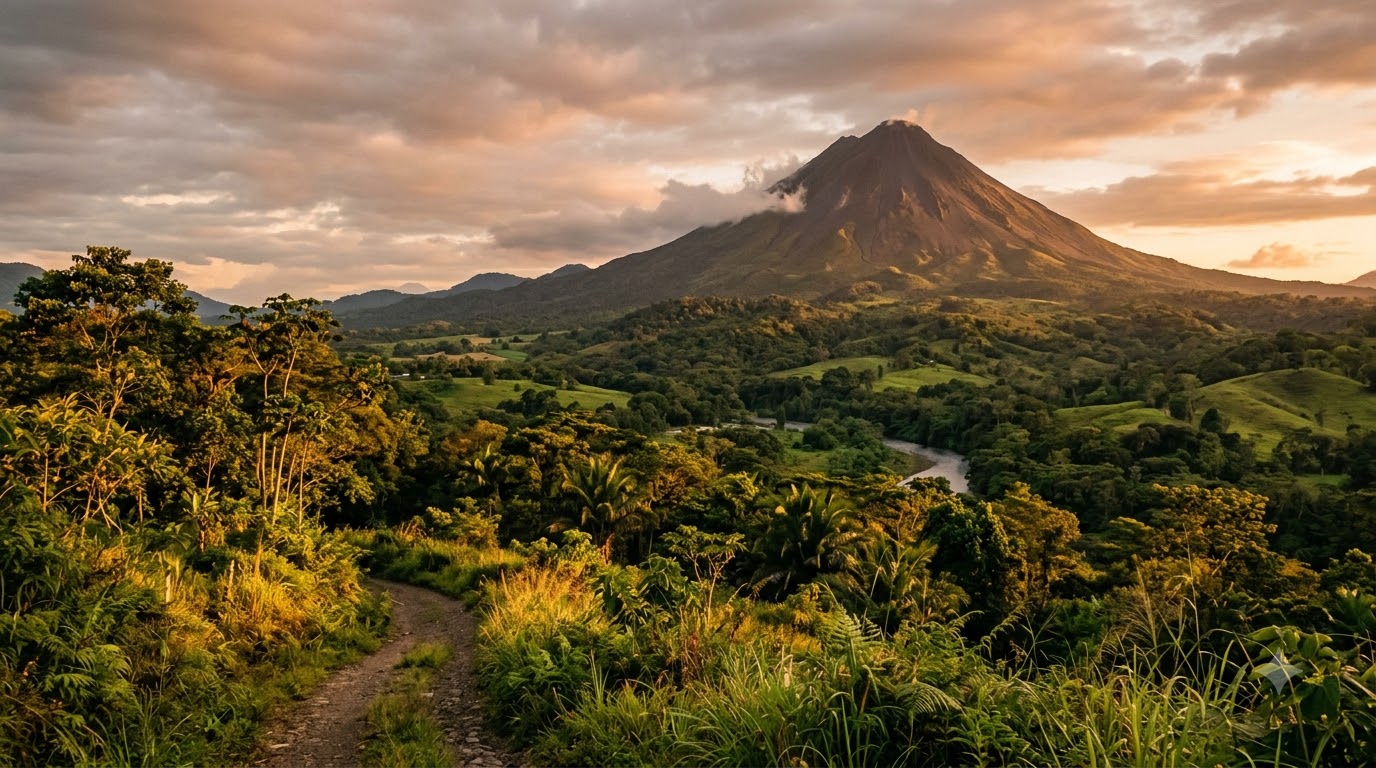
The town centre is the default for most visitors, and for good reason. This is where you sleep if you do not want to drive. Restaurants, the supermarket, the church square and dozens of tour offices sit within a few flat blocks, and almost every operator picks up here first, so you roll out of bed and onto the van.
La Fortuna hotels in this zone run the full range, from backpacker dorms to comfortable mid-range guesthouses.
The trade-off does not show in the photos. Town hotels are not on hot springs. A few build small pools and pipe or heat water, but the real thermal rivers are out on the volcano road.
You also trade quiet for convenience: nights near the square carry restaurant chatter, scooters and the odd rooster at dawn. For a first trip, most people still choose here and just book a hot springs entry or a soak on a tour day.
The road toward the volcano (out to Arenal)
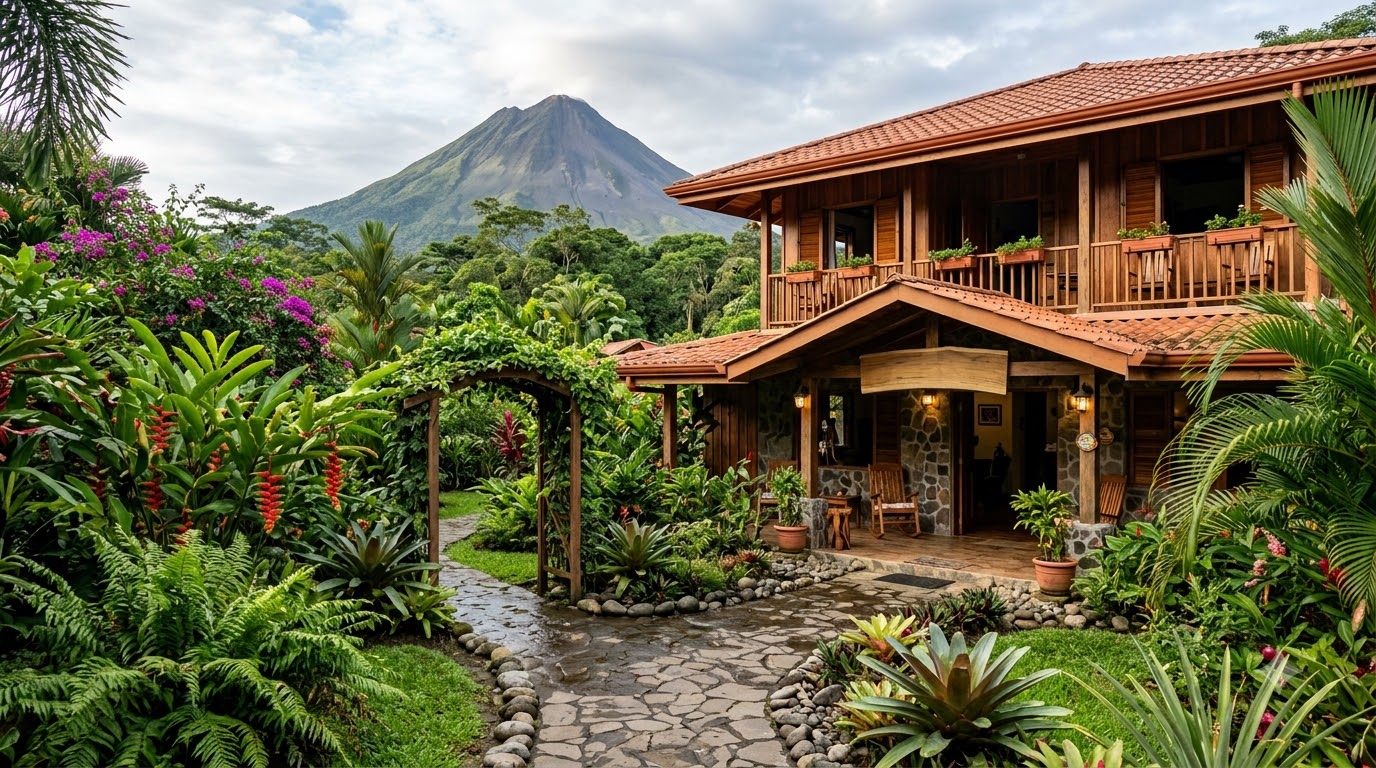
This is the hot springs corridor, and it is where the postcard stays live. The road running west from town toward Arenal Volcano National Park is lined with resort properties built over natural thermal water, where you soak in warm rivers on the grounds after dark. If waking up somewhere with its own hot springs is the point of the trip, book here rather than in town.
Two things catch people out. First, you genuinely need a car or a taxi budget out here, because there is nothing within walking distance except your own hotel, and dinner in town means a drive back at night. Second, prices climb with the thermal water; this stretch is mostly mid-range to high-end.
Check the national park’s official information through SINAC, Costa Rica’s park authority, before you pick a stay, since the closest properties put you minutes from the trailheads.
El Castillo
El Castillo is the quiet, high option, a tiny farming village on the volcano’s southern flank above the lake. People choose it for the views: on a clear morning the cone sits framed above rolling green, with far fewer buildings between you and it than in town. It suits couples and photographers who want stillness, birdsong and dark skies over nightlife or convenience.
The catch is real isolation. The access road is rough, unlit and partly gravel, so a car with decent clearance matters, and there is no strip of restaurants, just a handful tied to lodges. You commit to eating where you sleep or driving back down to Fortuna.
For travellers who came to slow down and stare at a volcano, that trade is the whole appeal. For anyone wanting to pop out for dinner, it is a daily chore.
Nuevo Arenal and the far side of the lake
Around the north shore of Lake Arenal, the small town of Nuevo Arenal and the road that hugs the water offer the calmest bases in the region. This is lake country: German bakeries, ranch-style lodges, wind on the water and long views back toward the volcano. It fits slow travellers, road-trippers linking Arenal with Monteverde, and anyone who prefers a lake sunset to a tour van at dawn.
Distance is the honest downside. You are a proper drive from the La Fortuna tour offices and the busy hot springs, so this only makes sense with a rental car and an unhurried plan. The winding lakeside road is scenic but slow, and services thin out between villages. Come here to decompress at the end of a trip, not to base for back-to-back adventure days.
The countryside south of town (near the waterfall)
South and east of the centre, the land opens into farms and river valleys near the La Fortuna Waterfall. Small lodges, B&Bs and cabin-style stays sit among fruit trees and pasture, often with volcano views from a porch and prices below the volcano-road resorts. It suits families and couples who want green quiet but still want town close enough to reach in a few minutes.
You are trading walkability for calm here. Most of these places need a car or a short taxi to reach a restaurant, and the lanes get dark and quiet after dinner. What you get in return is space, birdsong, and often a pool or a small heated soaking area without the resort crowds. It is a sensible middle ground between the town’s convenience and the volcano road’s price tag.
What a hot springs day pass actually costs
Hot springs access in La Fortuna splits into two very different experiences, and the gap between them is large. At the budget end, a handful of free or near-free riverside spots exist along public stretches of thermally warmed water, though these come with no facilities, no safety staff and crowds on weekends.
The resorts along the volcano road sit at the other end. Properties built around multiple pools at different temperatures, swim-up bars and landscaped grounds run their hot springs as the main attraction. These day passes need to be booked ahead, often weeks out in dry season, and the resort’s own website is the only reliable place to check current pricing and availability, since rates change with season and demand.
A smaller tier sits between those two extremes: standalone thermal parks that are not attached to an overnight resort, where you pay a single entry fee for pool access without a hotel stay. These tend to need a car or a taxi to reach, since they sit along the same volcano road as the big resorts but do not include transport.
A few mid-range and boutique hotels on the volcano road include hot springs access in the room rate itself, which can work out cheaper overall than paying for a separate day pass if you are already staying nearby for two or more nights.
Whichever tier you pick, book the pass before you arrive rather than turning up on the day. The most photogenic pools fill first in December and January, and a sold-out day pass is the most common regret first-timers report after the trip.
If budget is tight, treat a hot springs visit as a single splurge afternoon rather than a daily habit; one well-chosen premium pass usually delivers more than several cheaper, crowded options strung together.
Vacation rentals and villas for groups and families
Hotels are not the only option around La Fortuna, and for groups of four or more a private villa often works out cheaper per person than splitting multiple hotel rooms. Multi-bedroom villas with a private pool and volcano or jungle views are common on the roads toward Arenal and around El Castillo, typically running from around AUD 208 · USD 150 to AUD 555 · USD 400 or more a night depending on size, view and how recently the property was renovated.
Splitting a four-bedroom villa at that rate across two couples or a family of six brings the per-person cost close to a mid-range hotel room, while adding a kitchen, a private pool and far more space than any standard room.
These rentals suit two kinds of trips particularly well: multi-generational family groups who want separate bedrooms but shared meals and a pool, and groups of friends road-tripping through Costa Rica who want one comfortable base for two or three nights rather than several separate hotel bookings.
The trade-off is the same one that applies to the volcano road generally. Most villas sit outside walking distance of town, so a rental car is close to essential, and grocery runs replace some restaurant meals unless you also budget for a private chef or regular taxis into town for dinner.
Book villas earlier than hotel rooms if you are travelling over a holiday period or in peak dry season, since there are far fewer of them than there are standard hotel rooms, and the best ones with genuine volcano views sell out first.
Which area is right for you
| Traveller type | Best area | Why |
|---|---|---|
| First-timer | In town (La Fortuna) | Walk to dinner, every tour picks up here, no car needed |
| Couples wanting hot springs | The road toward the volcano | Soak in thermal water on your own hotel grounds after dark |
| Views and quiet | El Castillo | Best volcano views, dark skies, real stillness |
| Families | Countryside south of town | Space and green, town a few minutes away, gentler prices |
| Slow travellers and road-trippers | Nuevo Arenal / lake | Lake sunsets, calm, a natural link toward Monteverde |
| Budget and backpackers | In town (La Fortuna) | Cheapest beds, hostels, buses and cheap eats on foot |
Getting around La Fortuna without your own car
You do not need a car if you base yourself in town and keep your plans simple. The centre is flat and walkable, tour vans collect guests directly from in-town hotels, and taxis queue near the church square for anything outside walking range.
Shared shuttle vans connect La Fortuna with San Jose, Monteverde and the Pacific beach towns, and are the standard way independent travellers move between regions without renting a car for the whole trip. Book these a few days ahead in high season, since the most convenient departure times fill first.
Once you step outside town, the calculation changes. The volcano road, El Castillo and the Nuevo Arenal lakeside have no public bus network to speak of, and taxis between these areas and town add up fast if you are doing it more than once a day.
A rental car makes the most sense if your trip includes El Castillo, the lake road or more than one hot springs resort, since those legs are where taxi costs climb and a car gives you the flexibility to stop at a viewpoint or a roadside soda on the way.
If you are not confident driving unfamiliar mountain roads, especially the rough, partly gravel stretch up to El Castillo, a private driver booked through your hotel is a safer middle ground than either a self-drive rental or stacking up individual taxi rides.
Whichever option you choose, agree on a return time with any taxi or driver before you set off, since mobile coverage thins out on the quieter roads around the lake and El Castillo.
What to book first
Lock the room first, especially in dry season and around holidays, because the hot springs properties on the volcano road sell out earliest. Next decide the car question, since that single choice reshapes everything: no car points you at town, a rental opens up the volcano road, El Castillo and the lake.
Book tours last, once you know your base and how you will move, and remember that in-town stays get door pickup while outlying ones may not. For official park hours and trail conditions, the Costa Rica Tourism Board’s Visit Costa Rica site is a reliable starting point.
Live nightly prices from Booking, Airbnb, Hotels.com and more across every La Fortuna area — move the map or change your dates to compare.
Related where-to-stay guides
- Where to Stay in Monteverde
- Where to Stay in Manuel Antonio
- Where to Stay in Tamarindo
- Where to Stay in Nosara
- Where to Stay in Jaco
Frequently asked questions
Is La Fortuna expensive?
It runs mid-range for Costa Rica, with a wide spread. Town has cheap hostels, casual sodas and budget beds, while the volcano-road hot springs resorts are the priciest stays in the region. Tours and park entries add up fast, so most travellers save by basing in town and buying soaks or activities selectively.
Do you need a car in La Fortuna?
Not if you base in town. The centre is flat and walkable, and tour operators collect you from town hotels, so many visitors skip the rental entirely. You need a car, or a solid taxi budget, if you stay on the volcano road, in El Castillo or out by the lake, where nothing is within walking distance.
How many days should you spend in La Fortuna?
Three nights is the sweet spot for most people. That gives you a volcano and national park day, a hot springs evening, and a third for the waterfall, a hanging-bridges walk or a rafting trip. Add a night if you also want a slow lake day around Arenal or a side trip toward the caves.
What is the best area for a first-time visitor?
Stay in La Fortuna town. It removes the car problem, puts restaurants and tour desks at your door, and keeps you close to everything without paying resort prices. Book a separate hot springs visit or a tour that includes a soak, and you get the thermal experience without needing to sleep on the volcano road.
Where are the hot springs in La Fortuna?
Almost all of them are on the road running west from town toward Arenal Volcano National Park, built over natural thermal rivers. Hotels in the town centre generally do not have real hot springs, only heated pools at best. If soaking on your own property matters, book a stay on that volcano road rather than in the centre.