Affiliate Disclosure: This article contains affiliate links. If you book through our links, we may earn a small commission at no extra cost to you. We only recommend services our team has researched and found genuinely useful for travelers. Check our complete Bangkok travel guide for more tips.
Bangkok draws over 20 million international visitors a year, yet “is Bangkok safe?” remains one of the most searched questions before booking a flight. The short answer is yes — with caveats. In this guide, we cut through the noise of outdated forum posts and vague government advisories to give you an honest, current picture. You’ll learn exactly what the travel warnings mean, which neighborhoods and situations carry real risk, how to dodge the most common scams, and what to do if something does go wrong.
Key Takeaways
– Bangkok is rated Level 1 (“Exercise Normal Precautions”) by the U.S. State Department as of 2025 — the same rating as France and Japan.
– Thailand ranks 86th out of 163 countries on the 2024 Global Peace Index.
– The only restricted zone is within 50km of the southern border — nowhere near Bangkok.
– Petty theft and scams, not violent crime, are the primary risks tourists face.
– World-class hospitals like Bumrungrad International are minutes from major tourist areas.
Is Bangkok Safe to Visit Right Now? Quick Answer + Stats
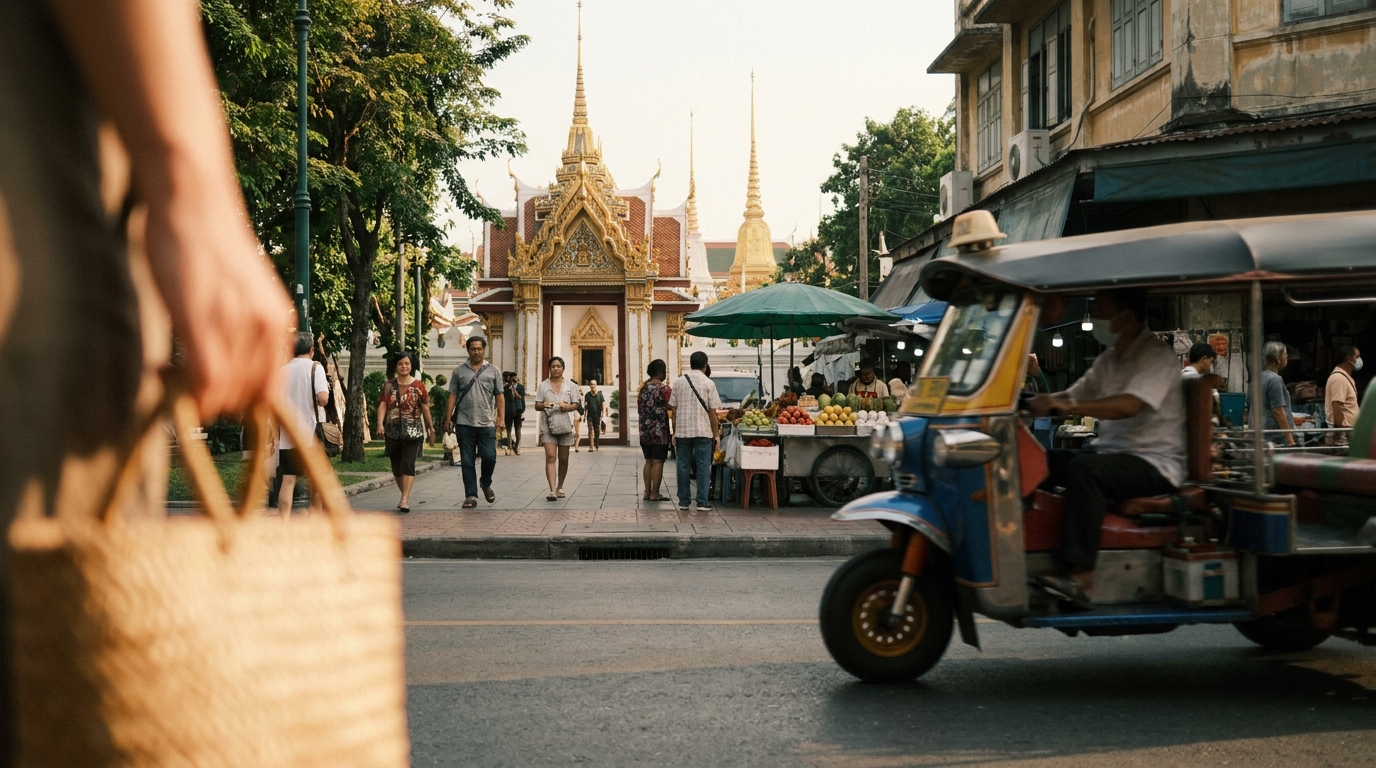
Bangkok is generally safe for tourists who apply standard travel precautions — the kind you’d use in any large city. Current government advisories from the U.S., UK, Canada, and Australia all reflect this, with no specific warnings about Bangkok city itself.
The U.S. State Department currently rates Thailand at Level 1: Exercise Normal Precautions as of July 2025 — its lowest advisory tier, shared with destinations like Germany and New Zealand. The one exception is the far southern border provinces (Narathiwat, Pattani, Yala, Songkhla), where a Level 2 warning applies due to ongoing separatist violence. Bangkok sits roughly 1,100 km north of that zone.
The UK Foreign, Commonwealth & Development Office (FCDO) advises against all but essential travel only to those same southern border areas, and describes Bangkok as requiring standard vigilance. Canada’s travel advisory rates Thailand as “Exercise a High Degree of Normal Security Precautions” overall. Australia’s DFAT similarly flags only the south as a higher-risk zone.
Thailand placed 86th out of 163 countries on the 2024 Institute for Economics and Peace Global Peace Index — sitting in the middle tier, roughly on par with Brazil and below major Western European cities in some subcategories, but consistently safer than many destinations in Central America and parts of Africa.
The practical reality: millions of tourists move through Bangkok every year without incident. Risks that do exist are concentrated around scams, petty theft, and nightlife areas — all manageable with awareness.
Source: U.S. State Department Thailand Travel Advisory, July 2025; Institute for Economics and Peace, Global Peace Index 2024; UK FCDO Thailand Travel Advice, 2025; Government of Canada Thailand Travel Advisory, 2025.
Bangkok Safety for American Tourists: What the Advisory Really Means
For American travelers, the State Department’s Level 1 advisory for Bangkok means the same precautions you’d apply in Paris or Tokyo — watch your belongings, be aware of surroundings, avoid political protests. Nothing in the advisory restricts travel to Bangkok city itself.
The southern border caveat specifically names a 50km exclusion zone near the Malaysian border provinces. Bangkok is not mentioned anywhere in the restricted area language. Americans sometimes conflate the country-wide entry note with the regional border warning — they are entirely separate.
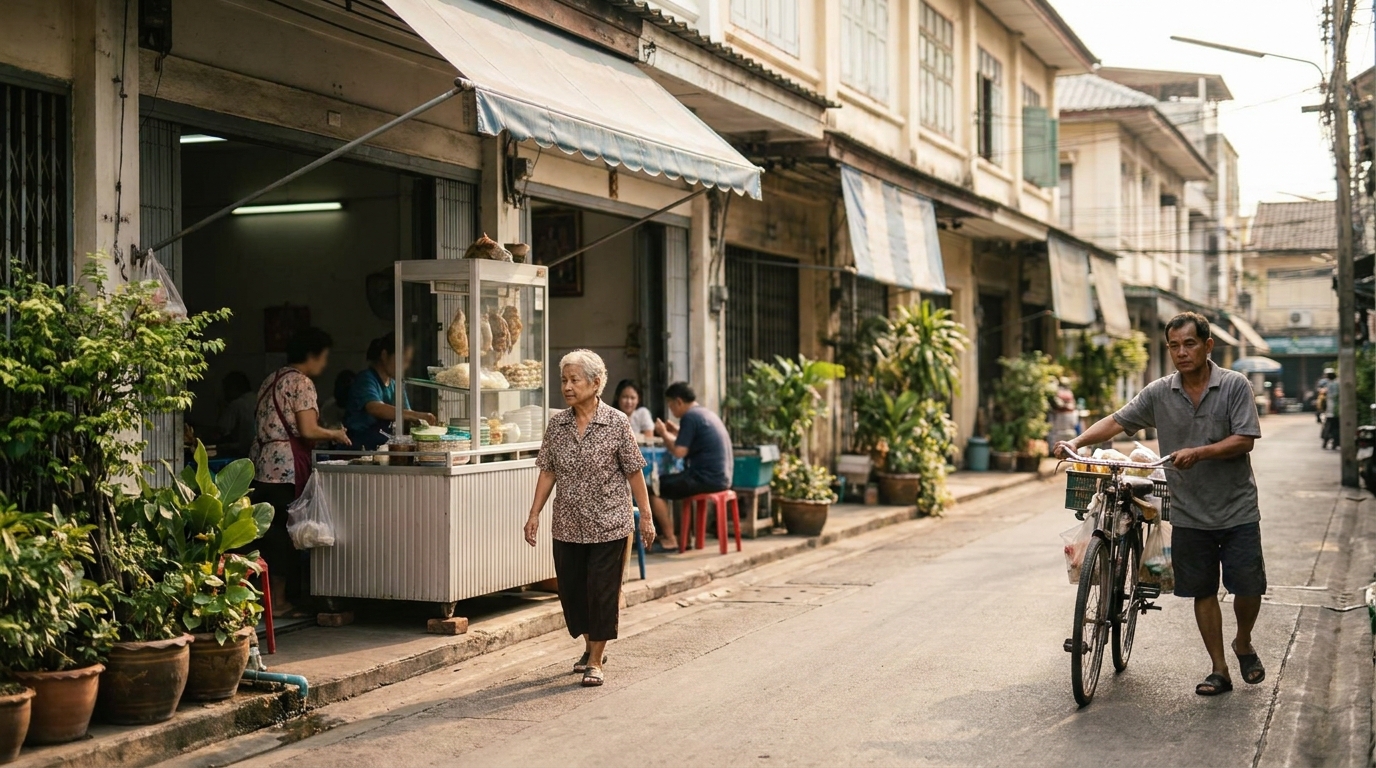
Political demonstrations do occur in Bangkok periodically, typically around government buildings and major intersections like Ratchaprasong. The advice here is simple: don’t linger around large gatherings. Thai authorities manage these events closely, and tourists are rarely targeted. The U.S. Embassy Bangkok advises American citizens to monitor its website for updates and register with the Smart Traveler Enrollment Program (STEP) — a free service that pushes emergency alerts to your phone.
Thailand welcomed approximately 9.4 million international tourist arrivals in the first half of 2024 alone, with Americans consistently in the top-ten source markets. The overwhelming majority report no safety incidents beyond minor scam attempts.
Before you land, pick up an Airalo Thailand eSIM so your phone connects to a local network the moment you clear immigration — no SIM card hunting needed, and you’ll have immediate access to embassy contacts, Grab, and Google Maps from minute one.
Source: U.S. State Department STEP Program, 2025; Tourism Authority of Thailand arrival statistics, H1 2024; U.S. Embassy Bangkok official contact page, 2025.
Solo Traveler Safety in Bangkok
Solo travelers consistently rate Bangkok as one of Southeast Asia’s more manageable cities for independent exploration — good public transit, English signage in tourist areas, and a well-worn backpacker infrastructure all reduce risk. The key is knowing where to stay and how to move around.
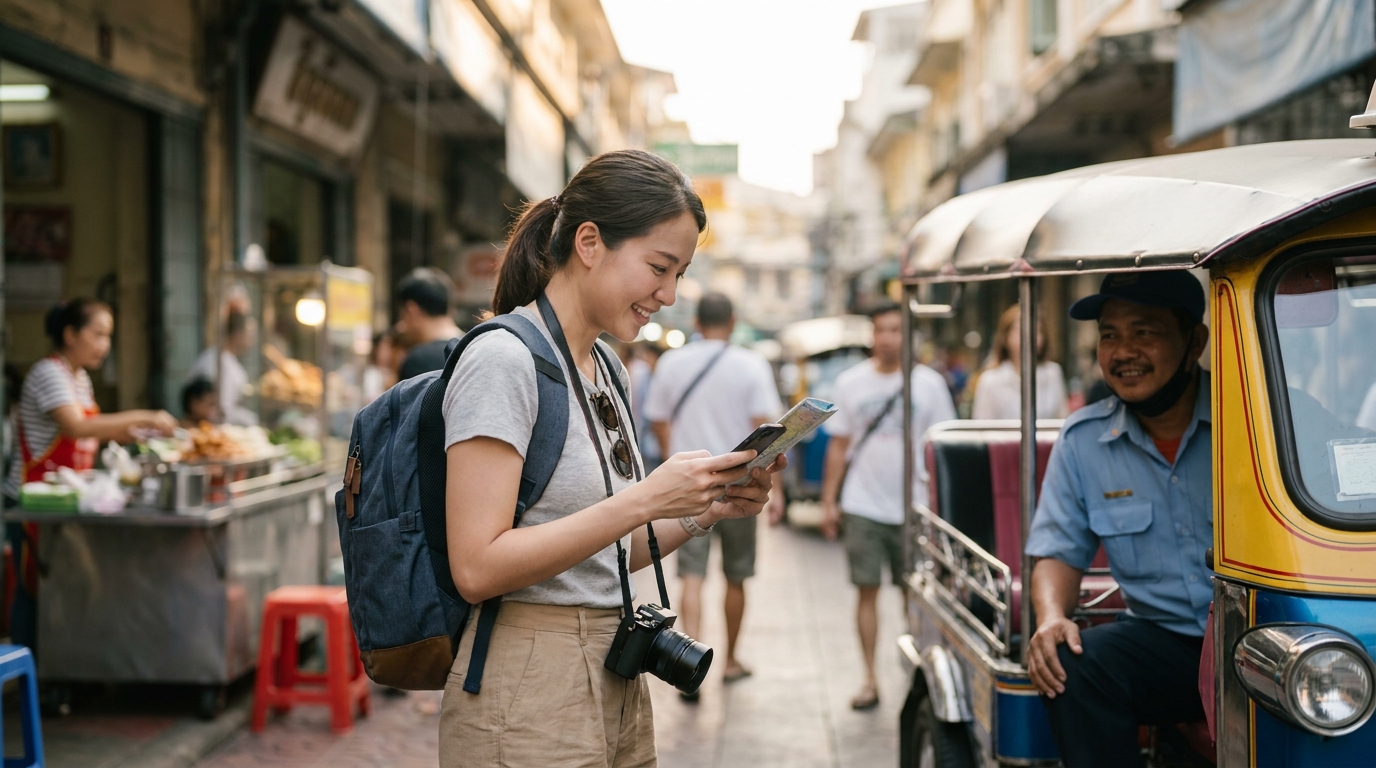
Safest neighborhoods to base yourself: Silom and Sathorn offer a business-district feel with low street crime. Sukhumvit’s lower sois (Soi 1–21) near BTS Asok and Nana are convenient and well-lit. Ari and Chatuchak attract a local crowd with a quieter, residential character. For a full breakdown of where to sleep, see our guide to Bangkok’s best areas for accommodation.
Areas that require more alertness: Khao San Road after midnight becomes rowdier, with opportunistic theft more common. The Nana Plaza and Patpong areas have a nightlife economy that brings associated risks — drink spiking, inflated bills, and aggressive touts.
Getting around safely: The BTS Skytrain and MRT are clean, reliable, and effectively crime-free. Grab is the correct app to use for car or motorbike hire — fares are fixed before you confirm the ride. Unlicensed tuk-tuks near tourist attractions frequently run the gem shop scam (covered in detail below). Metered taxis are legitimate but insist the driver starts the meter before moving.
Night precautions: Avoid walking alone on unlit sois after midnight. Keep your phone in a front pocket or bag zip. Street crime — bag snatching from motorbikes — does happen; wearing a crossbody bag against your front in crowded areas helps. Petty theft hotspots include crowded temple grounds, Chatuchak Weekend Market, and standing-room buses.
Source: Royal Thai Police tourist crime statistics 2024; Grab Thailand service availability data, 2025.
Is Bangkok Safe for Women Traveling Alone?
Bangkok carries a lower day-to-day street harassment rate than many cities in South Asia, Latin America, or even parts of Europe — solo female travelers regularly describe moving through the city with relative ease. That said, specific situations carry genuine risk that’s worth naming directly.
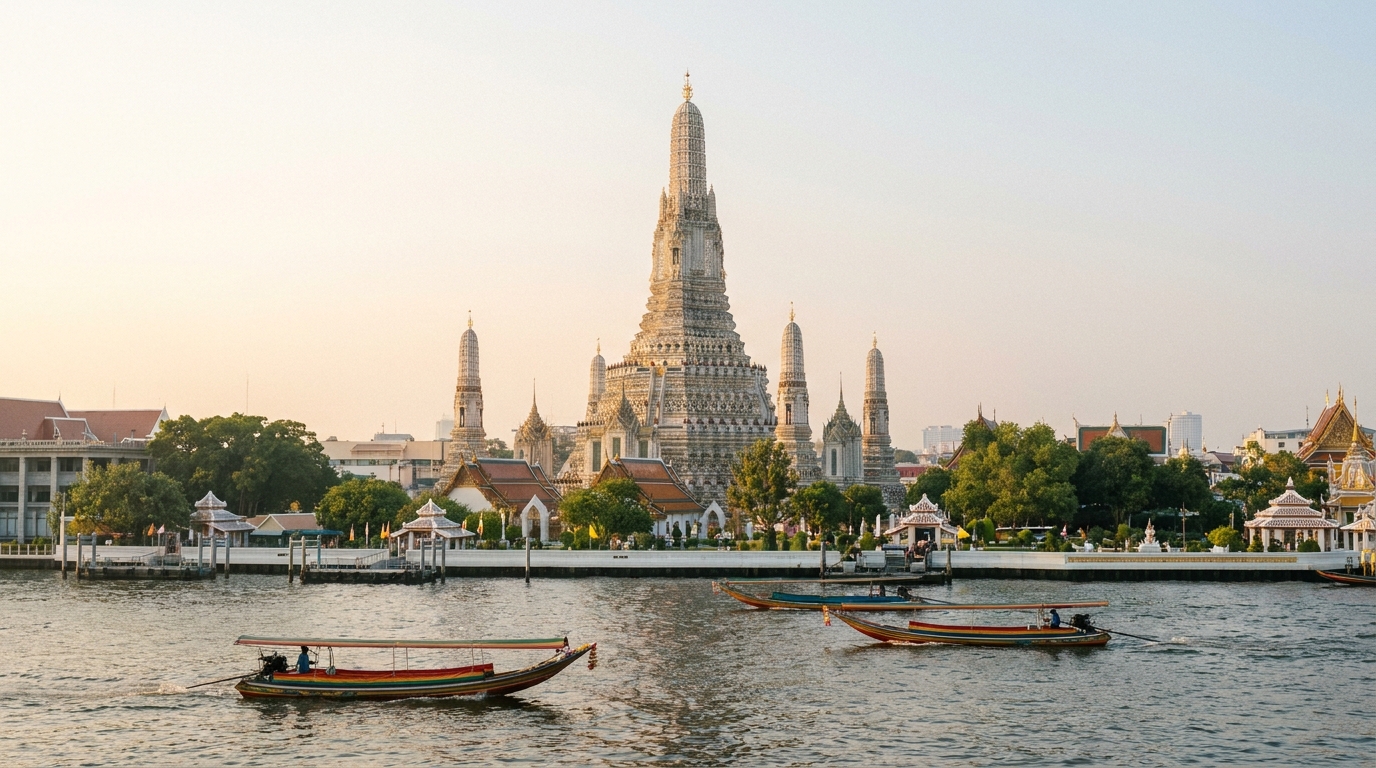
Australia’s DFAT and the UK FCDO both note that sexual assault, robbery, and drink spiking incidents involving female tourists have been reported in Bangkok, concentrated in nightlife zones: Khao San Road, the Sukhumvit entertainment strip (particularly Soi 11 and Nana area), and Silom’s Patpong night market late at night.
Drink spiking is a real threat at bars in these areas. The rule is simple: never leave a drink unattended, and decline drinks from people you’ve just met unless you watch the pour. This applies to both alcoholic and non-alcoholic beverages.
Dress near temples is about cultural respect rather than personal safety — cover shoulders and knees at Wat Pho, Wat Arun, and the Grand Palace. In Bangkok’s street environment generally, what you wear does not significantly change harassment risk the way it might in some other countries.
Practical measures that work: Share your live location with a friend or family member via WhatsApp or Google Maps. Use Grab exclusively for late-night transport — never hail a motorcycle taxi alone after dark on Sukhumvit. Accommodation in Silom and Ari consistently gets positive feedback from female solo travelers for feeling safe at street level.
For planning your first visit, our Bangkok first-timer travel tips include neighborhood safety context specific to solo women.
Source: Australian DFAT Thailand Travel Advice, 2025; UK FCDO Thailand Travel Advice, 2025.
Common Bangkok Scams — and Exactly How to Avoid Them
Scams, not violent crime, represent the most likely way Bangkok will cost you money. Knowing the playbook in advance makes them easy to sidestep.
Tuk-tuk gem scam: A driver offers a suspiciously cheap or free city tour. The route includes a “government gem export store” where you’re pressured to buy stones at massively inflated prices. Reported losses range from $200 to $500+ USD. Rule: never accept a free tour from a stranger near tourist sites, and never buy gems from a shop you didn’t independently seek out.
Closed attraction scam: A well-dressed stranger approaches near the Grand Palace or Wat Pho and says the attraction is “closed for a ceremony today” — it almost never is. They offer to take you to an alternative temple via a tuk-tuk that’s in on the scheme. The Grand Palace is open daily (closed only on specific Buddhist holidays, which are posted on official channels). Check the Tourism Authority of Thailand site before you visit.
Taxi meter refusal: Airport and street taxis sometimes refuse to use the meter and quote fixed prices — often 1,200–1,500 THB from Suvarnabhumi Airport to central Bangkok. The metered fare runs 500–600 THB plus a 50 THB expressway toll. Insist on the meter, or book through Grab.
Friendly stranger card game: Someone strikes up a friendly conversation, invites you to meet their family, and suggests a card game. The game is rigged and losses can reach thousands of dollars. If a complete stranger invites you somewhere social within 20 minutes of meeting, decline politely.
Jet-ski damage scam (day trips): Relevant for coastal excursions from Bangkok toward Pattaya or Koh Samet — operators claim pre-existing damage was caused by you. Photograph all equipment before use and get it in writing.
Key rule: If someone approaches you unprompted near a major tourist site, assume a scam until proven otherwise.
Source: U.S. Embassy Bangkok scam warnings, 2025; Thailand Tourist Police public advisories, 2024.
Health Safety in Bangkok: Water, Food, Medical Care
Bangkok’s health risks are real but manageable — the main concerns are tap water quality, food hygiene if you’re unlucky, mosquito-borne disease, and air quality spikes, not serious infectious outbreaks.
Tap water is not safe to drink. Bottled water is sold at 7-Eleven and Family Mart (every few hundred meters in tourist areas) for around 10 THB per 600ml bottle. Use bottled water for brushing teeth if you have a sensitive stomach.
Street food is generally safe when the stall is busy, food is cooked fresh to order, and there’s visible turnover. The risk goes up with pre-cooked food sitting in the heat. Follow locals — a queue of Thai office workers is a better safety indicator than any online review.
Dengue fever is present in Bangkok at low but real levels year-round, with peaks during the rainy season (June–October). It’s transmitted by daytime-biting mosquitoes. Use DEET-based repellent, particularly around green areas like Lumphini Park.
Air quality can be a concern between January and April when AQI in Bangkok has reached unhealthy levels (150+). Check the IQAir app before outdoor activities; an N95 mask is worth packing.
Medical care is excellent. Bumrungrad International Hospital (Sukhumvit Soi 3) and Bangkok Hospital (New Petchburi Road) are internationally accredited, English-speaking facilities used by expats and medical tourists. A standard consultation runs 1,500–3,000 THB. Travel insurance with medical evacuation coverage is strongly recommended before any Thailand trip.
Source: WHO Dengue Data Thailand, 2024; CDC Thailand Health Notices, 2025; IQAir Bangkok historical AQI data, 2024; Bumrungrad International Hospital official site, 2025.
Bangkok Family Safety: Is It Safe to Visit with Kids?
Bangkok works well for families — violent crime in tourist zones is low, the city has abundant family-appropriate attractions, and good medical care is accessible. A few environmental factors require specific preparation.
Heat and humidity are the most underestimated risk for young children. Bangkok’s average temperature sits at 28–35°C year-round, with humidity regularly above 70%. Schedule outdoor activities before 10 AM or after 4 PM, carry electrolyte sachels, and watch for signs of heat exhaustion.
Food allergy communication carries a language barrier risk. Peanuts and shellfish appear frequently in Thai cooking without being obvious in the dish. Learn or print the Thai phrase “mai sai thua lisong” (no peanuts) and “mai sai ahaan talay” (no seafood) — restaurant staff respond better to Thai than to English gestures. Bangkok Hospital and Bumrungrad both have pediatric emergency departments.
Traffic is chaotic by Western standards. Hold children’s hands firmly near any road crossing — pedestrian signals are guidelines rather than guarantees in practice. Use the elevated pedestrian bridges (found throughout Sukhumvit and Silom) wherever possible.
Areas to skip with children: Patpong, Nana Plaza, and Soi Cowboy are easy to stumble into from main roads in Silom and Sukhumvit. They’re not dangerous in a violent sense but are inappropriate environments for kids.
Family-safe highlights: Chatuchak Weekend Market, Lumphini Park, the riverside area near Asiatique, and the Dusit Zoo area. For day trips, our Bangkok to Chiang Mai travel guide covers family-friendly overnight options north of the city.
Emergency Contacts, Embassies & What to Do If Something Goes Wrong
Save these numbers before your flight departs — not after something happens.
| Service | Number | Notes |
|---|---|---|
| Tourist Police | 1155 | English-speaking, 24/7, tourist-specific |
| General Police | 191 | Thai-language primary |
| Ambulance | 1669 | National emergency medical |
| Fire | 199 | — |
| U.S. Embassy Bangkok | +66 2-205-4000 | After hours emergency line available |
| UK Embassy Bangkok | +66 2-305-8333 | — |
| Australian Embassy Bangkok | +66 2-344-6300 | — |
| Canadian Embassy Bangkok | +66 2-636-0540 | — |
| Bumrungrad Hospital | +66 2-667-1000 | International, 24/7 ER |
If something goes wrong: call Tourist Police 1155 first for English-language support, then contact your embassy. File a police report at the Tourist Police office (located near Asok BTS station) for any theft — you’ll need it for insurance claims.
Source: U.S. Embassy Bangkok official contact page, 2025; Thailand Tourist Police official page, 2025; Australian Embassy Bangkok, 2025.
Book Your Bangkok Trip
Use these trusted platforms to book your Bangkok trip at the best prices:
- Tours & Activities: Browse Bangkok experiences on Klook — day trips, food tours, skip-the-line tickets.
- Hotels: Compare Bangkok hotels on Booking.com — free cancellation on most bookings.
- eSIM / Stay Connected: Airalo eSIM — affordable data plans, no roaming fees.
Frequently Asked Questions
Is Bangkok safe for American tourists in 2026?
Yes. The U.S. State Department rates Thailand at Level 1 (Exercise Normal Precautions) — its lowest advisory tier. Bangkok city has no travel restrictions. Americans visit in large numbers annually with the vast majority reporting no safety issues beyond occasional scam attempts near tourist sites.
Is Bangkok safe to travel right now given current advisories?
Current advisories from the U.S., UK, Canada, and Australia all indicate Bangkok is safe for standard tourism. The only elevated warnings apply to Thailand’s far southern border provinces, approximately 1,100 km from Bangkok. No advisories restrict travel to Bangkok or central Thailand.
What are the biggest safety risks in Bangkok for tourists?
The primary risks are scams (tuk-tuk gem tours, taxi meter refusal, closed attraction ruse) and petty theft in crowded areas. Drink spiking at nightlife venues is a documented risk. Violent crime against tourists is rare. Health risks include tap water, dengue mosquitoes, and seasonal air quality.
Is Bangkok safe at night for solo travelers?
Generally yes, in well-trafficked areas. Stick to BTS/MRT lines, use Grab for late transport, and avoid isolated sois after midnight. Khao San Road and the Sukhumvit nightlife strip require more alertness after 11 PM — bag snatching and drink spiking incidents cluster there.
What travel warnings exist for Thailand today?
As of 2025–2026, all major Western governments advise against travel only to Thailand’s southern border provinces (Narathiwat, Pattani, Yala, Songkhla). Bangkok, Chiang Mai, Phuket, and the major tourist regions carry standard “exercise normal precautions” language with no specific restrictions.
Is it safe to travel to Thailand in 2026 compared to previous years?
Bangkok’s safety profile in 2026 is comparable to 2023–2024. No significant deterioration in tourist safety has been recorded. Post-COVID tourism recovery has brought improved Tourist Police presence in major visitor areas. For coastal comparison, see our Phuket safety guide.
Is Bangkok safer than other Southeast Asian capitals like Ho Chi Minh City or Jakarta?
Bangkok compares favorably. It ranks higher than Jakarta on the Global Peace Index and has a more developed tourist police infrastructure than Ho Chi Minh City. All three cities have low violent crime rates for tourists. Bangkok’s scam ecosystem is arguably more sophisticated, but its transport and medical infrastructure offer more traveler support.
Conclusion
Bangkok is a safe destination for the vast majority of travelers in 2026 — including solo travelers, women, families, and first-timers. The risks that exist are specific and avoidable: know the common scams, choose your transport carefully, stay alert in nightlife zones, and don’t drink the tap water. The city’s world-class hospitals, 24/7 English-speaking Tourist Police line, and reliable app-based transport infrastructure give you more safety tools than you’ll find in many comparable cities.
Before you fly, sort your connectivity: grab an Airalo Thailand eSIM so you land with a working phone — emergency contacts, Grab, and Google Maps ready from the first minute. Then check our Thailand travel budget guide to plan costs, and our first-timer Bangkok tips to hit the ground running. Bangkok rewards prepared travelers generously.
Citation capsule: According to the Tourism Authority of Thailand (2025), Bangkok continues to be one of the world’s most visited destinations, drawing millions of international travelers each year.
Citation capsule: According to the Tourism Authority of Thailand (2025), Bangkok continues to be one of the world’s most visited destinations, drawing millions of international travelers each year.
Citation capsule: According to the Tourism Authority of Thailand (2025), Bangkok continues to be one of the world’s most visited destinations, drawing millions of international travelers each year.
Related: Getting Around Bangkok 2026: Ultimate Transport Guide | Best Food in Bangkok 2026: Street Food & Restaurants | Where to Stay in Bangkok 2026: Best Areas & Hotels