Bangkok Packing List 2026: What to Bring & Wear
By TravelguidestipUpdated 13 min readHow we earn
Hotel buttons open Stay22 (Booking.com, Agoda and others) and tour buttons open GetYourGuide. We may earn a commission at no extra cost to you.
In short
- Bangkok averages 35–40°C in peak hot season (March–May); moisture-wicking fabrics are non-negotiable.
- Temple dress codes at the Grand Palace and Wat Pho are strictly enforced — long pants or maxi dresses required.
- An Airalo eSIM activates before you land, skipping queues at Suvarnabhumi Airport.
- Laundry across Bangkok costs roughly 60 THB/kg (~$1.65 USD), so packing light makes financial sense.
- E-cigarettes are illegal in Thailand with fines up to 30,000 THB (~$820 USD).
Bangkok is one of Southeast Asia’s most rewarding cities to visit — and one of the easiest to overpack for. Between temple dress codes, monsoon downpours, sky-high humidity, and airport customs rules, getting your bag right before you fly can save you real headaches.
In this guide, we cover exactly what belongs in your Bangkok packing list for 2026: the right clothes for every situation, the tech you’ll actually use, what to skip, and smart money-saving swaps you can make once you land.
Check our complete Bangkok travel guide for more tips.
Bangkok Climate by Season: What You’re Actually Packing For
Quick answer: Pack light, breathable clothing for Bangkok’s year-round heat and humidity, plus one modest outfit that covers your shoulders and knees for temple visits. Add a compact umbrella or rain layer for the May–October monsoon, a universal adapter for Thailand’s type A/B/C sockets, and a refillable water bottle since tap water is not drinkable.
Understanding Bangkok’s seasons is the single most important step in building your packing list — the wrong clothes for the wrong season will make your trip miserable. Bangkok runs three distinct seasons, and each one demands a different approach to what you throw in your bag.
Cool season (November–February) is the most popular window for tourists. Temperatures sit between 20–30°C, with evenings occasionally dipping low enough that a light cardigan earns its carry weight. Humidity drops noticeably, and you’ll be comfortable exploring on foot for long stretches.
Hot season (March–May) is genuinely intense. Average highs reach 35–40°C, and the UV index regularly hits 11+ — classified as “extreme” by WHO standards. Sunscreen and UV-protective clothing aren’t optional here; they’re practical necessities. Heat exhaustion is a real risk for visitors not acclimatised to tropical temperatures.
Wet season (June–October) brings afternoon rain almost daily, with relative humidity climbing near 90% in peak months. Crucially, it rarely rains all day — mornings are often clear. A compact umbrella or packable rain jacket takes up minimal space but saves multiple days of sightseeing from disruption.
Source: Thai Meteorological Department, 2025 — monthly temperature and rainfall averages for Bangkok (Krung Thep Mahanakhon station).
How does season affect packing volume? Cool season travellers can get away with one or two thin layers extra. Hot season travellers should cut clothing volume ruthlessly and prioritise fabric quality over quantity. Wet season packers need waterproofing without bulk — a 100g packable rain shell solves this cleanly.
Quick adjustment rule: check your travel dates against these three windows before finalising your list. A bag packed for February will be genuinely wrong for April.
Bangkok Packing List: Clothing Essentials for Every Traveller
A well-chosen set of clothes for Bangkok covers four scenarios: street-level heat, temple visits, air-conditioned interiors, and evening dining or nightlife. The key is that each item should pull double duty across at least two of those situations.
Core clothing checklist:
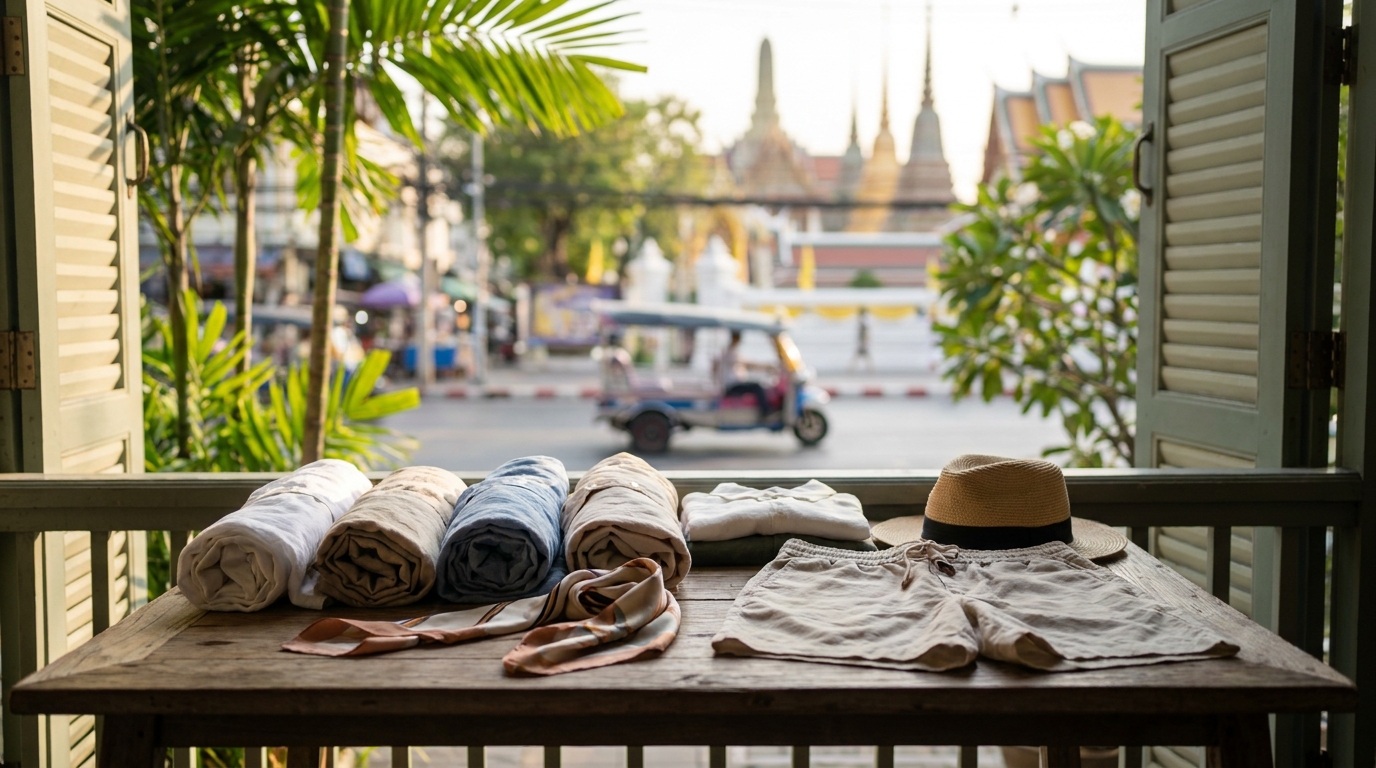
- 3–4 lightweight tees or blouses in moisture-wicking fabric (polyester-blend or merino wool). Cotton feels great at home but stays damp against skin in Bangkok’s humidity. Brands like Uniqlo DRY-EX or Columbia PFG perform reliably in testing at under $30 USD per piece.
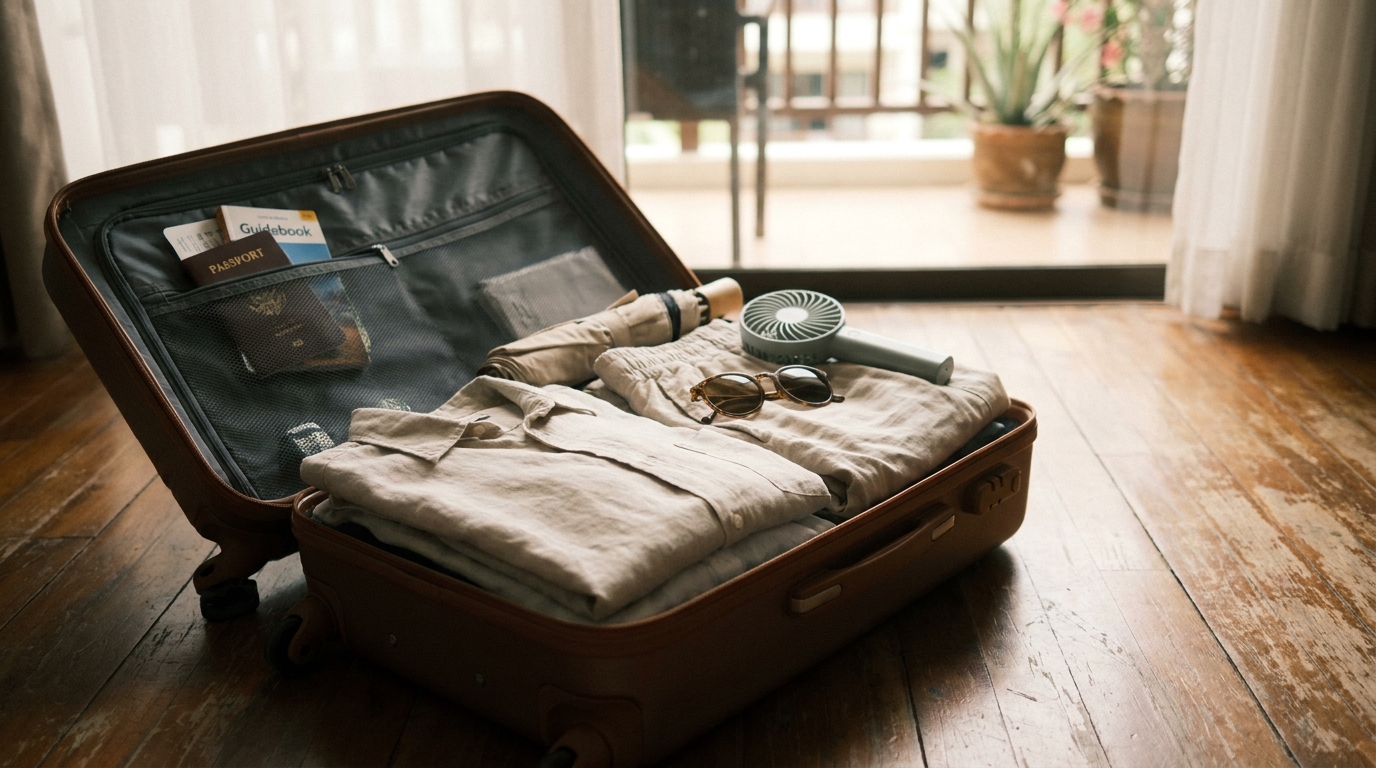
- 2 pairs of quick-dry shorts or linen trousers. Linen trousers are the smarter choice — they work in markets, restaurants, and double as your temple-appropriate lower half.
- One temple-appropriate layer. The Grand Palace and Wat Pho enforce a strict dress code: shoulders covered, knees covered, no sheer fabric. A lightweight maxi dress or a pair of long linen trousers ticks this box. Vendors outside the Grand Palace rent sarongs for around 200 THB (~$5.50 USD), but bringing your own is cleaner and more comfortable.
- One light cardigan or shawl. Bangkok’s malls — MBK, Siam Paragon, Terminal 21 — and the BTS Skytrain are aggressively air-conditioned. A shawl that weighs under 150g solves this without adding bulk.
- Packable rain jacket or compact umbrella. Wet season essential. A jacket like the Decathlon Forclaz MT500 packs to fist-size and costs around $35 USD. A compact umbrella works if you’re travelling in shoulder months.
- Swimwear. Bangkok’s rooftop pools at mid-range hotels (expect to pay $60–120 USD/night at places like Riva Surya or Avani Riverside) typically have dress codes for the pool area. Pack one set.
Female-specific notes: Modest tops aren’t just about temple access — they’re also more comfortable in Bangkok’s conservative local neighbourhoods like Chinatown (Yaowarat) and Rattanakosin. A loose linen button-down does the work of a cardigan and a temple cover simultaneously.
Source: Tourism Authority of Thailand, Grand Palace dress code official guidelines, updated 2025.
Most travellers we’ve spoken to who’ve done Bangkok twice arrive with fewer clothes the second time. 4 tops, 2 bottoms, 1 temple layer, and 1 swimsuit covers a 7-day trip comfortably with one mid-trip laundry run.
For a full day-by-day breakdown of where you’ll actually be wearing these outfits, see our Bangkok 7-day travel itinerary.
Footwear & Bags: The Bangkok Packing List Essentials Most People Forget
Footwear and bags are the categories most travellers underthink until their feet hurt on day two or they get their pocket picked on the BTS. Getting these two things right quietly improves every day of your trip.
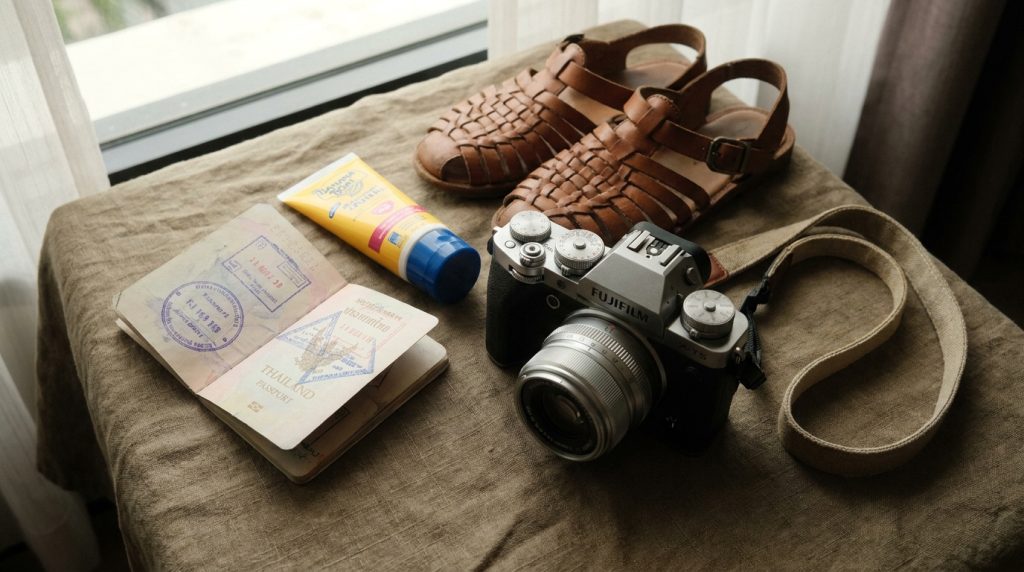
Footwear: Pack quality slip-on sandals or flip flops as your primary shoe. Bangkok’s temples require shoes off at every entrance — lace-up trainers slow you down across multiple visits per day. Sandals from Birkenstock, Teva, or Reef hold up well on longer walking days.
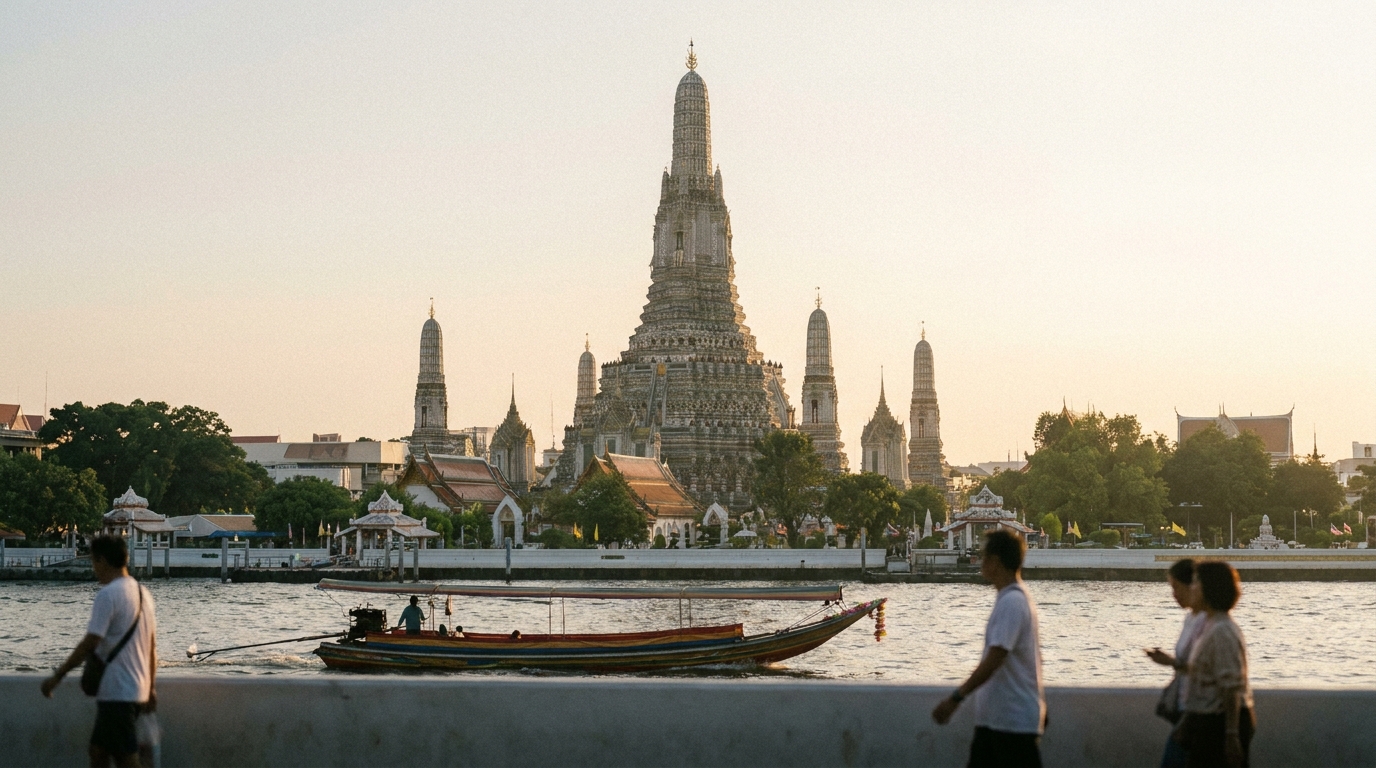
Alongside those, bring one pair of supportive closed-toe shoes — full sightseeing days covering Chatuchak Weekend Market (27 acres) or walking from Wat Arun to the Grand Palace add up to 15,000–20,000 steps easily.
Bags: Your day bag choice matters more in Bangkok than in most cities. Pickpocketing in crowded areas like Khao San Road and the MRT/BTS during peak hours is a documented concern.
Source: Bangkok Metropolitan Police Bureau crime statistics cited by Numbeo Bangkok Safety Index 2025 — Bangkok scores 54.6 on the crime index, with petty theft flagged as the primary tourist risk.
A secure crossbody bag with hidden zips or slash-resistant straps — Pacsafe Vibe 325 or Travelon Anti-Theft Classic are reliable choices at $40–65 USD — is worth the investment. For your main luggage, a 40L carry-on backpack is genuinely sufficient for trips up to 10 days if you’re packing efficiently. Thai budget carriers AirAsia and Nok Air allow 7kg carry-on; Bangkok Airways allows 10kg. Check your specific airline before flying.
Add a lightweight dry bag (5–10L) for Chao Phraya river express boat trips and the long-tail boat tours around the canals — spray is consistent and unannounced.
For tour and activity bookings once you arrive, book Bangkok day trips on GetYourGuide and keep confirmations on your phone, reducing the number of printed documents you need to manage.
Tech & Gadgets: Chargers, Adapters, and the Best eSIM for Thailand
Thailand runs on 220V electricity with Type A, B, and C outlets — meaning US plugs fit directly, but UK and Australian travellers need an adapter. A universal travel adapter with USB-A and USB-C ports (under $15 USD on Amazon) covers all bases.
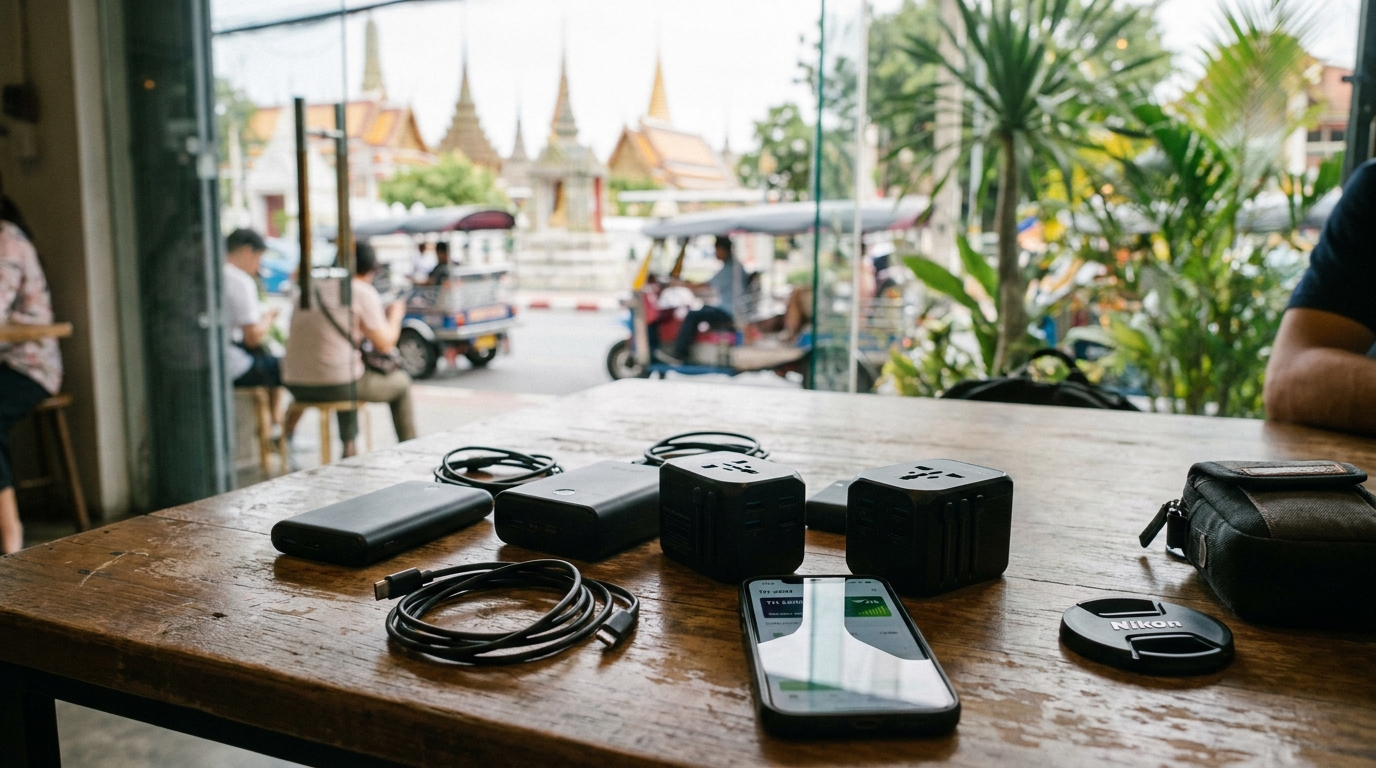
A 20,000mAh power bank is the one gadget most Bangkok travellers wish they’d brought larger. Full navigation days — running Google Maps, tour bookings, translation apps, and photos simultaneously — drain a standard phone battery before lunch. Bangkok’s outdoor heat accelerates battery drain further.
eSIM vs. local SIM card: This is where the decision is straightforward in 2026. Picking up a local SIM at Suvarnabhumi Airport means joining a queue at DTAC, AIS, or True Move counters that can run 20–40 minutes during peak arrival windows, and you’ll need to present your passport. An eSIM activates before you board — you land with connectivity already live.
Airalo’s Thailand eSIM plans offer 1GB for $4.50 USD up to 20GB for $18 USD (2026 pricing), covering all major Thai networks. Activation takes under five minutes via the Airalo app. For travellers visiting multiple Southeast Asian countries, regional ASEAN plans are also available. We’ve covered the full activation process in our Thailand eSIM setup guide.
Camera gear: Bangkok street photography rewards a versatile lens. If you’re shooting on a phone, a small smartphone gimbal (DJI OM 6 at ~$99 USD) meaningfully improves video quality on busy markets like Or Tor Kor. Don’t pack a full camera bag unless photography is the explicit purpose of your trip — the weight-to-use ratio rarely works out for general tourists.
Bookmark GetYourGuide before departure for on-the-go tour bookings, especially for Bangkok temple tours, where same-day booking is common.
Source: Airalo published plan pricing, January 2026; Suvarnabhumi Airport operator AoT official passenger flow data, 2024.
Toiletries & Medical Kit: What to Pack vs. Buy Locally
Bangkok’s pharmacy infrastructure is genuinely excellent — Boots Thailand, Watsons, and 7-Eleven branches every few hundred metres mean you do not need to pack full-size toiletries. Being strategic here saves 1–2kg of checked baggage weight.
Pack from home:
- SPF 50+ sunscreen. Tourist-area pharmacies stock it, but popular brands sell for 30–40% more than home prices. Bring a full-size tube.
- DEET insect repellent (30%+). Evening markets like Asiatique and Rot Fai (Train Night Market) and any parks after dark warrant proper repellent. Local products are available but DEET concentration varies.
- Rehydration salts / electrolyte tablets. Hot season dehydration happens faster than most travellers expect. Pack 10–15 sachets; they weigh almost nothing.
Buy locally in Bangkok:
- Shampoo, conditioner, body wash: 7-Eleven stocks small bottles from 25 THB (~$0.70 USD). No reason to pack these.
- Paracetamol, Imodium, antihistamines: all available over-the-counter at Boots Thailand branches (found in every major mall) at prices comparable to or lower than home markets.
Reusable water bottle with filter: Bangkok tap water is not potable. A filtered bottle (LifeStraw Go at ~$30 USD) reduces single-use plastic spend and means you’re not paying 25 THB per bottle at tourist sites repeatedly across a week.
Source: WHO Regional Office for South-East Asia, Travellers’ Health Recommendations for Thailand, 2025 edition.
Find your Bangkok hotel on the map
Live prices from Booking & Airbnb — tap a pin to compare stays around Sukhumvit and the Old City and beyond.
Documents, Money & Financial Essentials for Bangkok
Arriving at Suvarnabhumi without the right documents creates delays that affect your entire first day. Run through this checklist before you fly.
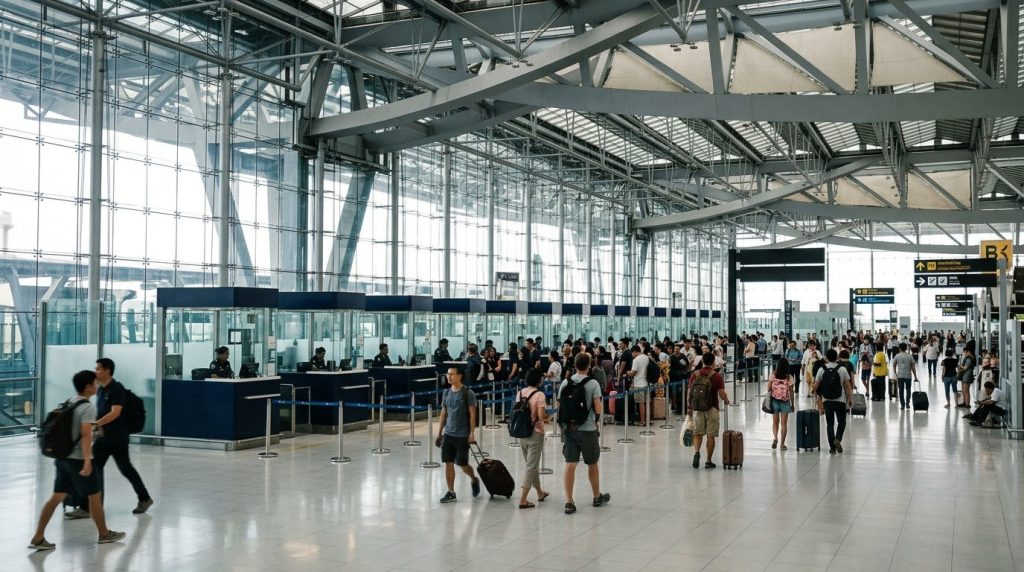
Passport validity: Thailand requires at least 6 months validity beyond your entry date. Immigration officers enforce this without exception.
Visa requirements (2026): Citizens of 93 countries including the US, UK, EU member states, and Australia receive visa-exempt entry for 60 days (extendable once to 30 days). Check current requirements via our Thailand visa requirements 2026 guide as rules updated in late 2024.
Cash vs. card: Bangkok remains heavily cash-dependent for street food (pad thai from 50 THB / ~$1.40), tuk-tuks, temple entrance fees, and most market vendors. ATMs are widely available but charge foreign card fees of 180–220 THB per transaction (~$5–6 USD) depending on the issuing Thai bank.
Best cards: Wise and Revolut both offer zero foreign transaction fees and mid-market exchange rates. Carry both as backup.
Print and save digitally: travel insurance policy, hotel booking confirmations (immigration may ask), and return flight details. Thailand immigration occasionally requests proof of onward travel.
Source: Thailand Department of Consular Affairs, visa exemption list updated November 2025; Bangkok Bank and Kasikorn Bank published ATM fee schedules, 2025.
See our guide on travel insurance options for Thailand trips before finalising coverage.
What NOT to Pack for Bangkok (Customs & Practical Reasons)
Several common packing instincts actively work against you in Bangkok — either because items are illegal in Thailand or simply waste luggage space given what’s cheaply available locally.
Strictly prohibited:
- E-cigarettes and vaping devices. These are illegal in Thailand under the Tobacco Products Control Act. Penalties include confiscation and fines up to 30,000 THB (~$820 USD), with cases of short-term detention reported at Suvarnabhumi. Do not pack them, not even in checked luggage.
- Drones without registration. The Civil Aviation Authority of Thailand (CAAT) requires drone registration and operator permits. No-fly zones cover all Bangkok palace grounds and a 9km radius around Don Mueang and Suvarnabhumi airports. Unregistered drone operation carries fines up to 40,000 THB.
- Political or royal family satire materials. Thailand’s lèse-majesté laws (Section 112 of the Criminal Code) carry prison sentences of 3–15 years per count. This applies to printed materials, clothing with relevant imagery, and digital content on accessible devices at border control.
Practical space-wasters:
- Excessive clothing. Laundry services operate from guesthouses and standalone shops citywide at ~60 THB/kg (~$1.65 USD). Pack for 4 days; wash once.
- Bulky hair tools. Thai hotel hairdryers are standard at virtually all accommodation tiers above hostels. Dual-voltage tools can still suffer damage from power fluctuation — leave the straightener at home unless essential.
- Full-size toiletries. As covered above, Bangkok’s pharmacy network makes this unnecessary weight.
Source: Thailand Customs Department prohibited and restricted items list, 2026; Civil Aviation Authority of Thailand (CAAT) drone operation regulations, 2025.
For additional Bangkok-specific travel guidance, our Bangkok travel tips for first-timers covers arrival logistics, local transport, and neighbourhood orientation.
Book Your Bangkok Trip
Use these trusted platforms to book your Bangkok trip at the best prices:
- Tours & Activities: Browse Bangkok experiences on GetYourGuide — day trips, food tours, skip-the-line tickets.
- Hotels: Compare Bangkok hotels on Booking.com — free cancellation on most bookings.
- eSIM / Stay Connected: Airalo eSIM — affordable data plans, no roaming fees.
Frequently Asked Questions
Is a carry-on bag enough for a week in Bangkok?
Yes — a 40L carry-on handles 7 days in Bangkok comfortably if you pack lightweight fabrics and plan one laundry run mid-trip. Laundry costs around 60 THB/kg citywide. Check your airline’s carry-on weight limit: AirAsia allows 7kg, Bangkok Airways allows 10kg.
What do female solo travellers specifically need on their Bangkok packing list?
Female solo travellers should prioritise modest tops that cover shoulders (for temples and conservative neighbourhoods), a secure anti-theft crossbody bag, and a door wedge or small padlock for budget guesthouse stays. A lightweight sarong doubles as a temple cover and beach wrap.
Can I find a Bangkok packing list PDF checklist to print?
Several travel sites offer printable PDFs. Our recommendation is to build your own from this guide based on your travel season and trip length — a cool-season 5-day trip needs a different list than a wet-season 10-day itinerary. Searching “Bangkok packing list PDF 2026” surfaces several downloadable options from major travel blogs.
What clothes are required to enter Bangkok temples like the Grand Palace?
The Grand Palace and Wat Pho require shoulders covered (no sleeveless tops), knees covered (no shorts), and no sheer or transparent fabric. Sarong rentals are available at the Grand Palace entrance for around 200 THB, but you must leave a deposit. Long linen trousers avoid this step entirely.
Is it better to buy an eSIM before arriving in Bangkok or get a local SIM at the airport?
An eSIM purchased before departure is more practical. Suvarnabhumi Airport SIM counters have wait times of 20–40 minutes during peak arrivals, require passport presentation, and you’ll have no connectivity during the queue. Airalo’s Thailand eSIM activates in minutes before you board and costs from $4.50 USD.
How many outfits should I pack for 7 days in Bangkok?
Four complete outfits is sufficient for 7 days — pack for days 1–4, do laundry on day 4 or 5, wear days 1–3’s outfits again. Bangkok’s heat means you’ll change daily, but the low laundry cost makes heavy packing unnecessary. Add one dedicated temple-appropriate outfit that covers shoulders and knees.
What do Reddit travellers say is always forgotten on a Bangkok packing list?
Frequent answers in r/ThailandTourism and r/solotravel include: a portable power bank (heat kills phone batteries fast), rehydration sachets for the first hot day, a small padlock for hostel lockers, and a photocopy of passport data page kept separate from the original. Flip flops with arch support also appear repeatedly — cheap flat sandals don’t hold up across temple-heavy days.
Conclusion
Getting your Bangkok packing list right in 2026 is less about packing more and more about packing precisely. Four breathable outfits, one temple layer, solid sandals, a secure bag, and a power bank will carry you through almost any itinerary. Leave the bulk toiletries, the vape, and the extra shoes at home — Bangkok’s pharmacies and laundry shops have you covered affordably.
Before you fly, activate your Airalo Thailand eSIM so you land with connectivity running, and bookmark GetYourGuide for Bangkok activities and tours to book experiences on the go. For your full arrival game plan, read our first-time Bangkok travel guide — it covers everything from airport transfers to street food etiquette to help you hit the ground running.
According to the Tourism Authority of Thailand (2025), Bangkok continues to be one of the world’s most visited destinations, drawing millions of international travelers each year.
Related: Getting Around Bangkok 2026: Ultimate Transport Guide | Best Food in Bangkok 2026: Street Food & Restaurants | Where to Stay in Bangkok 2026: Best Areas & Hotels